Grokbot in Practice: 11 AI Agents for Astronomers — Data Analysis to Paper Writing

Grokbot uses MCP protocol and multi-agent orchestration to deploy 11 specialized AI agents for astronomers in five minutes.
Grokbot is an AI agent platform targeting researchers, built around a "five-minute setup" pitch. It connects a template creator to an MCP server, using natural language to automatically match and install profession-specific agent toolsets. For astronomers, it generates 11 specialized agents plus a coordinator that links data analysis, paper writing, and grant proposals into a coherent workflow. The platform uses a template-based design claiming coverage across multiple professions to lower the barrier for non-programmers. However, since these claims come from an official promotional demo, the actual output quality of the agents, their compatibility with specialized astronomy tools like FITS files, and whether the five-minute setup is realistic in practice all lack third-party verification and warrant careful scrutiny.
When Research Time Gets Swallowed by Data Analysis
Astronomical research is caught in an awkward bind: the time actually spent exploring the universe is constantly eaten up by data analysis, paper writing, and the tedious process of drafting grant proposals. An astronomer must simultaneously play the roles of data engineer, academic writer, and project manager — and these administrative tasks consume no less energy than the observations themselves.
Grokbot's answer to this pain point is a set of configurable AI agents designed to take over repetitive tasks. According to the official demo, the tool is built around a "five-minute setup" promise, giving researchers their time back for actual research.
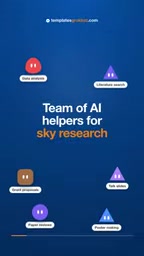
Building an AI Team in Five Minutes
Grokbot's core pitch is AI agents that are "simple enough to configure in five minutes." According to the official demo, the entire setup process breaks down into a few clear steps:
Setup Walkthrough
- Install the Grokbot main application;
- Add a "template creator" bot;
- Connect it to the template's Grokbot MCP server;
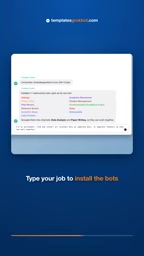
- Enter a prompt — for example, "I'm an astronomer, find and install all relevant bots";
- Add a "coordinator" bot to get the whole team working together.
After completing these steps, users can have 11 specialized agents plus 1 coordinator up and running within five minutes. Worth noting here is the role of the MCP (Model Context Protocol) server — it acts as a bridge between the agents and the template library, allowing the system to automatically match and pull the appropriate toolset based on the user's professional needs.
MCP (Model Context Protocol) is a standardized protocol proposed and open-sourced by Anthropic in late 2024, designed to address the fragmented integration between large language models and external tools or data sources. Previously, every AI application required separately written integration code for each tool, making maintenance extremely costly. MCP's core idea is to define a unified "socket" specification: the AI model acts as a client, while various tools or data services act as MCP servers, communicating through standardized interfaces. Grokbot uses an MCP server as the access point to its template library, enabling agents to "discover" and pull tools on demand rather than hardcoding every integration into the product — this is the technical foundation behind its claim of rapidly matching toolsets across different professions.
Natural Language-Driven Agent Orchestration
The most distinctive design choice in this workflow is using natural language to discover and install agents. Users don't need to manually select each tool; they simply describe their role and needs in a single sentence, and the system will "find and install all relevant bots."
This reflects a broader trend in AI applications: moving from single chat assistants toward multi-agent orchestration. A single large model excels at general conversation, but when facing clearly delineated tasks like data analysis, paper writing, and proposal drafting, a model where specialized agents handle their respective domains — coordinated by a single orchestrator — tends to fit real-world workflows much better.

Multi-agent orchestration refers to an architectural pattern where a complex task is broken down and distributed among multiple specialized AI agents for parallel or sequential processing, with a top-level "coordinator" responsible for task assignment, result aggregation, and error handling. Compared to a single large model handling everything, this architecture's advantage lies in each sub-agent being optimized for a specific task with tailored prompts and tool calls, reducing the complexity of each individual inference pass and making it easier to debug failures in isolation. Popular implementation frameworks include LangGraph, AutoGen, and CrewAI. That said, multi-agent systems are often harder to debug and introduce more latency than single-model solutions — when any agent in the chain produces a deviant output, the error can be amplified by downstream nodes, which is a common challenge for products of this kind.
The Coordinator Mechanism: From Solo to Team
If 11 specialized agents operate independently, they can easily become isolated silos. Grokbot's solution is a "coordinator" role responsible for keeping the team working in sync.
Looking at an astronomer's actual workflow, the output from data analysis needs to feed into the paper-writing stage, and the paper's conclusions in turn inform the grant proposal. These tasks have natural dependencies on one another, and the coordinator mechanism's value lies in connecting this chain — rather than forcing users to manually transfer results between multiple independent tools.
Beyond Astronomy: A Template-Based Universal Approach
Grokbot's team is quick to emphasize that the platform wasn't designed exclusively for astronomers — "every profession has a corresponding template." Users can find solutions tailored to their industry at templatesgrokbot.com/for-my-job.
This template-based approach lowers the barrier to using AI agents: ordinary users don't need to understand prompt engineering or the technical details of tool calling. Just select the right professional template, and the system pre-loads an entire workflow. For researchers and professionals without a programming background, this "out-of-the-box" design is genuinely appealing.
A Sober Assessment: Questions Beyond the Demo
Worth noting: the content above comes from a promotional demo, which is closer to a feature advertisement than an independent review. Several key questions remain unverified:
- The specific functions of the 11 agents and the quality of their outputs were not covered in the demo;
- Whether "five-minute setup" reflects an ideal scenario or a realistic experience lacks third-party corroboration;
- Astronomical data processing often involves highly specialized toolchains (e.g., FITS files, dedicated astronomy software) — whether general-purpose agents can handle the core analysis remains questionable.
Multi-agent collaboration and the MCP protocol represent a reasonable direction for AI tool development, but for researchers, what ultimately determines adoption is the quality of these agents' outputs in real data and paper-writing scenarios. Until more rigorous hands-on evidence is available, cautious optimism is the appropriate stance.
The specialized technical barriers in astronomical data processing deserve separate mention. FITS (Flexible Image Transport System) is the standard data storage format in astronomy, used for storing images, spectra, and multi-dimensional array data, with an associated toolchain including Astropy, DS9, and others. Professional astronomical analysis often involves steps like signal-to-noise ratio calculation, point spread function fitting, and redshift measurement — all of which require domain knowledge to configure parameters correctly. General-purpose AI agents have clear advantages in natural language generation and document organization, but their reliability in core analysis tasks requiring precise numerical computation and specific file format handling has not been sufficiently validated publicly. This is precisely why, for scientific research scenarios, "output quality" — not "setup speed" — should be the primary metric for evaluating tools of this kind.
Related articles

Apple HomeView Hands-On Review: Is the $300 Smart Home Hub Worth It?
Apple HomeView hands-on: a $300 smart home hub with facial recognition for quick account switching, but no App Store or voice recognition. Is the wall-mounted version worth it? Should you buy the first generation?

Meta Muse Wonder Launch: What It Means for Meta's Return to the Frontier AI Race
Meta releases Muse Wonder and WonderFull, benchmarks reach the frontier, community feedback is polarized. An in-depth look at Meta's return to the frontier AI race, its personal agent strategy, and Zuckerberg's different path.

Apple Home Smart Home Lineup Leaked: LG and Schneider Team Up, UWB Door Lock on Board
Apple Home ecosystem gains new LG and Schneider devices: UWB smart lock with proximity unlock, 2.5K dual-camera doorbell, privacy indoor camera, and AirPods-like seamless pairing.