GTA VI Leak Hacker Sentenced Then Released, Raising Cybersecurity Alarm Bells Again
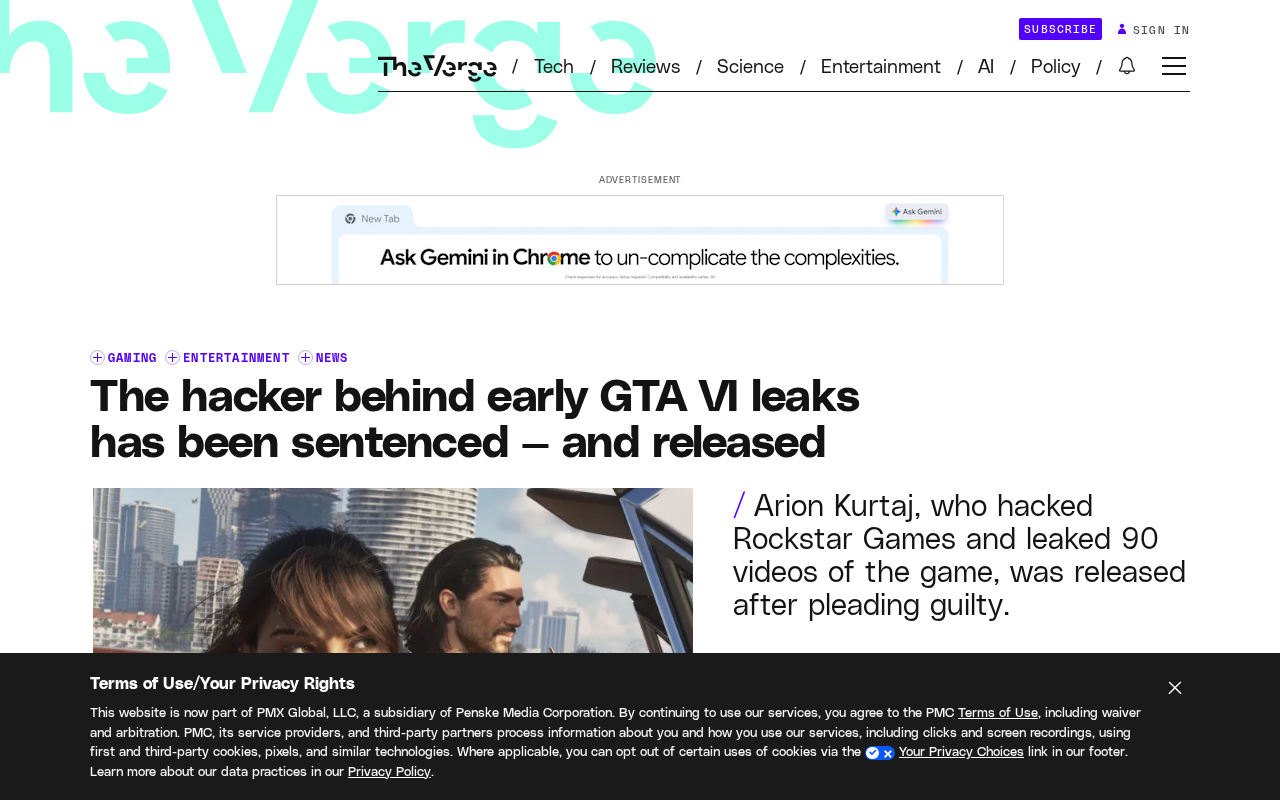
Hacker Kurtaj was sentenced to seven years but released on license for leaking GTA VI videos, sparking reflection on security and sentencing.
The article reviews the case of hacker Arion Kurtaj, who breached Rockstar and leaked 90 clips of GTA VI development footage. Kurtaj was sentenced to seven years in prison but released on license, requiring supervised reintegration into society. He also attacked companies including Uber and Revolut, showing that his attack scope was not limited to the gaming industry. The case exposed internal security vulnerabilities at AAA game companies, prompting the industry to strengthen confidentiality and cybersecurity measures. Meanwhile, the verdict sparked discussion about sentencing for juvenile cybercrime, with the court seeking a balance between punishment and rehabilitation. The article notes that companies need to continuously invest in multi-factor authentication, network segmentation, and employee training, and establish bug bounty and emergency response mechanisms to address the security challenges posed by the rising value of digital assets.
Incident Recap: The Biggest Leak in GTA VI History Goes to Court
According to BBC reports, hacker Arion Kurtaj, who breached Rockstar Games and leaked early footage of GTA VI, pleaded guilty last week and was sentenced to seven years in prison, but was subsequently released on license. The case has drawn widespread attention because it involves one of the most anticipated games in recent years. Kurtaj also admitted to attacking multiple companies including Uber and Revolut, showing that his attack scope extended well beyond the gaming industry.
In 2022, Kurtaj leaked 90 clips of GTA VI development footage after breaching Rockstar—years before the game's official release. The videos spread rapidly online, forcing Rockstar to publicly acknowledge the leak and state that it would not have a long-term impact on game development.
Sentencing and Release: How the Law Handles Juvenile Cybercrime
Kurtaj was sentenced to seven years in prison, but "released on license" means he is not entirely free—he must comply with specific conditions and reintegrate into society under supervision. The verdict has sparked discussion about sentencing for juvenile cybercrime: on one hand, his actions caused enormous commercial losses and security risks; on the other, given his age and potential psychological conditions, the court may have adopted a strategy balancing punishment with rehabilitation.
Interestingly, Kurtaj had previously been deemed unfit to stand trial, but the judicial process ultimately moved forward through a plea agreement. The case also highlights the complex considerations of the UK justice system when dealing with highly skilled juvenile offenders.
"Released on license" is a conditional release mechanism in the justice systems of England and Wales. After serving a certain proportion of the statutory minimum sentence, an offender may be assessed by the parole board for suitability for early release, but must comply with a series of license conditions after release—such as regularly reporting to a probation officer, accepting electronic monitoring, restrictions on internet use or contact with specific individuals, and participation in rehabilitation programs. Violating these conditions may result in recall to prison to continue serving the sentence. The mechanism emphasizes social reintegration and risk management in addition to punishment, and is particularly applicable to juvenile offenders or those with mental health issues. In this case, although Kurtaj was sentenced to seven years, release on license means he will be subject to long-term supervision in the community rather than being fully free.
"Unfit to plead" is a special determination in UK criminal procedure. When a court finds that a defendant cannot understand the charges, instruct counsel, or participate in their defense due to mental disorder or severe cognitive issues, a special procedure may be initiated. The case is not simply dismissed; instead, a jury determines whether the defendant committed the alleged acts. If found to have done so, the disposition shifts to medical or custodial measures rather than conventional punishment. Kurtaj was previously found unfit to stand trial, but the process ultimately advanced through a plea agreement, suggesting that his mental state may have been deemed improved in subsequent assessments, or that the prosecution and defense reached an arrangement balancing judicial efficiency with treatment.
Impact of the Leak on the Gaming Industry
The GTA VI leak not only exposed internal security vulnerabilities at Rockstar but also sounded alarm bells for the entire gaming industry. Although the leaked videos were low in quality, they revealed details about the game's setting, characters, and gameplay, disrupting the developer's promotional rhythm. Rockstar subsequently strengthened internal security measures and accelerated the release of official information to regain control of the narrative.
From a broader perspective, the incident shows that even AAA game companies with top-tier security teams can become targets of hacker attacks. As game development costs soar and player expectations run high, keeping unreleased content confidential has become a critical part of commercial success.
Cybersecurity Lessons: How Companies Can Prevent Insider Threats and External Attacks
Kurtaj's attack methods have not been fully disclosed, but it is known that he obtained sensitive data by breaching company systems. This serves as a reminder that companies need to continuously invest in cybersecurity infrastructure, including multi-factor authentication, network segmentation, and employee security awareness training. Meanwhile, the victimization of Uber and Revolut shows that financial and technology companies are equally prime targets.
For game companies, protecting intellectual property is not only about commercial interests but also about player experience and community trust. Establishing bug bounty programs, cooperating with law enforcement agencies, and developing data breach emergency response plans are all effective ways to reduce risk.
Multi-factor authentication (MFA) requires users to provide an additional verification factor beyond a password—such as a phone verification code, hardware token, or biometric—significantly reducing the risk of account compromise after credentials are stolen. Network segmentation divides a corporate network into multiple isolated zones, limiting an attacker's ability to move laterally within the internal network; even if one device is compromised, sensitive data zones can still be protected. Employee security awareness training targets common entry points such as phishing emails and social engineering, reducing human error. For game companies, separating development environments from production environments, minimizing permissions on code repositories, and implementing encryption and access auditing for unreleased assets are all key practices that complement the measures above.
Conclusion: A Long-Term Challenge in the Contest Between Law and Technology
The case of Arion Kurtaj has temporarily concluded, but the discussion around hacker sentencing, juvenile crime prevention, and corporate security protection is far from over. As the value of digital assets rises, similar attacks may become more frequent. Finding a balance between protecting innovation and combating crime will remain a long-term challenge for both the legal and technological communities.
One-line Summary
Hacker Kurtaj was sentenced to seven years but released on license for leaking GTA VI videos, prompting reflection on security and sentencing.
Paragraph Summary
The article reviews the case of hacker Arion Kurtaj, who breached Rockstar and leaked 90 clips of GTA VI development footage. Kurtaj was sentenced to seven years in prison but released on license, requiring supervised reintegration into society. He also attacked companies including Uber and Revolut, showing that his attack scope was not limited to the gaming industry. The case exposed internal security vulnerabilities at AAA game companies, prompting the industry to strengthen confidentiality and cybersecurity measures. Meanwhile, the verdict sparked discussion about sentencing for juvenile cybercrime, with the court seeking a balance between punishment and rehabilitation. The article notes that companies need to continuously invest in multi-factor authentication, network segmentation, and employee training, and establish bug bounty and emergency response mechanisms to address the security challenges posed by the rising value of digital assets.
Related articles
Workflow SDK 5.8 Performance Benchmark: Step Latency Reduced 12x
Workflow SDK 5.8 rebuilds its execution engine, cutting p75 inter-step latency from 85ms to 7ms and 256-way parallel fan-out overhead by 14x, improving durable AI agent turnaround.

David Fincher's New Film Accused of Being AI-Generated? The Truth Behind the Controversy
David Fincher's new film *The Further Misadventures of Cliff Booth* is accused of using AI, with a carriage shot in the trailer sparking controversy. Netflix's acquisition of Ben Affleck's AI company and Fincher's own openness to AI keep suspicions alive. This article sorts out the controversy and the views of all sides.

FCC Clears SpaceX's Space-Based AI Data Centers: A Debate Over Regulatory Boundaries
The FCC approved SpaceX's plan to deploy AI data centers in space but dismissed opponents' key concerns about scientific research impacts as beyond its regulatory authority. This article analyzes the regulatory boundary issues behind the decision, the deeper tensions of space-based AI infrastructure, and its implications for the industry.