GTA VI Pulled Off the Impossible: It Actually Deserves the Hype

GTA VI withstood the unrealistic expectations set by GTA V's 230 million sales, living up to the wait.
Against the backdrop of GTA V's thirteen-year commercial and industry standing, the article notes its 230 million-plus sales and "Rockstar-style open world" standard set almost unrealistic expectations for GTA VI. The original's core judgment is that GTA VI "pulled off the impossible"—evolving through layered world density, narrative scale, and detail realism while preserving the series' feel. The author cautions that the material only offers conclusive assessments: it successfully managed expectations rather than conjuring a miracle.
Thirteen years ago, Grand Theft Auto V redefined the ceiling of open-world games, selling over 230 million copies across three console generations—second only to Tetris and Minecraft. Faced with such a peak, any sequel is inevitably subjected to relentless comparison. And GTA VI's answer, in the original's words, is that it "pulled off the impossible"—it withstood that almost unrealistic expectation.
An Expectation Spent in Advance
The success of GTA V wasn't just about commercial numbers. It made the "Rockstar-style open world" an industry standard: multi-protagonist storytelling, a dense ecosystem of side content, and an online mode built for long-term operation. Because of this, GTA VI has carried a structural pressure since its announcement—players don't just want a better game, they want a leap that rewrites the genre once again.
The original notes that GTA V's sales rank behind only Tetris and Minecraft, meaning the sequel faces one of the most discerning and massive audiences in the history of entertainment products. Expectation has been spent in advance, and any minor regression will be magnified.
Multi-protagonist storytelling is GTA V's most iconic structural innovation: the game features three switchable protagonists—Michael, Franklin, and Trevor—and players can switch perspectives in real time during missions, with the three personal storylines interweaving with a shared main heist plot. This design broke the series' previous linear, single-protagonist narrative framework, making the open world's "multiple perspectives" genuinely serve narrative layers rather than merely free movement across a map.
An online mode built for long-term operation refers to GTA Online—launched independently weeks after the single-player release, it sustained player activity through continuously updated missions, vehicles, real estate, and social gameplay, becoming the core source of the game's commercial vitality for over a decade. This model profoundly influenced the entire AAA industry's "games as a service" (GaaS) thinking, and it means GTA VI's online component carries commercial expectations far beyond its single-player content.
Why It "Deserves" It
The original's core judgment is direct: the game "pulled off the impossible"—it became the hype itself. Although the material doesn't elaborate on specific gameplay details, looking at the series' evolutionary logic, Rockstar's consistent approach is to layer on world density, narrative scale, and detail realism rather than tearing everything down and starting over.
For a sequel, the hardest thing isn't innovation—it's making players feel "this really is a new generation" while preserving the series' feel. From the original's framing, GTA VI walked that narrow path successfully—it didn't let the wait turn into disappointment.
What It Means for the Industry
The significance of a AAA sequel that withstands expectations spills beyond the game itself. It once again proves that massive, long-cycle projects can still earn both critical acclaim and commercial returns—a counterpoint for large studios that have frequently faced the "high expectations, low delivery" trap in recent years.
At the same time, GTA V's 230 million baseline reminds us: a sequel's real competitor is often not a same-period release, but the user habits and emotional memories left by its predecessor. What GTA VI had to cross was precisely the threshold set by its own family.
The "high expectations, low delivery" trap is a common phenomenon in the AAA industry in recent years: works build enormous buzz through trailers and marketing during the announcement phase, but at launch fail to deliver on promises due to compressed timelines, technical debt, or design churn, leading to setbacks in both reputation and sales. Typical cases include Cyberpunk 2077's technical issues at launch and Anthem's hollow content. This backlash not only damages individual products but also erodes player trust in entire studios and even publishers.
GTA VI's reference value lies in this: Rockstar chose an extremely long development cycle and extremely high investment to hedge delivery risk, rather than jumping the gun on marketing节奏. For other large studios forced to shorten timelines under capital pressure, this is both a proof—long cycles can still yield commercial success—and a structural difference that's hard to replicate.
A Sober View of the "Masterpiece" Narrative
It's worth noting that the available material only offers conclusive assessments, lacking elaboration on specific systems, story, and online modes. A more prudent reading, therefore, is: it successfully managed expectations, rather than conjuring a miracle out of thin air. For players, that's already rare enough—in an industry where hype often turns into backlash, being able to "live up to the wait" is itself a scarce capability.
One-line Summary
GTA VI withstood the unrealistic expectations set by GTA V's 230 million sales, living up to the wait.
Paragraph Summary
Using GTA V's thirteen-year commercial and industry standing as backdrop, the article notes that its over 230 million copies sold and the "Rockstar-style open world" standard set almost unrealistic expectations for the sequel GTA VI. The original's core judgment is that GTA VI "pulled off the impossible"—it didn't start over, but layered on world density, narrative scale, and detail realism while preserving the series' feel and making players feel a new generation has arrived. The article further points out that a sequel's real competitor isn't same-period releases but the user habits and emotional memories left by its predecessor; a AAA sequel that withstands expectations serves as a counterpoint for large studios long plagued by the "high expectations, low delivery" trap. The author also cautions that the available material only offers conclusive assessments, and a more prudent reading is that it successfully managed expectations rather than conjuring a miracle from nothing.
Related articles

Vibe Coding for Absolute Beginners: A Practical Guide to AI-Assisted Programming
A beginner's practical guide to Vibe Coding: how AI-assisted programming lets people direct AI to write code, covering tools like Claude Code and Cursor, AI collaboration, multi-platform development, and automated operations for the full-chain one-person company.
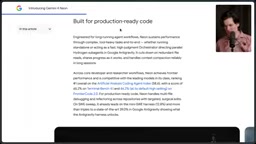
Gemini 4 Neon Hands-On: Google's Mid-Size Model Takes On Opus 5.5
Hands-on with Gemini 4 Neon: Google's mid-size model rivals Opus 5.5 on coding tasks with strong coherence and long-task performance at lower cost, though 3D generation and architecture analysis remain weak.

Police Transcription Firm Data Leak: Naked Cloud Server Exposes Law Enforcement Sensitive Information
A transcription firm serving police, prosecutors, and tech giants exposed sensitive data like interrogation recordings and bodycam videos due to an unprotected cloud server. This article analyzes the third-party risks and recurring cloud security issues behind the incident.