Hands-On with Gemini 4 Argon: Building an AI Agent That Finds Sponsors Automatically

A creator built an AI agent with Gemini 4 Argon and Zapier MCP that auto-mines sponsor leads from peer videos and drafts outreach emails for 7 cents each.
The article describes how YouTube creator Mike Russell used Gemini 4 Argon and Zapier to build an AI agent that automatically watches peer videos, identifies sponsored segments, locates contact emails, and generates customized collaboration emails. The technical backbone is Zapier's MCP server for Gemini CLI — users describe the task in natural language, and Gemini plans and generates a real, long-running Zap. In Zapier's benchmark of 657 real automation tasks, Argon ranked first at 51.3%, the first model to break 50%. Key advantages include Agentic management that auto-repairs broken connections and extremely low cost (~7 cents per six-minute video). The author stresses two limits: sponsor info in descriptions may be missed, and all contacts require human verification — Human-in-the-loop is essential.
A YouTube creator used Gemini 4 Argon and Zapier to build an AI agent that automatically watches peer videos, identifies sponsors, finds contact emails, and drafts customized outreach messages. This isn't just a technical demo — it's a reimagining of how content creators monetize their work.


From "Skipping Sponsors" to "Catching Leads"
Most viewers skip right past sponsor segments in videos. But creator Mike Russell saw something entirely different: every sponsored mention is a brand publicly declaring "we're willing to pay creators in this space." It's a business lead that the vast majority of people overlook.
[Image: The AI agent's workflow shown in the video]
His idea was straightforward: have AI "watch" all of a peer creator's videos, identify the sponsors within them, locate the person at the company responsible for partnerships, get their email, and generate a customized collaboration email. No frame-by-frame human viewing required, no manual LinkedIn searching.
The core engine behind this project is Gemini 4 Argon. Since Google also owns YouTube, Gemini can directly "understand" video content without relying on third-party transcription scraping tools — a detail that saves enormous data-cleaning hassle in practice.
Zapier Automation Benchmark: Argon Is the First Model to Break 50%
Zapier released a benchmark for automation tasks. Across 657 real-world automation tasks, Gemini 4 Argon ranked first with a score of 51.3% — the first model to break 50%, leading the runner-up by 6.6 percentage points.
[Image: The interface for configuring Gemini CLI and MCP server in Zapier]
Zapier's CEO revealed that Zapier MCP is growing at four times the rate of Zapier's own historical growth. The logic behind this: users no longer want to open an editor and manually build workflows — they want to build directly within the AI environment they already use every day.
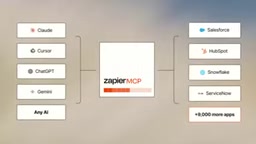
The creator leveraged this by creating an MCP server for Gemini CLI within Zapier. With just one command, Gemini CLI can connect to all the tools already linked in a Zapier account, including new tools that can automatically generate next-generation Zaps.
MCP (Model Context Protocol) is an open-source protocol standard proposed by Anthropic in late 2024, designed to unify how large language models connect to external tools and data sources. Before MCP, every time you wanted to integrate a new tool (Gmail, Notion, Slack, etc.), developers had to write separate adapter code, creating an N×M integration explosion problem. MCP abstracts these integrations into "servers" — each server exposes a set of standardized capabilities (tool calls, resource reads, prompt templates), and any MCP-compatible client (such as Gemini CLI or Claude Desktop) can call them plug-and-play. In this article, "creating an MCP server for Gemini CLI in Zapier" essentially means exposing the capabilities of over a thousand apps already connected in a Zapier account through a unified interface to Gemini, enabling cross-app operations without configuring each app individually. This is the underlying reason Zapier MCP is growing at four times its historical rate: integration cost drops from "adapting one by one" to "connect once, use everywhere."
One Prompt, an Entire Automated Workflow
The actual process is simpler than you'd think. The user just needs to describe the task in natural language — "watch the video, find the sponsor, find the contact person, use Google Search to look up information, use Hunter to get the email, write a short collaboration email, save to a Zapier table."
[Image: The AI agent automatically managing connections and maintaining workflows]
Gemini reads Zapier's build instructions, checks which apps and accounts are connected, and then presents an execution plan. Once the user confirms, it automatically generates the complete workflow and runs a test. The final output is a real Zap living in the Zapier account — not a code file on a computer — labeled "Built by Gemini CLI."
Using a Fire Ship channel video with 3 million views as a test, the agent accurately identified the sponsor as Appify, noted that the sponsored segment began at 4 minutes 57 seconds, and quoted the spoken segment verbatim. The creator verified against the subtitles and confirmed it was an exact match.
Gemini CLI is a command-line AI tool from Google that lets developers call Gemini models directly from the terminal and mount external capabilities via the MCP protocol. Unlike web-based chat, Gemini CLI can read and write local files, execute shell commands, and invoke registered MCP server tools, giving it "agentic" execution capability — it can autonomously plan steps, call tools, check results, and iterate based on a goal, rather than just generating text responses. In this article, it plays the role of "orchestrator": understanding Zapier's build specifications, scanning authorized apps in the account, planning the execution chain of "search video → identify sponsor → find contact → get email → write email → save to table," and then calling Zapier's API to solidify this chain into a real Zap. This is also why the final product isn't a code file, but a workflow in the account that can run long-term and be maintained by Agentic management.
Agentic Management: Solving the Real Pain Point of "Hard to Maintain"
Perhaps the most valuable part of this solution isn't the automation itself, but its "Agentic management" capability. When connections expire or processes break, Zapier's agent can automatically connect to the user's account to fix them — by default, it tests the fix, publishes a new version, and emails a notification of the changes. Users can also disable auto-repair and switch to manual approval.
The creator put it bluntly: "The vibe coding solution is the easy part — maintenance is the hard part." He believes that rather than maintaining a fragile set of automation scripts himself, it's better to let a professional team handle the infrastructure problems.
Extremely Low Cost, But Human Judgment Remains Irreplaceable
Argon reads video at roughly 100 tokens per second, so a six-minute video costs only about 7 cents. This cost makes daily operation feasible.
But the creator also honestly pointed out two current limitations: first, if a sponsor appears only in the video description without a spoken mention, "watching the video" alone might miss it — though simply feeding in the description text solves this; second, all contact information must be verified by a human before sending, and no emails are sent automatically.
He emphasized that "Human-in-the-loop" is a non-negotiable step. AI can discover leads and generate drafts, but the final screening and decision-making must be done by a human. He only collaborates with products and brands he genuinely believes in, and this principle won't change because of AI's involvement.
Human-in-the-loop is a collaborative paradigm in AI system design that retains human review, decision-making, or intervention at key nodes of an automated process. It stands in contrast to "fully automated," with the core assumption that in scenarios with high error costs, external relationships, or legal liability, AI should play the role of "generating candidates" while humans play the role of "final arbiter." In this article, it manifests in two ways: first, all emails must be verified by a human before sending — because emails scraped by tools like Hunter may be outdated or misattributed, and sending to the wrong person would damage the creator's reputation; second, content collaboration itself involves judging brand fit, which is a value-oriented question that can't be measured by accuracy metrics. The practical value of this design lies in controlling "the downstream cost of automation failure": the cost of an AI mistake drops from "an embarrassing email" to "an ignored draft," allowing the system to retain most of its efficiency gains while keeping risk within an acceptable range.
What This Means
This case demonstrates a typical path for current AI agents landing in real workflows: not pursuing complete replacement of humans, but freeing humans from repetitive information gathering and initial screening. The tools a creator needs are actually quite simple — Zapier, a Gemini API Key, and a well-written prompt.
This approach can be transferred to other scenarios: monitoring sponsored posts on social media, tracking brand collaboration trends in specific industries, or even sales lead generation. When AI can "understand" unstructured content and automatically execute cross-app operations, every link that profits from information asymmetry is worth re-examining.
One-line Summary
A creator built an AI agent with Gemini 4 Argon and Zapier MCP that automatically mines sponsor leads from peer videos and generates outreach emails — costing as little as 7 cents per video.
Paragraph Summary
The article describes how YouTube creator Mike Russell used Gemini 4 Argon and Zapier to build an AI agent that automatically watches peer videos, identifies sponsored segments, locates contact emails, and generates customized collaboration emails. The technical backbone is Zapier's MCP server for Gemini CLI — users simply describe the task in natural language, and Gemini plans and generates a real, long-running Zap. In Zapier's benchmark covering 657 real automation tasks, Argon ranked first with 51.3%, the first model to break 50%. The solution's core advantages are its "Agentic management" capability to auto-repair broken connections and its extremely low operating cost (about 7 cents for a six-minute video). The author also emphasizes two limitations: sponsor mentions in descriptions may be missed, and all contacts require human verification — Human-in-the-loop is non-negotiable.
Related articles
FlyEnv Plugin Review: Visually Running llama.cpp and Managing GGUF Models
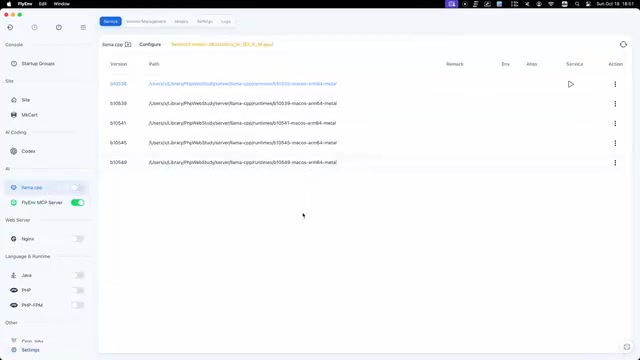
FlyEnv launches the official llama.cpp plugin with side-by-side Metal runtime management, public GGUF repository indexing with file type labels, and visual configuration of context, threads, and GPU layers—saving templates and speculative decoding with each model for one-click local LLM inference.
How Can Frontend Developers Advance into AI Agent Development? Deconstructing System-Level Agent Architecture from OpenClaw
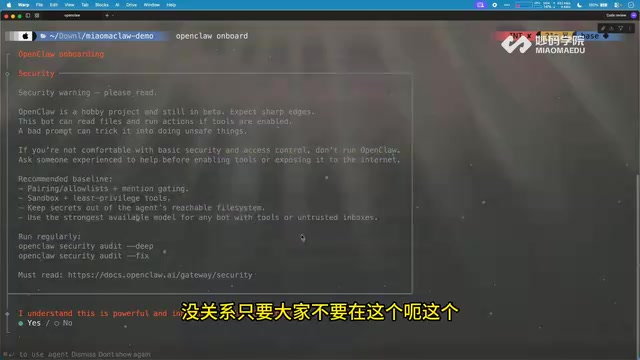
Starting from the OpenClaw demo in a Bilibili open class, this article breaks down the three-layer architecture and universal formula of system-level AI agents, and analyzes the path for frontend developers to enter agent development based on TypeScript, including plugin-based design and security/memory layer challenges, with an interview answer framework.
WorkBuddy in Action: How AI Agents Automate Batch File Conversion and Archiving
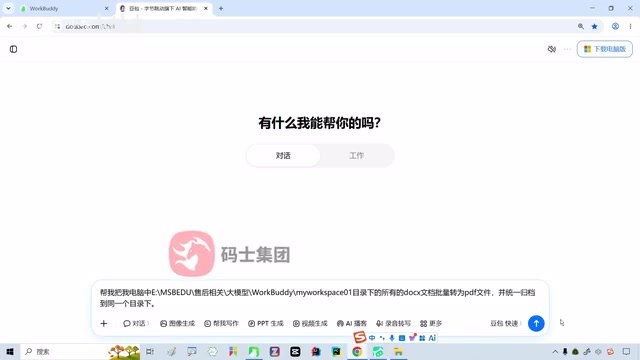
Bilibili creator Teacher Shanyao tests WorkBuddy vs. Doubao on batch file conversion, showing how AI Agents move from "giving solutions" to "direct execution," with a full workflow and credit cost reference.