Hands-On with the Open-Source Blue Big Fat Fish QQbot Voice Mod Plugin
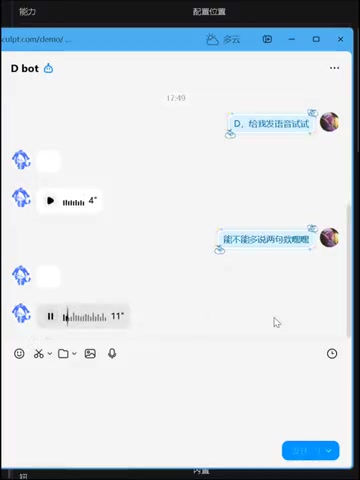
An open-source QQbot voice plugin uses TTS to make text bots speak and supports voice switching.
The "Blue Big Fat Fish QQbot Voice Mod Plugin" demoed on Bilibili is an open-source project that gives QQ bots TTS speech synthesis. The demo shows the bot speaking test lines in a machine voice and joking about itself, with the uploader repeatedly tuning the timbre, indicating configurable voice parameters. The article analyzes the likely technical path: synthesizing text replies into audio first, then sending them as voice messages, with voice switching relying on multi-speaker TTS models. The real engineering effort lies in modifying the message pipeline and handling audio format, duration, and frequency details. Open source enables forking, swapping TTS backends, or porting to other frameworks, though reuse value depends on code structure and interface abstraction. It concludes that whether synthesized speech "sounds right" is subjective, and voice plugins suit short sentences, reminders, and character lines.
When QQbot Starts to "Speak": A Voice Plugin Modding Experiment
An open-source project demo called "Blue Big Fat Fish QQbot Voice Mod Plugin" has appeared on Bilibili, where the uploader used a voice test to showcase the plugin's actual effects. Judging from the screenshots and audio content, this plugin gives a QQ bot that could previously only reply in text the ability to synthesize speech—it speaks in a machine-synthesized voice saying "Hey hey, testing testing, can you hear me talk," and even playfully remarks, "Anyway, it's machine-synthesized, so if you think it sounds weird, there's nothing to be done about it—just bear with it."
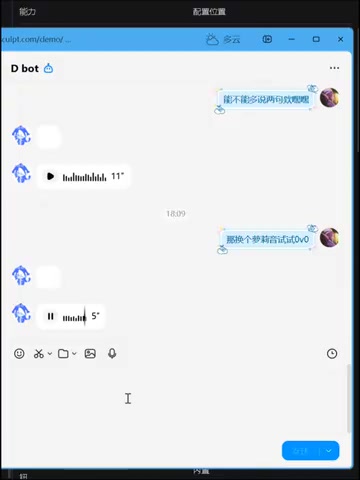
The fun of this demo lies in the fact that it doesn't package the voice feature as cold technical specs, but instead uses the bot's "self-deprecation" to present the real listening experience of synthesized speech. The uploader clearly went through multiple rounds of tuning the voice—from the initial default timbre, to "Voice switched—are you satisfied with me talking like this?" and then trying "This voice is a bit lower—does it sound like the real deal?" The whole process feels more like finding the right voice for a virtual character.
What Problem Does the Voice Plugin Actually Solve
The QQbot ecosystem has long been dominated by text interaction, and the lack of voice capabilities limits many scenarios. For example, group reminders, emotional expression for role-playing bots, and casual chat scenarios that need a sense of "auditory companionship"—pure text replies always feel thin. The value of this modded plugin is that it connects TTS (text-to-speech) capability into the bot's reply pipeline, turning the bot's output from "readable" to "listenable."
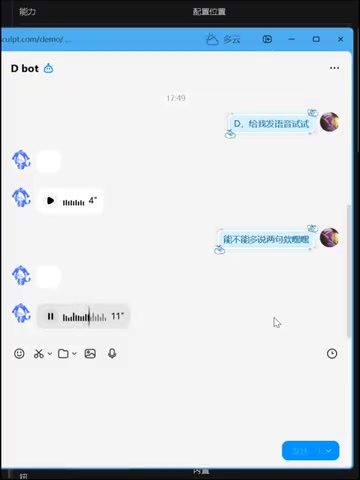
From the demo, the plugin supports voice switching, which means users can choose different timbres based on the bot's persona. For developers building character bots, this is a practical feature—having the same bot use different voices in different contexts can noticeably boost immersion. The uploader's repeated timbre adjustments during testing also indirectly show that voice parameters are configurable rather than a hardcoded single voice.
TTS (Text-to-Speech) is a technology that automatically converts input text into audible speech. Its core typically consists of three parts: a text frontend, an acoustic model, and a vocoder. The frontend handles tokenization, phonetic annotation, and prosody prediction; the acoustic model maps phoneme sequences to acoustic features; and the vocoder reconstructs the features into waveform audio. In recent years, deep learning-based end-to-end TTS (such as the VITS and Tacotron series) has significantly improved naturalness and generally supports multi-speaker modeling—that is, using speaker embeddings within a single model to distinguish different timbres. For applications like QQbot, the key value of TTS lies in the ability to batch-generate speech without real human recordings, but the trade-off is that prosody, breathing, and emotional details often fall short of real humans—which is also the main source of why synthesized voices sound "a bit weird."
Inferring the Technical Path of the Voice Mod
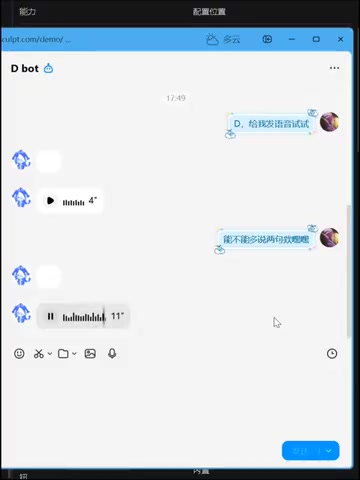
The original material does not disclose the plugin's specific implementation details, but reasonable inferences can be made from the word "mod" and the demo format. QQbot voice output typically has two paths: one is converting TTS-generated audio files into voice messages to send, and the other is real-time streaming through a voice call interface. In the demo, the bot speaks complete sentences rather than fragments, which is closer to the former—synthesizing audio first and then sending it as a voice message.
Voice switching most likely relies on the TTS engine's multi-timbre support. Most mainstream open-source TTS solutions on the market provide multi-speaker models, and the plugin layer only needs to map the timbre parameters in the bot configuration to the TTS interface. The real engineering effort lies in modifying the message pipeline: the trigger logic for text replies must also trigger speech synthesis, and details such as audio format, duration limits, and sending frequency must be handled.
QQbots typically rely on third-party protocol libraries to communicate with QQ servers, such as implementations based on the OneBot standard (e.g., NapCat, Lagrange). These frameworks encapsulate received messages as events and hand content to be sent over to the protocol endpoint for delivery. Voice messages in QQ are a separate message type: you must first upload the audio file to obtain a file identifier (file id), then send it as a voice segment, and there are restrictions on audio format (commonly silk or amr encoding) and duration. Therefore, a typical "mod plugin" approach is: intercept text replies at the message-sending stage, call TTS to obtain audio, transcode it, upload it, and send it as a voice message segment instead. Voice switching is usually achieved by mapping timbre names to the TTS service's speaker parameter via a configuration file, thereby changing the voice without altering the reply logic.
The Imagination Space Brought by Open Source
The title explicitly marks it as "open source," which is a positive signal for the QQbot developer community. Closed-source plugins are often limited by the author's maintenance pace, while open source means others can fork it, change voices, swap TTS backends, or even port it to other bot frameworks.
The value of a voice plugin is not just in "being able to make sound," but more in whether it can become reusable infrastructure. If the project's code structure is clear and the TTS interface is properly abstracted, it will be very easy for others to integrate their own voice models. Conversely, if it simply hardcodes a specific TTS service, the barrier to "modding" remains. The material does not show the code structure, so this requires actually checking the repository to judge.
"Modding" in the bot community usually refers to unofficial modifications on top of existing frameworks or plugins, and its sustainability depends heavily on the stability of upstream interfaces. Since QQ's official protocol for unofficial bots is not publicly stable, protocol libraries often need to be adjusted as client versions update. If a plugin is too deeply coupled with a specific protocol implementation, it is prone to break when versions change. The significance of open source here is not just code visibility, but also that the community can jointly track protocol changes, replace TTS backends, and abstract a unified voice-sending interface. When evaluating such projects, three points are worth focusing on: whether TTS calls are encapsulated as a replaceable adapter layer, whether configuration is externalized, and whether handling of audio format conversion and frequency limits is robust.
The Experience Boundaries and Trade-offs of Voice Bots
The uploader's remark in the demo—"feels a bit off"—actually points to the core challenge of voice bots: whether synthesized speech "sounds like the real deal" is a subjective feeling rather than a technical metric. No matter how clear the machine-synthesized voice is, when it lacks breathing, pauses, and emotional ups and downs, the listening experience still gives it away.
From a product experience perspective, voice plugins are suitable for short replies, reminder notifications, and fixed lines in role-playing; long-paragraph voice broadcasts tend to expose the synthetic feel. Developers need to find a balance between "the novelty that voice brings" and "the unnaturalness of synthesized speech," rather than forcibly converting all text replies into voice. This is also where such plugins most need restraint when being deployed.
Overall, this voice mod plugin demonstrates a feasible path toward voice-enabled QQbots, and its open-source nature makes its reuse potential worth anticipating. For developers who want to give their bots a "voice," it is a starting point worth watching.
One-line Summary
An open-source QQbot voice plugin uses TTS to make text bots speak and supports voice switching.
Paragraph Summary
The "Blue Big Fat Fish QQbot Voice Mod Plugin" demoed on Bilibili is an open-source project that gives QQ bots TTS speech synthesis. In the demo, the bot speaks test lines in a machine voice and jokes about itself, while the uploader repeatedly tunes the timbre, indicating voice parameters are configurable. The article analyzes its technical path: most likely synthesizing text replies into audio first and then sending them as voice messages, with voice switching relying on the TTS engine's multi-speaker model. The real engineering effort lies in modifying the message pipeline and handling audio format, duration, frequency, and other details. Its open-source nature allows forking, swapping TTS backends, or porting to other frameworks, but reuse value depends on code structure and interface abstraction. Finally, it notes that whether synthesized speech "sounds right" is a subjective experience, and voice plugins are better suited for short sentences, reminders, and character lines.
Related articles

No Coding Required: He Shipped an App Store App by 'Cutting Features' and Nitpicking with AI
A game designer with zero frontend/backend skills shipped a dual-platform App Store app with AI—not via one-click generation, but by cutting scope and nitpicking like a demanding client.
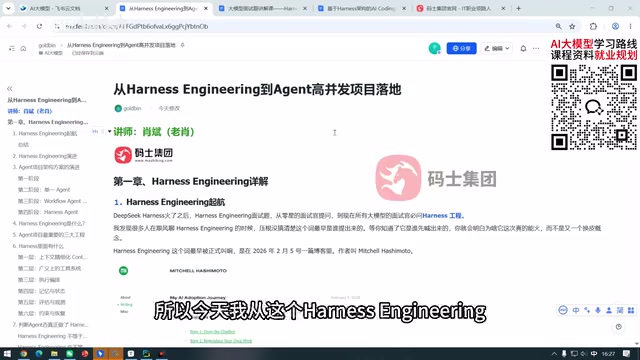
What Is Harness Engineering? From Concept Origins to Enterprise-Level Agent Implementation
What is Harness Engineering? This article traces the concept's origins and analyzes enterprise-level Agent requirements for tool call fault tolerance, data security, tenant isolation, and memory gaps.
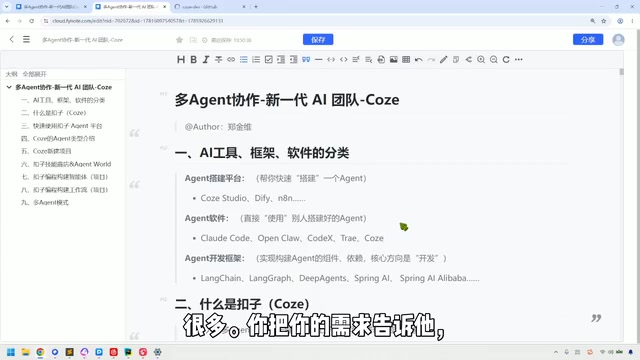
Coze in Practice: A Three-Tier Agent Classification and a Multi-Agent Collaboration Guide
A Bilibili tutorial breaks down the multi-agent collaboration toolchain into three categories: building platforms like Coze Studio and Dify, Agent software like Claude Code, and development frameworks like LangChain—plus a Coze demo of industry templates, three-platform interoperability, local Agent integration, and the trade-offs of credit consumption.