Happy Accidents in AI Image Generation: When Loss of Control Creates Better Work
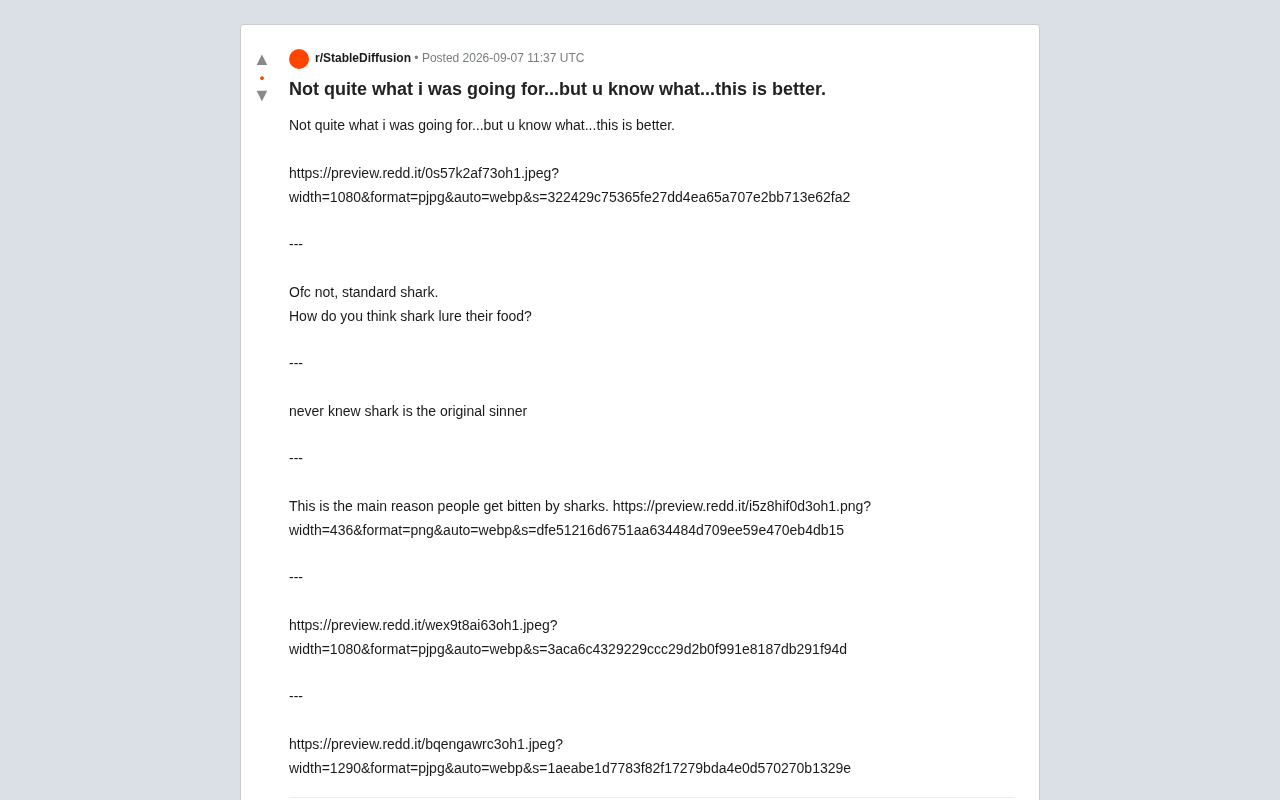
AI image generation's "happy accidents" reveal new creative paradigms in human-machine collaboration
AI image generation increasingly demonstrates a phenomenon where outputs deviate from user intent yet produce superior results. This reflects the inherent uncertainty in diffusion models and prompt engineering, where the gap between human intent and machine interpretation becomes a breeding ground for creativity. Successful creators embrace this unpredictability, shifting from precise control to collaborative exploration and developing aesthetic judgment as their core skill.
When AI Doesn't Work as You Expected
In the field of AI image generation, creators are increasingly discussing a common phenomenon: AI-generated results often don't match what users initially envisioned, yet sometimes these "deviations" bring unexpected delights. A Reddit user recently shared their creative experience with a blunt title—"Not exactly what I wanted... but you know what, this is actually better."
This statement precisely captures a nuanced experience in current generative AI creation: there's a gap between human intent and machine "understanding," and sometimes this gap becomes a breeding ground for creativity.
The Gap Between Intent and Results: Uncertainty in Prompt Engineering
Why AI Won't Completely "Obey"
When using text-to-image models, users describe their desired imagery through prompts. Prompt Engineering is an emerging discipline in AI generation, studying how to guide AI toward expected outputs through carefully designed text inputs. However, text-to-image conversion is fundamentally a semantic mapping problem—natural language has ambiguity and multiple meanings, while visual representation is concrete. For example, the description "a happy dog" can correspond to countless specific visual expressions: breed, posture, environment, lighting—none of these details are specified.
Whether it's Midjourney, Stable Diffusion, or DALL-E, model interpretations of prompts carry inherent randomness and unpredictability. These tools each have distinct characteristics in model architecture, training data, and controllability mechanisms, but all face the same fundamental challenge.
This uncertainty stems from how diffusion models work. Diffusion models are the mainstream technical architecture in current AI image generation, with core concepts originating from 2015 deep learning research, generating images by simulating physical diffusion processes. Specifically, models first learn to progressively add noise to a clear image until it becomes pure random noise (forward diffusion process), then train neural networks to reverse the operation—progressively recovering meaningful images from noise (reverse denoising process).
Models start from random noise and progressively "denoise" to generate images. Even with identical prompts, different random seeds produce vastly different results. The random seed is a key parameter controlling randomness in AI generation—the seed value determines the initial input for the pseudo-random number generator, and identical seeds produce identical random number sequences. In diffusion models, the seed determines the distribution pattern of initial noise, thereby affecting the trajectory of the entire denoising process. This means creators find it difficult to exercise precise control over final outputs.
Technically, when users input prompts, text encoding models like CLIP (Contrastive Language-Image Pre-training) encode text into high-dimensional vectors. CLIP is a breakthrough model released by OpenAI in 2021, trained on 400 million image-text pairs using contrastive learning methods, learning to map vision and language into the same semantic space. However, CLIP's "understanding" is essentially statistical association rather than true semantic comprehension—it identifies which visual features frequently co-occur with specific words in training data, leading the model to potentially capture associative patterns humans never consciously considered.
From "Flaw" to "Feature"
Interestingly, this loss of control isn't always negative. As the original poster expressed, while the AI's result deviated from the initial intent, it presented an unanticipated aesthetic or narrative quality. In the comments section, users engaged in lively secondary creation and playful discussion around details in the generated image, which itself demonstrates AI-generated content's potential to spark community interaction.
The Philosophy of "Happy Accidents" in AI Creation
From Precise Control to Open Collaboration
In traditional digital art creation, artists pursue precise control over every pixel. Traditional tools like Photoshop and 3D modeling software follow a "what you see is what you get" principle, where each operation produces predictable, deterministic results. AI-assisted creation introduces an entirely new workflow: creators become more like collaborators with a partner possessing "creativity" rather than simply using tools.
Generative AI marks a paradigm shift in digital creation from deterministic tools to probabilistic collaborators. AI generation tools introduce probabilistic behavior—identical inputs may produce different outputs, and the creative process becomes a journey exploring probability distribution spaces. This shift borrows from Computational Creativity concepts, viewing AI as an agent with a form of "creativity." The creator's role transforms from "executor" to "curator"—screening, combining, and refining among numerous candidate options generated by AI.
This transformation requires creators to adjust their mindset—rather than obsessing over precisely reproducing mental imagery, remain open and embrace the "happy accidents" AI brings. This concept isn't actually new; master painter Bob Ross famously said, "We don't make mistakes, just happy accidents." AI creation revitalizes this philosophy in digital form.
Iterative Creation: Going with the Flow or Precise Approximation
Facing unsatisfactory results, mature AI creators typically employ two strategies:
- Precise approximation: Continuously adjust prompts and modify parameters, regenerating to approach the initial vision. Fixing random seeds enables result reproducibility—highly useful when iteratively optimizing prompts. Some advanced tools also support control techniques like ControlNet, allowing users to precisely control composition through conditional inputs like edge maps and depth maps.
- Following through on accidents: Continue exploring and developing in the unexpected direction AI provides
The latter often catalyzes more original works because it breaks out of creators' inherent thinking frameworks, bringing entirely new visual possibilities.
Practical Insights for AI Creators
Redefining "Control" in Human-Machine Collaboration
This small Reddit share reflects a more macro issue: in the AI era, the relationship between creators and tools is being redefined. Control no longer means absolute dominance over every detail, but finding balance in human-machine collaboration—retaining creative intent while leaving space for machine "expression."
This requires new skill combinations: mastering both technical skills like prompt syntax and parameter adjustment, and artistic abilities like rapid aesthetic judgment and narrative construction. Different tools suit different creative scenarios—Midjourney excels at rapid artistic exploration, Stable Diffusion suits projects requiring deep customization, and DALL-E has advantages in safety control and text understanding precision.
Aesthetic Judgment Becomes Core Competitiveness
When AI can batch-generate numerous images, truly scarce ability becomes aesthetic judgment—identifying which "accidents" among many results are worth preserving and developing. This ability cannot be automated; rather, it becomes increasingly precious against the backdrop of widespread AI painting tools.
Finding Creative Balance Between Precision and Chance
"Not exactly what I wanted, but this is actually better"—behind this simple sentiment lies an epitome of how generative AI is reshaping creative work methods. For creators, learning to coexist with AI's uncertainty and transforming chance deviations into unique value may be one of the most important creative literacies of this era.
As AI model capabilities continue improving and controllability strengthens, the future challenge may no longer be making AI obey, but rather finding one's own creative balance between precise control and creative chance.
Related articles
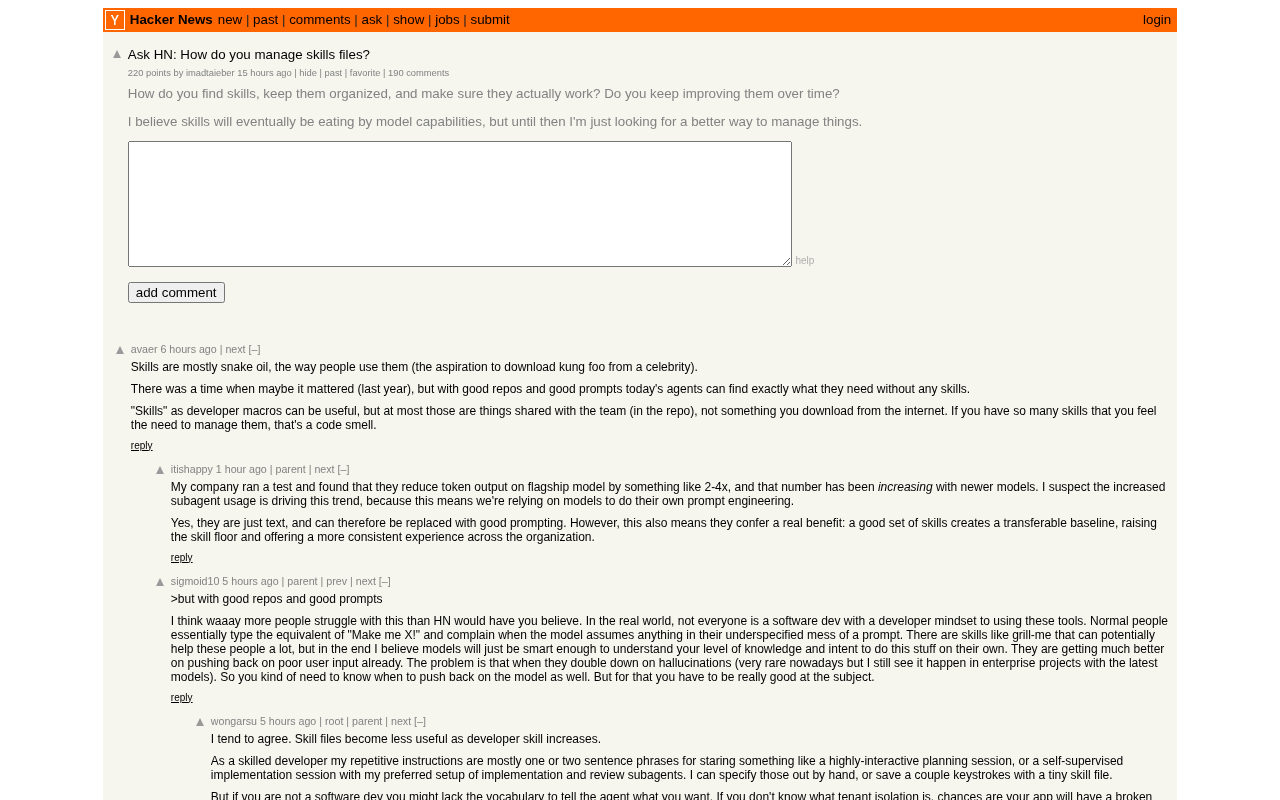
AI Skills File Management: Engineering Challenges and Solutions for Developers
Explore the engineering challenges of managing skills files in AI development, including discovery, organization, validation, and continuous optimization practices.
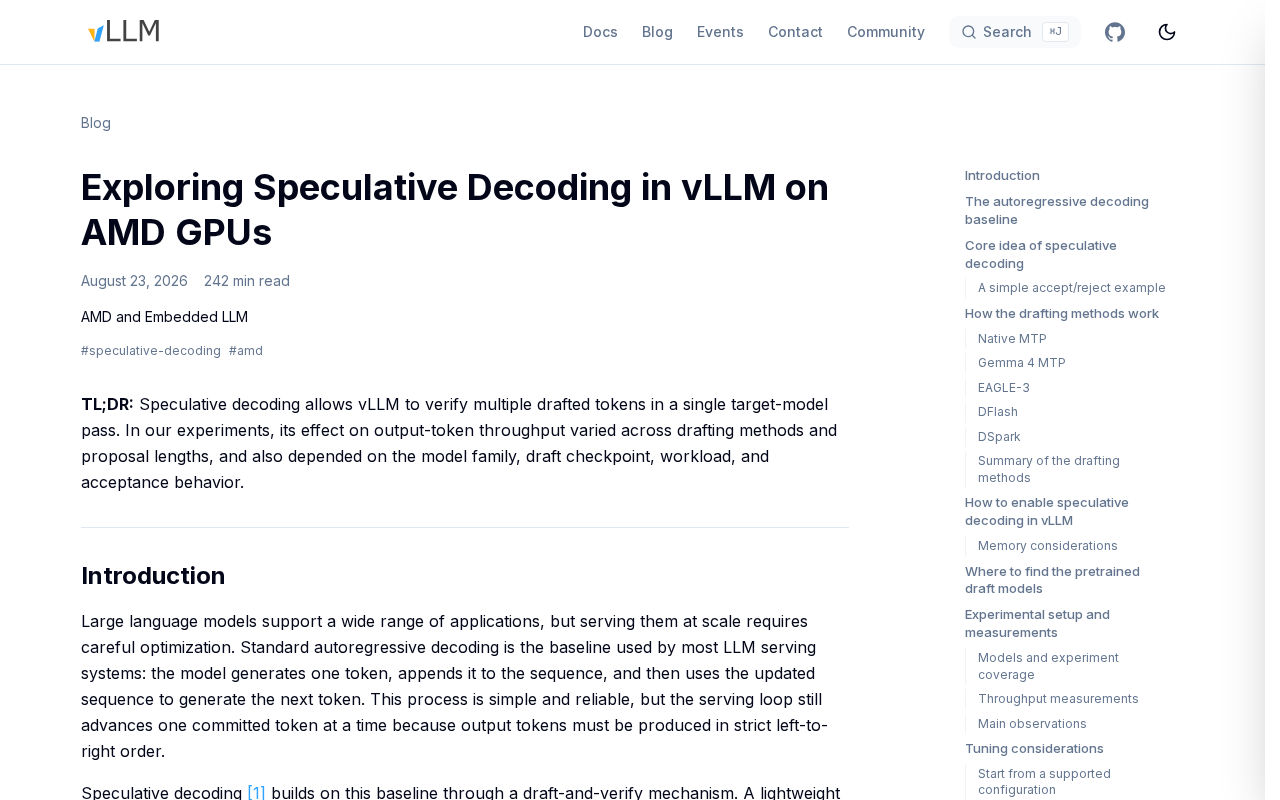
vLLM Speculative Decoding Lands on AMD GPUs: Inference Acceleration and an Ecosystem Breakthrough
vLLM brings Speculative Decoding to AMD GPUs, achieving 1.5–3× inference speedups via draft-model prediction and target-model verification. A deep dive into ROCm adaptation and its impact on AI ecosystem diversification.

AdCar Deep Dive: The Cross-Platform Marketing Innovation Combining Car Wraps, YouTube, and X
AdCar integrates car wrap advertising, YouTube, and X into a composite ad placement, offering low-cost, high-exposure creative marketing for SMBs and indie developers. An analysis of its product logic, micro-influencer economics, and scaling challenges.