Harness Architecture Explained: A New Paradigm for AI Agent Development
Harness architecture is an engineering design philosophy for building stable, controllable AI agents at scale.
Harness architecture is a hot concept in AI agent development — not a specific technology or framework, but a design philosophy. It splits agents into two layers: LLM (the reasoning engine) and Harness (the orchestration layer that handles scheduling, execution, error correction, and recovery). It rose to prominence through products like Claude Code and the community's Python rewrite of its leaked source code. Representing the latest stage in the evolution from prompt engineering to context engineering to Harness, it integrates all prior capabilities and excels in complex, multi-source enterprise scenarios.
What Is Harness Architecture
Harness architecture has been frequently mentioned in AI agent development circles lately, but it's often misunderstood. One key point needs to be clarified upfront: Harness is neither a specific technology nor a framework — it's an architectural approach and design philosophy for building AI agents. Its core goal is to "rein in" agent behavior, keeping it stable, correctable, and recoverable in complex tasks.
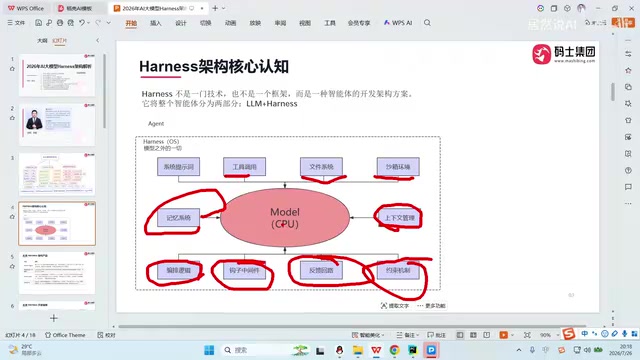
This architecture splits an agent into two layers: Harness + LLM. If you think of an agent as a computer, the LLM is the CPU responsible for reasoning, while everything else can be thought of as peripherals — and Harness is the operating system, responsible for scheduling, execution, error correction, and recovery. This analogy is simple but precisely captures the division of responsibilities: the model handles inference, and Harness provides the engineering infrastructure to keep everything running reliably.
In practice, a complete Harness architecture typically includes: a system prompt, tool calling, a file system and sandbox environment (which are closely related), context management with an accompanying memory system, agent orchestration logic, hooks and middleware, feedback loops, and constraint mechanisms. It may sound like a lot of components, but the underlying idea isn't complicated: when building an agent, try to include all of these capabilities and organize your codebase accordingly — splitting the project into clear directories and functional modules rather than cramming all the logic into two or three classes. That's essentially what it means to follow the Harness architecture approach.
Why Harness Architecture Has Taken Off
The first reason Harness architecture became popular is straightforward: nearly all of the mainstream, well-performing agent products use it. Whether it's coding tools like Claude Code, Codex, or a wave of new general-purpose agents, the underlying design philosophy consistently points back to Harness.
According to the content creator, the origin of this architecture's spread is somewhat dramatic — it traces back to the Claude Code source code leak. After the leak, the community rewrote it in Python and shared it widely on GitHub. Developers quickly discovered that when building a web coding tool, using the Harness architecture made agents noticeably "smarter" and capable of solving significantly more complex programming challenges. That real-world product validation is the practical foundation for Harness architecture's widespread adoption.
The second reason is its ability to tackle complex problems. Simple tasks — like "What's the weather tomorrow?" or "Open a file for me" — can be handled in a single exchange and don't need Harness architecture at all. Its real value emerges in industrial-grade, complex scenarios.
Why Complex Problems Require Harness
The video uses a fitting example: imagine building an agent for BYD's procurement department, with the task of comparing two parts and generating a procurement analysis. What seems like a routine task actually involves multiple layers of complexity.
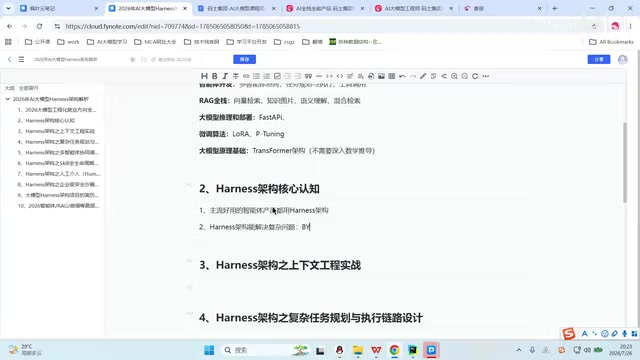
Specifically, this kind of task inevitably involves multiple data sources, multiple analytical dimensions, and multiple output formats. The agent needs to pull data from different sources, run comparisons across multiple dimensions, and deliver results in different formats. This multi-step, multi-stage orchestration requirement is exactly what can't be handled by simple prompts or basic API calls alone — it requires Harness architecture to coordinate and schedule everything.
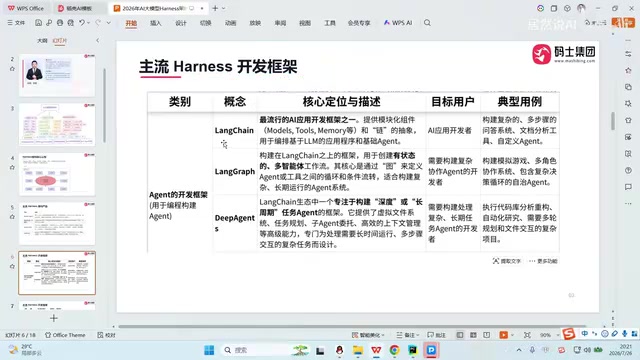
In terms of framework selection, the author focuses specifically on the Python ecosystem, noting that Python is currently the mainstream choice for enterprise-grade agent development, while languages like Java feel either outdated or too limited in this space. Frameworks mentioned include LangChain, LangGraph, and Deep Agents — described as closely aligned with the Harness architecture philosophy.
The Evolution from Prompt Engineering to Harness
Understanding Harness architecture requires seeing it in the context of how agent development has evolved. The author outlines a clear technical progression:
- Prompt Engineering phase: Getting the LLM to understand what you want by carefully crafting and breaking down prompts. This quickly hit a wall — prompts that were too long would exceed the model's context window.
- Context Engineering phase: The core idea is providing the model with the right context at the right time. Like a conversation where you can't monologue for an hour straight, this means multi-turn dialogue and feeding information gradually. RAG (Retrieval-Augmented Generation) is the classic example of context engineering in practice, involving techniques like context summarization and context pruning.
- Harness Architecture phase: Addresses how to run models in a persistent, continuous, observable, correctable, and recoverable manner.
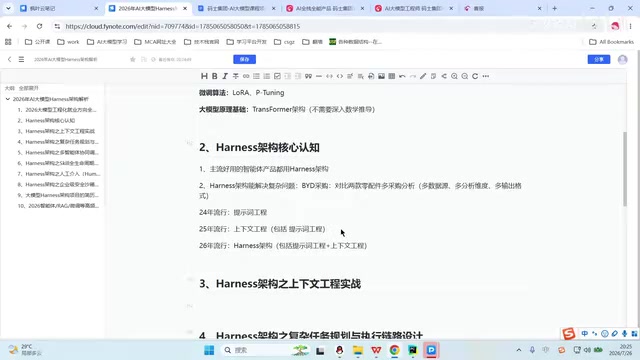
These three stages form a layered, cumulative relationship: context engineering builds on top of prompt engineering, and Harness architecture integrates the capabilities of both. For this reason, the author offers a direct recommendation: just learn Harness architecture now, because it already incorporates everything from the earlier stages — there's no need to start from prompt engineering or context engineering separately.
RAG (Retrieval-Augmented Generation) is the defining technique of the context engineering phase. The core idea is: instead of stuffing all knowledge into prompts or model weights, dynamically retrieve relevant information from an external knowledge base at inference time and inject those relevant passages into the context before passing it to the model. This sidesteps context length limitations and also reduces model "hallucination" (where the model fabricates answers to questions it doesn't actually know). The typical implementation involves chunking documents, vectorizing them into a vector database, and using semantic similarity at query time to retrieve the most relevant passages. Context summarization (compressing and distilling conversation history) and context pruning (discarding low-relevance content) further control the number of tokens sent to the model, making long multi-turn conversations viable. Harness architecture takes this a step further by encapsulating these retrieval and management capabilities as schedulable modules, allowing the agent to trigger retrieval on demand during task execution — rather than requiring developers to manually assemble context each time.
Clarifying Related Concepts
Terminology in the LLM space is easy to mix up. The author takes time to clarify these concepts — useful whether you're writing a resume or making technical decisions:
- Tools / Platforms: Such as Dify — drag-and-drop, visual, low-code tools well-suited for prototyping. N8N and Coze fall into this category too; think of them as AI/LLM tool platforms.
- General-purpose agents: Such as Claude Code and similar web coding tools — these are application software, essentially a single agent product you can use directly.
- Frameworks: Such as LangChain and LangGraph in the Python ecosystem, Spring AI in the Java ecosystem, and Deep Agents — which closely embodies the Harness architecture philosophy and is described as more of a code convention or standard.
Distinguishing these terms clearly is the first step to avoiding conceptual confusion. For developers new to the LLM space, building a clear mental model of "architecture / tool platform / general-purpose agent / development framework" before diving into Harness architecture will save a lot of wrong turns.
LangChain and LangGraph are the two most mainstream agent development frameworks in the Python ecosystem today. They're closely related but serve different purposes. LangChain provides foundational abstractions for chained calls, tool integration, and memory management — well-suited for quickly building single-turn or simple multi-step agent workflows. LangGraph builds on LangChain by introducing directed graph (DAG/cyclic graph) structures, allowing developers to model an agent's execution flow as nodes and edges, with support for conditional branching, retry loops, and multi-agent collaboration — making it better suited for complex task orchestration. Deep Agents is described by the author as "highly aligned with the Harness architecture philosophy" and "more like a set of code conventions." Its design principles closely match Harness's modular layering approach, making it a valuable reference for developers who want to organize their project directories and functional modules according to Harness architecture. A practical rule of thumb for choosing: use low-code platforms (Dify/Coze) for prototyping, and use frameworks (LangGraph/Deep Agents) for production engineering — the two aren't mutually exclusive.
Related articles
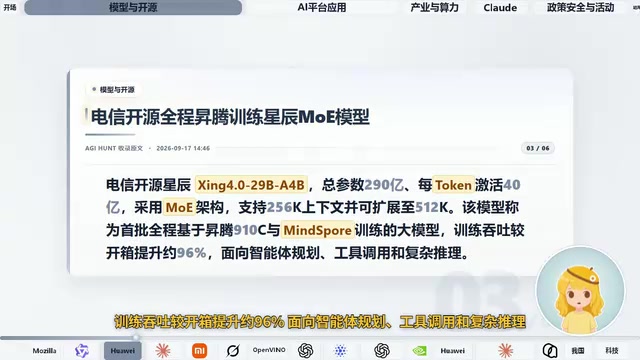
AI Daily Briefing: Qwen3-Omni Full-Modality Model Launches, Huawei Ascend 960 and Grok's New Model Surface
AI Daily: Qwen3-Omni Flash launches with full-modality support and 93% cost cuts; Huawei unveils million-processor AI architecture; Ascend 960 rumored; Grok spotted on GCP; N8N hits CVSS 10 vulnerability.
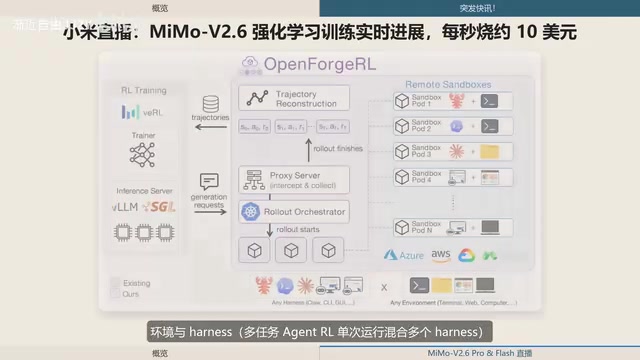
Xiaomi MiMo-V2.6 Live Training: ¥8.55M Spent in One and a Half Days, ~$10 per Second
Xiaomi's MiMo team live-streams MiMo V2.6 Pro/Flash RL training, spending ¥8.55M (~$1.28M) in 1.5 days — ~$10/sec. Covers compute scaling, open-source plans, and DeepSWE benchmarks.
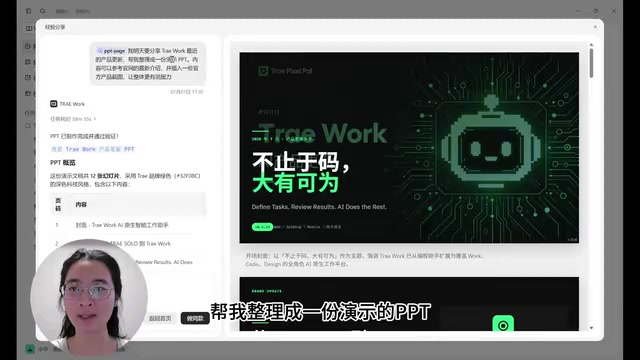
ByteDance Trae Work Getting Started Guide: 11 Use Cases Explained
A hands-on guide to ByteDance's Trae Work AI agent — covering Work, Code, and Design sections across 11 use cases including PPT generation, data analysis, coding, and more.