Harness Engineering: Core Methodology and Practical Guide for Enterprise-Level AI Programming

Harness Engineering: the methodology professional programmers need to master enterprise-level AI coding.
This article debunks the myth that AI will replace programmers by examining why AI coding tools fail at enterprise-scale projects. It identifies four key pain points — code quality degradation, context limitations, token costs, and stubborn bugs — then introduces Harness Engineering as the systematic methodology combining prompt engineering, context engineering, tool calling, and workflow orchestration to make AI programming reliable, maintainable, and cost-effective for complex business systems.
Don't Be Misled by Claims That "AI Will Replace Programmers"
Recently, the internet has been flooded with rhetoric like: "I have zero technical knowledge, but I can build all sorts of projects using Claude Code, Codex, or Cursor — programmers are going to be obsolete." As technology professionals, we need to have basic discernment.
Claude Code, Codex, and Cursor represent three typical forms of current AI programming tools: Claude Code is Anthropic's terminal-native programming agent that can directly manipulate file systems and execute commands; Codex is OpenAI's early model specifically trained for code generation, which laid the technical foundation for AI programming; and Cursor is currently the most popular AI-enhanced IDE among professional developers, deeply embedding LLM capabilities into the code editor workflow. These three types of tools perform impressively in single-file or small project scenarios, but their limitations escalate dramatically as project scale grows.
If you look closely at the projects that "non-technical beginners" have built with AI programming tools, you'll find they're almost all the same type: a simple static webpage, a wrapper tool, a digital utility, or a small game — uniformly demo-level, small-scale projects.
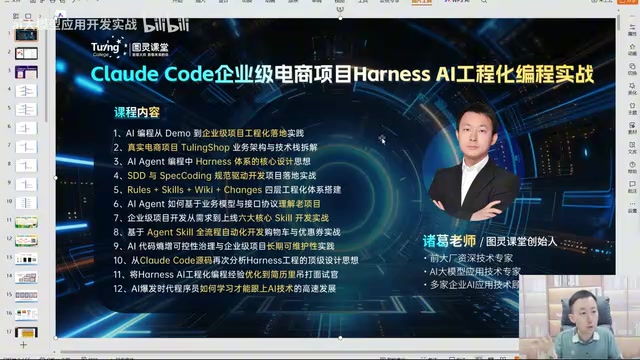
For truly complex large-scale business projects — high-concurrency microservice architectures at major tech companies, distributed systems, massive data processing — you'll find virtually zero cases where someone with no technical background independently completed them using AI tools.
There are profound technical reasons behind this. An order-of-magnitude complexity gap exists between large-scale internet systems and small demos. An e-commerce system with tens of millions of daily active users needs to consider distributed lock strategies for inventory overselling, queue-based peak shaving for flash sales, data synchronization latency tolerance across data centers, plus deep technical decisions around service governance, circuit breaking, rate limiting, distributed transactions, and CAP theorem trade-offs.
Behind these concepts lies decades of engineering wisdom accumulated through real-world production failures. Take the CAP theorem as an example: proposed by computer scientist Eric Brewer in 2000, it states that no distributed system can simultaneously guarantee Consistency, Availability, and Partition Tolerance. Every technology choice reflects a deep understanding of business scenarios — for instance, e-commerce order placement prioritizes consistency (choosing a CP system, like strongly consistent storage coordinated by ZooKeeper), while product browsing can tolerate brief data inconsistency in exchange for higher availability (choosing an AP system, like eventually consistent DNS or CDN caching). Circuit breaking and rate limiting involve sliding window algorithms and thread isolation models behind frameworks like Hystrix and Sentinel; distributed transactions require trade-offs among 2PC (two-phase commit — strong consistency but poor performance), TCC (Try-Confirm-Cancel — high business intrusiveness but flexible), and Saga (long transaction compensation — suitable for loosely coupled microservice scenarios), each chosen based on business fault-tolerance boundaries.
It's worth noting that these distributed system challenges don't exist in isolation — they're mutually coupled and constrain each other. Take "flash sales" as a typical scenario: queue-based peak shaving (using message queues like Kafka or RocketMQ to smooth burst traffic into a steady flow the backend can handle) solves the traffic surge problem but immediately introduces transaction consistency challenges from asynchronous processing; distributed locks (based on Redis's RedLock algorithm or ZooKeeper's ephemeral node mechanism) protect inventory data atomicity but face edge cases of lock release failure during network partitions; circuit breaking (automatically engaging when downstream service error rates exceed thresholds, cutting the call chain to prevent cascading failures) protects overall system availability but needs to work with Saga compensating transactions to ensure eventual data consistency. Each detail is a knowledge-intensive engineering judgment requiring years of production environment experience — far beyond what AI-generated code snippets can cover.
The logic is simple: if this were truly achievable, why wouldn't major tech companies just fire all their programmers? They could have product managers — who understand requirements best — write requirement documents and hand them directly to AI for development. The fact that this hasn't happened in reality speaks to the essence of the issue.
What Kind of Programmers Will Survive the AI Wave
Yes, AI has indeed disrupted various industries in recent years, and layoffs have been widespread. But since ChatGPT first appeared, one judgment has consistently held true:
The people who will survive are mid-to-senior-level professionals in every industry who are both deeply skilled in their domain and highly proficient with AI tools.

AI cannot fully replace humans. Every industry will ultimately retain those who possess both high-level professional expertise and proficient AI application skills. Such individuals will have no need to worry about employment for a considerable time to come.
Rather than being consumed by anxiety, it's far better to invest your energy in deepening your technical expertise and AI engineering capabilities — that's the direction truly worth pursuing.
The Four Real Pain Points of AI Programming
Many programmers encounter these headache-inducing problems when actually using AI programming tools:
Code Gradually Spirals Out of Control, Becoming a "Code Mess"
When you let AI continuously write code, you'll eventually find the entire project becomes increasingly difficult to maintain, ultimately devolving into an unreadable "code mess" that completely loses maintainability. This phenomenon is known in software engineering as rapid accumulation of "Technical Debt."
The concept of technical debt was first introduced by software engineering pioneer Ward Cunningham in 1992, borrowing the financial debt metaphor to describe the long-term costs accumulated by sacrificing code quality for short-term delivery speed. Just as financial debt accrues interest, technical debt also "compounds" — every new feature built on top of poor code further increases the cost of future modifications. AI-generated code accelerates this process at an alarming rate: models inherently have tension between local optimization (making the current feature work) and global consistency (maintaining overall architectural intent). Each piece of generated code may be semantically correct but lacks awareness of overall architectural intent, resulting in high module coupling, inconsistent naming, duplicated logic scattered throughout, and modification costs that grow exponentially with each subsequent change.
Technical debt in engineering practice is typically categorized into four quadrants: reckless deliberate debt (knowingly taking shortcuts), prudent deliberate debt (consciously trading off "ship fast now, refactor later"), reckless inadvertent debt (unintentional debt from insufficient team capability), and prudent inadvertent debt (when former best practices become debt as technology evolves). AI-generated code primarily creates the first three types: it neither understands the trade-off intentions behind business delivery pressure, nor perceives team architectural conventions, nor anticipates future technical evolution. Research shows that software maintenance costs typically account for 60%–80% of total development costs, making rapid technical debt accumulation a direct threat to a project's long-term viability.
Insufficient Context Causing "Amnesia" and Hallucinations
Context Window is the maximum number of tokens a large language model can process in a single call, currently ranging from tens of thousands to millions of tokens across mainstream models. For AI programming, this limitation is critical: a mid-sized enterprise project codebase might contain hundreds of thousands of lines of code across hundreds of files, far exceeding any model's single-pass perception range. When AI modifies a particular module, it cannot simultaneously "see" the full picture of the system — it doesn't know how a certain interface is called by ten downstream services, nor does it understand the historical baggage behind a field that spans three years of iterations.
Notably, even models with million-token context windows (like Gemini 1.5 Pro) face the problem of "long-context attention dilution" — the model's attention to information in the middle of the window is significantly lower than at the beginning and end. This phenomenon was systematically documented by Stanford researchers Nelson Liu et al. in their 2023 paper, termed the "Lost in the Middle" effect. Experiments showed that when critical information is placed in the middle of a long context, model performance degrades significantly, even though this information technically falls within its processing window.
The underlying cause of this phenomenon is closely related to the attention mechanism of the Transformer architecture. Self-Attention has computational complexity that scales quadratically with sequence length (O(n²)), meaning that as context length increases, maintaining high-quality attention to distant tokens becomes computationally prohibitive. Although model providers have mitigated this through positional encoding improvements (such as RoPE — Rotary Position Embedding, ALiBi — Attention with Linear Biases) and sparse attention mechanisms, "attention dilution" in ultra-long context scenarios remains an incompletely solved engineering challenge. This "local vision" is the fundamental reason AI produces hallucinations and introduces hidden bugs — when lacking complete context, models tend to "fill in" missing information, and these fabricated details are often presented in highly convincing ways that are difficult to quickly identify. This is also the core challenge that Context Engineering and Harness Engineering aim to systematically address.
Excessive Token Consumption and Persistently High Costs
Tokens are the basic unit of measurement for text processing in large language models, roughly corresponding to 0.75 English words or about 1.5 Chinese characters. The tokenization process is performed by a tokenizer, with different models using different tokenization strategies — the GPT series uses BPE (Byte Pair Encoding), an unsupervised algorithm that starts at the character level and iteratively merges high-frequency byte pairs to build a vocabulary, introduced to NLP by Sennrich et al. in 2016; some Chinese-optimized models have specialized optimizations for Chinese characters, achieving higher Chinese token efficiency.
Token consumption in AI programming scenarios is extremely high because each call requires not only the current instruction but also substantial context: existing code files, error logs, conversation history, system prompts, and more. With mainstream models, the full context for processing a moderately complex feature can consume over 100,000 tokens, translating to costs of tens of yuan (several dollars) — directly impacting the commercial viability of AI programming. For a slightly complex feature, tens of yuan can vanish in an instant.
Token economics has thus become an important consideration in enterprise AI programming engineering. It's worth noting that token costs are not evenly distributed — input tokens (Prompt Tokens) and output tokens (Completion Tokens) typically use different pricing, and the repeated transmission of historical messages in multi-turn conversations causes costs to accumulate linearly with conversation depth. To address this, major model providers have successively introduced KV Cache (Key-Value Cache) mechanisms: by caching attention key-value pairs from historical conversations, they avoid recalculating prefix context with each new request, potentially reducing multi-turn conversation inference costs by 30%–70%. The value of context compression, intelligent trimming, incremental updates, and other technical approaches lies not just in performance but is directly reflected on financial statements — this is an engineering economics dimension that enterprises cannot ignore when selecting AI programming solutions.
Stubborn Bugs That Refuse to Be Fixed
Some problems just can't be resolved no matter how much the AI tool tries. For beginners, the project often gets permanently stuck at this point. But technically skilled programmers can tackle these challenges through multi-round interactions, supplementing context, and providing precise guidance to collaboratively solve problems with AI — this is precisely the core dividing line between professional programmers and beginners.
The reason stubborn bugs are so difficult for AI to automatically fix fundamentally stems from the systematic reasoning ability that debugging requires: reverse-engineering root causes from symptoms, understanding the interplay of multi-dimensional information including call stacks, runtime state, and concurrency timing. In this process, AI plays the role of "advisor" rather than "decision-maker" — it can quickly provide hypotheses, but the judgment to validate hypotheses, narrow the search space, and understand business constraints still relies on the engineer's professional intuition.
Experienced engineers follow a "hypothesis-validate-eliminate" scientific methodology when debugging: forming initial hypotheses based on error symptoms, isolating variables through Minimal Reproducible Examples, using binary search to locate problem boundaries, and ultimately pinpointing root causes. This process is highly dependent on understanding the full system picture — knowing which modules might affect each other, which boundary conditions have historically caused issues, and which third-party dependencies have known defects. Professional programmers can construct a "crime scene for the bug" like detectives, providing AI with precise contextual clues (relevant code snippets, error stacks, reproduction steps, already-eliminated hypotheses). This collaboration model is far more efficient than blindly letting AI "guess" the problem.
It's worth mentioning that the Harness Engineering methodology introduced in this article can systematically address the vast majority of the problems described above.
What Is Harness Engineering
The English word "Harness" literally translates to equipment used on horses — the gear used to control and direct them. Hence, Harness is also called "Control Engineering" or "Harness Engineering."
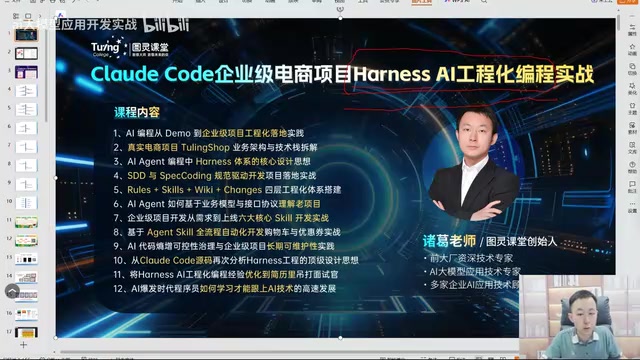
Here's an intuitive metaphor:
- A Large Language Model (LLM) is like a powerful, spirited horse — incredibly capable, but requiring precise control to deliver value.
- Harness is the gear needed to control that horse — including prompts, toolchains, context management, etc., helping you precisely direct it to turn left, turn right, or charge full speed ahead.
Expressed as a concise formula:
Harness + Large Language Model (LLM) = Agent
Harness combined with an LLM, precisely directed by humans, constitutes an AI agent capable of completing more complex tasks.
At the technical level, the core components of Harness Engineering include: Tool Calling / Function Calling, which allows LLMs to trigger external APIs, database queries, code execution, and other operations — essentially upgrading the model from a "language generator" to an "action executor"; Workflow Orchestration, which defines multi-step task execution order and branching logic through DAGs (Directed Acyclic Graphs) or state machines, where the DAG structure ensures clear task dependencies without circular deadlocks; State Management, which maintains task progress and context consistency across conversation turns and cross-Agent collaboration, addressing the fundamental limitation of single-call statelessness; and Agent communication protocols, such as Anthropic's MCP (Model Context Protocol) standard, which is becoming the foundational specification for industry interoperability through standardized tool description formats and calling interfaces — similar to the role HTTP plays in the Web ecosystem.
The core philosophy of Harness is closely aligned with "Inversion of Control" (IoC) and "Dependency Injection" (DI) concepts in software engineering — treating the LLM as a powerful component that needs to be orchestrated, rather than an omnipotent black box. This mirrors how the Spring framework strips the creation and management of Java objects from business code and delegates it to a container for unified scheduling. Frameworks like LangChain, LlamaIndex, and AutoGen are early engineering implementations of this philosophy: LangChain provides standardized abstractions for chained calls and tool integration, LlamaIndex focuses on engineering optimization for knowledge base indexing and retrieval, and AutoGen explores conversational frameworks for multi-Agent collaboration.
Worth exploring in depth is the critical importance of Observability design in Harness engineering, which inherits from but extends beyond traditional software engineering monitoring concepts. Traditional systems use the three pillars of Logs, Metrics, and Traces to understand system behavior, while AI systems additionally require prompt version management (tracking how different prompt versions affect output quality), token consumption auditing (fine-grained cost source tracking), and hallucination detection rates (quantifying the trustworthiness of model outputs) — AI-specific observability dimensions. Platforms like LangSmith, Langfuse, and Phoenix, designed specifically for LLM application observability, are rapidly emerging to fill the blind spots of traditional APM tools in AI scenarios. Harness Engineering further emphasizes engineering rigor and observability on this foundation, systematically introducing software engineering principles of modularity and testability into AI application development, enabling the powerful capabilities of LLMs to be harnessed precisely and reproducibly.
Currently, truly large-scale enterprise deployments of Harness remain relatively rare, with many companies still in the exploration phase. However, some enterprises have already successfully applied it to complex business scenarios like e-commerce, with notable results.
The Three Evolutionary Stages of AI-Assisted Development
Looking back at the development trajectory of AI-assisted development, three clear evolutionary stages emerge:
Stage 1: Prompt Engineering
When ChatGPT first appeared, the hottest concept was "Prompt Engineering." The core focus was studying how to clearly communicate problems to the LLM, using simple question-and-answer interactions. The underlying assumption: as long as the question is asked clearly enough, the model will provide high-quality answers. This stage produced several classic techniques: Chain-of-Thought prompting improves accuracy on complex problems by guiding the model to reason step by step, systematically validated by Wei et al. at Google Brain in their 2022 paper; Few-shot Prompting activates the model's in-context learning capability by providing a few examples in the prompt, one of the most important discoveries in the GPT-3 paper; and Role Prompting constrains output style and professional depth by assigning the model a specific identity.
The essence of Prompt Engineering is the external guidance of the model's implicit reasoning pathways — using natural language to constrain the conditional probability distribution as the model generates each token, focusing the model's general capabilities onto specific task domains. More advanced techniques like Tree-of-Thought allow models to simultaneously explore multiple reasoning paths with self-evaluation, Self-Consistency improves answer reliability through multiple sampling with majority voting, and ReAct (Reasoning + Acting) fuses chain-of-thought with tool calling, enabling models to dynamically acquire external information during reasoning. The evolution of these techniques clearly foreshadowed the intrinsic driving force behind the leap from Prompt Engineering to Context Engineering, and then to Harness Engineering: pure linguistic guidance quickly hits its ceiling when facing complex multi-step tasks.
Stage 2: Context Engineering
As problems grew increasingly complex, prompts alone became insufficient, and "Context Engineering" emerged. This transition marked an upgrade from "single-turn Q&A" to "continuous state management" in AI applications, focusing on how to systematically inject task-relevant structured information into the model — including conversation history, external documents, tool call results, user profiles, domain constraints, and more.
This is also the underlying driving force behind the flourishing of technologies like RAG (Retrieval-Augmented Generation), Memory mechanisms, and Few-shot example libraries. RAG was proposed by Facebook AI Research in their 2020 paper, storing external knowledge bases as vectors (using vector databases like FAISS, Pinecone, or Weaviate) and dynamically retrieving the most relevant document fragments to inject into context during inference. Essentially, it substitutes retrieval for memorization — bypassing the timeliness limitations (training data cutoff dates) and capacity constraints (knowledge upper bounds determined by parameter count) of model parametric knowledge. Memory mechanisms, through a layered design of short-term memory (sliding window conversation history), long-term memory (cross-session information persisted in vector databases), and entity memory (user states and business objects stored in structured JSON), endow Agents with cross-session continuity, giving AI systems true "memory" capability for the first time, rather than starting from scratch with every conversation.
The engineering challenges of RAG lie not only in retrieval accuracy but in the deep integration of retrieval results with the generation process. Early RAG adopted a naive "retrieve-and-concatenate" pattern (Naive RAG), directly appending retrieval results to the prompt prefix; Advanced RAG introduced Query Rewriting, hybrid retrieval (fusion of dense vector retrieval + sparse BM25 retrieval), and Reranking mechanisms; the latest Modular RAG and Graph RAG further incorporate knowledge graph reasoning, enabling retrieval systems to understand complex relationships between entities rather than staying at the text similarity level. These technical evolutions directly influence how AI programming tools leverage codebase history and technical documentation to assist code generation. For example: if you simply tell AI "write a technical article imitating a certain style," it will likely do a poor job because it lacks sufficient context — your writing style samples, compositional habits, professional domain background, etc. Context Engineering is about systematically providing the model with this information so the output truly meets expectations.
Stage 3: Harness Engineering
Building on Prompt Engineering and Context Engineering, Harness further introduces tool calling, workflow orchestration, state management, and other capabilities to form a complete engineering system, enabling AI to truly handle enterprise-level complex development tasks. The core value of this stage lies in deeply fusing software engineering rigor with LLM generative capabilities — context compression, intelligent trimming, incremental updates, and other technical approaches directly translate into engineering economic benefits, taking AI programming from "usable" to the enterprise-grade standard of "reliable, maintainable, and cost-quantifiable."
The evolution across these three stages essentially reflects the escalating trajectory of AI application complexity: from "how to ask" (Prompt Engineering) to "what information to provide" (Context Engineering) to "how to systematically organize AI to complete multi-step complex tasks" (Harness Engineering). Each leap is accompanied by an order-of-magnitude increase in engineering complexity, reinforcing the irreplaceability of professional engineers.

Learn Through Real Projects, Not Theoretical Overload
Much of the online content about Harness is concept-heavy, listing piles of theory. The truly effective way to learn is through enterprise-level real-world projects — for instance, selecting a familiar e-commerce business scenario, diving straight into code, and learning by doing.
For technical professionals, reading code and writing hands-on will always be easier to master than listening to lengthy theory. Once you actually start using it in practice, those once-obscure Harness theoretical concepts will naturally become clear and intuitive.
The conclusion is clear: enterprise-level AI programming is absolutely not a domain that non-technical beginners can handle. It requires solid technical foundations combined with engineering methodologies like Harness to truly unleash AI's "10x efficiency" potential. And this is precisely the core competitive advantage that professional programmers hold in the AI era.
Related articles

Building an AI Sci-Fi Short with LTX + MiniMax H3: Restrained Cinematography in ComfyUI
Sci-fi short REMAINDER uses LTX, MiniMax H3, and ComfyUI with restrained cinematography and flat aesthetics to solve visual consistency in AI filmmaking.

LangChain Deep Agents vs. MDA: Clearing Up the Confusion for Developers
What's the difference between LangChain's Deep Agents and MDA (Managed Deep Agents)? We break down create_deep_agent vs. define_deep_agent and help developers choose.
Why Is AI Agent Development So Fragmented? The Real Causes and How to Work Around Them
Why does AI Agent development feel so fragmented? Logic scattered across prompts, configs, and frameworks makes portability nearly impossible. Here's why — and how to cope.