Has AI Coding Assistant Fable Been Nerfed? Developer's Routing Anomaly Report Sparks Debate
Has AI Coding Assistant Fable Been Ner…
Developer reports Fable AI assistant doing only 20% of work while Opus handles the rest, sparking debate on routing transparency.
A developer on X reported that AI coding assistant Fable appeared to be heavily nerfed, with 4–10x more tokens being routed to Claude Opus while Fable completed only ~20% of the work. The incident highlights growing concerns around multi-model routing transparency in AI tools, opaque cost structures, and the trust gap when users can't see which model is actually handling their requests.
The Incident: A Developer Raises Questions
Recently, a developer posted on social platform X (formerly Twitter), questioning whether the AI coding assistant Fable had been "mega nerfed." The post quickly sparked widespread discussion in the community, zeroing in on a core concern shared by users of AI-assisted coding tools: the transparency of model routing and actual compute allocation.
The poster provided specific observations: across conversations in two different projects, the system routed 4 to 10 times more tokens to the Opus model than to Fable, with Fable itself completing only about 20% of the work. The user expressed clear disappointment and asked the community: "Is anyone else experiencing this?"
This brief piece of user feedback reflects a broadly representative issue worth examining in depth.
What Is Model Routing, and Why Does It Matter
The Rise of Multi-Model Routing Architectures
Modern AI coding tools increasingly adopt a "multi-model routing" architecture. Rather than sending all tasks to a single model, the system dynamically dispatches requests to models at different capability tiers based on task complexity, cost, and latency requirements:
- Lightweight tasks (e.g., simple completions, formatting fixes) go to smaller models that are cheaper and faster;
- Complex tasks (e.g., architecture design, complex logical reasoning) are routed to more capable but costlier large models, such as Anthropic's Claude Opus.
This design aims to strike a balance between performance and cost — users receive high-quality output while the provider controls how frequently top-tier models are invoked.
From a technical implementation standpoint, the routing layer typically consists of a lightweight classifier or rules engine that performs intent recognition and complexity assessment on incoming requests before dispatching them to the appropriate model endpoint. This classifier is itself often a small language model or a fine-tuned BERT-style encoder, required to complete task classification under extremely low latency constraints (typically under 50 milliseconds), since any routing delay adds directly to the user-perceived response time. This architecture closely mirrors the API gateway design pattern in microservices — just as an API gateway serves as the unified entry point for all external requests and distributes traffic to different backend services based on preset rules, the routing layer plays that same role in AI systems. The core goal is to find the optimal solution between quality of service (QoS) and operational cost.
Taking Anthropic's Claude family as an example, the API pricing gap between the Haiku, Sonnet, and Opus tiers can exceed 10x — as of 2024, Claude Opus's output token price is approximately 20 times that of Claude Haiku — making the economics of routing strategy extremely significant. For AI platforms handling millions of requests per day, even minor deviations in routing decisions can translate into hundreds of thousands of dollars in monthly billing differences, which explains why providers invest substantial engineering resources in continuously refining routing logic. It's worth noting that routing system optimization targets are often multi-dimensional: beyond cost, they must also balance time to first token (TTFT), user satisfaction scores, and task completion rates, making routing strategy design fundamentally a multi-objective optimization problem rather than simple cost minimization.
Token Metering and Cost Structure
Tokens are the basic unit of measurement for how large language models process text. From a technical standpoint, LLMs don't directly process raw characters — instead, a tokenizer splits text into subword units before computation. Take the common BPE (Byte Pair Encoding) tokenization algorithm as an example: originally proposed by Philip Gage in 1994 and later introduced to NLP by OpenAI and others, its core idea is to repeatedly merge high-frequency character pairs into new tokens, striking a balance between vocabulary size and sequence length. A key property of BPE is its elegant handling of out-of-vocabulary (OOV) words — even words never seen in training data can be decomposed into known subword combinations, which is especially important in code contexts where there are many custom identifiers and library names. In practice, one token in English corresponds roughly to 3/4 of a word, while in Chinese it corresponds to approximately 1.5 characters, though actual ratios vary by language, content type, and model version. Both input tokens (prompt tokens) and output tokens (completion tokens) in a conversation are billed, with output tokens typically priced higher than input tokens, since generation requires autoregressive decoding token by token — far more computationally intensive than the one-pass encoding process.
Token unit prices vary dramatically across models. Using 2024 market rates as a reference, top-tier models (such as Claude Opus and GPT-4o) typically cost 5 to 15 times more per output token than lightweight models. This means that when the routing system allocates 4 to 10 times the token volume to Opus, the actual compute cost could be tens of times higher than if Fable handled the same tasks — which directly explains why providers have strong incentives to control the invocation rate of top-tier models, and gives the poster's observed data discrepancy a deeper economic logic.
Transparency Becomes the Core Pain Point
The problem lies precisely here. When users believe they're using Fable, but the bulk of the heavy computation is quietly offloaded to Opus, a perception gap emerges.
The poster's core frustration wasn't that Opus was involved — after all, Opus is more capable — but rather that Fable's share of the work was far below expectations. This raises a critical question: Is Fable a model with independent capabilities, or primarily a lightweight "dispatch" layer?
Why Users Feel "Nerfed"
The Gap Between Expectation and Reality
The term "nerf" originated in the shooter game community, originally referring to the downward adjustment of overpowered weapons or character abilities to maintain game balance, and was later borrowed broadly to describe any intentional reduction in product features. The word first spread widely in player forums for games like Halo and Call of Duty, used by players to express frustration at developers unilaterally rebalancing games. It's also worth noting that "nerf" is a double entendre — Nerf is a Hasbro toy brand known for "softening" real weapon forms, a cultural metaphor that neatly fits the semantic core of "making something powerful weaker." The popularity of this term in developer communities reflects a deeper user psychology: technical users tend to view product capabilities as a form of implicit "psychological contract" — a concept from organizational behavior referring to the unwritten but mutually understood expectations and obligations between employer and employee, equally applicable in product relationships. Any undisclosed capability change is interpreted as a breach of that contract. This differs from traditional software update logic — the capability boundaries of AI tools are inherently fuzzy, and users' understanding of "baseline performance" is typically built on personal experience rather than official specification documents, making expectation management one of the core challenges in AI product operations.
When users describe Fable as "mega nerfed," they are really expressing a sense of failed product capability expectations. Based on prior experience, users believed Fable could independently handle most programming tasks. But the routing data shows that the real "heavy lifting" was done by Opus. This leads to two possible interpretations:
- Fable's capabilities were actively reduced — the provider, for cost or other reasons, narrowed the actual scope of what Fable handles;
- The routing strategy changed — the system increasingly pushes tasks up to Opus, marginalizing Fable's role.
In either case, what users perceive is: "The core component of the tool I'm paying for is participating far less than expected."
Opaque Cost Structures Fuel a Trust Crisis
The deeper tension in this type of incident lies in the opacity of AI service cost structures. Top-tier models like Opus cost far more per token than lightweight models, and frequent routing to Opus may mean:
- Users' token quotas are consumed faster;
- Providers face increased cost pressure under certain subscription tiers, leading them to adjust routing strategies in reverse;
- Users struggle to determine which model they're actually paying for.
Industry Trends Reflected by This Phenomenon
The Concern Over Black-Box Routing
As competition among AI coding tools intensifies, more and more products are adopting complex backend routing logic that is almost entirely invisible to users. Users see a unified conversational interface, while behind the scenes multiple models are dynamically collaborating.
It's worth noting that modern AI service platforms routinely use A/B testing frameworks to continuously optimize routing strategies. A/B testing is a method of randomly dividing users into groups to run controlled experiments on different strategy versions — its statistical foundations trace back to randomized controlled trials (RCTs) in early 20th-century agriculture, later popularized as a standard product iteration tool by Google, Amazon, and other internet companies. In the AI routing context, platforms may be running dozens of routing experiment variants simultaneously, measuring the impact of different routing configurations on user retention, task completion rates, and cost efficiency. A key statistical challenge is that changes in routing quality are often difficult to decouple from changes in the difficulty of users' own tasks — if users happen to submit more complex questions during a given period, the Opus invocation rate may naturally rise, which is hard to distinguish from a deliberate routing strategy adjustment in its outward appearance, creating considerable difficulty for causal inference in experimental conclusions. This means different users, different time periods, and even different sessions from the same user may be assigned to differentiated routing configurations without any awareness on the user's part. This practice is standard in internet products, but is particularly sensitive in AI tools — because changes in routing configuration directly affect output quality rather than just interface layout or recommendation algorithms, and users' perception of quality fluctuations is far more immediate and intense than their perception of interface changes.
While this black-box approach simplifies the user experience, it plants the seeds of a trust problem. When routing strategies are adjusted without users' knowledge, users easily form the intuitive judgment that "the product has gotten worse," even if actual output quality hasn't declined.
Transparency Will Become a Key Competitive Differentiator
From this discussion, it's foreseeable that model routing transparency will become an important factor influencing user trust in AI tools. Currently, industry practices vary considerably in this area: some platforms (such as OpenRouter) already provide detailed per-request model usage logs, allowing developers to precisely track which model was used for each call, the corresponding token consumption, and real-time pricing through API response headers or a dedicated console — they even support developers specifying priority ordering of fallback models in requests. Other integrated AI coding tools tend to fully encapsulate routing logic, blocking underlying details in the name of "optimal experience."
From a regulatory standpoint, the EU AI Act officially came into force in 2024, with explicit requirements for transparency and explainability in high-risk AI systems, including requiring deployers to disclose to users that they are interacting with an AI system and to provide basic explanations of the system's decision logic. It's worth noting that the EU AI Act adopts a risk-based tiered regulatory framework: AI systems are classified into four risk categories — unacceptable risk, high risk, limited risk, and minimal risk — with different levels of compliance obligations applied to each. AI coding tools are currently mostly classified as "limited risk" or "minimal risk," but as their penetration into critical software infrastructure development deepens, regulatory classification may face reassessment. Some industry self-regulatory frameworks (such as the U.S. NIST AI Risk Management Framework) are also beginning to incorporate the auditability of system behavior as an evaluation dimension. Notably, even where current regulations don't directly govern routing transparency, as AI tools penetrate deeper into professional contexts (such as healthcare, legal, and financial coding), regulators' attention to "whether users clearly know which AI system they're using" is steadily increasing, and future compliance pressure on routing transparency may intensify further — which will push more platforms to proactively disclose the basic rules of their routing logic.
Developer user groups are especially sensitive, and they typically want to:
- Know clearly which model was used for each request;
- Understand how token consumption is distributed across different models;
- Have some degree of routing control, such as the ability to force a specific model.
Products that can provide this kind of transparency are better positioned to build long-term user trust as a competitive moat.
A Balanced View: The Limitations of a Single Data Point
One important caveat: this is currently observations from one user across two projects — a limited sample size, and without an official explanation from the provider. The following possibilities cannot be ruled out:
- These two projects happened to contain a higher proportion of complex tasks, which naturally triggered more Opus routing — normal dynamic scheduling behavior;
- There was a temporary system adjustment or A/B test in progress;
- The user had a misunderstanding about Fable's intended positioning.
Therefore, "Fable has been mega nerfed" remains an unverified hypothesis, not a confirmed conclusion. The poster themselves was seeking corroboration from others, which itself indicates that the prevalence of the phenomenon is still unclear.
Conclusion
This brief piece of community feedback, while anecdotal, precisely strikes at a structural issue in current AI tools: behind the multi-model routing that pursues cost efficiency, how should users' right to information and their trust be protected?
For users, when facing similar situations, rather than rushing to conclude "the product was nerfed," it's better to collect more data, follow official communications, and use the opportunity to examine your actual expectations of the tool's capabilities. For service providers, this is also an important reminder: while optimizing costs, routing transparency is becoming a critical currency of user trust — and it cannot be ignored.
Key Takeaways
Related articles
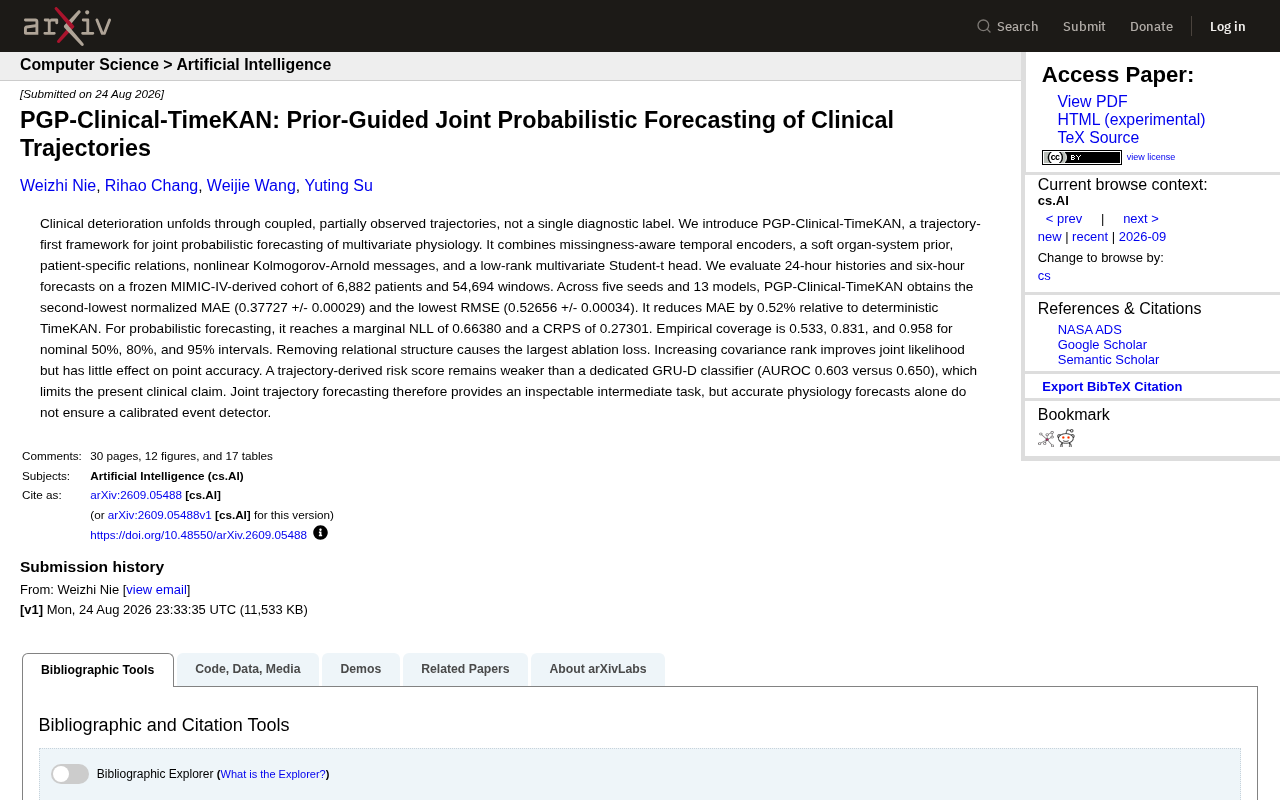
PGP-Clinical-TimeKAN: A Detailed Guide to the Multivariate Physiological Indicator Joint Prediction Framework
An in-depth analysis of the PGP-Clinical-TimeKAN framework for joint probabilistic prediction of multivariate physiological indicators, covering trajectory-first paradigm, KAN message passing, MIMIC-IV validation, and ablation studies.
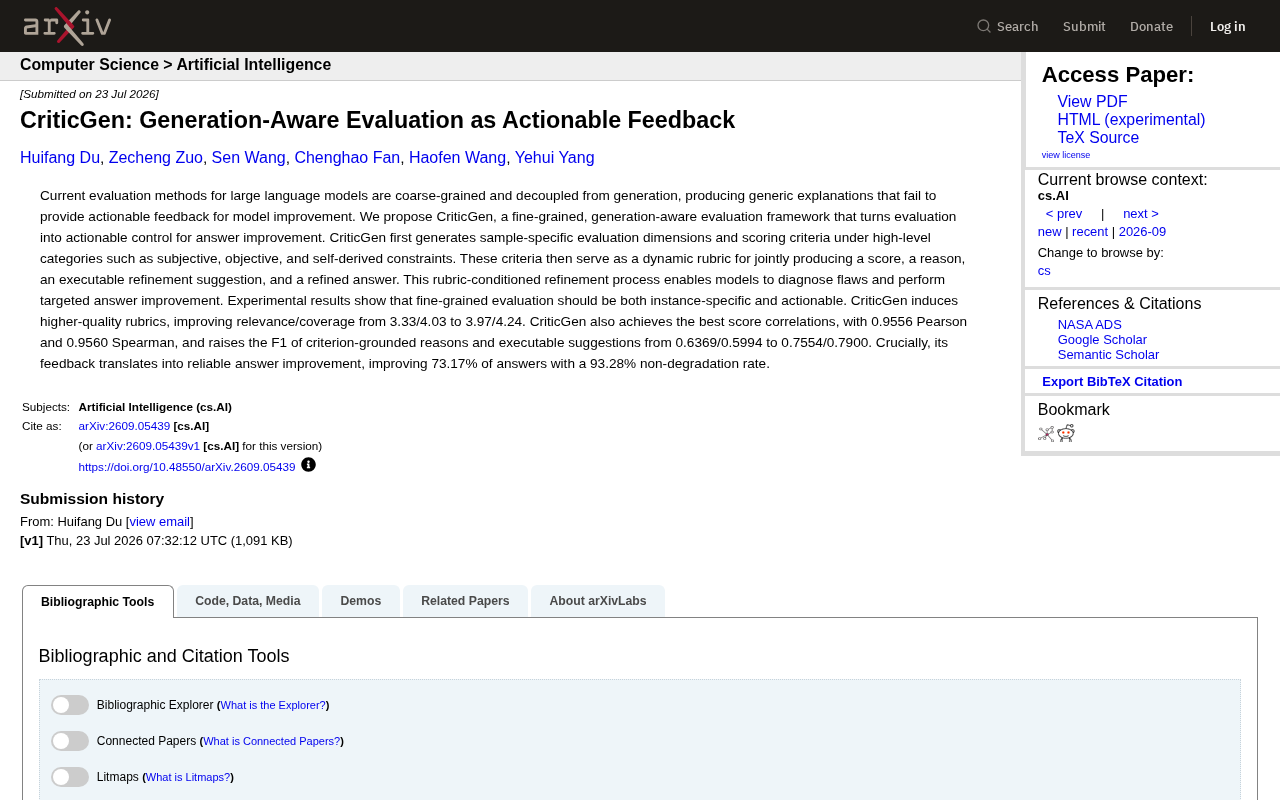
CriticGen: A New Framework That Transforms AI Evaluation into Actionable Improvement Feedback
CriticGen proposes a generation-aware evaluation framework that transforms AI assessment from passive scoring to an active optimization loop, achieving 73.17% answer improvement and 93.28% non-degradation rate.
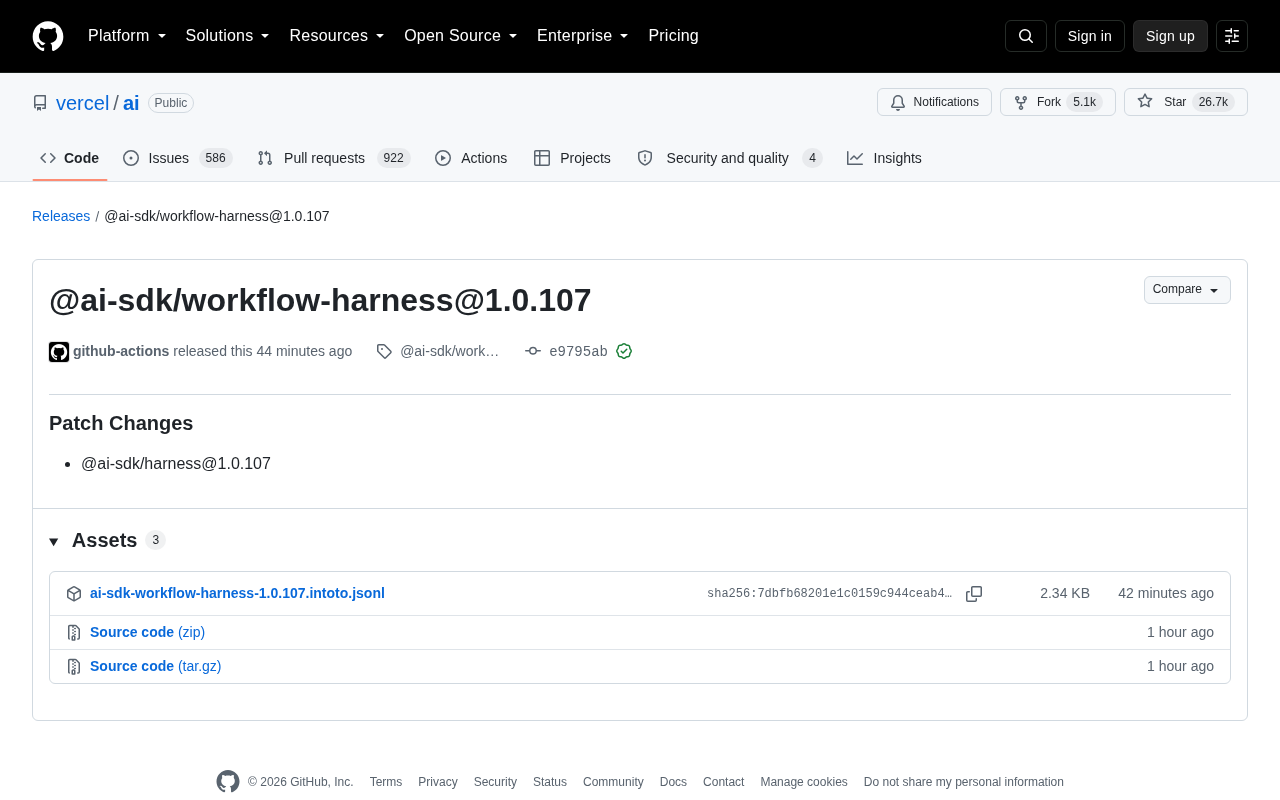
Vercel AI SDK workflow-harness Update Analysis
Deep analysis of Vercel AI SDK workflow-harness 1.0.107 update: architecture design, engineering practices, and developer value for building reliable AI apps.