#Claude Opus
14 related articles
 Product Reviews
GPT-5.5 After 3 Weeks of Real-World Testing: Does It Really Crush Opus 4.7 at Coding?
EVERY team tested GPT-5.5 for 3 weeks using SABench. GPT-5.5 scored 62.5 vs Opus 4.7's 33 in coding execution, but the best workflow combines Opus for planning with GPT-5.5 for execution.
 Product Reviews
Gemini 3.1 Pro vs Opus 4.6: A Hands-On Comparison of Front-End Programming Capabilities
In-depth comparison of Gemini 3.1 Pro and Claude Opus 4.6 in front-end programming, covering SVG generation, 3D animation, game dev, and data visualization tests.
 Product Reviews
GPT 5.4 vs Opus 4.7 vs Kimi K2.6 Code: Real-World Programming Comparison
Real-world comparison of GPT 5.4, Claude Opus 4.7, and Kimi K2.6 Code across backend, frontend, cost-effectiveness, and tooling to help developers choose the best AI coding assistant.
 Industry Insights
Claude Opus Reshaping Enterprise Cybersecurity: Real-World Cases and Defense System Upgrades
Deep analysis of how Anthropic Claude Opus helps Wiz, CrowdStrike, Palo Alto Networks achieve AI-driven cybersecurity defense across penetration testing, vulnerability remediation, and secure deployment.
 Product Reviews
SparkWinShape Review: Is Windsurf Auto Account-Switching for Unlimited Claude Opus Actually Reliable?
Real-world test of SparkWinShape plugin for Windsurf auto account-switching to use Claude Opus unlimited. Covers workflow, core features, risk analysis, and compliant alternatives.
 Product Reviews
Frontend UI Generation Showdown: GLM 4.7 vs Claude Opus vs Gemini vs Minimax — Who Wins?
Head-to-head test of Claude Opus 4.5, Gemini 3 Pro, GLM 4.7, and Minimax M2.1 on frontend UI generation across 5 tasks, comparing quality, speed, and cost.
 Tutorials
Can't Use Claude Code? Hands-On Guide to Accessing Opus 4 via Cursor and Windsurf
Can't use Claude Code in China? This hands-on guide tests Cursor and Windsurf as alternatives for accessing the Opus 4 model, both supporting Alipay payment with no overseas phone number required.
 Product Reviews
MiniMax M2.7 Hands-On Review: Coding Ability Rivals Claude Opus at 50x Lower Cost
In-depth hands-on review of MiniMax M2.7 agentic model: coding ability rivals Claude Opus 4.6 at 50x lower input cost. Real-world tests include MacOS system generation, game dev, and dynamic landing pages.
 Tech Frontiers
Cursor Launches Claude Opus 4 Fast Mode: 2.5x Faster, 6x More Expensive — Is It Worth It?
Cursor launches Claude Opus 4 Fast Mode with 2.5x speed but 6x cost. We analyze use cases, cost tradeoffs, and practical tips to help you decide if it's worth it.
 Tech Frontiers
Maieutic: A Socratic Teaching IDE Built with Claude Opus
Maieutic is a Socratic teaching IDE built with Claude Opus 4.7 that guides learners through structured dialogue instead of giving direct answers.
 Expert Opinions
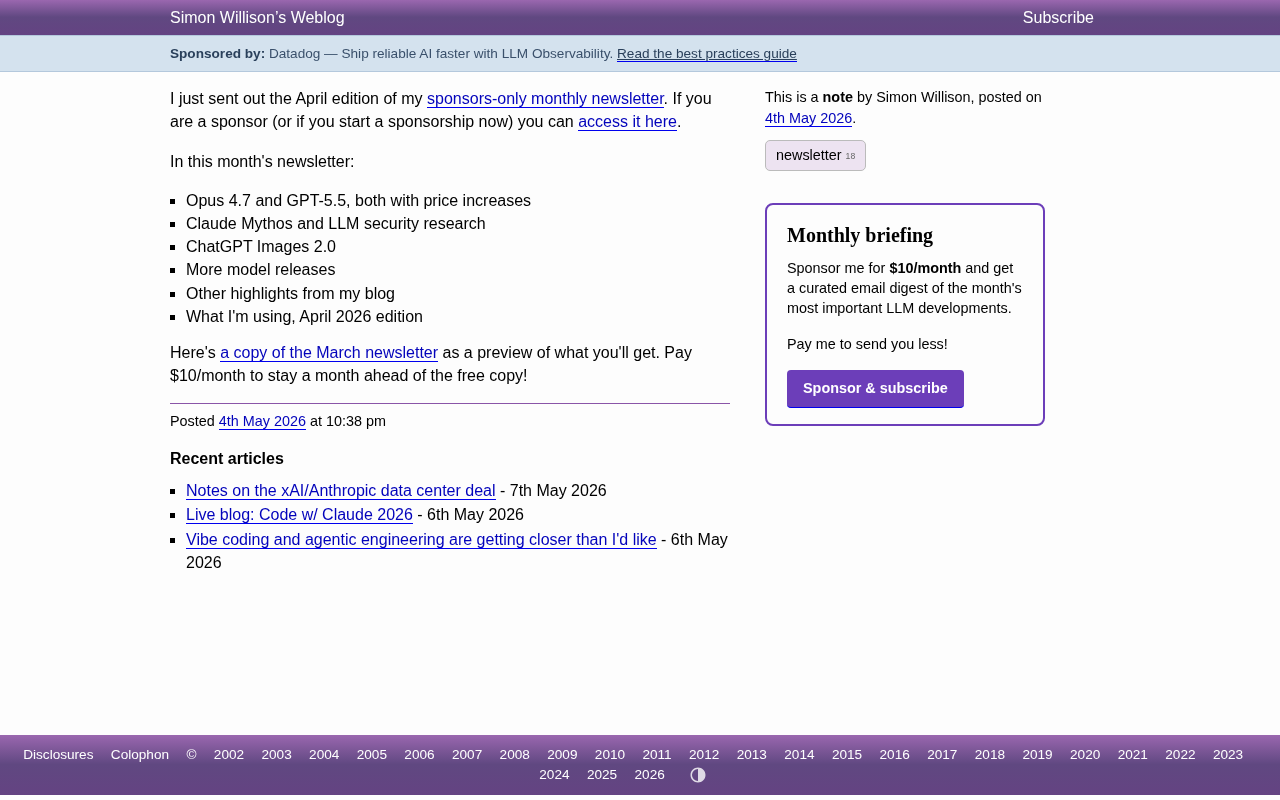
Opus 4.7 and GPT-5.5 Price Hikes in Sync: The AI Model Pricing Inflection Point Has Arrived
Analysis of Simon Willison's April 2026 newsletter: Opus 4.7 and GPT-5.5 launch with price hikes, Claude Mythos debuts, ChatGPT Images 2.0 upgrades. Deep dive into AI pricing tiers and LLM security.
 Expert Opinions
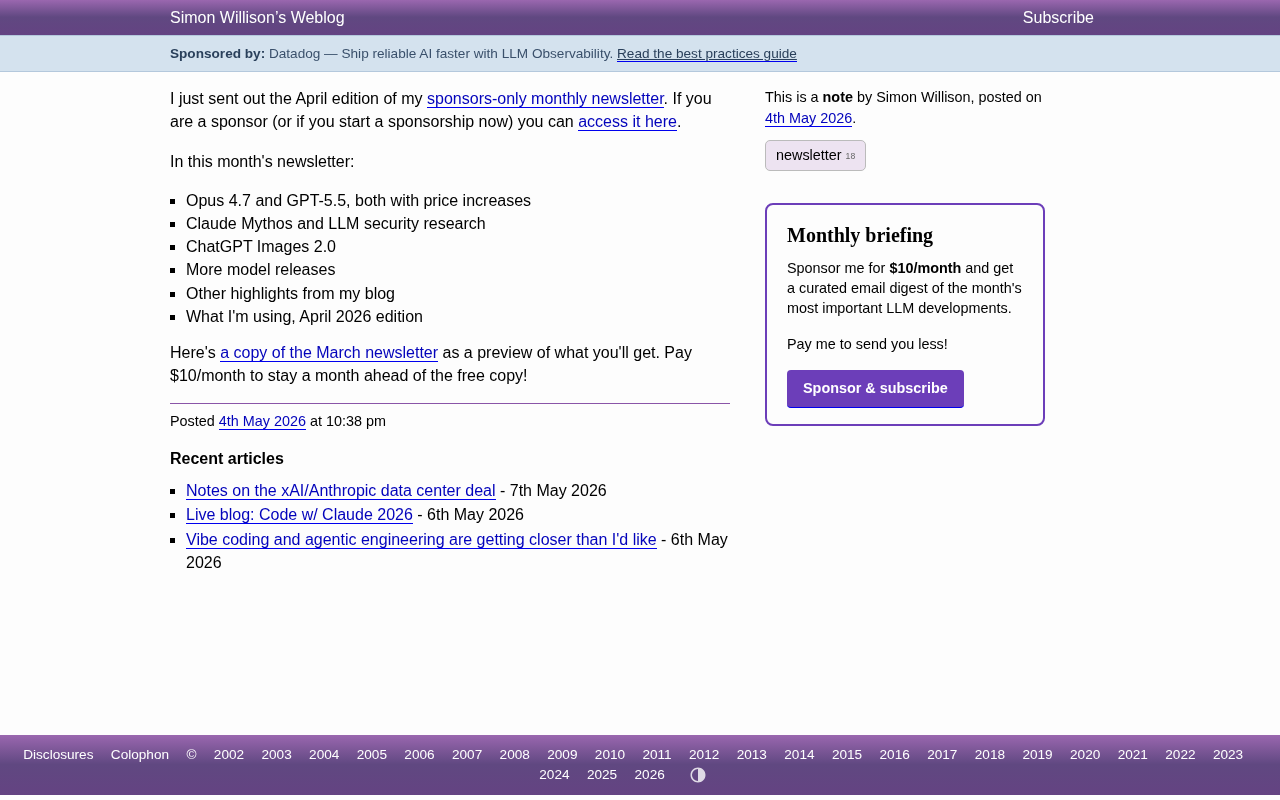
Opus 4.7 and GPT-5.5 Launch: Simon Willison's April Newsletter Breaks Down AI Frontier Developments
Simon Willison's April 2026 newsletter: Claude Opus 4.7, GPT-5.5 price hikes, Claude Mythos, ChatGPT Images 2.0, and the latest in LLM safety research.
 Expert Opinions
Simon Willison's April Newsletter: Opus 4.7, GPT-5.5 Launches, and AI Industry Trends
Simon Willison's April 2026 monthly newsletter: Anthropic Opus 4.7 and OpenAI GPT-5.5 launch with price hikes, Claude Mythos safety research, ChatGPT Images 2.0, and key AI trends.
 Product Reviews
MedKit Open Source Project: A Voice AI Patient Simulator Powered by Claude Opus 4
MedKit is an open-source voice AI patient simulator powered by Claude Opus 4.7, running in-browser to help medical students practice clinical skills through voice-based interviews.