HBO Max Black Friday Half-Price Subscription: The Streaming Price War Heats Up Again
HBO Max offers a 50% Black Friday subscription discount, using hit series as a selling point to compete for new and returning users.
HBO Max has joined the Black Friday promotional battle, offering a 50% discount to new subscribers and returning users, covering popular series such as Lanterns and The Gilded Age, and positioning Thanksgiving weekend as the best time to catch up on shows. The article notes this is a continuation of intensifying discount competition in streaming: Netflix has shifted to lower-priced ad tiers, Disney+ and Paramount+ frequently use bundles, and HBO Max itself has undergone rebranding and pricing adjustments. The promotion targets both acquisition and win-back, reflecting sophisticated lifecycle management. But discounts only drive short-term conversions; retention ultimately depends on content exclusivity and release cadence. For consumers, half price lowers trial-and-error costs, but terms like discount duration and auto-renewal should be checked, and planning subscriptions around promotional cycles may be more cost-effective than long-term commitments.
Black Friday Streaming Promotions: HBO Max Enters at Half Price
HBO Max has joined this year's Black Friday promotional battle, offering a 50% discount to both new and returning subscribers. According to RSS sources, the discount is available to new subscribers and returning users, covering popular content such as Lanterns and the latest season of The Gilded Age. Thanksgiving weekend is being officially positioned as the best time to catch up on shows, and the half-price strategy is clearly aimed at capturing users during this window when attention is most fiercely contested.
Black Friday promotions have become a regular fixture in the streaming industry in recent years, but a 50% discount is unusual within HBO Max's pricing system. What this reflects is the ongoing tension platforms face between content investment and user growth: premium series require costly production, and the subscriber base determines whether those investments can be amortized. A half-price promotion is essentially trading short-term revenue for user scale and the possibility of retention.
The Streaming Competition Logic Behind the Promotion
HBO Max's promotion is not an isolated event. The competitive landscape of the streaming market has shifted significantly over the past few years: Netflix has long since pivoted to lower-priced ad-supported tiers, Disney+ and Paramount+ frequently use bundles and discounts to acquire users, and HBO Max itself has undergone rebranding and pricing strategy adjustments. The Black Friday half-price offer is a continuation of this competitive logic—in an environment of subscription fatigue, discounts become the most direct conversion tool.
Notably, the promotion targets both "new subscribers and returning users." This shows the platform cares not only about acquisition but also about winning back churned users. For users who previously subscribed and canceled, half price is a hook that lowers the decision threshold; for those who have never subscribed, it's a trial window. This dual-coverage promotional design reflects more sophisticated lifecycle management than a discount aimed solely at new users.
Content-Driven Strategy Remains the Core Lever
Promotions can drive short-term conversions, but retention ultimately depends on content. Lanterns and The Gilded Age, mentioned in the report, represent two types of content assets for HBO Max: the former is a series extension of the DC Universe, while the latter is a period drama aimed at mature audiences. This content mix covers different audience segments and is why the platform can confidently emphasize "catching up on shows" during the promotion.
From an industry perspective, discount wars among streaming platforms won't stop, but pure price competition is unlikely to build long-term barriers. The cost for users to switch between multiple platforms is increasingly low, and content exclusivity and release cadence are what ultimately determine whether they stay or go. HBO Max's half-price promotion is a tactical move; the real question is how many users will stay for the content once the promotion ends.
Ad-supported video on demand (AVOD) refers to the lower-priced or free tier that streaming platforms offer alongside pure subscription models, where users watch ads in exchange for a lower monthly fee. Netflix launched its ad-supported plan in late 2022, and Disney+ followed suit. The core logic of this model is to subsidize subscription prices through ad revenue, covering price-sensitive user segments while opening a second revenue stream beyond subscription fees. For platforms like HBO Max with extremely high content costs, ad tiers both lower the barrier to entry and provide another price-flexibility tool beyond discount promotions. Understanding this helps clarify that half-price promotions are just one component of a platform's multi-tiered pricing strategy, not an isolated price-war tactic.
Subscription fatigue is a key contextual concept in the streaming industry in recent years, referring to the decision exhaustion and willingness to cut back that consumers experience when faced with too many subscription services. As the number of mainstream platforms increases and each platform's exclusive content becomes more fragmented, users increasingly tend to subscribe on a rotating basis—watching and canceling—rather than committing to multiple platforms long-term. This behavioral pattern directly undermines the continuous-payment foundation that subscription models depend on, and explains why platforms frequently use discounts, bundles, and win-back promotions: in an environment where users can churn at any time, lowering the threshold for a single decision matters more than maintaining list prices. HBO Max's half-price design targeting both new and returning users is a direct response to the reality of subscription fatigue.
The DC Universe is a film and television universe built on DC Comics characters under Warner Bros. Discovery, spanning movies and series, and is an important exclusive content asset for HBO Max. Lanterns is a series extension within this system, and its value lies not only in viewership for a single title but also in its ability to leverage existing fan bases and universe crossover effects to reduce marketing costs and boost user loyalty. For the platform, such IP-derived series are exclusive bargaining chips that differentiate it from competitors; for the promotion, they provide a concrete reason that it's "worth subscribing for." This also shows that whether users attracted by discounts will stay depends largely on the continued output capacity of such content assets.
What It Means for Consumers
For users who are on the fence, a half-price subscription lowers the cost of trial and error, especially with concentrated viewing time available during the Thanksgiving holiday. However, it's important to note that promotions usually come with terms and conditions, such as the discount period, whether auto-renewal applies, and how pricing is restored after expiration. The report did not disclose specific terms, so subscribers should check carefully before signing up.
From a broader perspective, Black Friday promotions have become a window into observing streaming pricing strategies. HBO Max's participation this year means that nearly all mainstream platforms have been drawn into discount competition. For consumers this is good news, but it also highlights a reality: the gap between list prices and actual prices paid for subscription services is widening, and planning subscriptions around promotional cycles may be more cost-effective than long-term commitments.
One-line Summary
HBO Max offers a 50% Black Friday subscription discount, using hit series as a selling point to compete for new and returning users.
Paragraph Summary
HBO Max has joined the Black Friday promotional battle, offering a 50% discount to new subscribers and returning users, covering popular series such as Lanterns and The Gilded Age, and positioning Thanksgiving weekend as the best time to catch up on shows. The article notes that this promotion is a continuation of intensifying discount competition in the streaming industry: Netflix has shifted to lower-priced ad-supported tiers, Disney+ and Paramount+ frequently use bundles to acquire users, and HBO Max itself has undergone rebranding and pricing adjustments. The promotion targets both acquisition and win-back of churned users, reflecting sophisticated lifecycle management. But discounts only drive short-term conversions; retention ultimately depends on content exclusivity and release cadence. For consumers, half price lowers the cost of trial and error, but they should check terms such as discount duration and auto-renewal, and planning subscriptions around promotional cycles may be more cost-effective than long-term commitments.
Related articles
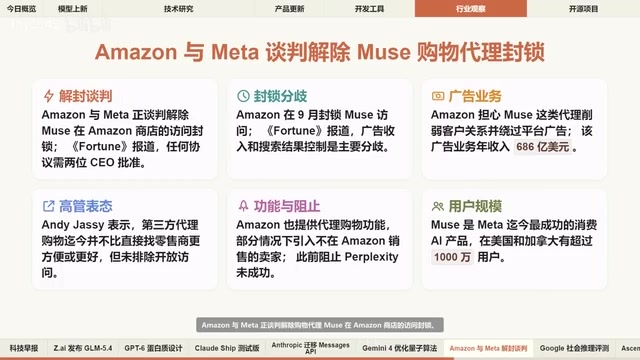
GLM-5.4 Debuts Loop Transformer as AI Coding Tool Race Heats Up
Z.ai launches GLM-5.4, claimed as the first Loop Transformer model; OpenAI drops preprints on protein design and math proofs; AI coding tools update densely; cloud robot inference and off-grid data centers emerge.

GLM-5.4 Loop Transformer Explained: Separating Mechanism from Evidence
Zhipu GLM-5.4 uses Loop Transformer to run trained layers for an extra round. This article breaks down gated updates, hybrid KV cache, and separates official claims from 30B experimental evidence.
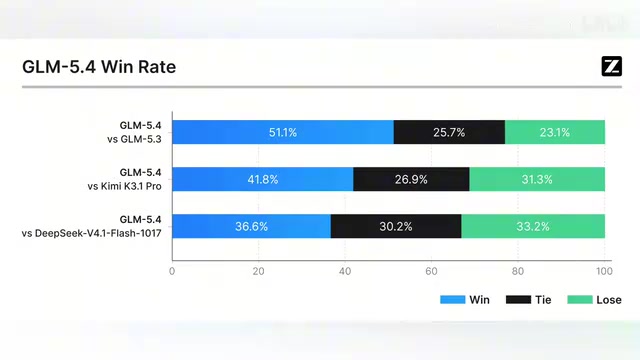
Zhipu GLM-5.4 Launches: First Commercial Loop Transformer Flagship
Zhipu launches GLM-5.4, China's first commercial Loop Transformer flagship: 750B params, 28-layer network looped twice for ~36% more compute depth, native vision for 3D modeling and industrial simulation, now fully available on Coding Plan.