Heteropessimism: Why Modern Dating Feels Increasingly Hopeless
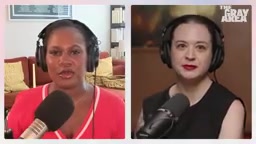
Exploring why modern heterosexual dating feels hopeless and what societal forces drive this cultural pessimism.
Heteropessimism—a growing cultural attitude of shame and frustration around heterosexual dating—reflects deeper issues beyond personal relationships. Rooted in post-Dobbs political anxiety, economic inequality that traps women in bad relationships, and amplified by social media's performative dynamics, this phenomenon demands structural solutions. Rather than choosing between blind optimism and cynical disengagement, a stance of "hopeful pessimism" offers a more constructive path forward.
On social media, we're seeing expressions like these with growing frequency: "Having a boyfriend is so embarrassing" and "Dating men is so humiliating." This attitude, laced with self-deprecation and irony, is becoming a recognizable cultural phenomenon. On The Gray Area, a podcast by Vox, host John Glenn Hill sat down with Sarah Jones, a senior writer at New York Magazine's Intelligencer, for a candid, in-depth conversation about this phenomenon known as "heteropessimism."
This article draws on that conversation to unpack the social, political, and emotional logic behind this trend—and to ask whether, amid a climate of pervasive pessimism, there are still reasons to hold onto hope.
What Is Heteropessimism: Definition and Manifestations
Sarah Jones defines "heteropessimism" as an attitude: a feeling that "things aren't going well for heterosexual women," mingled with a sense of shame and embarrassment about "dating men" or "wanting to date men," along with an impulse to distance oneself from that identity.
Notably, the concept of "heteropessimism" was first formally introduced by scholar Asa Seresin in a 2019 article published in New Inquiry. Seresin defined it as a negative affect that heterosexual people—especially heterosexual women—hold toward their own sexual orientation, manifesting as disappointment, weariness, and even shame about heterosexual relationships, while never actually abandoning heterosexual practice. The concept quickly gained traction on social media and in cultural commentary, becoming an important term for describing the predicaments of contemporary intimate relationships.
Its most typical expression takes the form of an "ironic distance"—people joke about heterosexual relationships, but beneath the jokes often lies a serious subtext. Jones admits that this sentiment is hard to quantify, but based on a wealth of writing, social media discourse, and personal experience, it genuinely reflects what many people feel.
As a side note, Jones herself is bisexual and has been married to a man for years. She chose to focus on "heterosexual women" as a group because she noticed that discussions around heterosexuality—particularly "heterosexual fatalism"—were surfacing everywhere, and she wanted to join the conversation.
Performance or Reality: The Emotional Roots Behind Self-Deprecating Jokes
The host raised a key question: How much of these eye-rolling expressions—"having a husband is so embarrassing," "having a boyfriend is so humiliating"—reflects genuine feeling, and how much is performative posturing?
Jones acknowledged that it's difficult to strip the "performance" out of it. But she argued that even when there is a performative element, it usually contains a "seed" of something that isn't performance at all. "We make the joke because we think other people might find it relatable, find it funny." Social media amplifies this posturing—joining a conversation, tossing out a joke, and receiving validation from others creates a sense of belonging and affirmation. This phenomenon aligns with sociologist Erving Goffman's theory of "impression management"—people are always performing to some degree in social interactions, and social media has amplified this performativity to an unprecedented scale, making the boundary between "performance" and "genuine feeling" increasingly blurry.
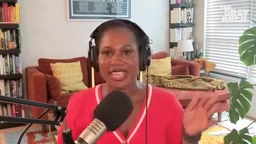
On a deeper level, Jones pointed out that this attitude is largely about using dark humor to cope with a situation that is real and sometimes even dangerous. She recalled similar experiences from her own twenties, when she was dating frequently, and noted that today—with people being more "online" and the political landscape shifting—things have become even more complicated.
How Political Reality Shapes Intimate Relationships
A recurring backdrop in the conversation is the political reality that American women currently face. Jones comes from a conservative evangelical background and grew up hearing arguments about Roe v. Wade. She pointed out that in the "post-Dobbs era" (after the Supreme Court overturned abortion rights protections), many women are confronting a stark fact in their own ways: they may now have fewer rights than they did at birth.
The historical context here is crucial. Roe v. Wade was a landmark 1973 Supreme Court decision that established a woman's right to abortion under the constitutional framework of the right to privacy. For nearly half a century, this ruling remained at the center of America's culture wars. In June 2022, the Supreme Court voted 6-3 in Dobbs v. Jackson Women's Health Organization to overturn Roe v. Wade, returning abortion legislation to the states. The decision led nearly half of U.S. states to swiftly pass laws severely restricting or outright banning abortion, fundamentally altering the reproductive autonomy of millions of women of childbearing age virtually overnight.
She observed that the current American right wing has "very aggressively embraced misogyny and racism" and is explicitly working to roll back civil rights. This political atmosphere creates a chain reaction that affects everyone's intimate relationships. She specifically mentioned so-called "politically mixed marriages"—where the husband is a MAGA supporter and the wife is not—as a real-world dilemma that many people are struggling with. Research data corroborates this trend: according to a survey by the American Enterprise Institute (AEI), after the 2020 election, about 20% of Americans reported that political disagreements had caused substantial damage to their family relationships, and among young women, the proportion who view political alignment as a "dealbreaker" in choosing a partner has risen significantly in recent years.
Economic Factors: Why Women Struggle to Leave Bad Relationships
When asked "why women stay in bad relationships," Jones emphasized that the question is far more complex than it appears on the surface, encompassing both emotional and material dimensions.
She listed a series of real economic predicaments:
- Moving in together prematurely because they can't afford rent on their own
- Getting married for health insurance
- Becoming the dependent spouse after falling ill post-marriage
These predicaments are rooted in America's unique social safety net. Unlike most developed nations, the U.S. has no universal healthcare system—roughly half of Americans receive health insurance through their employer, and spouses can obtain coverage through marriage. This means marriage in America functions partly as a social safety net. Additionally, housing costs in the U.S. have surged dramatically over the past decade. According to data from Harvard's Joint Center for Housing Studies, in 2023 about half of all renters spent more than 30% of their income on housing, meeting the definition of being "housing cost-burdened." As for the gender pay gap, American women still earn only about 84% of what men earn on average. These structural factors mean that "leaving a relationship" is not merely an emotional decision for many women—it's an economic one that can feel like a matter of survival.
Once you're in one of these situations, "I need to move out" becomes a problem that pulls on every thread—What about rent? Can I take the pets? Can I find a job to support myself?
Economic inequality makes "leaving" extraordinarily difficult for many people, especially women. Jones argued that improving structural issues like the wage gap and the healthcare system would "lower the stakes"—making the end of a relationship feel less catastrophic.
Women Also Sustain Patriarchy: An Overlooked Complexity
One of the sharpest points in the conversation was this: the discussion should not be reduced to "a men's problem." Jones stated explicitly that patriarchy has never been sustained by men alone—women have always been an essential part of it.
She drew on examples from American right-wing history, citing women like Phyllis Schlafly, anti-abortion activist Marjorie Dannenfelser, and Heritage Foundation's Emma Waters, as well as extensive New York Times coverage of "pronatalism." Phyllis Schlafly (1924–2016) was one of the most influential women in American conservative politics. In the 1970s, she led the campaign against the Equal Rights Amendment (ERA), successfully blocking ratification of the amendment that would have enshrined gender equality in the Constitution. Her central argument was that the ERA would undermine the interests of homemakers and force women into military service. Marjorie Dannenfelser is the president of Susan B. Anthony Pro-Life America, a major anti-abortion organization, and has long played a key role in Republican politics. The Heritage Foundation is one of Washington's most influential conservative think tanks; its "Project 2025" policy blueprint includes agendas to dramatically restrict reproductive rights and reshape family policy. Jones referenced these figures and institutions to illustrate that sustaining patriarchy has never been the work of a single gender. She argued that the right wing could hardly have advanced these agendas without women's "active consent and participation."
On a personal level, Jones recalled that in her evangelical community growing up, women were often the "more zealous enforcers" of moral values, encouraging young people to marry early and have many children as soon as possible. This reminds us that adopting an ironic posture to "distance" oneself from heterosexuality doesn't actually create real distance from these structures.
The Male Version of Heteropessimism: The Manosphere and Dating Frustration
So can men fall into heteropessimism too? Jones argued that the "manosphere" is, in a sense, the male version of heteropessimism—and in its worst forms, it manifests as violence: domestic abuse, sexual assault, carrying an undertone of threat.
The manosphere is an umbrella term for a constellation of male-centric online communities and subcultures, ranging from moderate men's self-help groups to extreme misogynist communities. Its main branches include Men's Rights Activists, MGTOW (Men Going Their Own Way, advocating that men withdraw from women and marriage), Pick-up Artists, and Incels (involuntary celibates). These communities are typically active on platforms like Reddit, YouTube, and Telegram, sharing a core narrative about gender relations—namely, that contemporary society is unfair to men and that feminism has harmed male interests. The most extreme Incel communities have been directly linked to multiple violent incidents, including the 2014 Isla Vista shooting in California and the 2018 Toronto van attack.
But Jones was also careful to say she doesn't want to project extreme cases onto every man who feels frustrated with dating. As a feminist, she openly acknowledged that "women are equally capable of being terrible people." If a man has had bad experiences and wants to step away from dating for a while, she completely understands—in fact, she believes that periodically stepping back from dating to figure out what you actually want is healthy for anyone.
What truly concerns her is framing male-female relationships as a "boys vs. girls" zero-sum conflict. This narrative echoes the core belief of the manosphere: that women's progress necessarily comes at men's expense. This "false sense of scarcity" is extremely dangerous—just as love, success, and happiness are not finite resources, one person having them doesn't mean another person is deprived of them. This zero-sum thinking is what psychologists call a "fixed mindset," as opposed to a "growth mindset" that sees resources and opportunities as expandable through collaboration and effort rather than merely contested within a fixed pool.
From Optimism to "Hopeful Pessimism"
The most thought-provoking part of the conversation was Jones's articulation of "hopeful pessimism" as a stance.
She distinguished it from optimism: optimism is believing that things will get better, and she's not sure about that. But she believes things can get better, and therefore she holds onto hope. This shift from optimism to "hopeful pessimism" feels, in her view, "closer to reality," and it comes with a sense of responsibility—"You can't just think your way out of the reality all of us are living in."
This stance is not without precedent in philosophical tradition. It echoes what former Czech president Václav Havel said about hope not being optimism—Havel once wrote: "Hope is not the conviction that something will turn out well, but the certainty that something makes sense, regardless of how it turns out." Italian Marxist thinker Antonio Gramsci expressed a similar idea in his famous formulation: "Pessimism of the intellect, optimism of the will." Jones's "hopeful pessimism" sits squarely within this intellectual tradition—it acknowledges the severity of reality but refuses to use that as a reason to give up action.

This stance rejects both self-deprecating ironic distance and blind optimism. It asks people to think: as part of a movement, a struggle, what can I do? Jones believes this is a more constructive way of thinking than the binary attitude of "all in or all out."
How to Build a Society Where It's Easier to Love
Jones's own marriage exemplifies her point. After growing up in a complicated conservative background, she had long since stopped dating—but she entered marriage because she met someone who made her feel "unafraid" and "safe." She therefore pushes back against women who, out of pessimism, cut off this possibility entirely: "You don't have to be an optimist to pursue a relationship."
In her view, romance and love aren't the trivial topics of social media or reality TV—they are "an important part of what makes life worth living." The very fact that we're having this conversation about "how to love better" is itself a positive sign.
Ultimately, Jones posed a question that sounds somewhat utopian but is worth pondering deeply: What kind of society do we need to make it easier for people to love? Perhaps the answer can't protect anyone from heartbreak, but at the very least, it could allow people to pursue love without carrying the crushing weight of fear about rent, health insurance, and worst-case scenarios. At its core, this question elevates intimate relationships from the realm of personal choice to the level of social institutional design—much as Nordic countries have, through comprehensive parental leave, universal healthcare, and housing security systems, largely socialized the economic risks of intimate relationships, enabling people to make relationship decisions based on emotion rather than survival needs.
Key Takeaways
Related articles

Bilibili's Hit Dify Tutorial: A Practical Guide to Building 20+ AI Apps from Scratch
A distilled guide to Bilibili's top-rated Dify tutorial: Windows + Docker deployment, MySQL connection, five app types, model integration strategy, and publishing.

Agent Skills Beginner's Guide: From Concepts to Multi-Agent Collaboration in Practice
A comprehensive guide to Agent Skills: core concepts, components, the importance of Description, standardization, beginner learning paths, and multi-agent collaboration.

One Neuron Detects Both Cats and Cars? We Reproduced It and Found a New Explanation
The cat-car neuron reinterpreted: researcher Cammarata argues it distinguishes pointy from round, not cats from cars. We reproduced the experiment and found the new explanation holds on most inputs—but cars are the exception. The interpretability debate continues on language models.