Holmes Documentary Explodes: A24 Wins, Who Got Manipulated?

Holmes asked A24 to make a documentary, but the directors used reflexive techniques to deconstruct her narrative.
Before going to prison for blood testing fraud, Elizabeth Holmes and her husband proactively contacted A24 to make the documentary 'You Can See Everything,' which earned $15 million in its opening weekend, far exceeding expectations. However, it was directed by Lance Oppenheim and Nathan Fielder—two creators skilled at blurring the boundary between reality and performance—whose vision clearly differed from the Holmeses'. Audiences briefly sympathized with Holmes while watching, but afterward increasingly suspected she was 'playing dumb' on screen and engaging in a new round of narrative manipulation. A24 achieved commercial and critical success, and Holmes got a platform to retell herself, but whether she is manipulating the narrative again remains undetermined. The film thus becomes a field of multi-party contestation.
Elizabeth Holmes once promised to disrupt the blood testing industry with a single drop of blood, and ultimately was sentenced to 11 years in prison for defrauding investors. But before going to prison, she and her husband Billy Evans proactively approached A24 and proposed making a documentary about her life. Now that film, titled You Can See Everything, has been released, earning $15 million at the box office in its opening weekend, far exceeding expectations.
However, it was the Holmeses who proposed the film, but it was directed by Lance Oppenheim and Nathan Fielder—two creators known for deconstructing narratives. Their vision for the film seems to be completely different from what the Holmeses wanted. A thought-provoking question thus emerges: is this documentary meant to help Holmes tell her side of the story, or do the filmmakers have another purpose? In the end, who got what they wanted?
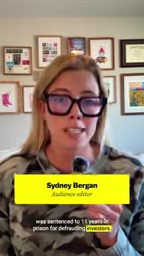
Documentary Release: A Win on Both Box Office and Critical Acclaim
According to analysis from a YouTube video, A24 is "very satisfied" with the film's market performance. A $15 million opening weekend is quite impressive for a documentary, and the film critics have also given it high praise. The video's narrator himself stated, "I personally really enjoyed this film."
From a commercial perspective, A24 is clearly one of the winners. Holmes's story is inherently newsworthy, and A24 excels at packaging controversial figures into cultural events. But beyond commercial success, the film's narrative stance is what's truly worth unpacking—after all, the party who proactively proposed the film and the party who ultimately controlled the editing rights are not the same side.
Divergent Visions Between Directors and Subject
According to the video content, directors Lance Oppenheim and Nathan Fielder "had very different ideas about what this movie should be" compared to the Holmeses. Nathan Fielder is known for works like The Rehearsal, skilled at blurring the boundary between reality and performance, making participants become narrative material without their knowledge. This creative style, combined with the setup of "the subject proactively proposing the film," inherently creates tension.
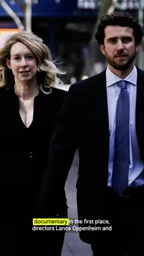
In other words, Holmes may have thought she was hiring a team to document her narrative, while what the directors were interested in was precisely "how she narrates" itself. This layer of reflexivity turns the documentary from "her story" into "a story about her telling stories."
Nathan Fielder is a Canadian comedian, writer, and director, known for works such as Nathan for You and The Rehearsal. The core of his creation is reflexivity and meta-narrative: he often has real people participate in a carefully designed scenario without their knowledge or with partial knowledge, then observes and shows how they react and how they narrate themselves. He blurs the boundaries between documentary, reality show, and scripted comedy, making his works both funny and unsettling. This style means that when the Holmeses proactively approached him, what Fielder was interested in might not be "documenting Holmes" but "how Holmes performs Holmes"—that is, treating the subject's self-presentation itself as material. This explains what the article calls "a story about her telling stories."
Audiences Sympathize While Watching, Doubt Afterward
The most noteworthy point in the video is the change in the narrator's feelings before and after. While watching the film, he felt "she couldn't be stupid enough to agree to make this documentary," and even briefly empathized with her. But as time went on, he became increasingly convinced that Holmes was "playing dumb on screen," "weaving another story," and engaging in a form of "manipulation."
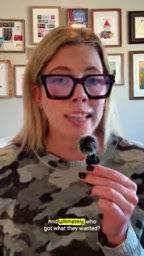
This shift from sympathy to vigilance may be exactly the effect the directors wanted—letting the audience personally experience the process of "being led by her," then coming to their own realization. If this was intentional, then Holmes's "cooperation" in front of the camera actually became the film's most powerful material.
Who Got What They Wanted?
According to the video analysis, A24 got box office and critical acclaim, and Holmes got a platform to retell herself. But the narrator believes "it feels like Holmes really did get what she wanted," while adding "we won't know until we see the next phase of her life."
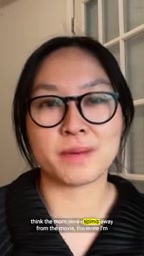
This uncertainty itself is the film's open space. Is Holmes "playing dumb" on screen to garner sympathy, or will she, like when she originally pitched her blood testing technology, turn the documentary into yet another carefully designed narrative manipulation? The video's answer is open-ended: we'll have to wait for her next chapter to judge.
For readers interested in tech startup ethics, founder narratives, and documentary creation, this film provides a rare sample: when the person being recorded proactively asks to be recorded, the footage is no longer a neutral mirror but becomes a field of multi-party contestation. Holmes got the camera, the directors got the material, and the audience got a story they need to judge for themselves.
One-line Summary
Holmes proactively asked A24 to make a documentary, but the directors used reflexive techniques to deconstruct her narrative.
Paragraph Summary
Before going to prison for blood testing fraud, Elizabeth Holmes and her husband proactively contacted A24 to make the documentary You Can See Everything, which earned $15 million in its opening weekend, far exceeding expectations. However, it was directed by Lance Oppenheim and Nathan Fielder—two creators skilled at blurring the boundary between reality and performance—whose vision for the film was clearly different from the Holmeses'. Audiences briefly sympathized with Holmes while watching, but afterward increasingly suspected she was "playing dumb" on screen and engaging in a new round of narrative manipulation. A24 achieved commercial and critical success, and Holmes got a platform to retell herself, but whether she is manipulating the narrative again remains undetermined. The film thus becomes a field of multi-party contestation.
Related articles

LLaMA-Factory in Practice: A Complete No-Code Guide to Fine-Tuning Large Models
An introduction to LLaMA-Factory, the open-source fine-tuning tool: its 60.1K-star background, supported models and algorithms, local vs. cloud deployment, and CUDA setup steps.

Zeng Ming's Deep Retrospective: Why OpenAI May Not Be the Ultimate Winner — and Why the Corporate System Will Disappear
Zeng Ming's deep retrospective on the AI endgame: model companies are just infrastructure, OpenAI and Anthropic won't be the final winners; the next battle is the Agent entry point standard; the corporate system will disappear as AI restructures collaboration, and only mission-driven companies can survive the cycle.

OpenHands v1.28.0: OpenCode and PI Added as Built-in Agents, API Keys Requestable In-Conversation
OpenHands ships 5 releases in 21 days: v1.27.0 adds OpenCode and PI as built-in agents, v1.28.0 enables in-chat key requests. ACP integration, credential reuse, model list changes, and upgrade advice.