How AI Agents Are Reshaping Enterprise Work: From Task Automation to Organizational Restructuring

AI agents are pushing enterprises beyond task automation toward fundamentally redesigning how work gets done.
This article explores how AI agents are transforming enterprise operations beyond simple task automation. Through the lens of Wonderful's applied AI partnership model, it examines the platform-plus-delivery-team approach, multi-agent collaboration for long-horizon tasks, and the critical shift from automating existing processes to structurally redesigning workflows. Key takeaways for leaders include leveraging external AI platforms, prioritizing change management, and adopting zero-based thinking about work design.
An Era of Redefining Enterprise Work
"This is a crazy time, perhaps one of the most exciting moments in human history." That's how Barak Kaufman, founder of Wonderful, opened his assessment of the current AI wave. As an "applied AI partner" serving the world's largest and most complex enterprises, Wonderful is trying to answer a question that all major organizations are grappling with: When AI agents truly enter the enterprise, how should work be redesigned?
AI agents refer to artificial intelligence systems capable of autonomously perceiving their environment, formulating plans, and executing actions to achieve specific goals. Unlike traditional chatbots or simple automation scripts, AI agents possess goal-oriented reasoning capabilities, memory mechanisms, and tool-calling abilities—they can decompose complex tasks, autonomously decide on next steps, and adjust based on feedback during execution. In 2024-2025, as large language model reasoning capabilities took a quantum leap, AI agents rapidly transitioned from laboratory concepts to enterprise-grade applications, becoming the second wave of AI deployment following chat assistants.
This isn't the old story about "automating repetitive tasks." Kaufman's core point is crystal clear—enterprises truly at the forefront are no longer satisfied with simply handing off manual human tasks to machines. Instead, they're beginning to fundamentally rethink how an enterprise should operate in the future.
Why Enterprises Need an "Applied AI Partner"
Enterprises Shouldn't Build Their Own AI Infrastructure
Kaufman offers a judgment worthy of deep reflection by all enterprise leaders: "The fastest-moving enterprises have realized that their core business is not building AI infrastructure, but using AI to transform their organizations."

Behind this statement lies a clear division-of-labor logic. For the vast majority of traditional enterprises, building agent orchestration, management, and optimization platforms from scratch is expensive, time-consuming, and diverts attention from core business. Rather than investing precious engineering resources in "reinventing the wheel," they should focus their energy where real value is created—helping teams embrace change faster. This follows the same logic as the cloud computing era: just as most enterprises choose to use AWS or Azure rather than building their own data centers, the infrastructure of the AI agent era is similarly suited to be provided by specialized platform providers.
A Dual-Engine Model: Platform Plus Local Delivery Teams
Wonderful's solution consists of two parts. The first is an infrastructure platform for "building, managing, and optimizing" agents; the second is a localized "forward deploy delivery team" responsible for actually getting agents into production environments.

This "platform + people" combination is no accident. Many AI projects dazzle during demos but stall when it comes to actual deployment, often not due to the technology itself, but because of organizational change management. Change management is a classic concept in organizational management science, originating from Kurt Lewin's three-stage model (unfreezing-changing-refreezing) and later developed into a systematic methodology by scholars like John Kotter. In the context of AI projects, this concept is particularly critical: McKinsey research shows that approximately 70% of digital transformation projects fail to meet expected goals, with the primary cause of failure being not technical deficiencies but inadequate organizational change management—employee resistance, lack of middle management motivation, insufficient process adaptation, and other "soft" issues are the real roadblocks.
For an AI agent to truly go live, processes need to be re-mapped, responsibility boundaries clarified, and frontline employee trust earned—these are precisely the problems that software alone cannot solve. This also explains why Wonderful deploys local delivery teams: they are not merely technical implementers but also drivers and coordinators of organizational change.
The Critical Role of OpenAI and Codex in AI Agent Development
Wonderful breaks down its collaboration with OpenAI into two layers, both indispensable.
The first layer is engineering acceleration. Kaufman candidly states that the company needs to build this platform "extremely fast," and "without OpenAI, especially Codex supporting our engineering team, we simply couldn't have done it."

Codex is a code generation model series developed by OpenAI, originally known as the underlying engine for GitHub Copilot. Its core capability is understanding natural language descriptions and generating executable code across dozens of programming languages. Through model iterations, Codex has evolved from single-line code completion to an agent capable of understanding project context, autonomously completing multi-file code modifications, and even end-to-end feature development. For AI startups like Wonderful, using Codex means the engineering team can delegate large amounts of repetitive coding work to AI, allowing human engineers to focus their energy on higher-level work such as architecture design, system integration, and business logic.
This is a highly representative signal: AI programming tools are becoming "force multipliers" for AI companies' own R&D. Using AI to build AI has moved from slogan to a tangible means of shortening time-to-market. This "recursive" capability growth—AI tools accelerating AI product development, while new products further drive the proliferation of AI capabilities—is forming a positive feedback loop of technological progress.
The second layer involves channeling OpenAI's model intelligence to Wonderful's global enterprise clients. In other words, Wonderful serves as a "translation layer" and "deployment layer," converting top-tier model capabilities into usable AI agents for specific industries and specific processes. This means enterprise clients don't need to directly interface with the complex APIs and engineering challenges of underlying large models, but instead receive industry-adapted and process-optimized agent solutions through Wonderful's platform.
From Task Automation to Structural Workflow Redesign
Long-Horizon, Multi-Agent, Multi-Modal Collaboration
Kaufman believes we are entering a new phase—one capable of executing "longer horizon agentic tasks," typically completed through collaboration among multiple agents while involving multiple interaction modalities.

Multi-Agent Systems (MAS) represent a research direction in artificial intelligence with decades of history, but they've been given entirely new practical significance in the large language model era. Modern multi-agent architectures typically include an orchestration layer responsible for decomposing complex tasks into subtasks and assigning them to specialized agents; agents collaborate through structured message passing, sharing context and intermediate results. For example, an enterprise-level customer complaint handling process might involve the coordinated work of an "information extraction agent," a "sentiment analysis agent," a "knowledge retrieval agent," and a "response generation agent." This division-of-labor model allows each agent to be optimized for specific capabilities, with the overall system's reliability and maintainability far superior to a single monolithic agent.
This differs fundamentally from the earlier model of a single agent handling a single task. When multiple AI agents can collaborate around a complex goal over extended periods, freely switching between text, voice, image, and other modalities, the range of work enterprises can delegate to AI expands dramatically. "Long-horizon" means agents are no longer just responding to a question in real-time but can continuously advance a project over hours or even days—conducting research, drafting proposals, awaiting approvals, revising based on feedback—tracking an entire work cycle just like a real team member.
Optimizing Productivity, Not Simply Replacing Human Labor
The most critical mindset shift lies in redefining the objective. Kaufman emphasizes that the focus should not be "automating the manual tasks we all do today" but rather "redesigning how work gets done to optimize productivity."
This represents a leap from "efficiency improvement" to "structural redesign." The former patches existing processes; the latter acknowledges that existing processes themselves may have been designed for human collaboration and aren't suited to the new reality of human-machine collaboration. This mindset shift has deep roots in management theory. Michael Hammer's "Business Process Reengineering" theory from the 1990s argued that enterprises should not simply layer information technology onto existing processes but should fundamentally rethink why those processes exist. At the time, this theory was controversial due to implementation difficulties, but in the AI agent era, it has gained new life. The reason: traditional enterprise processes were designed around human cognitive limitations and collaboration costs—for example, multi-level approvals exist because humans cannot process too much information at once, and departmental divisions exist because human expertise is limited. When AI agents are not bound by these constraints, the foundational premises of many processes are undermined.
The real opportunity is this: since AI agents can take on entirely new forms of work, the entire organization's operating model, role design, and collaboration logic all deserve to be reimagined. A concrete example: a traditional report review process might require junior analysts to gather data, mid-level analysts to write reports, and senior managers to review and revise. In the new human-machine collaboration paradigm, AI agents can handle data collection and first-draft writing, while human experts focus their energy on judgment, decision-making, and strategic thinking—this doesn't simply replace a particular role but redefines the structure of the entire workflow.
Three Core Insights for Enterprise Leaders
Synthesizing Kaufman's perspectives, several highly valuable takeaways for enterprise decision-makers emerge:
First, clarify your positioning. The vast majority of enterprises derive their value not from becoming AI infrastructure providers but from leveraging AI agents to achieve self-transformation—they should therefore make good use of external platforms and partners. This requires strategic consensus at the CEO and CTO level—the center of gravity for technology investment should shift from "building capabilities in-house" to "integration and application," deploying limited technical talent toward understanding business scenarios and designing new workflows rather than underlying model training and infrastructure construction.
Second, prioritize change management. Whether agents can go live is rarely a technical bottleneck—the key is whether the organization can adapt to process adjustments and whether teams can quickly embrace change. Successful AI transformation often requires a two-pronged approach: "top-down strategic support" combined with "bottom-up frontline participation"—leadership provides resources and clear direction, while frontline employees participate in agent design and testing, building trust and usage habits through the process.
Third, move beyond automation thinking. Don't just focus on "which manual tasks can be replaced"—think about "if we were designing from scratch, how should this work be done?" This means enterprises need to cultivate a "zero-based thinking" mindset—temporarily forget that existing processes exist, start from objectives, and consider what the optimal path to achieving goals would be given the entirely new capability of AI agents.
In this moment that Kaufman calls "one of the most exciting in human history," enterprises that can be the first to make this mental shift will hold the initiative in future competition. History has repeatedly shown that the dividends of technological revolution are never evenly distributed—they belong to organizations that not only embrace new tools but are willing to reimagine the very nature of work.
Related articles
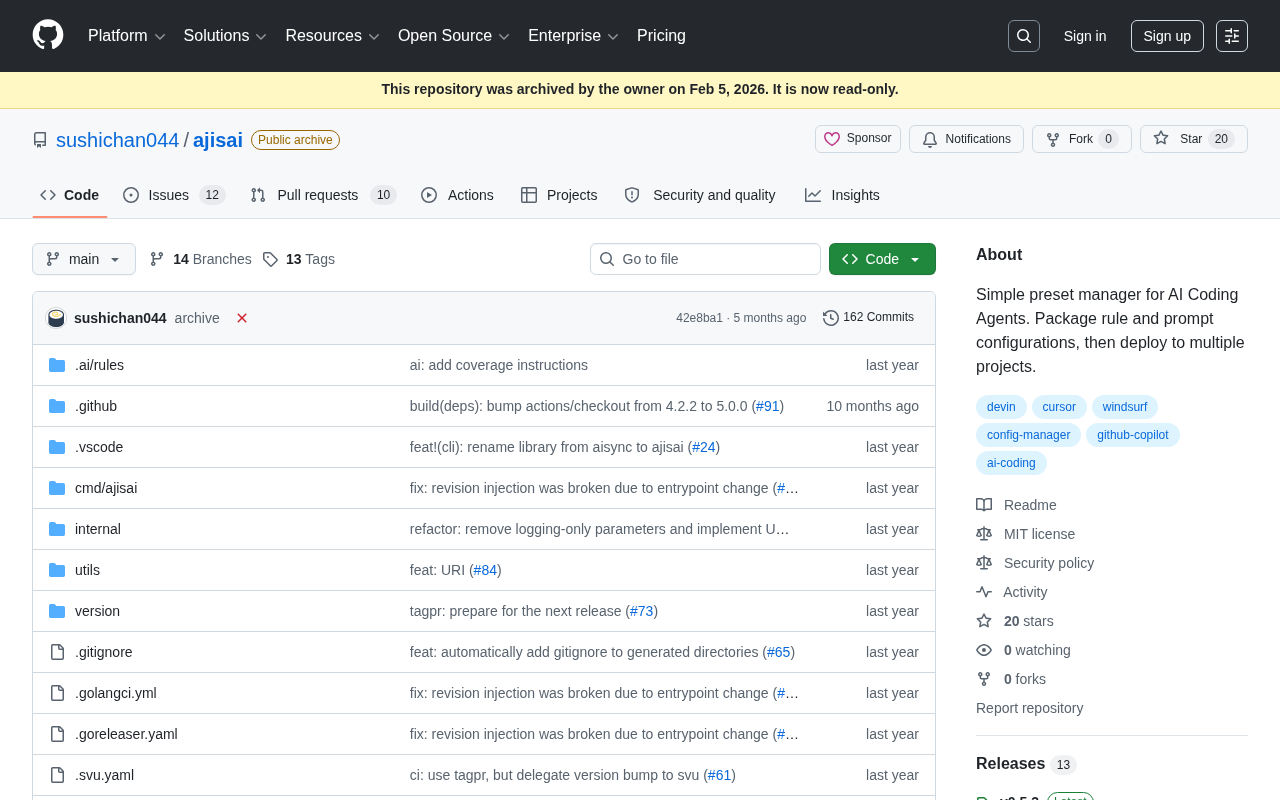
ajisai: A Preset Management Tool for Unifying Rules and Prompts Across AI Coding Assistants
ajisai is a Go-based preset manager for AI coding assistants like Cursor and Claude Code. Package rules and prompts once, deploy everywhere. Early-stage but promising.
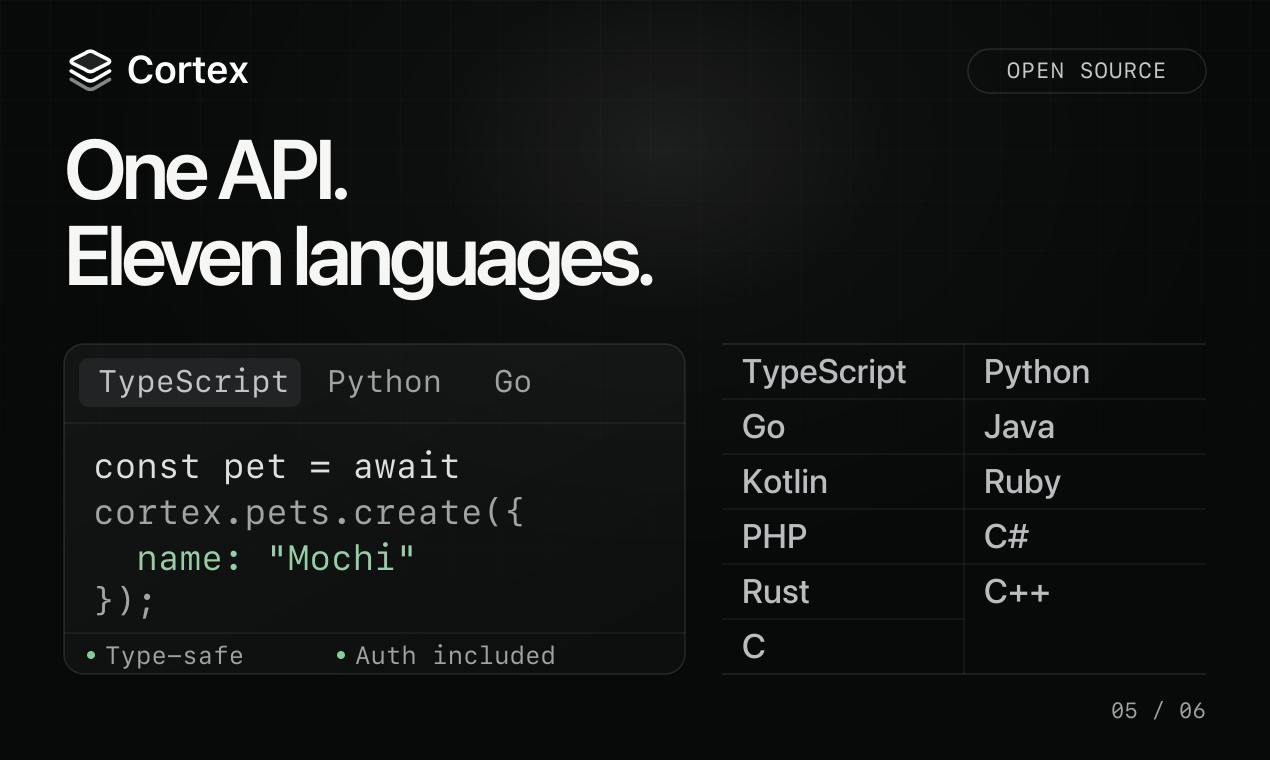
Cortex: Convert API Specs into Docs, SDKs, and MCP Servers in One Click
Cortex is an open-source tool that converts OpenAPI, GraphQL, gRPC and more into interactive docs, typed SDKs in 11 languages, and MCP servers for AI agents.
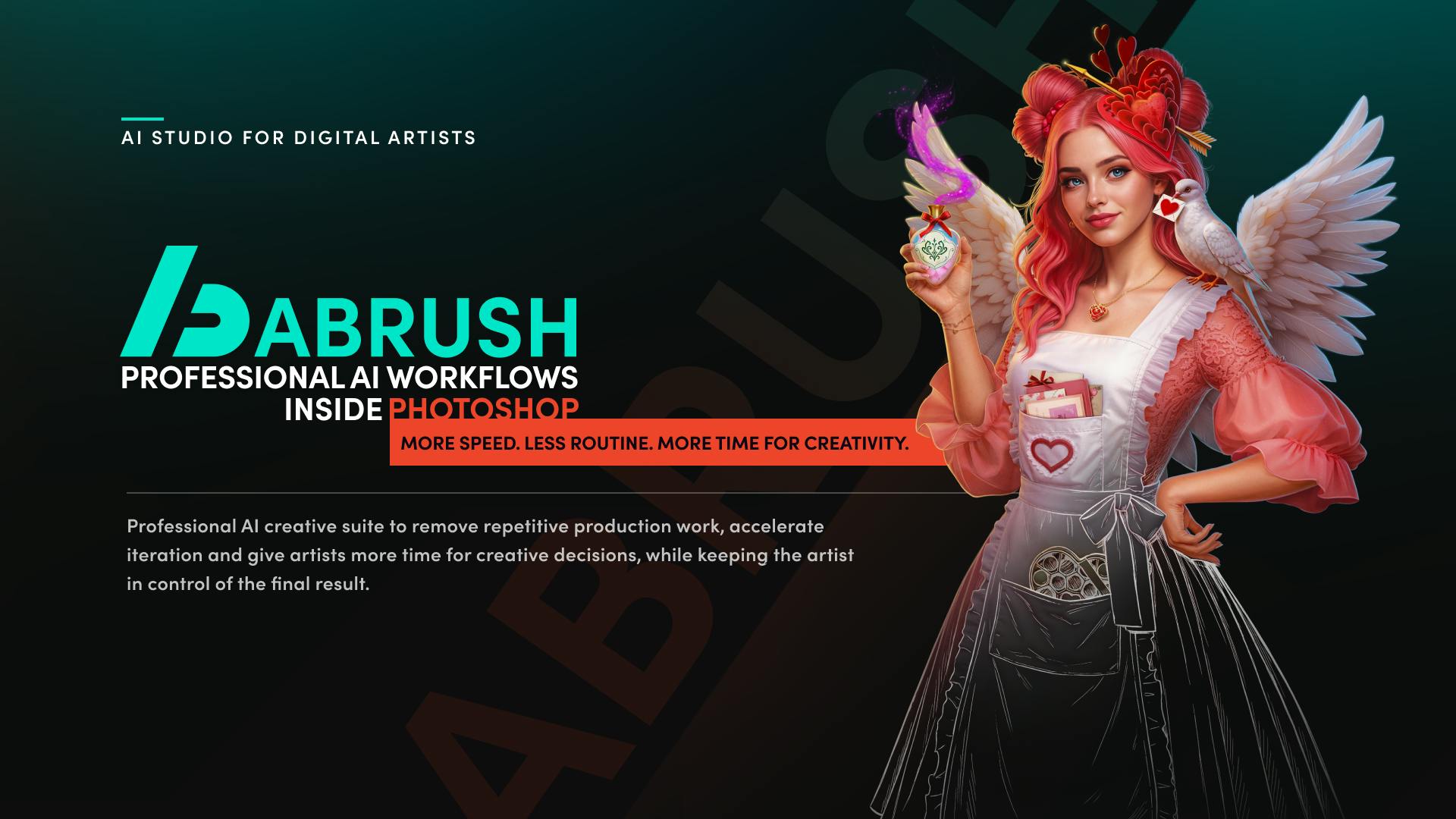
ABrush: An AI Studio Built for Digital Artists
ABrush is an AI studio for digital artists, ranked #4 on Product Hunt. It embeds leading AI models into existing workflows to remove repetitive tasks, speed up iteration, and keep artists in control.