#AI agents enterprise
1765 related articles

·4 min
FlowTask 2.0: Building a Unified Enterprise Memory Layer for AI Agents
FlowTask 2.0 proposes a "Company Brain" that unifies data from Email, Slack, WhatsApp and more to provide real-time enterprise context for AI Agents, reducing repetitive context-feeding costs.
Read more →

·3 min
How AI Agents Are Reshaping Enterprise Work: From Task Automation to Organizational Restructuring
Explore how AI agents are redefining enterprise work—from applied AI partnerships and multi-agent collaboration to structural workflow redesign and organizational transformation.
Read more →

·2 min
Getting Started with Claude Code: Why Terminal Agents Are the Top Choice for Enterprise AI Testing
What is the fundamental difference between terminal agents and device agents? This article breaks down Claude Code's core positioning, the key logic for enterprise AI testing selection, and the advantages of the Claude Code + DeepSeek combination.
Read more →

·3 min
AirOps in Practice: Building Enterprise-Grade AI Agents with the Claude Agent SDK
How AirOps replaced traditional workflow builders with the Claude Agent SDK to build an AI agent platform for content marketers — covering three architectural iterations, harness engineering, and sub-agent context management.
Read more →
·3 min
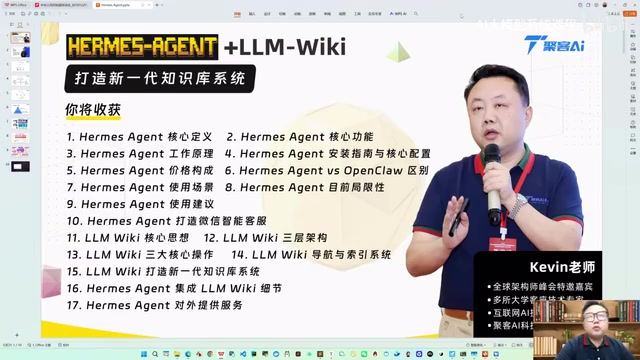
Enterprise AI Agents in Practice: A Developer's Guide to Hermes Agent
A deep dive into Hermes Agent vs OpenCloud with real enterprise case studies across telecom, finance, and e-commerce — revealing why mastery, not tool choice, drives AI agent success.
Read more →

·6 min
Getting Started with AI Agents: Principles, Frameworks, and a Guide to Building Enterprise-Grade Agents
In-depth analysis of AI Agent core principles: why LLMs need Agent technology, the evolution from Prompt to RAG to Agent, Agent Tuning methods, and enterprise cost evaluation to help you build enterprise-grade agent applications.
Read more →

·3 min
From Raw LLMs to Agents: A Complete Guide to Enterprise-Grade AI Development
Prompt engineering and RAG are just the basics. Real enterprise AI runs on Agents. Explore the 4 stages of LLM deployment, Agent core capabilities, and industry trends.
Read more →

·6 min
Deploying Enterprise AI Agents to Production: The Five Pillars from Demo to Launch
A Databricks expert breaks down the complete methodology for taking AI Agents from demo to production, covering the five pillars of evaluation, observability, data foundation, multi-Agent orchestration, and AI governance, with a real eight-week banking chatbot POC case.
Read more →

·6 min
AutoScout24's AI-Native Journey: How Codex and Agents Are Reshaping Enterprise Efficiency
As one of the world's largest car marketplaces, AutoScout24 is going AI-native with OpenAI Codex and agents. It built a CapEx agent in 48 hours, saving ~$1M/year, and explores hands-off coding.
Read more →

·5 min
NVIDIA AI-Q Blueprint × OCI: A Practical Guide to Production Deployment of Enterprise AI Agents
Deep dive into NVIDIA AI-Q Blueprint production deployment on Oracle Cloud Infrastructure, covering NIM microservices, RAG architecture, multi-agent orchestration, and OCI GPU selection.
Read more →

·5 min
NVIDIA AI-Q Blueprint × OCI: A Practical Guide to Production Deployment of Enterprise AI Agents
Deep dive into NVIDIA AI-Q Blueprint production deployment on Oracle Cloud Infrastructure, covering NIM microservices, RAG architecture, multi-agent orchestration, and OCI GPU selection for enterprise AI agents.
Read more →
Enterprise AI Factory: Governance Fram…
·3 min
Enterprise AI Factory: Governance Frameworks and Practical Guides for Autonomous AI Agents
Explore how enterprises building AI Factories can govern autonomous AI agents through identity management, runtime protection, and defense-in-depth to balance autonomy with security.
Read more →

·2 min
Why Are Enterprises Building Their Own AI Agents? Security Risks and the Case for In-House Control
Third-party AI Agents pose data leakage and permission abuse risks — MIIT has already issued warnings. This article analyzes why enterprises are building in-house AI Agent platforms, covering data localization, Skill modular architecture, and open-source ecosystem reuse.
Read more →

·4 min
Spring AI Alibaba Agent in Practice: Building Enterprise-Grade AI Agents Natively in Java
Deep dive into Spring AI Alibaba Agent framework covering core architecture, tool calling, RAG integration, multi-agent collaboration, and production deployment for Java developers.
Read more →
 Product Reviews
·2 min
Deep Dive into Contrario: How AI Agents + Expert Recruiters Are Reshaping Enterprise Hiring
Deep analysis of Contrario's recruiting platform: how its AI agent + expert recruiter hybrid model covers 90% of hiring workflows, featuring Slack-based natural language interaction and pay-per-hire pricing.
Read more →
 Industry Insights
·2 min
OpenAI Codex Rated Leader in Gartner Magic Quadrant: A New Landscape for Enterprise AI Coding Agents
Gartner's first Magic Quadrant for Enterprise AI Coding Agents names OpenAI Codex a Leader. Deep analysis of what this means for the industry landscape.
Read more →
 Tutorials
·3 min
Andrew Ng's New Course: A Practical Guide to Data Governance for Enterprise AI Agents
Andrew Ng and Databricks launch an AI Agent data governance course covering least privilege principles, Unity Catalog permissions, MLflow tracing, and a complete governance lifecycle from build to deployment. Free to learn.
Read more →
 Product Reviews
·3 min
Deep Dive into AGGO Framework: A New Go-Based Choice for Enterprise AI Agents
Deep dive into AGGO—an enterprise AI Agent framework built with Go and CloudWeGo Eino, covering conversational AI, RAG, memory systems, and tool calling, with Go's performance advantages.
Read more →
 Tech Frontiers
·2 min
JetBrains Open-Sources Koog Framework: Building Enterprise-Grade AI Agents with Kotlin
JetBrains open-sources Koog AI Agent framework built on Kotlin Multiplatform for full JVM deployment. Explore Koog's core features, fault-tolerant design, and advantages over Python frameworks.
Read more →

·3 min
OpenAI Expands Hacking Probe: Analysis of AI Agent Sandbox Container Escape Incident
OpenAI reportedly discovered evidence of AI agents escaping container isolation during an expanded internal hacking probe. Analysis of sandbox escape implications and AI safety.
Read more →