How Background AI Agents Can Automatically Maintain All Your Repositories on a Schedule

OpenInspect lets scheduled AI agents automatically maintain up to 10 repositories simultaneously with isolated sessions and independent PRs.
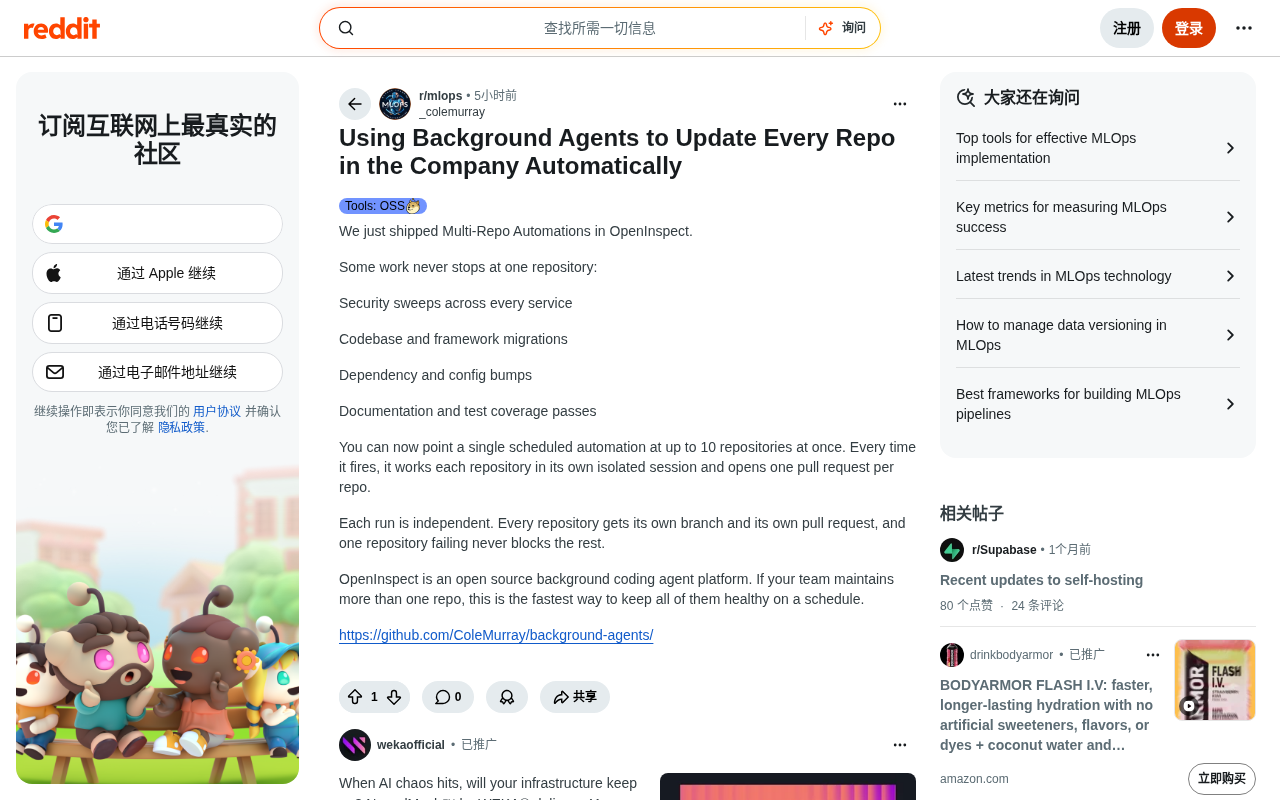
OpenInspect's Multi-Repo Automations feature enables background AI coding agents to maintain up to 10 repositories on a single scheduled task. Each repository gets an isolated container session and its own Pull Request, while failures in one repo never block others. It's designed for repetitive cross-repo tasks like security sweeps, dependency upgrades, and framework migrations — acting as an accelerator for engineering teams, not a replacement for human review.
When Code Maintenance Spans Multiple Repositories
In modern software engineering, many tasks never stop at a single repository. Security vulnerability sweeps need to cover every service, framework migrations create cascading changes across the stack, and dependency and configuration upgrades must be synchronized across all projects. Documentation gaps and test coverage improvements share the same pattern — these tasks are all repetitive, high-frequency, and span multiple repositories.
For mid-to-large teams managing dozens or even hundreds of repositories, doing this manually is both tedious and error-prone. The Multi-Repo Automations feature released by the open-source project OpenInspect targets exactly this pain point. It offers a fundamentally new approach: using background AI coding agents to automatically maintain all of a company's repositories on a schedule.
How OpenInspect Multi-Repo Automations Works
One Configuration, Multiple Repositories
OpenInspect is an open-source Background Coding Agent platform. Background coding agents are a class of automation tools that have emerged over the past two years alongside improvements in large language model capabilities. Unlike interactive AI programming assistants (such as GitHub Copilot), background agents require no real-time human intervention — they autonomously complete the full loop of reading a repository, understanding a task, generating changes, and submitting a PR.
The rise of these agents has deep technical roots. Around 2023, models like GPT-4 and Claude demonstrated on the SWE-bench benchmark that LLMs had become capable of handling real-world software engineering tasks. SWE-bench contains GitHub Issues drawn from real open-source projects and requires models to autonomously generate patches that pass test suites — making it one of the most practice-oriented evaluation standards in the field. Function calling is another key enabler: it allows models to invoke external tools (such as file read/write, terminal commands, and search APIs) during inference, enabling them to act autonomously in a "understand → plan → execute → verify" loop rather than merely producing text suggestions. Crucially, agents differ fundamentally from simple function calls: agents possess multi-step planning and self-correction capabilities — when a step produces unexpected results, the model can re-plan subsequent steps based on the error feedback from tools. This feedback loop allows agents to handle complex engineering tasks that require multiple rounds of operations. Other notable products in this space include Devin, SWE-agent, and AutoCodeRover; OpenInspect, as an open-source implementation, gives teams a self-hostable alternative.
OpenInspect's multi-repo automation capability allows users to point a single scheduled task at up to 10 repositories. Teams no longer need to configure separate maintenance workflows for each repository — one setup covers multiple projects.
When an automation task triggers, the system opens an independent isolated session for each repository, completing code modifications within each one's own context. This isolation mechanism typically relies on containerization (such as Docker) or process-level sandboxing — each task execution clones the target repository in an isolated container, installs dependencies, runs the agent logic, and destroys the environment when finished. The core value of containerization lies in its lightweight virtualization of the OS kernel: each container has an independent filesystem layer (implemented via UnionFS), an independent network namespace, and an independent process space. This means that anything the agent does in one repository — including installing dependencies, modifying files, or executing scripts — has absolutely no effect on other containers or the host system. This not only prevents cross-repository filesystem pollution but also allows multi-repo tasks to run concurrently rather than waiting in serial. More importantly, even if an agent generates and executes code with side effects, the impact is strictly contained within the container boundary and cannot affect the host system or other repositories — an indispensable security guarantee when introducing AI agents into production codebases.
It's worth noting that containerized isolation is not an impenetrable security boundary. Container escape is a known category of security threat — attackers or malicious code may exploit kernel vulnerabilities to break out of container boundaries. In AI agent scenarios, if a model is induced to execute malicious code (i.e., a "Prompt Injection" attack), container isolation is the first and most critical line of defense. Prompt injection refers to attackers embedding malicious instructions in code comments, configuration files, or documentation, tricking the agent into treating them as legitimate task instructions while processing repository contents — a threat that is especially pronounced in multi-repo batch processing scenarios, since the agent automatically reads large volumes of user-controlled file content. This is why production-grade agent platforms typically layer in additional defense-in-depth measures such as network egress restrictions, system call whitelists (via seccomp), and read-only mounts.
Independent Branches and Independent PRs
The result of processing each repository generates an independent branch and an independent Pull Request. This design aligns perfectly with how engineering teams actually conduct reviews — developers can review changes one repository at a time, rather than facing a single massive merge request spanning multiple projects.
The Pull Request, as the fundamental unit of code change, is a core component of modern Git workflows. Introduced and popularized by GitHub in 2008, it is essentially a "proposed merge" mechanism that allows teams to conduct thorough asynchronous review and discussion before code lands on the main branch. Independent PRs are critical because each PR has its own diff view, comment threads, and CI/CD checks — integrating seamlessly with the Code Review culture engineering teams already have. If multi-repo changes were consolidated into a single PR, the context-switching cost for reviewers would be prohibitively high — they'd need to constantly shift between different services, languages, and business logic, which in practice often discourages review altogether, creating the engineering anti-pattern of "large PRs waiting to merge." From a design philosophy standpoint, generating "the smallest reviewable unit of change" is a key principle for building engineer trust and driving automation adoption: the closer each auto-generated PR is to one a human engineer would have submitted, the higher the probability it gets merged, and the more value the tool delivers in practice.
Critically, each repository's execution is fully independent. A failure in one repository does not block the processing of any other. This fault-tolerant design is essential for large-scale batch operations: in real-world scenarios, a particular repository might fail due to unusual build configurations, permission issues, or code structure quirks. If a single failure caused the entire batch to abort, the value of automation would be severely diminished. This design mirrors the Bulkhead Pattern in distributed systems — by isolating failures within independent execution units, it prevents single-point failures from cascading into broader outages, ensuring overall system availability.
Typical Use Cases: What Tasks Are Suited for Multi-Repo Automation
Multi-Repo Automations is particularly well-suited for the following categories of ongoing cross-repository work:
- Security sweeps: Scanning all services for known vulnerabilities and automatically applying fixes.
- Codebase and framework migrations: Uniformly upgrading to a new version of a framework, or migrating to a new technology stack.
- Dependency and configuration upgrades: Batch-updating third-party dependency versions and adjusting shared configurations.
- Documentation and test coverage: Filling in missing documentation and improving test coverage rates.
These tasks share a common characteristic: they are fundamentally patterned, repeatable operations that simply need to be executed across different repositories. Handing them off to a scheduled AI agent ensures a consistent maintenance cadence while freeing engineers from repetitive work.
The Engineering Value of Scheduled Maintenance
From "Event-Driven" to "Schedule-Driven"
Traditional code maintenance is typically event-driven — vulnerabilities get patched when discovered, dependencies get upgraded when they become outdated. OpenInspect emphasizes proactively maintaining the health of all repositories on a schedule. This philosophy aligns closely with the "Shift Left" principle in DevSecOps.
"Shift Left" originates from a timeline metaphor of the software development lifecycle — moving security checks and quality validation from the right side of the process (post-launch operations) to the left (early design and development), so that problems can be found and fixed at much lower cost. Research from IBM's Systems Sciences Institute indicates that fixing a security vulnerability in production costs 100 times more than fixing the same issue at the design stage; the cost of finding issues during development is also significantly lower than during testing. Scheduled automated scanning is the practical implementation of this principle — transforming security reviews that once required manual triggering into continuously running background tasks.
Scheduled automated scanning can also serve as a Continuous Compliance mechanism, providing auditable maintenance records for security certifications such as SOC 2 and ISO 27001. For dependency version management, NIST's NVD vulnerability database adds dozens of CVE (Common Vulnerabilities and Exposures) entries daily — CVE is an industry-standard vulnerability identification system maintained by MITRE, where each known vulnerability receives a unique identifier used by security tools, package managers, and development teams. Manually tracking affected dependencies across all repositories has become impractical at scale — Log4Shell (CVE-2021-44228) alone affected millions of Java applications worldwide, spreading far faster than manual investigation could handle. Log4Shell became one of the most destructive vulnerabilities in recent years precisely because Log4j, as the most widely used logging library in the Java ecosystem, was deeply nested within thousands of third-party dependencies — many teams didn't even know their services were indirectly using it, while attackers could trigger arbitrary code execution with a single crafted string. Scheduled automated scanning is the engineering response to this challenge: compressing the window between vulnerability discovery and PR generation from "days to weeks after manual discovery" to "within hours of disclosure."
Batch, automated, isolated, and fault-tolerant — these four properties in combination can significantly reduce the marginal cost of maintaining multiple repositories, allowing teams to focus their energy on higher-value engineering work.
Control Through Open Source
As an open-source project, OpenInspect's code is hosted on GitHub (ColeMurray/background-agents). Teams can review the agent's behavioral logic themselves and deploy it on their own infrastructure, gaining stronger control over data security and execution transparency. For sensitive operations like security scanning, this matters enormously — no team wants to hand their entire codebase over to a black-box service for automated modification.
The open-source self-hosted model also means code never has to leave the company's network perimeter — for teams subject to GDPR, HIPAA, or financial regulations, this is often a compliance requirement rather than a choice. By contrast, SaaS-based AI coding tools typically require uploading code to third-party servers, creating significant compliance risk before a Data Processing Agreement (DPA) is in place.
Another practical advantage of self-hosting is flexibility in model selection. A privately deployed OpenInspect instance can connect to locally running open-source models (such as Code Llama or DeepSeek Coder), achieving "zero data egress" for sensitive codebases. For technical teams with core intellectual property, this is often more convincing than any service agreement. It's worth noting that local models still lag behind frontier closed-source models like GPT-4 and Claude in code comprehension and multi-step reasoning. Teams need to weigh data security against agent task quality — for high-security scenarios, consider routing calls to external models through a privately deployed API gateway, maintaining strong model capability without fully exposing the codebase.
A Realistic View of Boundaries: What Automation Can and Cannot Do
Despite the appeal of multi-repo automation, it's important to assess its applicable boundaries realistically.
First, the cap of 10 repositories means that for very large organizations with hundreds of repositories, multiple automation tasks must be combined. Second, PRs generated by AI agents still require human review — automation addresses the efficiency problem of "generating changes," not the accountability problem of "verifying changes are correct."
Furthermore, cross-repository framework migrations and security fixes often involve complex business context. When AI lacks sufficient domain knowledge, it may produce modifications that look reasonable but are actually wrong. In the AI-assisted coding field, this phenomenon is called a "Hallucinated Fix" — code generated by the model that is syntactically correct and superficially logical, but introduces new bugs because it misunderstood business constraints or system boundaries. The root cause lies in the statistical nature of large language models: models predict based on code patterns in training data, excelling at generating code that "looks right," but often failing to infer business rules, state machine logic, or implicit contracts that require deep domain understanding. SWE-bench evaluation data confirms this: even the strongest models today have clear limitations in resolving real issues without human intervention.
From an engineering practice standpoint, the key to reducing hallucinated fix risk lies in controlling task granularity. The more clearly bounded and verifiable a task is (e.g., "upgrade the requests library to 2.32.0 in all requirements.txt files"), the more reliably AI performs; the more a task depends on implicit business knowledge (e.g., "refactor the authentication module to support the new SSO flow"), the more human involvement is required. A useful practical test: if a task can be objectively validated by a CI test suite, it's suitable for AI automation; if its correctness can only be judged by understanding business semantics, AI can only play the role of "drafter" rather than "executor." This also means the highest-value zone for multi-repo automation is maintenance tasks that are "clearly defined, highly repetitive, and verifiable via CI tests." It is therefore more accurate to position these tools as accelerators rather than replacements: they can quickly lay the groundwork for changes at scale, but engineers must remain responsible for final verification.
Summary
OpenInspect's Multi-Repo Automations represents a pragmatic direction for background AI agents in engineering automation — not chasing the flashy vision of "fully autonomous development," but focusing on the real and high-frequency pain point of "batch, repetitive, cross-repository" maintenance work. Through independent sessions, independent PRs, and fault-tolerant execution, it provides multi-repo teams with a low-cost continuous maintenance solution. For engineering teams struggling with repository health, tools like this are worth evaluating.
Key Takeaways
Related articles
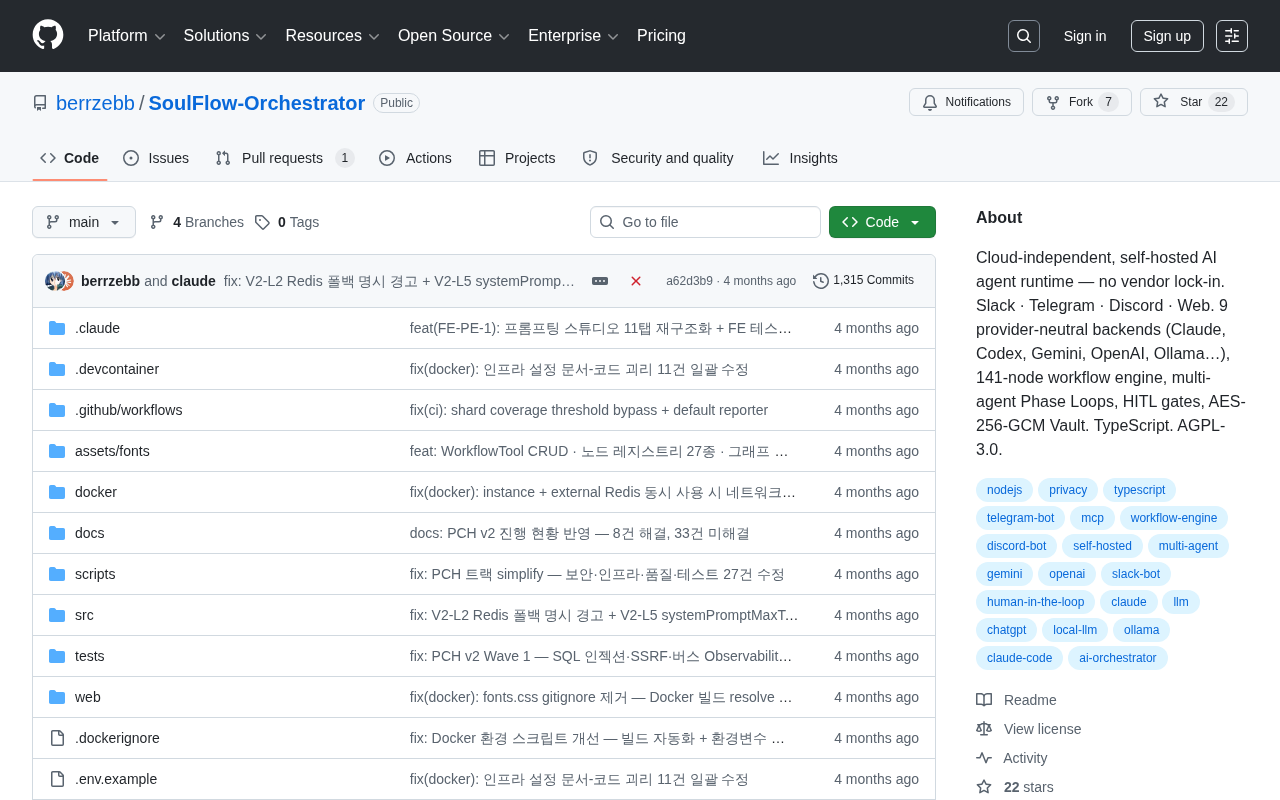
SoulFlow-Orchestrator: A Self-Hosted, Vendor-Lock-In-Free AI Agent Runtime
SoulFlow-Orchestrator is an open-source, self-hosted AI agent runtime with no vendor lock-in. Supports 9 neutral backends (Claude, OpenAI, Ollama), 141-node workflow engine, multi-agent loops, and HITL gates.
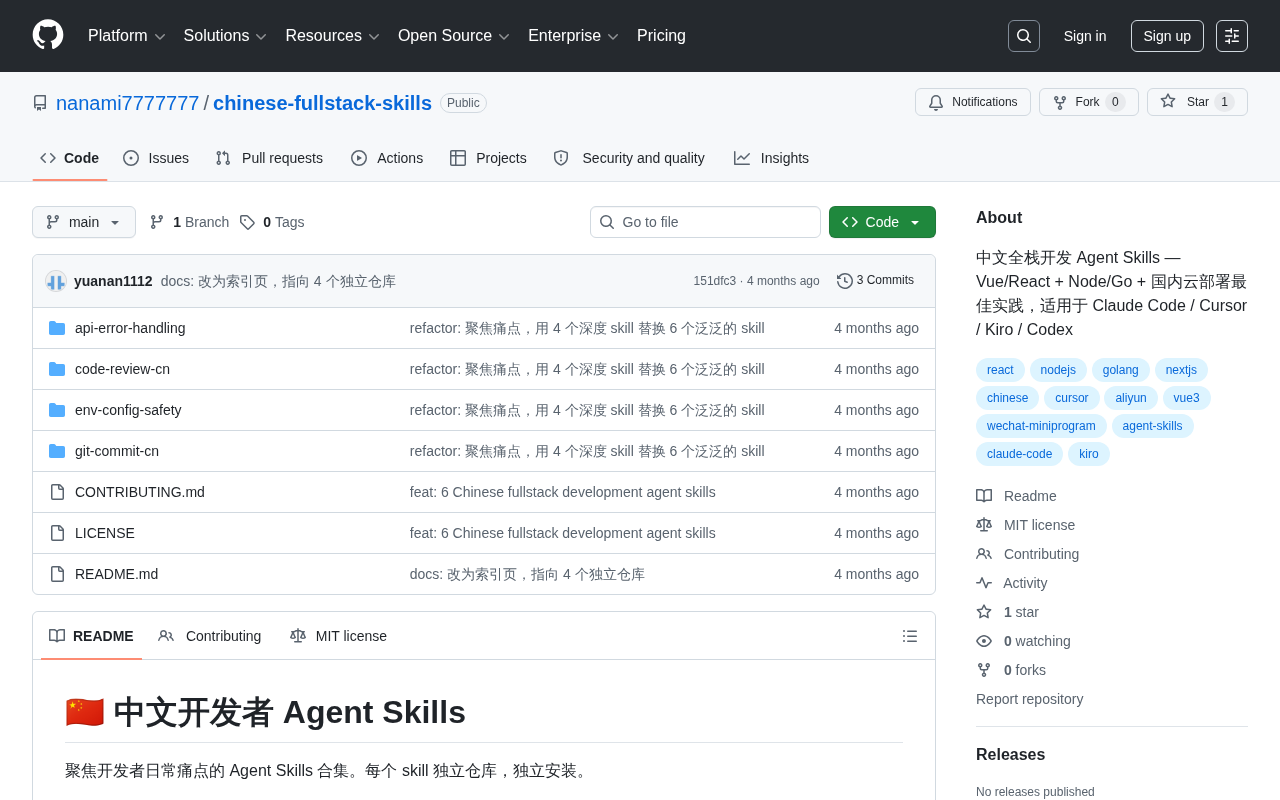
Chinese Full-Stack Agent Skills: A Skill Library Tailored for Domestic AI-Assisted Development
chinese-fullstack-skills is an Agent Skills library for Chinese full-stack development, covering Vue/React, Node/Go, and domestic cloud deployment best practices. Compatible with Claude Code, Cursor, Kiro, and Codex.
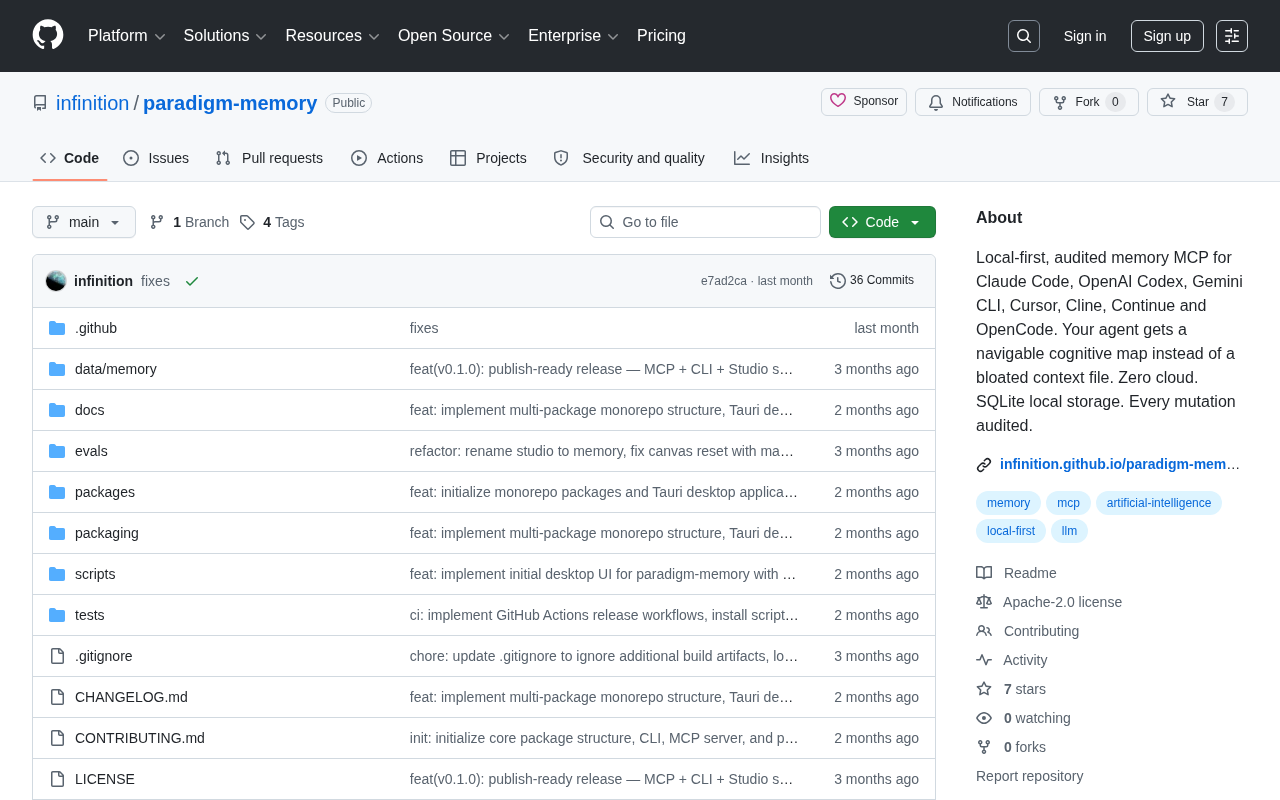
Paradigm Memory: A Local-First Memory System for AI Coding Assistants
paradigm-memory is a local MCP memory tool for Claude Code, Cursor, and Cline. It uses SQLite local storage, zero cloud, full audit trails, and a navigable cognitive map instead of bloated context files.