How Cozey Turned Warehouse and Finance Staff into Software Developers
Cozey enables non-engineering staff to build apps on Vercel, driving AI-era enterprise digitalization with low cost and efficient governance.
Canadian modular sofa brand Cozey breaks the "software development is for engineers only" convention, letting non-technical employees in warehouse, finance, and customer service build and deploy apps directly using coding agents and the Vercel platform—new apps appear almost weekly. A warehouse coordinator built a real-time floor plan, finance moved profit reviews from monthly to weekly, and support built an AI furniture image app. On the technical side, Cozey rebuilt its storefront on Next.js, runs internal systems on Vercel, and replaced an ~$80K/year tool with Vercel Flags. As apps multiply, Cozey manages permissions and model access via access protection, SSO, and AI Gateway, and is building Agentic Mesh as a single control plane for AI use. This model relieves engineering pressure and speeds response to frontline needs.
Canadian modular sofa brand Cozey is breaking the convention that "building software is for engineers only." The company's warehouse, finance, and customer service employees can now build applications directly and deploy them to the Vercel platform without waiting for the engineering team's schedule. According to Sam Morrison, Cozey's VP of Digital, new applications are born almost every week. This model not only solves business pain points but also significantly reduces tooling costs, offering a new approach to enterprise digitalization in the AI era.
Starting from Business Pain Points: Development Practices of Non-Technical Employees
Cozey CEO Fred Aubé encourages employees to solve problems themselves rather than waiting for other teams to take over. VP of Digital Sam Morrison found that the team's prototyping capabilities in AI chat tools had hit a ceiling. After employees build web applications with coding agents, they can deploy them themselves via Vercel and share the link with colleagues.
In the warehouse, a coordinator built a real-time floor plan showing box locations and employee activity. Sam admits the engineering team would never have prioritized this project. The finance department developed its own profit and loss tracking application, increasing the frequency of performance reviews from monthly to weekly. Customer service representatives also built an AI application that generates images of Cozey furniture in customers' rooms, with plans to open it to shoppers in October.
Sam commented: "Every problem they solve for themselves is one I don't have to deal with. If they build something cool, I can also borrow from it and integrate it into what we're doing."
Technical Foundation: Full Extension from Storefront to Business Backend
Cozey's storefront was rebuilt on Next.js, and Sam estimates that the Atmosphere sofa series alone has about 1.2 million possible configurations. The team wanted full control over how shoppers explore options, so they chose a custom frontend rather than a Shopify template. Sam said: "We could use a Shopify template, or we could build our own frontend on Next.js and get full control. We'd choose the latter 100%."
Storefront functions use Fluid compute, and the internal Python backend and Cozey Operating System (C.O.S.) also run on Vercel. C.O.S. is used to forecast orders, manage warehouse and retail operations, review finances, and track business performance. Every pull request for C.O.S. gets a Vercel Preview Deployment, allowing the team to test a working application before release. Engineers report that builds on Vercel take only minutes thanks to caching. The team also shares preview links with CEO Fred so he can try changes and provide feedback.
For feature release control, Cozey adopted Vercel Flags to replace a standalone tool that cost about $80,000 per year. After release, performance metrics on Vercel provide the team with a unified reference baseline. When Cozey entered the Australian market, the team needed to handle regional backend work, but for the storefront on Vercel, Sam said "it wasn't even a discussion."
Fluid compute is a compute model introduced by Vercel, designed to solve the cold start and concurrency limitations of traditional Serverless functions under burst traffic. It keeps function instances "warm" between requests and dynamically allocates compute resources, allowing functions to run continuously like a server while retaining Serverless elastic scaling and pay-as-you-go characteristics. For an e-commerce storefront like Cozey's, which has about 1.2 million sofa configurations and needs frequent backend logic calls, Fluid compute can reduce cold start latency and ensure shoppers get a smooth experience when browsing and customizing products. In addition, Fluid compute supports longer execution times and higher memory configurations, making it suitable for handling complex configuration calculations and real-time inventory queries without managing server clusters yourself.
Governance at Scale: Permission Management and Unified AI Access
As more employees start building applications, Cozey needs to manage who can open applications, who can deploy and maintain them. At one point, an employee deployed an application that anyone on the internet could open. For internal applications that went live without proper authentication, Sam enabled Vercel's access protection feature. "This saved us from some fairly serious privacy risks," Sam said. Cozey uses single sign-on and Directory Sync to manage team membership through groups in the employee directory.
On the AI application side, Sam found that teams were duplicating model connection work. Six Cozey projects, including the storefront, send model requests through Vercel AI Gateway, and engineers also call models in their code editors. AI Gateway provides a unified interface for different model providers; when one provider is unavailable, the gateway can route requests to another provider offering the same model. It does not add a markup on providers' token prices, and Sam describes the additional cost of routing requests through it as "essentially $0."
Cozey is also developing what it calls Agentic Mesh, a system that coordinates AI use across internal applications and customer experiences. The coordination service is built on AWS, with plans to use AI Gateway for model requests and Vercel for application deployment. Its goal is to help teams decide which models to use and where to run applications, while giving the engineering team visibility into AI usage and costs. Sam said: "This mesh is our single control plane. I want control, observability, governance—all the foundational pieces—in place so we can enter this future in the safest, most private way possible."
Vercel AI Gateway is a unified model access layer for AI applications that provides a standardized API interface for different model providers (such as OpenAI, Anthropic, Google, etc.). Developers don't need to write separate integration code for each provider; they simply send requests through the gateway, which automatically routes to the specified model. When a provider experiences an outage or rate limiting, the gateway can seamlessly switch requests to another provider offering the same model, improving application availability. AI Gateway does not mark up providers' token prices and charges only a small fee based on request volume, making multi-model strategies more cost-effective. For Cozey, having six projects call models through the same gateway simplifies key management and billing reconciliation and lays the foundation for unified governance under Agentic Mesh.
Vercel Flags is a feature flag service built into the Vercel platform, allowing teams to dynamically enable or disable specific features without redeploying code, and to roll out gradually by user group, region, or percentage. Compared with standalone tools like LaunchDarkly, Vercel Flags is deeply integrated with the deployment platform, with configuration and code managed in the same repository, reducing additional tool procurement and operational costs. Cozey replaced a standalone tool costing about $80,000 per year with it, showing that for teams already using Vercel, built-in Flags are sufficient for common release control needs. Feature flags are especially important in microservices and high-frequency iteration scenarios, enabling engineering teams to safely test new features, quickly roll back problematic changes, and decouple release decisions from code deployment.
Takeaways: The Value of Business People Becoming Developers
Cozey's practice shows that when non-engineering employees can build and deploy applications directly, enterprises can respond faster to frontline needs while relieving pressure on engineering teams. Sam points out that the engineering team would never have prioritized projects like the warehouse floor plan, but the people who needed it could decide, build, and share it with the people moving boxes. When the digital team finds a valuable idea, there's already a working application as a foundation.
Cozey chose to build a custom storefront on Vercel to control the shopper experience, and Sam's next goal is to let non-engineering employees share that control too. If shoppers repeatedly ask the same question about a sofa, the customer service representative who hears it can put the answer directly on the product page. This model diffuses development capability from a centralized engineering team to the entire organization, offering a path worth learning from for enterprise operations in the AI era.
One-line Summary
Cozey lets non-engineering employees build their own applications on Vercel, driving enterprise digitalization in the AI era with low cost and efficient governance.
Paragraph Summary
Canadian modular sofa brand Cozey breaks the convention that "software development is for engineers only," enabling non-technical employees in warehouse, finance, and customer service to build and deploy applications directly with coding agents and the Vercel platform—new applications are born almost every week. A warehouse coordinator developed a real-time floor plan, the finance team increased profit review frequency from monthly to weekly, and customer service built an AI furniture image generation application. On the technical foundation side, Cozey rebuilt its storefront on Next.js, runs internal systems on Vercel, and uses Vercel Flags to replace a standalone tool costing about $80,000 per year. As applications multiply, Cozey manages permissions and model access uniformly through access protection, single sign-on, and AI Gateway, and is developing Agentic Mesh as a single control plane for AI use. This model relieves pressure on engineering teams and accelerates response to frontline needs.
Related articles
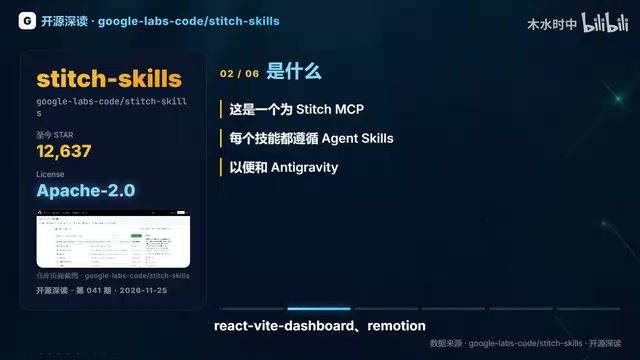
Google Stitch Skills: Connecting Coding Agents to the Design Workflow
Google Stitch Skills is an Agent Skills library following the open standard, adding a design-to-code workflow to the Stitch MCP Server. This article breaks down its three skill groups, SKILL.md directory structure, installation paths, and dependency pitfalls.

40.5-Inch Color E-Paper Art Frame: An Art Display You Charge Once a Year
The Ink Poster Tella 40.5-inch color e-paper art frame uses the E Ink Spectra 6 full-color solution: A1 format, no backlight, no noise, about one charge a year, 2,000+ licensed artworks built in, and automatic adaptation of phone photos.

Jingle Jam Memories: RT's Awkward First Encounter with Lewis
RT shares his awkward first Jingle Jam experience: unexpectedly pushed into the studio, meeting Lewis and Yogg's cast, and Toddy appearing in armor.