How DeepSeek's Open-Source Free Strategy Is Disrupting the AI Industry

DeepSeek's open-source free model is reshaping AI industry power structures and rattling Big Tech valuations.
DeepSeek founder Liang Wenfeng has adopted a dual strategy — monetizing through commercial services while releasing models as open-source and free — that echoes Android's ecosystem playbook and revives OpenAI's forgotten founding ideals. This approach has spooked capital markets, wiped over $1 trillion from U.S. tech stocks, and sparked geopolitical backlash, yet continues to win over developers worldwide.
Open Source and Free: DeepSeek's Strategic Choice
In the competitive landscape of large AI models, business models often determine industry direction more than the technology itself. Prominent scholar Wang Depei recently offered a sharp insight: DeepSeek founder Liang Wenfeng has charted a distinctly different path — generating profit through commercialization while simultaneously advancing AI development for society at large through open-source and free distribution.
This "two-pronged" approach essentially draws a clear line between profitability and public good. Wang Depei captured it in a memorable contrast: "You charge fees, I'll go free; you close the source, I'll open it." That line cuts straight to the core tension in today's AI industry.
What "Open-Source LLM" Actually Means
An open-source large language model refers to one whose weights, training code, and inference framework are released under an open license — allowing any individual or organization to freely download, use, modify, and redistribute them. Unlike traditional software open-sourcing, the challenge with LLMs lies in the sheer scale of model weight files (typically tens to hundreds of gigabytes), the fact that training data and processes are often not released alongside the model, and the complex boundaries around commercial usage terms. DeepSeek uses a relatively permissive license that allows commercial derivative development — a stark contrast to the early versions of Meta's LLaMA series, which restricted commercial use. This openness is a key reason DeepSeek spread so rapidly through the global developer community.

This model echoes the open-source philosophy behind Android. Released under the Apache 2.0 license in 2007, Android enabled hundreds of hardware manufacturers — Samsung, Huawei, Xiaomi, and others — to build customized systems on top of it, and millions of developers to construct application ecosystems, ultimately giving Android over 70% of the global smartphone OS market. Google doesn't charge for Android licensing; instead, it monetizes through Google Play, advertising services, and other ecosystem layers — a "free foundation, commercial superstructure" profit loop. DeepSeek follows the same logic: open up foundational model capabilities, attract ecosystem aggregation, then recover value through API access, enterprise services, and other commercial channels. By opening core capabilities to developers worldwide and enabling anyone to build on top of them, DeepSeek seeds an entire ecosystem for innovation to flourish.
Revisiting OpenAI's Original Mission
Wang Depei's analysis pays particular attention to OpenAI's evolution. When Sam Altman, Elon Musk, and others co-founded OpenAI, they were committed to a "non-profit" mission — to provide humanity with an open-source computing framework that would advance AI for the benefit of all.
The Structural Fracture at OpenAI
OpenAI was founded in 2015 as a 501(c)(3) nonprofit, with an initial commitment to publicly sharing its research. In 2019, it introduced a "Capped-Profit" subsidiary structure, allowing outside investors to receive returns of up to 100x — a move designed to attract large-scale funding from institutions like Microsoft. This structural shift marked a fundamental transition from a purely altruistic research organization to a commercial entity. After GPT-3, OpenAI progressively stopped releasing full model weights, offering only paid API access — drifting ever further from the "Open" in its name.

As OpenAI pivoted toward commercialization, its early open-source ideals faded. Musk left the board in 2018 and subsequently criticized OpenAI publicly on multiple occasions for betraying its founding principles, eventually filing a lawsuit in 2023 alleging violations of the founding agreement. This context helps explain why Musk, after departing from OpenAI, expressed support for DeepSeek — because DeepSeek in many ways carries forward the open-source spirit that OpenAI originally stood for.
Liang Wenfeng's distinctive achievement is finding a balance between idealism and pragmatism: using commercial operations to cover the steep costs of GPU compute, while giving back to the global tech community through open-source and free access — sustaining both commercial viability and technological accessibility.
GPU Compute: The Core Cost Barrier in AI Competition
The primary cost of training and deploying large language models is GPU compute. A single NVIDIA H100 costs roughly $30,000–$40,000, and training a GPT-4-scale model is estimated to require thousands of H100s running in parallel for months, pushing total compute costs into the hundreds of millions of dollars. This steep barrier creates a significant capital moat, limiting frontier model development to tech giants or startups backed by top-tier venture capital. DeepSeek's breakthrough lies in its team's algorithmic innovations — including Mixture of Experts (MoE) architecture and Multi-head Latent Attention (MLA) — which dramatically reduced the compute required for both training and inference. Reports suggest its training costs were a fraction of comparable competing models, enabling it to achieve performance rivaling top closed-source models under constrained resources, and thus sustaining an open-source, free-to-use business strategy.
Global Reactions and Controversy
DeepSeek's open-source free strategy triggered strong reactions around the world, and controversy followed close behind.

Dual Pressures: Geopolitics and Data Security
U.S. restrictions on Chinese AI technology began with the export control rules introduced in October 2022, which prohibited the export of high-performance AI chips — including NVIDIA's A100 and H100 — to China, with subsequent rounds extending restrictions to downgraded variants as well. Against this backdrop, DeepSeek's ability to train high-performance models despite chip access constraints carries potent geopolitical symbolism. Italy's data protection authority, the Garante, approached the matter from a different angle — primarily through the lens of GDPR compliance, requesting that DeepSeek clarify its data handling practices. The divergent concerns across regions reflect different dimensions of anxiety about Chinese AI products, with security logic predominating in the U.S. and data privacy concerns more prominent in Europe.
According to Wang Depei, some U.S. legislators even floated extreme proposals — suggesting that users who download the DeepSeek agent could face up to 20 years in prison and fines of up to $100 million. While this proposal was never formally enacted, the mere fact that it was publicly raised in Congress speaks to the magnitude of DeepSeek's perceived threat. Similar restrictive sentiments have been expressed in parts of Europe, including Italy.
Yet administrative resistance has not dampened technical appreciation. If anything, the opposite has occurred — scientists and developers worldwide have grown increasingly enthusiastic about DeepSeek. The reason is straightforward: it's open source, free, and genuinely solves real-world problems. When comparable commercial solutions come at high cost, a high-performing, zero-barrier alternative is naturally compelling.
Impact on the Industrial Capital Landscape
DeepSeek's most profound disruption may be in how it has shaken the AI valuation framework built by industrial and financial capital working in tandem.

The Undermining of NVIDIA's Valuation Logic
NVIDIA's market cap surged dramatically during the AI investment boom of 2023–2024, briefly exceeding $3 trillion. The core logic underpinning that valuation was simple: demand for GPU compute for AI training and inference would continue growing at high speed, and NVIDIA held roughly 80% monopolistic share of the high-end AI chip market — a formidably deep moat. DeepSeek's emergence delivered a two-pronged challenge to this logic. First, its efficient algorithms demonstrated that equivalent performance could be achieved with significantly less compute, directly compressing expected GPU demand. Second, the wider availability of open-source high-performance models would reduce the need for tech companies to repeatedly train massive models from scratch, further diminishing incentives to purchase compute at scale. This explains why NVIDIA's market cap fell by approximately $590 billion in a single day following DeepSeek's announcement — the largest single-day market cap decline for any individual stock in U.S. market history.
For years, American tech giants had accumulated enormous market valuations through technological monopolies and financial engineering. DeepSeek, by offering a lower-cost, open-source alternative, strikes directly at the foundation of that logic.
According to Wang Depei's analysis, within just days of DeepSeek's debut, NVIDIA and the "Magnificent Seven" U.S. tech giants collectively shed more than $1 trillion in market capitalization. This figure may reflect short-term market panic, but it makes one thing unmistakably clear: capital markets have recognized that the rules of competition in the AI industry are being rewritten.
Conclusion: The Disruption Will Continue
Wang Depei's assessment is that the disruption DeepSeek has set in motion "will continue."
Viewed from a broader perspective, DeepSeek's significance may extend beyond being a high-performing open-source LLM. It offers a new industrial paradigm: technology can be both commercialized and democratized; innovation can be both profitable and open. If this model continues to evolve, it will pose a sustained long-term challenge to the current AI industry structure — characterized by closed-source development, high pricing, and monopolistic control.
Of course, the analysis in this article draws primarily from a single commentator's perspective, and specific details — such as the market cap loss figures and legislative proposals mentioned — should be evaluated carefully alongside additional sources. Nevertheless, the "open source vs. closed source" and "free vs. paid" debate that DeepSeek has ignited has become an indispensable lens through which to understand the future trajectory of the AI industry.
Key Takeaways
Related articles
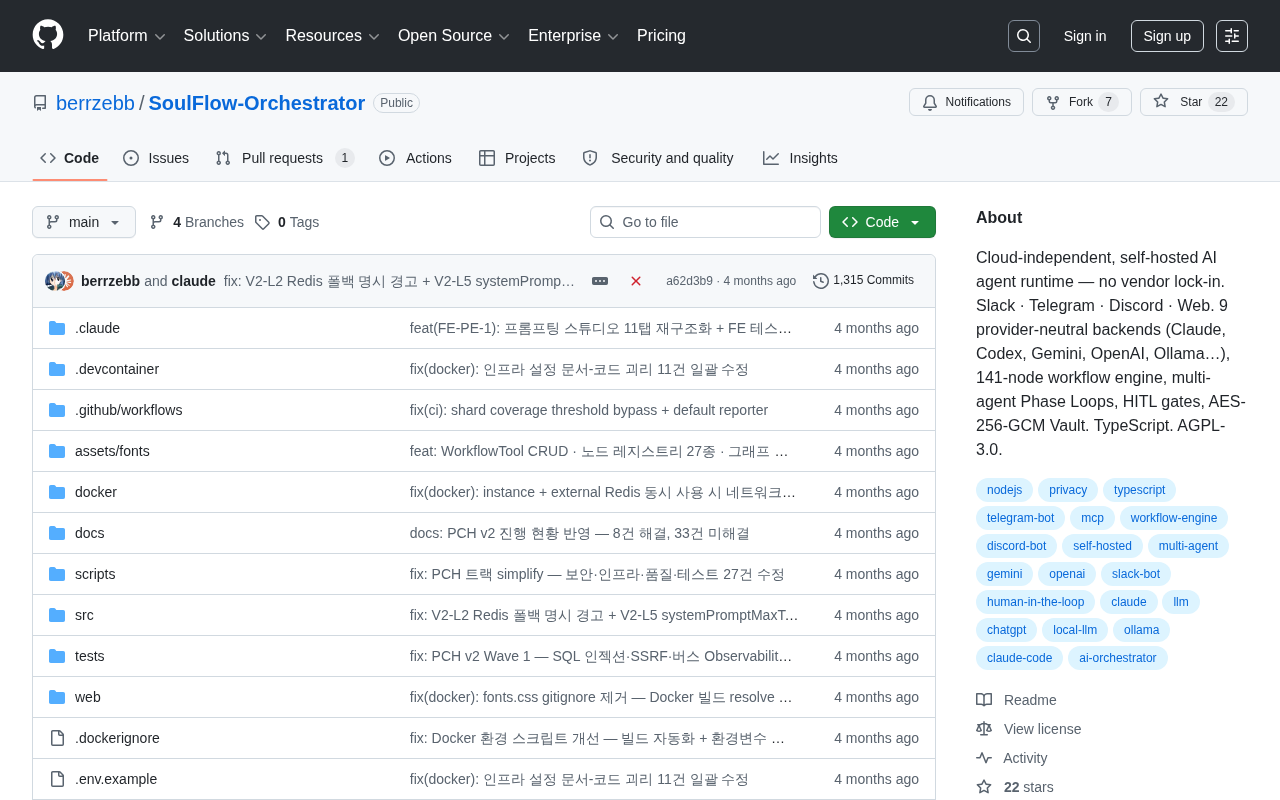
SoulFlow-Orchestrator: A Self-Hosted, Vendor-Lock-In-Free AI Agent Runtime
SoulFlow-Orchestrator is an open-source, self-hosted AI agent runtime with no vendor lock-in. Supports 9 neutral backends (Claude, OpenAI, Ollama), 141-node workflow engine, multi-agent loops, and HITL gates.
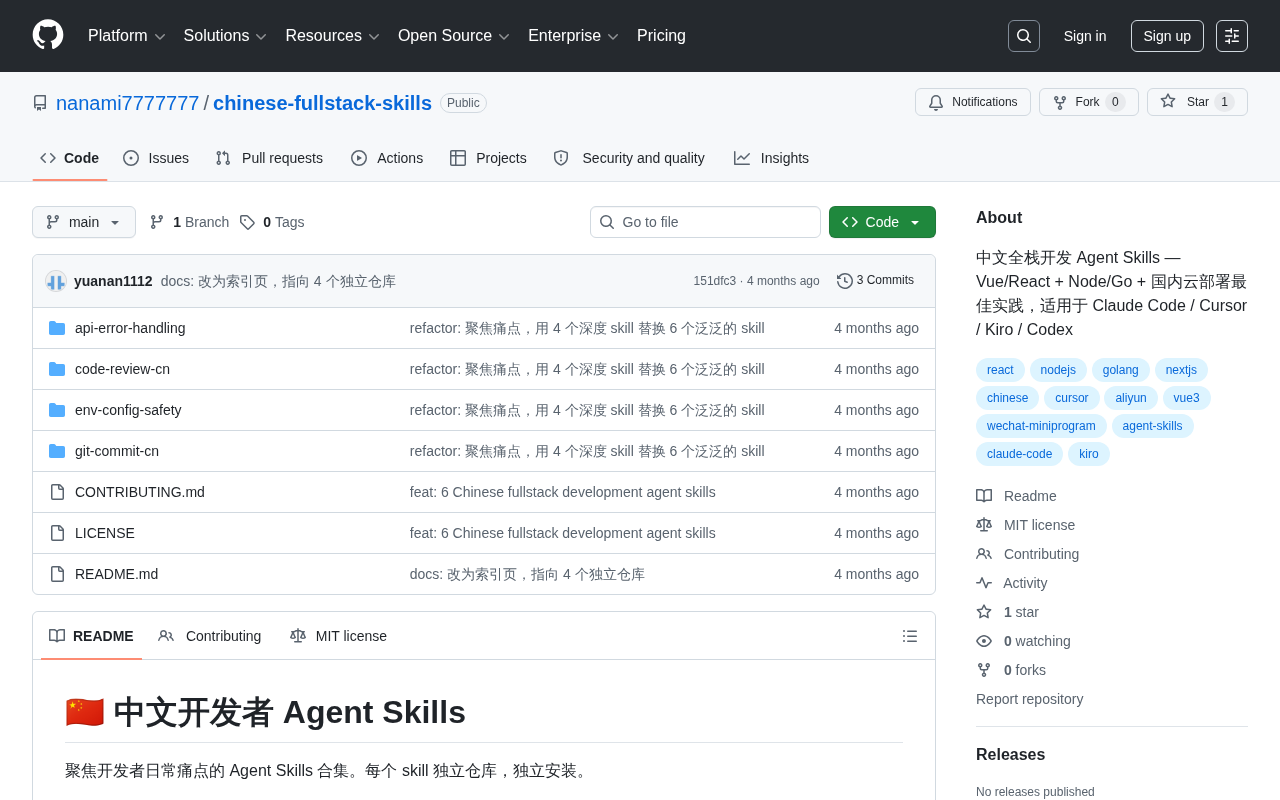
Chinese Full-Stack Agent Skills: A Skill Library Tailored for Domestic AI-Assisted Development
chinese-fullstack-skills is an Agent Skills library for Chinese full-stack development, covering Vue/React, Node/Go, and domestic cloud deployment best practices. Compatible with Claude Code, Cursor, Kiro, and Codex.
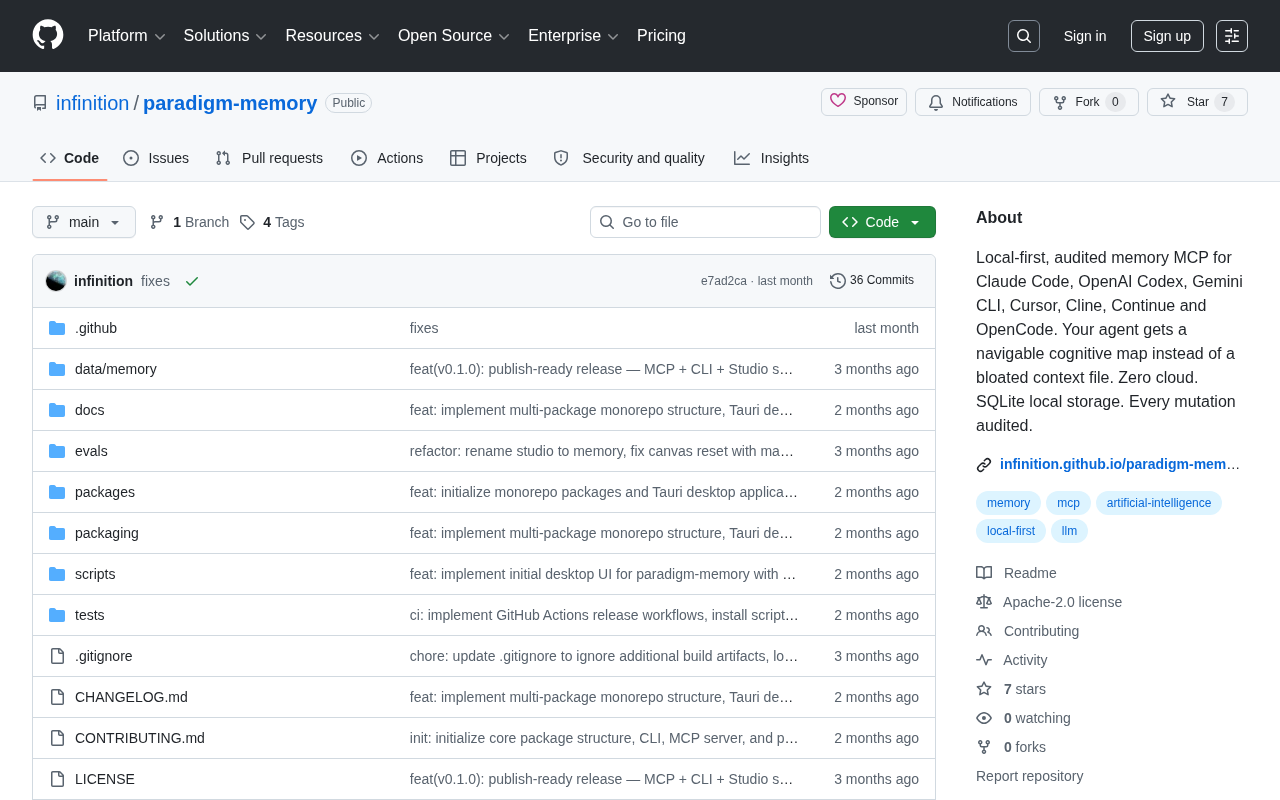
Paradigm Memory: A Local-First Memory System for AI Coding Assistants
paradigm-memory is a local MCP memory tool for Claude Code, Cursor, and Cline. It uses SQLite local storage, zero cloud, full audit trails, and a navigable cognitive map instead of bloated context files.