How DeepSeek Upended Silicon Valley With Rock-Bottom Prices: The Collapse of AI Pricing Power
DeepSeek is commoditizing frontier AI at one-tenth the Western price, dismantling Silicon Valley's pricing logic.
After shocking markets on 'DeepSeek Monday' in January 2025, the Chinese AI lab born from a quant hedge fund returned in 2026 with flagship V4 — matching Anthropic's Claude Opus on coding benchmarks at roughly one-tenth the price. The price shock forced OpenAI and Google into deep cuts, while Chinese-origin models surged from under 2% to over half of token consumption on OpenRouter. DeepSeek also closed a record ~$7.4B funding round, but founder Liang Wenfeng kept full control via a no-vote, five-year lockup structure. The piece also confronts the other side: top U.S. models still lead on hard reasoning and sensitive data, while censorship baked into model weights and data sovereignty concerns remain real and unresolved.
18 months ago, a Chinese company virtually unknown in the West wiped nearly $600 billion in market cap from a single stock in a single afternoon. Then it went quiet. Everyone assumed Silicon Valley had absorbed the blow and moved on. But DeepSeek never went away — it went back to the drawing board, and returned in 2026 with a weapon far more dangerous than a viral chatbot: a price low enough to turn the world's most sophisticated software into a commodity.
This piece is based on an in-depth breakdown by overseas analysts, tracing DeepSeek's full arc from "DeepSeek Monday" to the V4 launch in 2026 — including both the overhyped elements and the very real threats.
"DeepSeek Monday": A Market Meltdown for the History Books
January 27, 2025 — a Monday — is now referred to on Wall Street as "DeepSeek Monday." Over the weekend, news had spread rapidly about a new model called R1, released by a Chinese startup out of Hangzhou. R1 was a reasoning model that performed roughly on par with OpenAI's best models — but it was open-source, freely downloadable, and according to the company, cost a fraction of the price to train.
That Monday, the DeepSeek app surpassed ChatGPT to become the most downloaded free app on the U.S. App Store. When U.S. markets opened, they cracked: Nvidia dropped roughly 17%, erasing approximately $593 billion in market cap — the largest single-day loss in market cap ever recorded by any company. The Nasdaq shed roughly $1 trillion. Broadcom, Microsoft, and Alphabet all fell in tandem. Venture capitalist Marc Andreessen called R1 AI's "Sputnik moment."
What was truly unsettling was the underlying logic. The entire American AI strategy had been built on brute force — buy more chips, build bigger data centers, spend money no one else can match. DeepSeek's message was: maybe you don't need any of that. Maybe you can substitute ingenuity for wealth.
The Cost Controversy Behind the Legend
DeepSeek grew out of High Flyer, a quantitative hedge fund co-founded by Liang Wenfeng. Before the strictest U.S. chip export controls took effect, High Flyer had stockpiled thousands of Nvidia GPUs for stock trading. Liang turned that hardware into an AI lab, funding it entirely himself with no outside investors. He said in 2023: "Money has never been a problem for us. Export bans on advanced chips are."
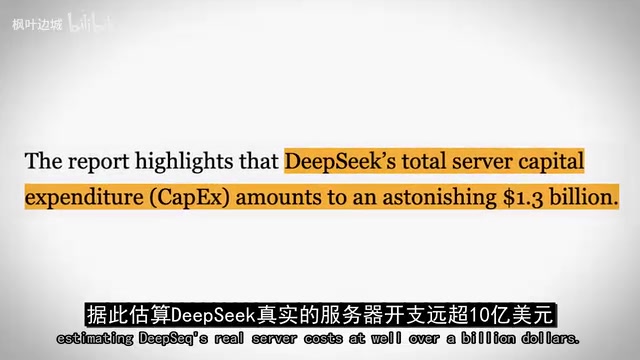
But the famous "under $6 million training cost" claim was quickly picked apart. Research firm SemiAnalysis pointed out that the $6 million figure only counted the final GPU training run, ignoring R&D, infrastructure, and the hardware itself — with actual server costs far exceeding $1 billion. Google DeepMind CEO Demis Hassabis called the cost claim "exaggerated and a bit misleading," while a Wall Street analyst flatly called it "a potentially made-up story." OpenAI and others also accused DeepSeek of training at low cost through "distillation" of Western model outputs — a charge DeepSeek countered by arguing distillation is standard industry practice. DeepSeek later published a paper in Nature putting the final training cost of R1 at $294,000, using 512 export-compliant Nvidia chips.
What is distillation? "Distillation" is a well-established model compression technique in machine learning: a large "teacher model's" outputs are used to train a smaller "student model," allowing the student to mimic the teacher's behavior at far lower parameter counts and training costs. The controversy centers on the fact that OpenAI and others explicitly prohibit using their API outputs to train competing models in their terms of service. If DeepSeek called these APIs at scale and incorporated the results into training, it would effectively be using the intelligence built by Western companies' billions in investment as a free shortcut. DeepSeek's response is that distillation is a universal industry practice used extensively by Google and Meta alike. The dispute remains unresolved — but it exposes a fundamental security gap in the open-API era: the outputs of any powerful model can potentially become raw material for training the next generation of competitors.
The Return: V4 Comes Back With Sharper Weapons
While everyone was still debating what happened in January 2025, DeepSeek was building toward 2026.
In April 2026, DeepSeek released a preview of V4 — its first true flagship since R1 — followed by the full release. V4 Pro features a context window of up to one million tokens, with a focus on agentic tasks: AI autonomously using tools, writing and running code, and completing multi-step workflows.
The real bombshell was Flash. On a crowdsourced coding leaderboard, DeepSeek's V4 debuted ahead of Anthropic's flagship Claude Opus on front-end programming. Axios reported it performed close to Opus on complex coding tasks. DeepSeek was now going head-to-head with America's best models.
The AI "Race to Zero": Pricing Power Is Collapsing
What turned a good model into an industry-wide crisis was the price.
Based on mid-2026 pricing comparisons, DeepSeek V4 Pro charged approximately $0.87 per million output tokens. The comparable Western flagships — Claude Opus and GPT-5.5 — charged $25 to $30 for the same volume. That's not a discount. That's a roughly 10x cheaper model of comparable quality. The Flash tier was even cheaper — one analysis found that a workload costing nearly $800 on top U.S. models cost about $11 on DeepSeek. And because DeepSeek's models are open-source, developers can download and run them anywhere, with no vendor lock-in whatsoever.
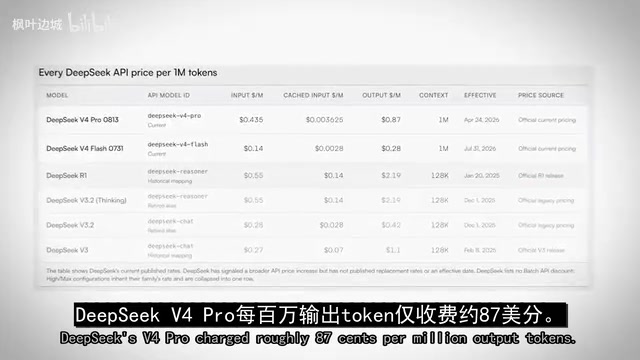
This is exactly the trap Silicon Valley walked into. For years, the pitch to investors was: frontier AI costs an enormous amount to build and run, only a handful of well-capitalized giants can compete, and that justifies premium pricing and staggering valuations. DeepSeek's entire existence is a counter-argument — that sufficiently good intelligence is becoming a commodity purchasable for pennies. Axios dubbed it "the AI race to zero."
The data backs this up. On OpenRouter, a platform that routes developer traffic across multiple AI models, the share of token consumption from Chinese-origin models surged from under 2% in late 2024 to more than half by June 2026.
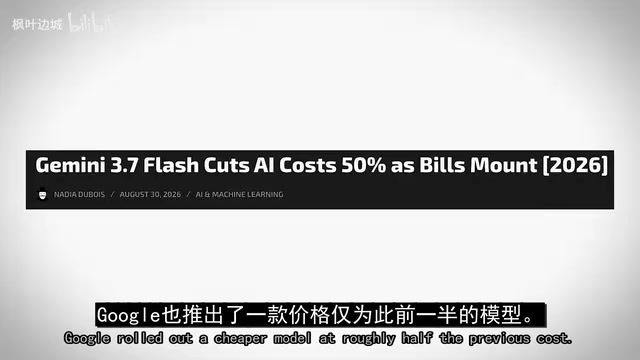
The incumbents' reactions reveal their fear. OpenAI reportedly slashed the price of one model by roughly 80% just weeks after launch. Google released a cheaper model at roughly half the price of its predecessor. These are not the moves of confident monopolists — they're the scramble of companies watching their pricing power evaporate from the bottom, while reportedly still losing enormous amounts of money on every dollar of revenue.
Why does "per million tokens" matter? One million tokens is roughly 750,000 English words — the equivalent of about ten mid-length novels. For ordinary users, that's an abstract number. But for enterprise developers calling APIs at scale — building code review tools, customer service systems, or data analysis pipelines — token consumption accumulates at a staggering rate. That's exactly why compressing the same output from $25–30 to under $1 represents a structural disruption for any enterprise client spending tens of thousands of dollars per month on API calls. The traffic migration recorded on OpenRouter is essentially enterprise customers voting with their feet: when the quality gap narrows to "good enough," price becomes the only variable.
Closing the Loop: The Company That Refused Outside Capital Finally Raises Funding
The most complete plot twist in DeepSeek's comeback was that this company — which had spent its entire existence refusing external capital — finally accepted investment.
In mid-2026, DeepSeek closed its first external funding round at a reported ~$7.4 billion, a record for a Chinese startup, at a valuation approaching $50 billion. Investors reportedly included Tencent and battery giant CATL, with Liang Wenfeng himself putting in billions. Even so, DeepSeek did it on its own terms — investors reportedly bought not ordinary equity, but stakes in a partnership entity controlled by Liang, with a five-year lockup and no voting rights. They could fund him. They couldn't direct him.
The structure of control DeepSeek's fundraising architecture reflects a distinctive logic of capital control common among Chinese tech companies. Investors purchased stakes not in DeepSeek's operating entity directly, but in a partnership vehicle controlled by Liang Wenfeng, with a five-year lockup and no voting rights. This arrangement legally insulates the company's strategy, product direction, and data handling decisions from any outside interference. By contrast, America's top AI labs are typically deeply entangled with strategic investors — OpenAI's relationship with Microsoft being the textbook example, where capital investment comes bundled with compute supply, cloud service tie-ins, and constraints on commercialization. Liang's structure allows DeepSeek to absorb large-scale funding while retaining virtually the same decision-making autonomy it had as a startup — a precedent nearly without parallel among the world's top AI labs.
The Fear Is Real — But It's Not the Whole Story
Before crowning DeepSeek, it's worth being honest about the other side.
Top American labs still hold the absolute frontier. For the hardest reasoning tasks, the most demanding long-horizon agentic work, and anything involving regulated or sensitive data, the expensive models still win — and that gap is exactly what buyers are paying for.
The trust problem is equally real. Hosted Chinese models send data to servers subject to Chinese law; security and censorship concerns have not gone away. Independent testing has found that DeepSeek models are more willing to comply with malicious requests than their American counterparts. Italy, South Korea, Australia, and Taiwan have all restricted or banned its use. Censorship of politically sensitive topics has reportedly been baked directly into the model weights. And DeepSeek actually raised its prices when V4 Pro officially launched — suggesting the race to zero has a floor.
So rather than saying the giants are "afraid," what's actually happening is a collapse of pricing power — not yet a collapse of the companies themselves. But that may be exactly what makes it so frightening for Silicon Valley: when Microsoft or Meta is in trouble, AI is what investors pour money into to save the day. For premium AI labs, there is no "AI bailout" — because AI is the very hand applying the pressure.
DeepSeek once proved you can substitute ingenuity for wealth. Now it's proving you can substitute cheap for dominant. If genuinely powerful intelligence keeps getting cheaper and more open every few months, then the trillion-dollar bet that "a handful of companies will own this technology and price it however they like" starts to look more and more like the most expensive assumption in the history of tech.
What's your read? Does DeepSeek represent the future of AI — cheap, open, and "good enough" for almost everyone? Or are you willing to pay the premium for top-tier models, because in your use case, "good enough" isn't good enough? That's the core debate the entire industry is having right now.
What are "model weights"? Model weights are the technical key to understanding the embedded censorship problem. All the "knowledge" and behavioral patterns of a neural network are ultimately encoded in billions of floating-point parameters stored in a weights file. When researchers find that DeepSeek's avoidance of certain political topics is "baked into the model weights," it means this restriction doesn't come from system prompts or real-time filtering layers — it was burned into the model's underlying structure during training. Even if a user downloads the open-source weights and runs them locally, bypassing DeepSeek's servers and Chinese legal jurisdiction, those behavioral constraints remain embedded in the model itself. This is fundamentally different from an external filter that a system administrator can turn off — and it's why multiple countries and regions, after assessing the risks, have chosen to restrict its use. The concern isn't just where the data goes. It's whether the model itself carries embedded value judgments.
Related articles

LynnReal-Omni: 32B Unified Video Diffusion Model Goes Open Source with Multi-Task Coverage in Four Steps
LynnReal-Omni is a 32B unified video diffusion model on MiniMax H3, covering text-to-video, pose guidance, style transfer, restoration in 4 steps. Flash version generates 540p video in 377ms on one H100.

Anthropic Co-Founder: AI 'Kill Switch' May Need to Be Mandatory by Law
Anthropic's co-founder tells the BBC that AI 'kill switches' may need to be legally mandated. We analyze the industry logic, technical challenges, and the tension between regulation and innovation.

The AI Data Center Boom Is Colliding With Cities Scarred by Heavy Industry
The AI data center boom is clashing with post-industrial communities. Philadelphia's case reveals structural conflicts between AI growth, energy use, water, and environmental justice.