How Do Chiral Molecules Determine Drug Efficacy? A Plain-Language Guide to the 2026 Nobel Prize in Chemistry

The 2026 Nobel Prize in Chemistry reveals chiral molecule synthesis: how tiny deviations dominate reactions, and why life prefers left-handed amino acids.
Starting from the everyday analogy of left and right hands, this article explains how chiral molecules share the same chemical formula but differ in 3D orientation and cannot be superimposed. It uses the lock-and-key mechanism to show why drugs must use the correct chiral version, highlights Henry Kogan's asymmetric synthesis and Kenzo Soi's chiral amplification effect, and explores why life almost exclusively uses left-handed amino acids—an unsolved mystery in origin-of-life chemistry.
Starting with Left and Right Hands: What Is Chirality?
The 2026 Nobel Prize in Chemistry was awarded to two scientists—Henry Kogan of France and Kenzo Soi of Japan—for their pioneering work in the synthesis of chiral molecules. But what is chirality? This concept is actually closer to everyday life than you might imagine.
Hold your hands side by side in front of you, and you'll notice that the two hands look structurally identical: the same number of fingers, the same palm structure. But if you place your left hand in front of a mirror, what appears in the mirror is a right hand. The reverse is also true. Left and right hands are mirror images of each other, appearing completely identical, but with one key difference—you cannot fit a left-hand glove perfectly onto your right hand.
This "glove experiment" is the most intuitive way to understand chirality. Chiral molecules work the same way: they share identical chemical formulas and identical chemical properties, but their arrangement in three-dimensional space differs (that is, their orientation differs), so they cannot be perfectly superimposed. The left-handed version and the right-handed version are mirror images of each other, yet they cannot fit together perfectly.
According to the popular science YouTube video, the human body contains a large number of chiral molecules, as well as achiral molecules, but the focus of the 2026 Nobel Prize is on chiral compounds—which always exist in pairs as a "left-handed version" and a "right-handed version."

The term chirality comes from the Greek word cheir, meaning "hand," and is a geometric concept shared across chemistry, physics, and mathematics. An object is called chiral if it cannot be perfectly superimposed on its mirror image through rotation and translation; otherwise, it is called achiral. At the molecular level, chirality is usually caused by a chiral center (most commonly a carbon atom bonded to four different groups), and such molecules are called enantiomers. Enantiomers have nearly identical properties in achiral environments (such as ordinary solvents or routine melting-point measurements), but in chiral environments—for example, when interacting with another chiral molecule—they behave completely differently. This is precisely the fundamental reason why drug molecules differ so dramatically when binding to proteins, and it is also the physical basis for why chemists must distinguish between the "left-handed version" and the "right-handed version." Beyond enantiomers, there are more complex stereoisomeric phenomena such as diastereomers, but the enantiomers focused on in this article are the most fundamental and most critical category.
Lock and Key: How Do Chiral Molecules Interact with Proteins?
After understanding chirality, another key concept is the "lock and key" mechanism. The human body is made up of countless protein molecules, and we can think of a protein as a lock, while a foreign molecule (in this case, specifically a chiral molecule) is the key.
When we insert the left-handed "key" into the protein "lock," it can match precisely, producing strong interactions and stability. But here's the question: can the right-handed version of the same molecule—its mirror image—also fit perfectly into this lock?
The answer is no. Just as a left-hand glove cannot fit onto a right hand, if the left-handed key can be inserted into the lock, its mirror version—the right-handed version—cannot match in the same way. The two mirror versions of the same molecule interact with proteins in completely different ways.
This mechanism belongs to the field of supramolecular chemistry and is also the foundation for understanding how drugs work in the body.

The lock-and-key model was first proposed by German chemist Emil Fischer in 1894 to explain the high specificity between enzymes and substrates. Modern structural biology has further developed this into the "induced fit" model, in which proteins fine-tune their conformation upon binding a ligand, but the core logic of chiral recognition remains unchanged: the protein's active pocket itself is composed of L-amino acids and has a defined chiral environment, so it can only form an optimal hydrogen-bonding network, van der Waals contacts, and electrostatic complementarity with a ligand of a specific chirality. This is also one of the core subjects of supramolecular chemistry—how the cooperative effects of non-covalent interactions determine molecular recognition. In pharmacology, this mechanism directly gave rise to the concept of chiral drugs: for example, in the famous thalidomide case, the R-configuration had a sedative effect while the S-configuration was teratogenic. The two enantiomers interacted with different proteins in completely different ways in the body, becoming one of the most profound lessons in the history of drug regulation.
Why Must Drugs Get "Chirality" Right?
The importance of chirality in drug development cannot be overstated. Drug molecules are also chiral and also have left-handed and right-handed versions.
Suppose something goes wrong in your body and you need the left-handed version of a drug for treatment. If you accidentally get the right-handed version, what happens? Not only is it ineffective, but it may even trigger the opposite reaction in your body.
This means that for scientists, merely being able to "produce" a drug molecule is not enough. The key is to produce the correct three-dimensional version. If you need the left-handed version, you must synthesize it in a targeted way from the very beginning, rather than leaving it to chance and getting a mixture with an arbitrary left-right ratio.
This understanding directly drove the development of asymmetric synthesis technology—and this is precisely where the core contributions of the two awarded scientists lie.
The Breakthroughs of Two Scientists: From 2% to Complete Dominance
The contributions of the two Nobel laureates can be broken down into two levels.
Henry Kogan's Contribution: Asymmetric Synthesis
In a chemical reaction, the initial state has 50% left-handed and 50% right-handed versions. Kogan's breakthrough was that by artificially increasing the proportion of one version—even if only from 50:50 to 51:49, meaning just 2% more—he could observe a significant change in the product. He named this method "asymmetric synthesis."
Kenzo Soi's Contribution: Chiral Amplification
Soi's discovery went further: if one mirror version is only slightly more abundant at the start (say, 51% versus 49%), this tiny advantage is continuously amplified in subsequent reactions. The left-handed product continues to catalyze the formation of more left-handed product, creating a positive feedback loop. Ultimately, the left-handed version takes absolute dominance in the entire reaction, while the right-handed version—which was originally only 2% less—is completely eliminated.

In the video explanation, this effect is described as a "snowball": an initial deviation that seems insignificant is amplified step by step until it determines the direction of the entire reaction. This explains why tiny controls over initial conditions are so critical in chemical synthesis, and also explains why nature can produce biomolecules with highly uniform chirality.
Asymmetric synthesis is one of the core fields of contemporary organic chemistry. Its goal is to preferentially generate one enantiomer rather than a 50:50 racemic mixture in a reaction. Achieving this goal usually relies on chiral catalysts, chiral auxiliaries, or chiral solvents, among other means, to lower the activation energy of a particular transition state by providing a chiral environment. A closely related concept is enantiomeric excess (ee value), used to quantitatively describe the excess of one enantiomer relative to the other in a product. The "from 50:50 to 51:49" observed by Kogan corresponds to about 2% ee. Although the value is small, it is enough to trigger significant chiral amplification in subsequent reactions. The chiral amplification effect revealed by Soi is known in physical organic chemistry as a special case of the nonlinear effect, whose mathematical description was first systematically demonstrated in 1995 by Japanese chemist Kenso Soai (the "Kenzo Soi" in this article) and others through the Soai reaction—a reaction that uses a pyrimidyl alcohol as a catalyst and can spontaneously boost enantiomeric excess from extremely low values to nearly 100%, making it an important model system for studying the origin of homochirality in life.
Why Did Life Choose the Left Hand? An Unsolved Mystery
The research of the two scientists raises a bigger question: why does life prefer one chirality?
The hundreds of millions of proteins in the human body are all made of amino acids. And a surprising fact is that human proteins almost exclusively use left-handed amino acids (L-amino acids), while right-handed ones (D-amino acids) hardly participate in protein construction.
Not only proteins, but the formation of many other biomolecules also shows a preference for a specific mirror version. But why is this so? Why did life choose the left-handed version rather than the right-handed version during evolution?
The video offers a conjecture: at some stage in the evolution of life, a "chemical deviation" may have occurred—the left-handed version of some chiral molecule was slightly more abundant than the right-handed version. According to Soi's amplification mechanism, this tiny advantage was continuously amplified, ultimately leading the left-handed version to dominate the entire biological system while the right-handed version gradually faded out.
But how exactly did this process begin? Where did that first tiny deviation come from? The scientific community currently has no definitive answer. This is still an open frontier question, waiting for future researchers to answer.

Homochirality refers to the widespread phenomenon in which key biomolecules in living organisms almost exclusively use one chiral form: proteins are made of L-amino acids, while the sugar rings in DNA and RNA are in the D-configuration. This combination of "left-handed amino acids, right-handed sugars" is not accidental, but a basic feature of life on Earth. Regarding its origin, the scientific community has proposed several hypotheses: first, the physical origin hypothesis, which holds that parity violation caused by the weak nuclear force produces extremely tiny energy differences at the molecular level that are amplified over long evolutionary timescales; second, the cosmic origin hypothesis, which holds that interstellar organic molecules carried by meteorites themselves have a chiral bias, such as the Murchison meteorite containing slightly more L-amino acids than D-amino acids; and third, the spontaneous symmetry breaking hypothesis, which holds that in the "primordial soup" before the origin of life, random fluctuations were locked in through Soai-type amplification mechanisms. Whichever hypothesis is correct, all point to the same core: a tiny initial bias plus positive feedback amplification is enough to determine the chirality choice of the entire biosphere over billions of years. Answering this question concerns not only chemistry, but also our understanding of whether life in the universe is universal.
Summary
The work honored by the 2026 Nobel Prize in Chemistry centers on revealing two key principles in the synthesis of chiral molecules: asymmetric synthesis can be used to prepare the desired chiral version in a targeted way, and a tiny chiral bias can ultimately dominate the entire reaction system through amplification effects. These discoveries have not only advanced the precision of drug development, but also provided an important chemical basis for understanding why life chooses a specific chirality. Although the ultimate question of "why life prefers the left hand" has not been fully solved, the research of the two scientists has already paved the way toward answering it.
One-line Summary
The 2026 Nobel Prize in Chemistry reveals the principles of chiral molecule synthesis: how tiny deviations dominate an entire reaction, and why life prefers left-handed amino acids.
Paragraph Summary
Starting from the everyday analogy of left and right hands, the article explains how chiral molecules share the same chemical formula but differ in three-dimensional orientation, are mirror images of each other, and cannot be superimposed. It then uses the "lock and key" mechanism to explain the specificity of interactions between chiral molecules and proteins, leading to the conclusion that drugs must use the correct chiral version to be effective while the wrong version may be harmful. The article focuses on the two 2026 Nobel Prize in Chemistry laureates: Henry Kogan proposed asymmetric synthesis, proving that a tiny ratio adjustment of just 51:49 can significantly change the product; Kenzo Soi discovered chiral amplification, in which an initial tiny bias is amplified step by step through positive feedback until one chiral version becomes absolutely dominant. Finally, it explores the unsolved mystery of why life almost exclusively uses left-handed amino acids, conjecturing that an early evolutionary chemical bias was locked in through amplification mechanisms, while the source of the original bias remains an open question.
Related articles

M&M's Spent Millions Replacing Artificial Blue Dye — Why Is It So Hard?
Mars spent millions trying to replace artificial blue dye in M&M's with spirulina, but thick material clogs pipes and residue risks mold, forcing a full production-line rebuild. Here's the engineering behind the reformulation.
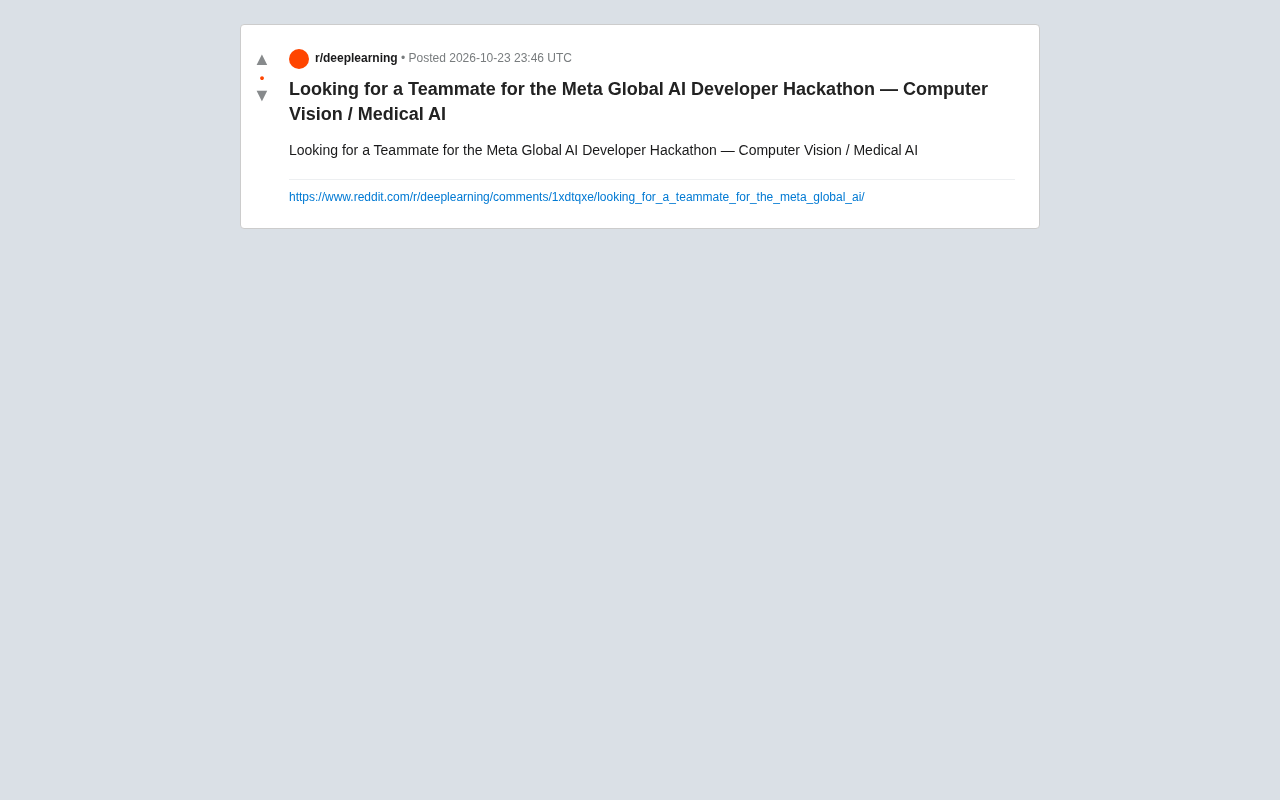
Teammate Wanted for Meta Global AI Developer Hackathon: Computer Vision & Medical AI
A Reddit developer seeks teammates for the Meta Global AI Developer Hackathon, focusing on computer vision and medical AI. This article analyzes the track logic, skills-complementarity needs, and topic selection strategy behind this teaming signal.
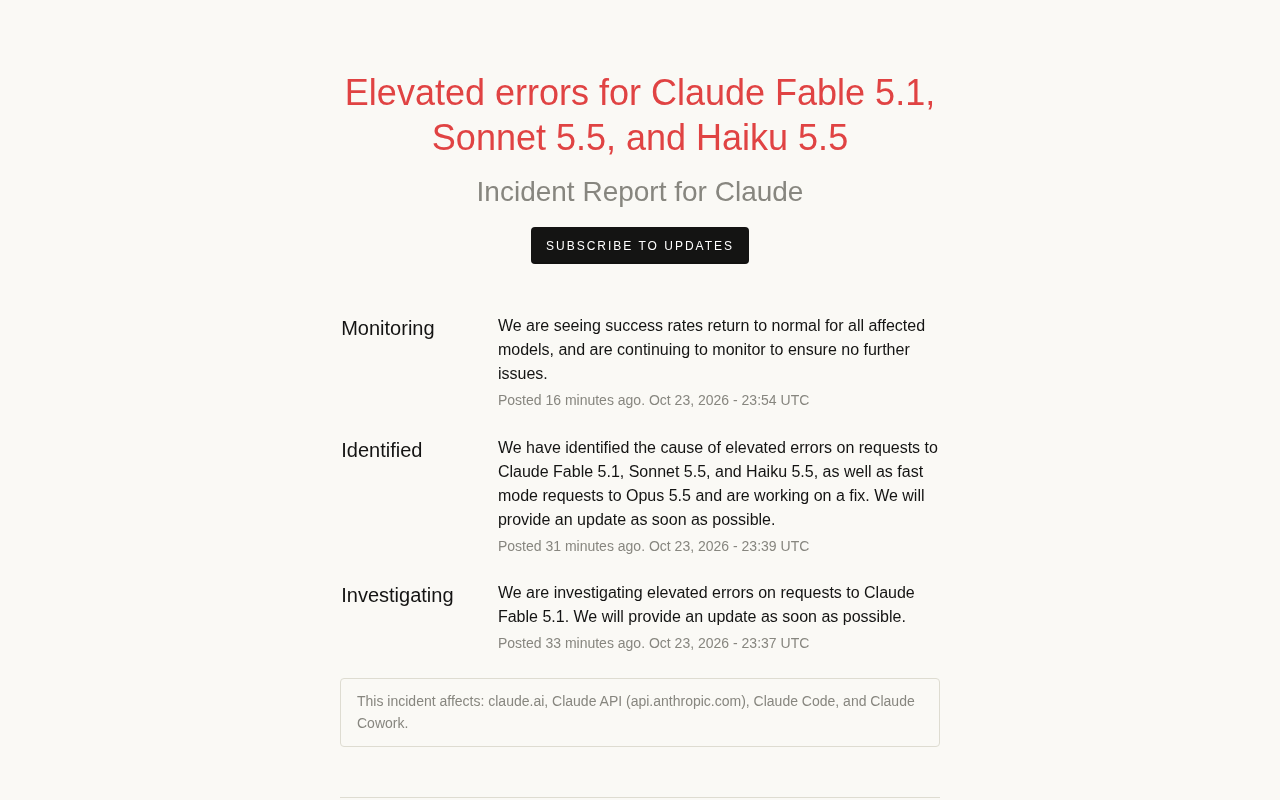
Multiple Claude Models Hit by Errors: A Postmortem of Fable 5.1, Sonnet 5.5, and Haiku 5.5
Claude Fable 5.1, Sonnet 5.5, Haiku 5.5, and Opus 5.5 fast mode saw elevated errors; Anthropic identified and resolved the issue in 17 minutes. This postmortem covers the timeline, the technical reasons for the multi-model cascading failure, and practical lessons for retry and degradation strategies.