How Do Driver Assistance Systems Work? The Fusion Logic of Millimeter-Wave Radar and Cameras

Driver assistance relies on radar-camera fusion, but physical interference, scenario limits, and driver complacency pose real risks.
The article examines the perception principles and risks of driver assistance systems. The perception layer combines millimeter-wave radar (distance and speed, unaffected by light but low angular resolution) and a windshield camera (recognition and classification, limited by field of view, lighting, and training data). Manufacturers warn against use in rain, fog, snow, sharp curves, and congestion, and the systems lack collision avoidance for pedestrians or stationary vehicles. More concerning is human behavior: studies show lane keeping systems triple phone-checking and increase hands-off-wheel instances seventeenfold, while speed limiting users speed 24% more. The more reliable the system, the lower the engagement — this paradox is the core issue. At present, it remains an assist, not a replacement.
Adaptive cruise control, lane keeping, and similar driver assistance features have gradually evolved from optional extras on mid-to-high-end vehicles to standard equipment on many new cars. Yet most drivers have a fairly limited understanding of the underlying logic of these systems — how they actually "see" the road ahead, under what conditions they fail, and what behavioral changes long-term use can bring.
Drawing on a technical analysis from Hacks.gr and multiple studies on driver behavior, we can map out how these systems work and the potential risks involved.
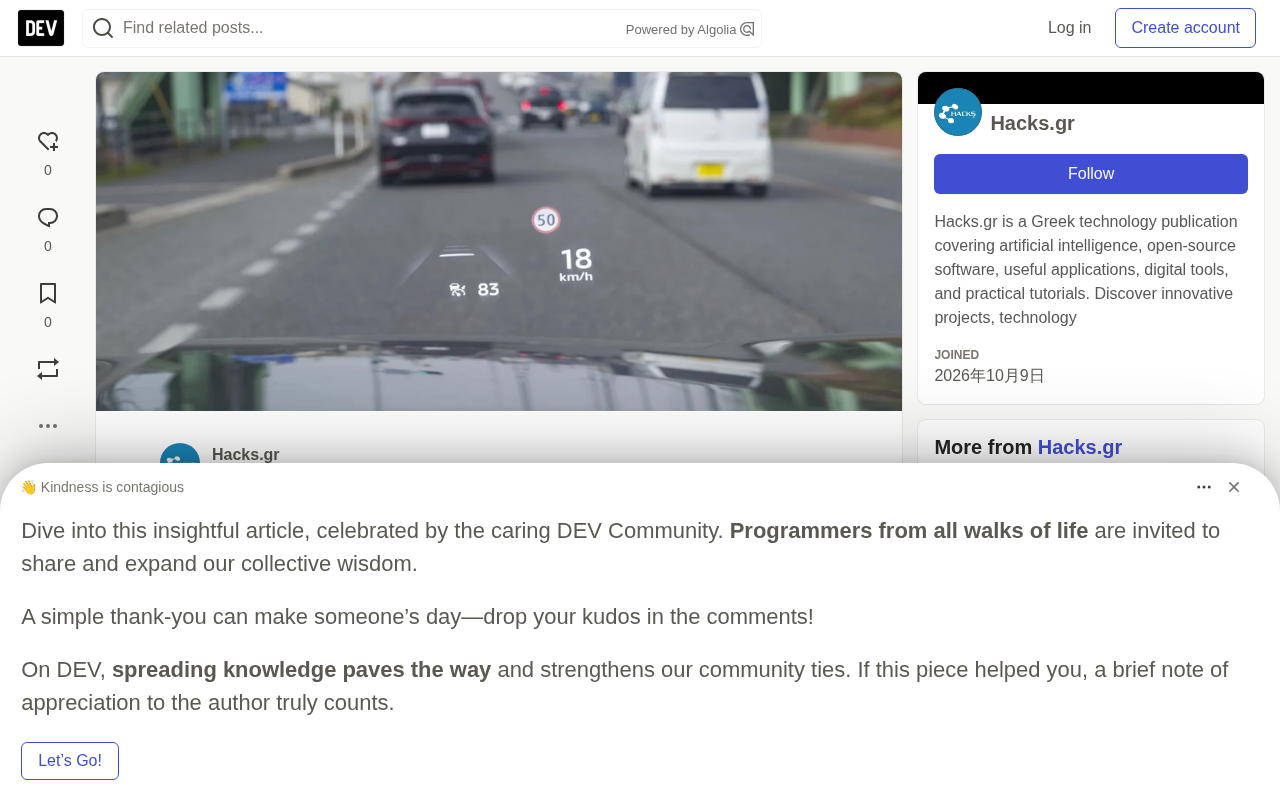
How Does a Car "See" the Road?
The perception layer of driver assistance consists of two core components, each with a clearly defined role.
Millimeter-Wave Radar: The Workhorse for Distance and Speed Measurement
The radar module is typically hidden low in the front of the vehicle, often behind the badge or grille. It emits radio waves toward the vehicle ahead and calculates distance and relative speed by measuring the echo return time. The advantage of this approach is that it is not limited by lighting conditions — it works just as well at night and in fog.
But radar is also a vulnerable link that is easily overlooked. Stickers applied to the front of the car, aftermarket license plate frames, or even a minor scrape while parking that shifts the radar's position can interfere with its detection accuracy. This kind of physical damage often does not trigger a warning light, yet it can substantially degrade ranging accuracy.
Windshield Camera: Recognition and Classification
The second component is the camera mounted high on the windshield, behind the rearview mirror. It is responsible for tracking lane markings, determining what type of vehicle is ahead, and identifying other vehicles that suddenly cut into the lane. Some manufacturers also combine camera data with GPS map information to anticipate curves and gradient changes.
Radar alone cannot distinguish whether the vehicle ahead is a truck or a motorcycle, and a camera alone will be "blinded" by backlight or heavy rain. Only by fusing the two do you get the basic architecture of today's mainstream solutions.
What Can't These Systems Do?
Continuous software iteration — such as automatically slowing down before curves or learning the driver's acceleration habits — is indeed expanding the boundaries of what these systems can do. But manufacturers' warnings are equally clear: rain, fog, snow, slippery roads, congested traffic, sharp curves, and uphill or downhill sections are all unsuitable for enabling these systems.
Heavy rain significantly weakens radar detection capability, a point noted in the owner's manuals of multiple manufacturers. More critically, these systems are not designed as collision avoidance systems. They will not brake for small targets such as pedestrians, animals, or bicycles, nor will they react to oncoming or already stationary vehicles.
Treating driver assistance as autonomous driving is the biggest cognitive mismatch today.
The Real Risks of Driver Complacency
The limitations of the technology itself are one thing; changes in human behavior are another — and the latter may be more dangerous.
A one-month volunteer trial showed that drivers equipped with lane keeping systems were more than three times as likely to look at their phones or in-car screens by the end of the trial, and instances of taking both hands off the steering wheel increased seventeenfold. This is not an isolated phenomenon. Another earlier study found that drivers using active speed limiting systems were 24% more likely to speed on highways — and actually drove faster.
The more "reliable" the system, the lower the human engagement — this inverse relationship is the core paradox facing current driver assistance technology. Manufacturers' vague handling of feature naming and user education further amplifies this risk.
How to View This Technology's Current Positioning
Driver assistance systems have made real progress over the past few years, and the introduction of sensor fusion and machine learning models has made system behavior smoother. But architecturally, it remains an "assist" role, not a "replace" role.
For drivers, understanding the respective blind spots of radar and cameras, being clear about the scenarios manufacturers explicitly list as off-limits, and maintaining continuous attention to road conditions after enabling assistance features are the basic prerequisites for safely using this technology at the current stage. Technology can help reduce your fatigue, but it cannot take responsibility on your behalf.
Additional Background
Millimeter-Wave Radar Operating Bands and Technical Characteristics
Automotive millimeter-wave radar commonly uses two frequency bands: 24GHz and 77GHz. 24GHz is mostly used for short-range detection, while 77GHz, with its shorter wavelength and higher resolution, has gradually become the mainstream choice for forward medium-to-long-range radar. Radar measures relative speed through the Doppler effect: when there is relative motion between the target and the radar, the echo frequency shifts, and the amount of frequency shift directly corresponds to the speed difference — this is also why it can judge the speed of the car ahead more precisely than a camera.
However, radar has low angular resolution, making it difficult to distinguish two vehicles in adjacent lanes, and it cannot determine a target's shape or category. Metal objects (such as manhole covers and guardrails) can produce false echoes, leading to "phantom braking" incidents. Multiple manufacturers have issued recalls over such issues, which also explains why radar must be fused with cameras and cannot serve as the sole basis for decisions.
Camera Solutions and Visual Recognition Principles
Windshield cameras are typically monocular or binocular. Monocular solutions estimate distance based on target size and perspective relationships in the image, with accuracy heavily influenced by calibration; binocular solutions directly calculate depth through the parallax between two lenses, making ranging more reliable but requiring higher installation precision and computing power. Cameras also have field-of-view (FOV) limitations — forward-facing cameras generally have a horizontal viewing angle between 50° and 100°, which means a vehicle rapidly merging from an adjacent lane may complete its lane change before entering the field of view.
A camera's recognition capability depends on training data. For oddly shaped vehicles rarely seen in the training set, tilted disabled vehicles, and occluded lane markings, the algorithm may miss or misjudge them. Direct strong light, lens smudges, and rain or snow accumulation can also significantly reduce recognition rates. The fusion logic between camera and radar is usually "radar provides distance and speed, camera provides category and confidence," and when the two reach conflicting conclusions, the algorithm makes a weighted decision.
Automation Bias and Declining Driving Engagement
The concept of "automation bias" in driver behavior research refers to humans' tendency to over-trust automated systems, thereby reducing their own vigilance and monitoring effort. When a system performs stably for an extended period, drivers gradually come to see it as a reliable substitute, and their attention shifts from the road to their phones or in-car screens. This decline does not happen suddenly but accumulates slowly over time, so drivers themselves often fail to notice it.
Researchers also distinguish between "passive fatigue" and "active distraction": the former is mental numbness produced after prolonged monitoring of an automated system, while the latter is actively directing attention to other tasks. The combination of the two can leave drivers unable to take over in time when the system suddenly disengages (for example, when lane markings disappear or the car ahead brakes sharply beyond the system's capability). This is also why some manufacturers have begun introducing driver monitoring cameras, using eye tracking and steering wheel torque monitoring to determine whether the driver is still paying attention to the road.
One-line Summary
Driver assistance systems rely on radar-camera fusion, but physical interference, scenario limitations, and driver complacency together constitute real risks.
Paragraph Summary
The article outlines the perception principles and potential risks of driver assistance systems. The perception layer consists of millimeter-wave radar and a windshield camera: radar handles distance and speed measurement, unaffected by lighting but with low angular resolution and vulnerability to physical interference; the camera handles recognition and classification, but is limited by field of view, lighting, and training data — only their fusion forms the mainstream solution. Manufacturers explicitly warn that rain, fog, snow, sharp curves, and congestion are unsuitable scenarios, and the systems lack collision avoidance capability for pedestrians or stationary vehicles. More alarming are the behavioral changes: studies show lane keeping systems increase drivers' phone-checking probability more than threefold and hands-off-wheel instances seventeenfold, while active speed limiting system users are 24% more likely to speed. The more reliable the system, the lower the engagement — this paradox is the core issue facing the technology today. At this stage, it remains an assist role, not a replacement.
Related articles

REA: Reverse Engineer Any App with AI, No Coding Required
REA is a viral open-source AI reverse-engineering tool that lets Claude, Codex, and other AI agents analyze any app and generate functional clones—no coding required. This article covers how it works, installation, a hands-on test, and legal risks.

2026 AI Coding Tools Comparison: Claude, ChatGPT, Gemini — Which Is the Best?
A 2026 comparison of five mainstream AI coding tools — Claude Code, ChatGPT Codex, Gemini, DeepSeek, and GitHub Copilot — on real projects, pricing, and code quality, to help you decide where that $20/month should go.

ChatGPT Codex Can Clone Any Software? Testing the Risks and the Truth
YouTube shorts claim ChatGPT Codex or Claude Code can clone Adobe, Excel, and Figma for lifelong free use. We break down the feasibility, legal risks, and DM-funnel tactics—and explain what AI coding tools are truly good for.