How Do You Evaluate AI Agent Skills? The HN Community Weighs In

An HN discussion notes that AI agent skill evaluation requires layered design, trajectory review, and online monitoring.
The article centers on a Hacker News question about how to reliably evaluate the quality of reusable AI agent skills. Because agent skills are composite and probabilistic, traditional assertion-based testing cannot be applied directly. The community discussion offers two main approaches—fine-grained unit tests and full execution-trajectory evaluation—and argues that fully automated evaluation is difficult, so human review remains irreplaceable. The article also offers practical guidance: use rules for low-level skills, simulated environments and regression tests for mid-level tasks, and human or model-assisted review for end-to-end scenarios, while building repeatable evaluation sets and production monitoring with sampling review to address behavior drift.
As AI agents take on more real-world tasks, a thorny question surfaces: how do we determine whether the "skills" they've acquired are reliable? In the Ask HN section of Hacker News, a user raised this pointed question, sparking a discussion about evaluating agent skills.
Why Skill Evaluation Is a Challenge
Traditional software testing has clear inputs, outputs, and assertions, but AI agent "skills" are often composite and probabilistic. An agent might be good at calling a search tool yet lose its way in multi-step reasoning; it might perform flawlessly in a demo yet fall apart when faced with edge cases.
The core concern of the questioner is this: when an agent is broken down into a set of reusable skills (such as reading and writing files, calling APIs, planning tasks), how can developers systematically assess the quality of each skill rather than just looking at whether the final task was completed? The question gained attention on HN but drew few comments, suggesting that relevant practices are still in an early exploratory stage.
Probabilistic skills refer to agent outputs or behaviors that carry randomness: the same input may trigger different tool-call sequences or return slightly different results. This contrasts with the determinism of traditional functions, where "the same input must yield the same output"—meaning assertion-based tests need to tolerate some variance or switch to statistical metrics (such as pass rate or average number of steps) for measurement.
Edge cases refer to inputs or environment states that occur infrequently but have a large impact, such as APIs returning malformed formats, insufficient file permissions, or ambiguous user instructions. Agents in demos often cover only the typical path, yet edge cases are precisely the main source of failures in long-horizon tasks, so evaluation sets must deliberately include such scenarios.
Several Approaches in the Community Discussion
Although the discussion is not yet extensive, existing responses point in several directions. One approach is to break skill evaluation down into finer-grained unit tests, designing deterministic checks for each skill—for example, given a fixed input, verifying whether the tool-call parameters are correct. Another approach emphasizes trajectory evaluation: caring not only about the result but also examining whether each decision in the agent's execution process is reasonable.
Some comments also suggest that fully automated evaluation is very difficult and that human review will remain irreplaceable for the foreseeable future. This aligns with the general sentiment in current AI engineering: evaluating agents is far more complex than evaluating single-turn dialogue models because it introduces tool use, environment state, and long-horizon dependencies.
Trajectory evaluation is a common term in agent assessment. It refers to taking the agent's complete execution process from receiving a task to producing a result—including every tool call, parameter, intermediate reasoning step, and state change—as the object of evaluation, rather than merely comparing the final answer. It can reveal situations where "the result happens to be correct but the process is unreasonable," and it makes it easier to pinpoint which step a failure occurred at. Common practices include comparing trajectories against reference trajectories, using rules to check key steps, or having a judge model score the trajectory.
Practical Implications for Developers
From a practical standpoint, evaluating agent skills requires a layered design. Low-level skills can be covered with rules and assertions, mid-level tasks can rely on simulated environments and regression tests, and end-to-end complex scenarios depend on human scoring or model-assisted review. The key is to build a repeatable evaluation set and keep it updated as agent capabilities change.
Another point worth noting is that skill evaluation should not happen only during development. Agent behavior in production drifts as external APIs, data distributions, and user inputs change, so establishing online monitoring and sampling review mechanisms is equally important.
Behavior drift refers to a system's behavior shifting due to changes in external dependencies or data distributions even when the code is unchanged. For agents, underlying model version updates, adjustments to tool API return formats, and changes in user input style can all cause previously passing evaluation items to fail. Countermeasures include regularly regressing on a fixed evaluation set, conducting sampled human review of online outputs, monitoring metrics such as tool-call success rate and task completion rate, and setting alert thresholds.
Conclusion
Although this question on HN was modest in scale, it touches on a key bottleneck for putting AI agents into practice: without reliable skill evaluation, it is hard to trust agents to perform tasks autonomously. As agent frameworks and tool ecosystems mature, methodologies and infrastructure around evaluation are likely to become the next major area of focused development.
One-line Summary
An HN discussion points out that AI agent skill evaluation requires layered design, trajectory review, and online monitoring.
Paragraph Summary
The article centers on a question posted on Hacker News, exploring how to reliably evaluate the quality of various reusable skills in AI agents. Because agent skills are composite and probabilistic, the assertion-based methods of traditional software testing cannot be applied directly. The community discussion proposes two main approaches: breaking skills down into fine-grained unit tests, and evaluating the agent's complete execution trajectory rather than just the result; it also holds that fully automated evaluation is difficult and that human review remains irreplaceable. The article further offers practical guidance: cover low-level skills with rules, use simulated environments and regression tests for mid-level tasks, rely on human or model-assisted review for end-to-end scenarios, and emphasize building repeatable evaluation sets plus online monitoring and sampling review in production to cope with behavior drift.
Related articles
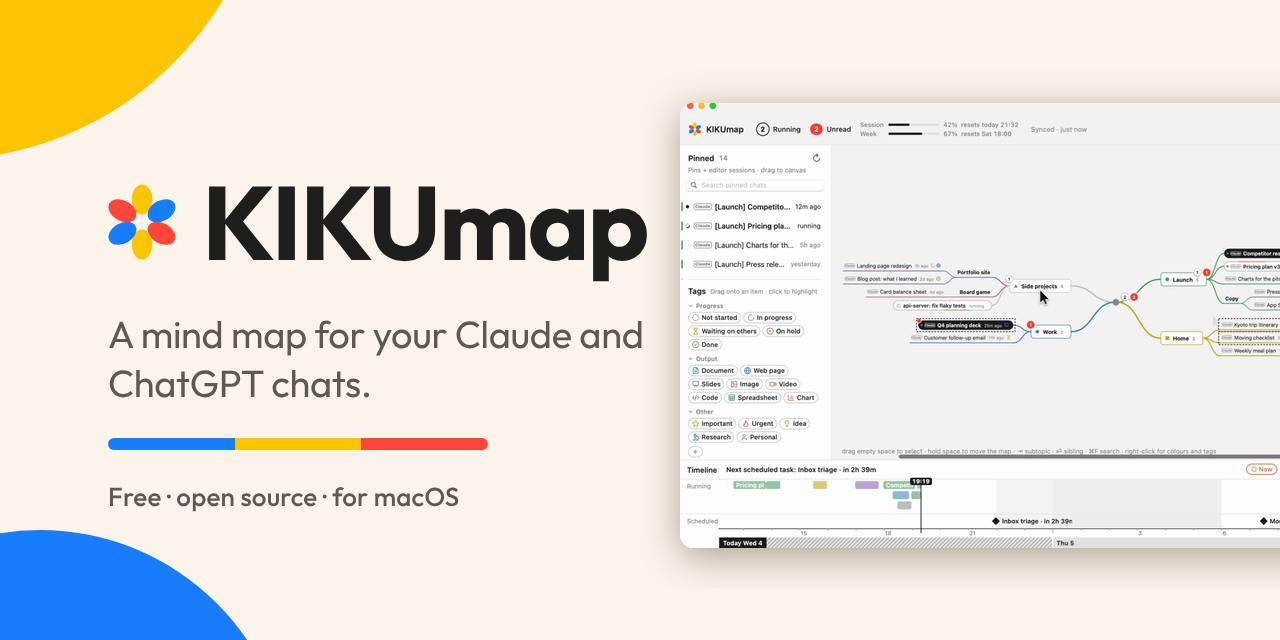
KIKUmap: Manage Your Claude and ChatGPT Conversations with Mind Maps
KIKUmap is a macOS menu bar app that visualizes Claude and ChatGPT conversations as mind maps with real-time status. Free and open source.

Hugging Face Executive Warns: Cyberattacks Are Eroding the Openness of Open-Source AI
Hugging Face executive Irene Solaiman warns that rising cyberattacks on open AI platforms may force stricter security limits, threatening the openness of the open-source community and affecting the developer ecosystem.

Google Cloud Launches Healthcare Version of Gemini: Integrating Clinical Data and Automating Workflows
Google Cloud releases healthcare version of Gemini, focusing on unified clinical data and automated workflows to reduce administrative burnout. Analysis of positioning, challenges, and the healthcare AI landscape.