Hugging Face Executive Warns: Cyberattacks Are Eroding the Openness of Open-Source AI

Hugging Face executive warns cyberattacks may force open-source AI platforms to tighten restrictions, weakening openness.
Hugging Face executive Irene Solaiman warned that rising cyberattacks on open AI platforms may force stricter model review, access controls, and usage limits, weakening the openness the open-source community depends on. The article analyzes the deep tension between security and openness—openness drives innovation and accessibility but expands the attack surface, while security hardening may harm free access, modification, and distribution and disproportionately affect independent developers, academic researchers, and startups. It proposes balance through community co-governed review, robust protection technologies, transparent disclosure, and cross-platform collaboration, emphasizing measures that minimize impact on legitimate developers and avoid one-size-fits-all approaches.
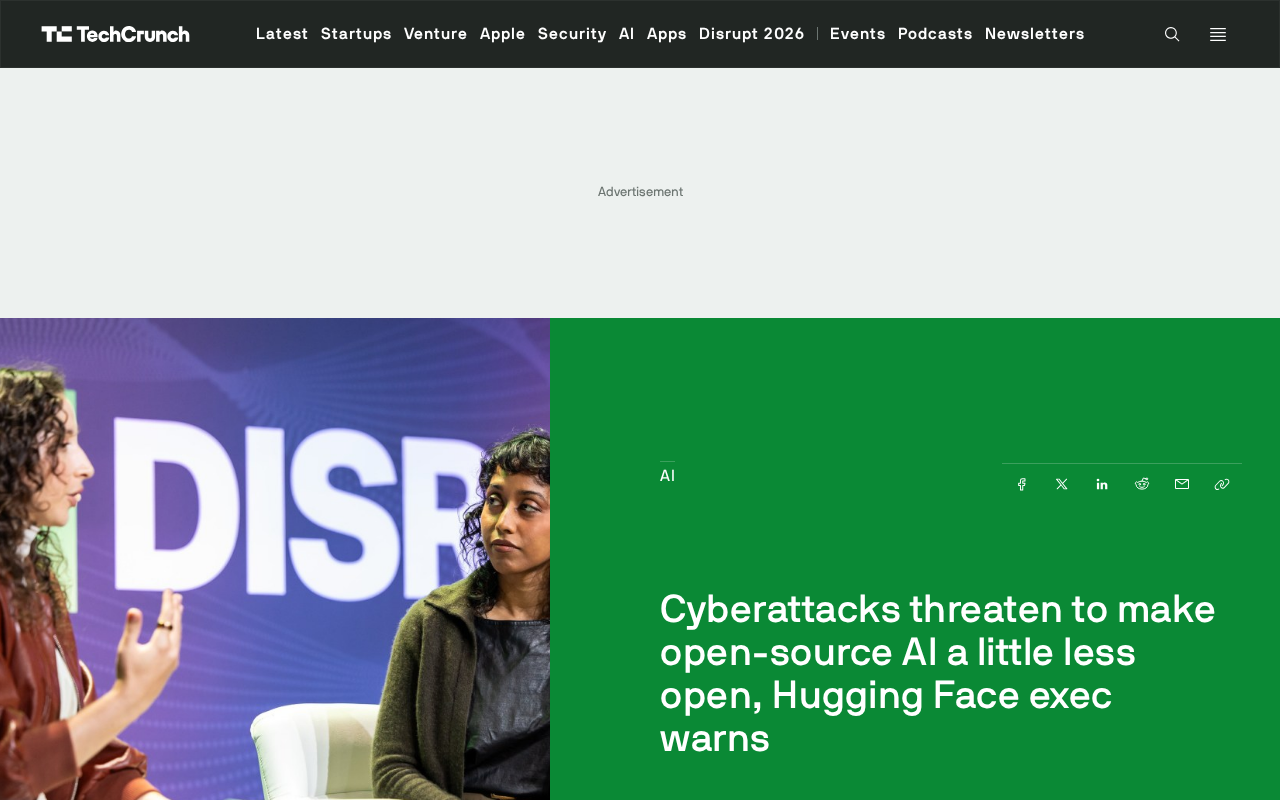
The open-source AI community has long prided itself on openness, collaboration, and low barriers to entry—but this foundation is now facing a serious test. Hugging Face executive Irene Solaiman recently issued a warning: cyberattacks targeting open AI platforms are increasingly common and may force platforms to implement stricter security restrictions, thereby weakening the openness that the open-source community depends on. This statement reveals a deep tension between security and openness in open-source AI.
The Open-Source Dilemma Under Security Pressure
As the world's largest open-source AI model hosting platform, Hugging Face brings together a vast number of models, datasets, and development tools, serving as the infrastructure for countless developers' daily work. Solaiman noted that as the platform's influence grows, it has also become a target for malicious attackers. Attacks not only threaten the platform's own security but may also affect downstream applications and end users that depend on it.
To address these risks, the platform may have to adopt stricter security measures—such as more rigorous model review, access controls, or usage restrictions. While these measures can improve security, they conflict with the open-source community's ideals of "free access, free modification, and free distribution." Solaiman's concern is that the cost of security hardening may be sacrificing some openness—and openness is precisely the core value that attracts developers worldwide to the open-source AI community.
Hugging Face's platform positioning: Hugging Face is often called "the GitHub of AI." Its core assets include three major components—Model Hub (model hosting), Datasets (dataset hosting), and Spaces (application demo hosting)—along with supporting open-source libraries such as Transformers and Diffusers. Models on the platform are mostly stored as Git repositories, supporting version management and community submissions, which is the concrete engineering-level manifestation of "openness." Understanding this helps clarify what "restricting access" means in the following discussion: it often does not mean shutting down the platform, but rather adding barriers at specific points such as repository pulling, model card review, and download authentication.
The Tug-of-War Between Openness and Security
The openness of open-source AI manifests at multiple levels: model weights are publicly downloadable, code is transparent and auditable, and community collaboration has no barriers. This open model accelerates technological innovation and makes AI technology more accessible. But openness also means an expanded attack surface—malicious actors may abuse open models for cyberattacks, generate harmful content, or steal data.
According to Solaiman's observations, escalating cyberattacks are forcing platforms to reassess their openness strategies. Security teams need to invest more resources in monitoring and defense, and these costs may ultimately be passed on to the community in the form of access restrictions. For example, platforms may require developers to authenticate their identity before downloading certain models, or implement usage approval for high-risk models. While these measures are necessary, they may put small developers, academic researchers, and users in resource-poor regions at a disadvantage.
The multiple meanings of "open" in open-source AI: Unlike traditional open-source software licenses (such as MIT or Apache 2.0), the "openness" of AI models also involves three separable layers: model weights, training data, and training code. The industry commonly uses "open weights" to describe the practice of disclosing only parameters without disclosing data and training processes. Once weights are released, they are difficult to retract—anyone can download and run them locally. This limits the effectiveness of platform-side pre-release review and explains why security discussions often focus on access control at the download and distribution stages.
Potential Impact on the Developer Ecosystem
If open-source AI platforms tighten their openness strategies, the first to be affected will be independent developers and startup teams that rely on free resources. They often lack the budget to purchase commercial APIs or build private models, and the open-source community is their primary path to participating in AI innovation. Stricter restrictions may exacerbate the Matthew effect in AI—resource-rich organizations can absorb compliance costs, while smaller players are marginalized.
Moreover, reduced openness may also slow the pace of technology dissemination. A major advantage of open-source models is that they allow developers to freely experiment, fine-tune, and redistribute, thereby spawning a large number of derivative innovations. If access is restricted, this bottom-up innovation vitality will be suppressed. Solaiman's warning is not alarmist but a reminder for the community to find a balance between security and openness.
Finding Balance: The Future Path of Open-Source AI
Faced with attack threats, the open-source AI community does not only have the option of "closing down." Possible strategies include: strengthening community co-governed security review mechanisms, developing more robust model protection technologies, establishing transparent security incident disclosure processes, and promoting cross-platform security collaboration. The key is that security measures should be designed to minimize impact on legitimate developers and avoid one-size-fits-all restrictions.
Solaiman's remarks also suggest that platforms need to communicate more fully with the community about security decisions, help developers understand the necessity of restrictions, and jointly explore solutions that balance security and openness. The openness of open-source AI is not a black-and-white choice but a balancing act that requires continuous adjustment in a dynamic threat environment.
Model cards and responsible release practices: The open-source AI community has developed mechanisms that balance openness and security—for example, Model Cards require developers to explain training data, scope of use, and known limitations; responsible release checklists (such as Hugging Face's Model Cards and Metadata specifications) encourage risk assessment before release. In addition, practices such as "staged release" and "gated model" access allow platforms to require users to accept terms of use before downloading high-risk models. This represents differentiated governance within an open framework rather than simple closure.
Conclusion
The Hugging Face executive's warning sounds an alarm for the open-source AI community: cyberattacks are becoming a real threat to openness. How to safeguard security without stifling the spirit of openness is a question that platforms, developers, and the entire ecosystem must answer together. The future of open-source AI depends on whether we can find a path that is both secure and open.
One-line Summary
A Hugging Face executive warns that cyberattacks may force open-source AI platforms to tighten restrictions, weakening openness.
Paragraph Summary
Hugging Face executive Irene Solaiman warned that cyberattacks targeting open AI platforms are increasingly common and may force platforms to implement stricter model review, access controls, and usage restrictions, thereby weakening the openness the open-source community depends on. The article analyzes the deep tension between security and openness: openness brings innovation and accessibility but also expands the attack surface; security hardening, while necessary, may undermine the core values of free access, modification, and distribution, and will first affect independent developers, academic researchers, and startup teams that rely on free resources, exacerbating resource inequality in AI. The article proposes finding balance through community co-governed review, robust protection technologies, transparent disclosure, and cross-platform collaboration, emphasizing that security measures should minimize impact on legitimate developers and avoid one-size-fits-all approaches.
Related articles
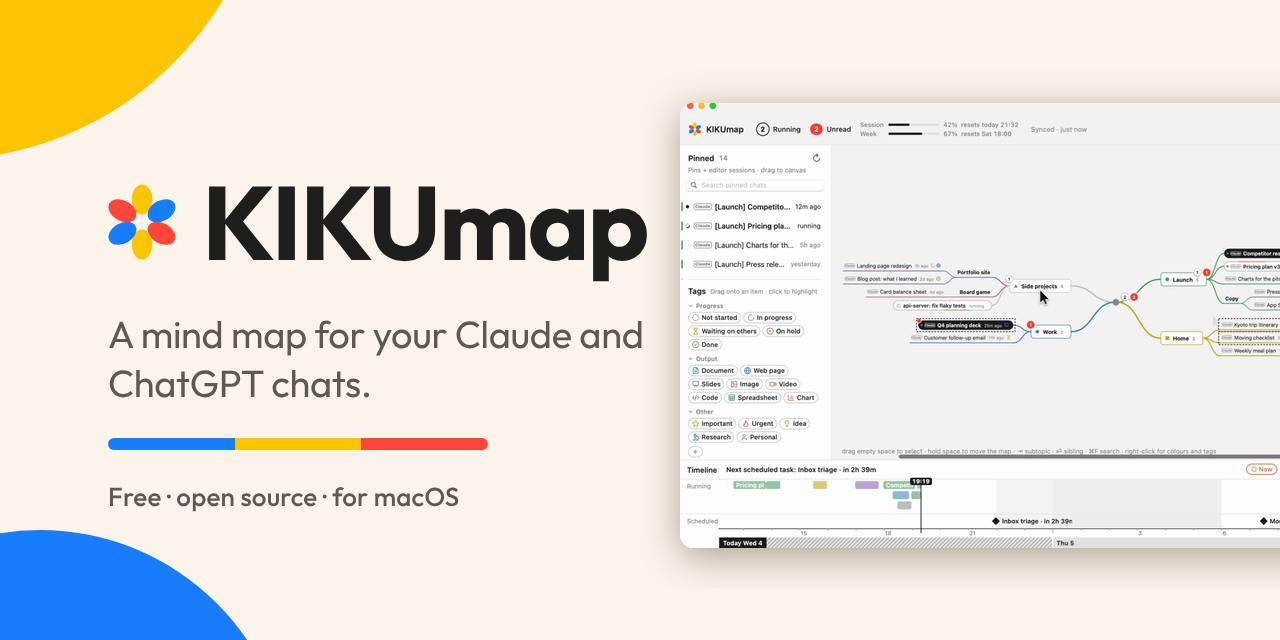
KIKUmap: Manage Your Claude and ChatGPT Conversations with Mind Maps
KIKUmap is a macOS menu bar app that visualizes Claude and ChatGPT conversations as mind maps with real-time status. Free and open source.
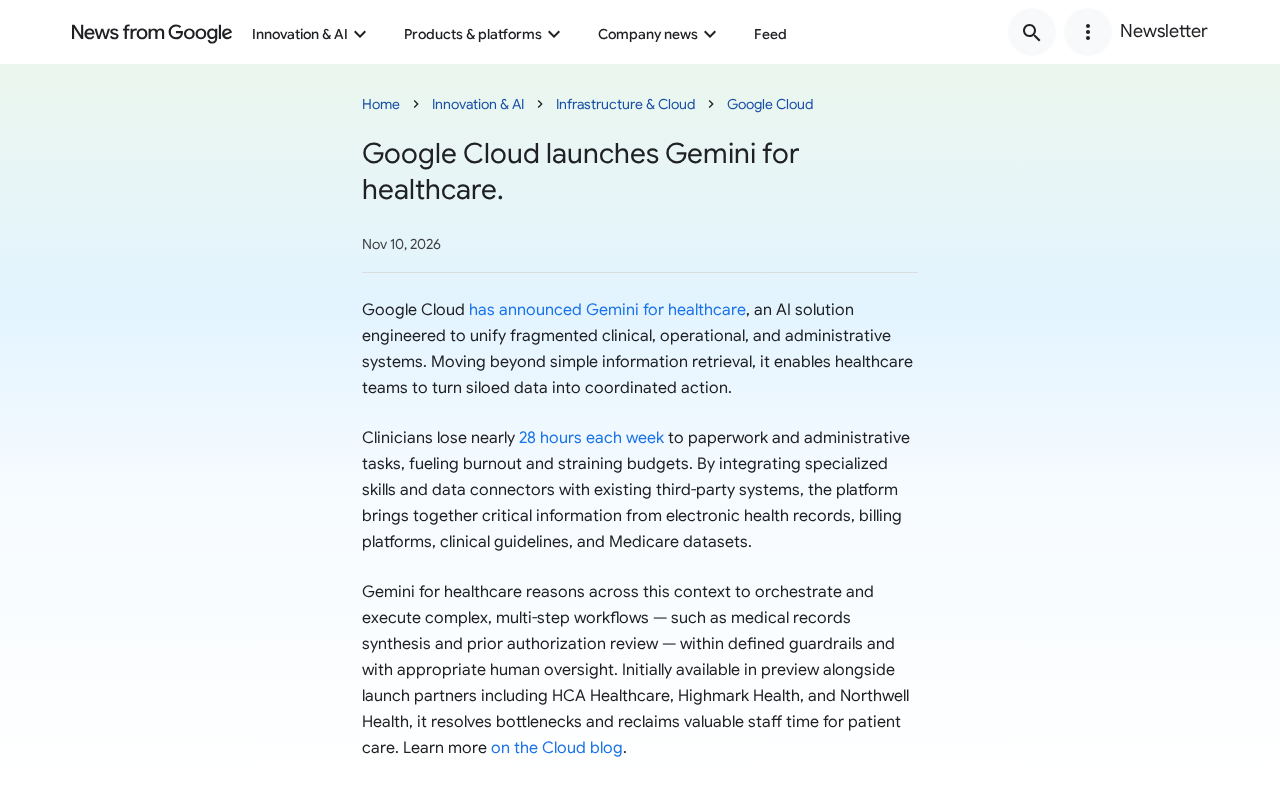
Google Cloud Launches Healthcare Version of Gemini: Integrating Clinical Data and Automating Workflows
Google Cloud releases healthcare version of Gemini, focusing on unified clinical data and automated workflows to reduce administrative burnout. Analysis of positioning, challenges, and the healthcare AI landscape.
OpenAI's Free AI Course Goes Into Comm…
OpenAI's Free AI Course Goes Into Communities: Helping Caregivers Bring ChatGPT Into Daily Life
OpenAI Academy offers free, hands-on ChatGPT workshops for caregivers in five U.S. cities, helping non-technical people build practical AI skills for daily life. This article analyzes the training model, caregiver scenarios, and implications for AI adoption.