How Fast Is AI Evolving? Last Year's Tech Already Feels Like Ancient History

AI evolves so fast that last year's breakthroughs already feel like ancient history.
AI technology is advancing at such a staggering pace that capabilities considered groundbreaking just a year ago now feel outdated. This article examines the cognitive gap created by exponential progress, exploring how rapid iteration impacts developers, entrepreneurs, and everyday users — and why society's governance frameworks are struggling to keep up.
A Year Apart, Two Different Worlds of AI
In the tech world, we often say "three months is an era" — but when it comes to today's AI industry, even that might be an understatement. A widely circulated post on Twitter (now X) captured the shared sentiment of the entire industry with one evocative line: "mind you this was just last year." It perfectly encapsulates the feeling among AI practitioners: the pace of AI iteration has become so intense that it warps our sense of time.
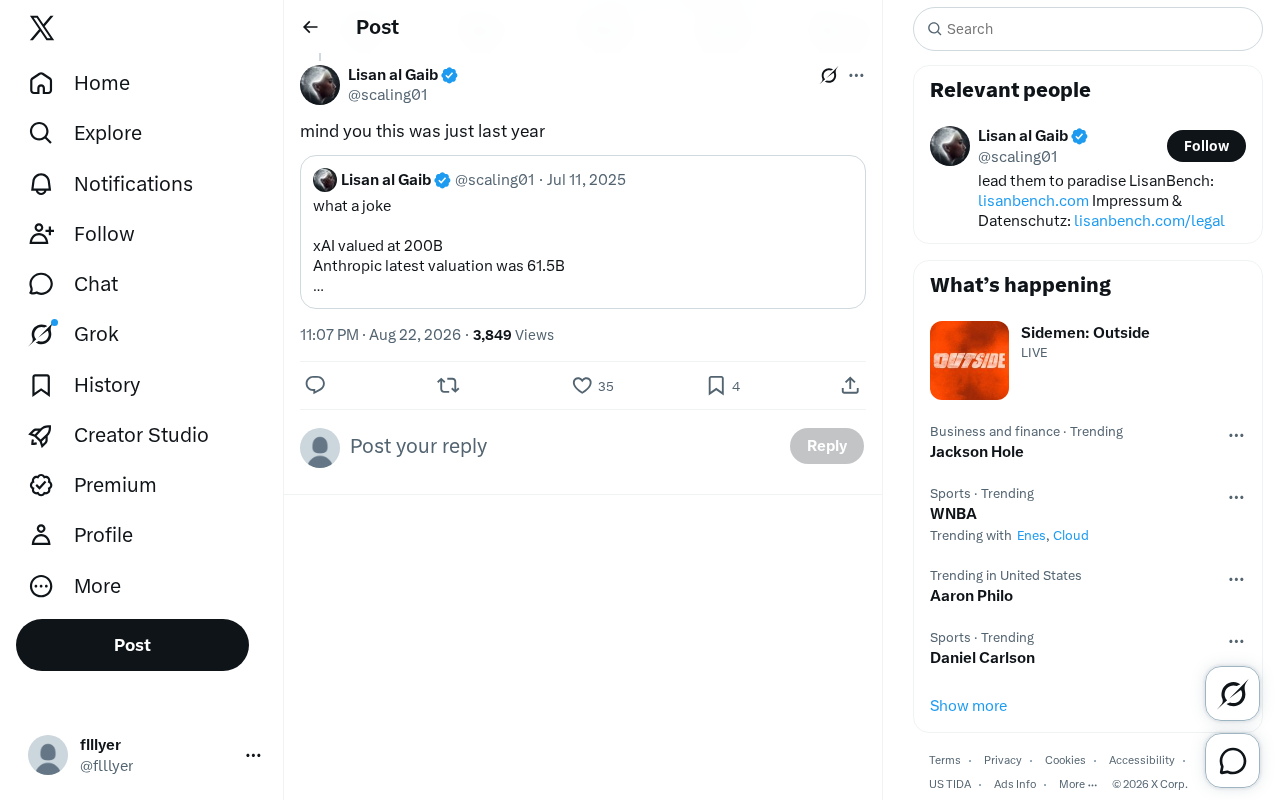
This sense of temporal whiplash isn't exaggeration. When we look back at AI capabilities that were considered cutting-edge or even "mind-blowing" just one year ago, we're struck by how ordinary — even outdated — they seem today. What this reflects is nothing less than a technological revolution advancing at exponential speed.
Why Our Perception of AI's Evolution Is Distorted
Our intuitive sense of technological progress is typically built on linear experience. Over the past few decades, most technologies required years or even a decade of refinement to mature. But the trajectory of generative AI has shattered that pattern entirely.
The Cognitive Gap Under an Exponential Curve
When technology advances along an exponential curve, our mental expectations always lag behind reality. A model released or a feature demonstrated a year ago may have represented the absolute bleeding edge of laboratory research at the time. But mere months later, the same capabilities are being reproduced by open-source communities, startups, and even individual developers — at lower cost and higher quality.
This "gap" is precisely what "mind you this was just last year" is really about. It's not marveling at how advanced the past was — it's being stunned at how absurdly fast the present has progressed. Effects that once required elite teams and massive compute resources can now be achieved with a single API call or a locally deployed open-source model.
From "Groundbreaking" to "Table Stakes" at Breakneck Speed
Over the past year, we've witnessed this pattern again and again: an AI capability launches to acclaim as a "game-changer," only to become a standard feature across products within months. Whether it's text generation, image creation, code writing, or multimodal understanding, the ceiling of what's possible keeps getting shattered over and over.
What Rapid AI Iteration Means for the Industry
This hyper-accelerated evolution impacts different groups in very different ways.
The Impact on Developers and Entrepreneurs
For developers and startups on the front lines, this is both opportunity and challenge. The opportunity: AI capabilities that were out of reach yesterday can be used to build products today. The challenge: the technical moat you carefully construct today might be effortlessly erased tomorrow by a newly released foundation model.
This demands that practitioners maintain extreme sensitivity and adaptability. Betting on a single technical differentiator is becoming increasingly risky. Real value is shifting from "implementing a specific feature" to "integrating rapidly evolving capabilities into real-world scenarios to create lasting value."
The Impact on Everyday Users and Society
For ordinary users, AI capabilities are trickling down at an unprecedented pace. Tools and skills that once belonged exclusively to professionals are being democratized at remarkable speed. On the other hand, society's understanding, regulation, and ethical discourse around AI are clearly struggling to keep up with the technology itself. This governance lag — the consequence of "technology moving too fast" — is a problem we must confront head-on.
Conclusion: Embrace Uncertainty, but Stay Clear-Eyed
The reason a single brief tweet can resonate so widely is that it articulates the shared experience of every AI observer: we are living in an era of ever-increasing technological acceleration.
"Mind you this was just last year" — this statement is both an expression of awe at past progress and a mix of anxiety and anticipation about the future. It's safe to predict that a year from now, when we look back at everything that amazes us today, we'll likely utter the very same words. In times like these, the only certainty is uncertainty itself. Keep learning, stay sharp, and maintain a sober perspective on technology's relentless charge forward — that may be the best advice any of us can give ourselves.
Related articles

Bilibili's Hit Dify Tutorial: A Practical Guide to Building 20+ AI Apps from Scratch
A distilled guide to Bilibili's top-rated Dify tutorial: Windows + Docker deployment, MySQL connection, five app types, model integration strategy, and publishing.

Agent Skills Beginner's Guide: From Concepts to Multi-Agent Collaboration in Practice
A comprehensive guide to Agent Skills: core concepts, components, the importance of Description, standardization, beginner learning paths, and multi-agent collaboration.

One Neuron Detects Both Cats and Cars? We Reproduced It and Found a New Explanation
The cat-car neuron reinterpreted: researcher Cammarata argues it distinguishes pointy from round, not cats from cars. We reproduced the experiment and found the new explanation holds on most inputs—but cars are the exception. The interpretability debate continues on language models.