How GTA VI Uses a Smartphone to Rebuild Open-World Immersion

GTA VI designs the phone as an in-world entity, enhancing open-world immersion through everyday object embedding.
The article explores *Grand Theft Auto VI*'s design treatment of the smartphone. Unlike traditional open-world games that reduce the phone to a shortcut for bringing up menus, GTA VI attempts to elevate the phone to the core of the experience and design it as an "object that exists in the world," embedding interactions into character animations, street conversations, and mission flows. The article analyzes the experiential paradox this design brings: players enter the game to escape into fantasy, only to find that the most sticky device in reality has been fully replicated into the fantasy world—but it is precisely this replication that enhances the world's credibility. The article suggests that the phone may take on the role of a "second-layer interface," connecting characters, the city, and the narrative, and points out that systematic embedding of everyday objects creates more immersion than stacking map icons, providing a reference sample for open-world design.
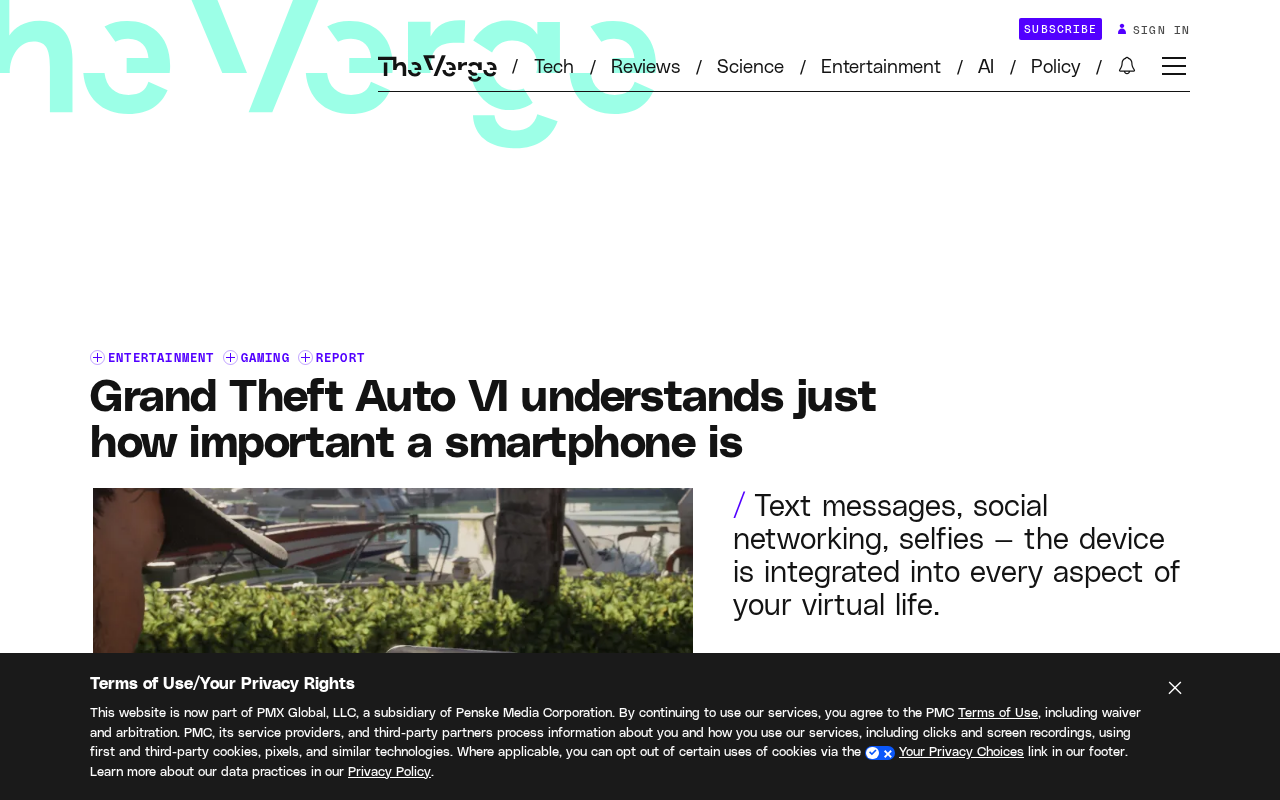
Rockstar Games' Grand Theft Auto VI attempts to simulate real life across multiple dimensions. In the context of 2026, this simulation cannot avoid one item that is almost as essential as breathing—the smartphone. According to observations from the original source material, GTA VI's approach to the phone is not a simple menu tool, but rather elevates it to the core of the experience, designing it as an "object that exists in the world."
From Tool to Part of the World
In traditional open-world games, phones are often reduced to a shortcut for bringing up a menu: open the map, accept a mission, check messages, then close it. GTA VI's ambition seems to go beyond this. The source material points out that the phone is not only a central part of the experience but also an entity that exists within the game world. This means that player interaction with the phone may occur through animations of the character holding the device, through conversations in the streets and alleys, and even between the distractions and conveniences during missions.
This shift in design thinking reflects a deeper iteration of open-world immersion. When the phone no longer floats above the world but is embedded in its texture, players' perception of the virtual society becomes more coherent.
"Diegetic object" is an important concept in game design and narratology, referring to items that are genuinely perceived, used, and interacted with by characters within the fictional world, as opposed to "non-diegetic UI." Classic examples include the Pip-Boy worn in the Fallout series, the physical map and flashlight in the Metro series, and the backpack that characters actually rummage through in The Last of Us. Compared with non-diegetic interfaces, diegetic objects strengthen the alignment between player and character perspectives and reduce the sense of detachment caused by menus, but they also place higher demands on animation, camera work, and operational fluidity. GTA VI's treatment of the phone as a diegetic object means that interaction logic must conform to the worldview and character actions rather than simply pursuing efficiency.
The Logic of Life in 2026 and Escapist Fantasy
The original text mentions a fascinating tension: players enter the game to escape into fantasy, but the fantasy the game constructs includes a phone so realistic that it cannot be ignored. Life in 2026 is inseparable from smartphones, and GTA VI chooses to confront this rather than gloss over it.
This brings up an intriguing experiential paradox—you try to escape reality, only to find that the most sticky device in reality has been fully replicated into the fantasy. But it is precisely this replication that greatly enhances the credibility of the game world. The phone becomes the hub connecting characters, the city, and the narrative, rather than an abstract function folded away in a pause menu.
"Escapism" in game studies generally refers to the psychological motivation of players to temporarily detach from real-world pressures and daily constraints through virtual worlds. However, modern open-world games increasingly tend to construct highly realistic social systems, including communication, transportation, economy, and social networks, which means the escapist experience itself contains a large amount of replication of real life. Researchers often discuss this tension: the higher the realism, the more players may be burdened by real-world logic—such as answering calls, handling messages, and managing schedules; but moderate daily simulation can also enhance immersion and emotional investment. The GTA series has always been known for its satirical realism, and its portrayal of smartphones is a continuation of this "escaping with reality" strategy.
Implications for Open-World Design
GTA VI's emphasis on the phone provides a reference sample for open-world design: the systematic embedding of everyday objects creates more immersion than stacking more map icons. Phones naturally carry multiple functions such as communication, socializing, navigation, consumption, and entertainment. When these functions unfold in ways that fit the worldview, players will unconsciously use them according to behavioral habits from real life.
The source material does not disclose specific interaction details or feature lists, but from the design intent, the phone's role in GTA VI is closer to a "second-layer interface"—it is both a tool for the player to control the character and evidence that the character lives in this world.
"Second-layer interface" is not a strict academic term, but in game interface design it is often used to describe an auxiliary interaction layer beyond the main screen, carried by characters or in-world devices, such as a holographic projection on the wrist, a car dashboard, or a handheld terminal. Its difference from traditional pause menus lies in maintaining the flow of time and visual continuity of the game world; while operating it, the character remains exposed to environmental risks. This design can create tension and presence, for example, checking a phone map or answering a call during a chase. Phones are naturally suited to this role because they simultaneously possess communication, navigation, photography, and consumption functions, and can serve as an intermediary layer between the player and the city system without interrupting immersion.
Conclusion
Can a single phone support the immersion of an open world? GTA VI's answer tends toward yes. When a game is willing to treat the most everyday device as part of the world, the boundary between fantasy and reality becomes more convincing. For those interested in open-world design, this detail is worth continued observation.
Related articles
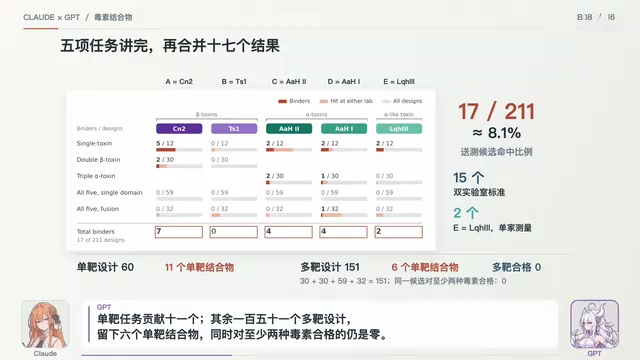
Claude Designs Scorpion Venom-Neutralizing Proteins: With 17 Binders, How Far Are We From an Antidote?
Anthropic's Claude helped design scorpion venom-neutralizing proteins: only 17 of 211 candidates passed, multi-target coverage failed, and channel function and animal testing remain absent.

Fitting a 27B Model into 5.9GB: Ternary Bonsai 2.5 Fixes Its Agent Weaknesses
Prism ML releases Ternary Bonsai 2.5: a 27B model in just 5.9GB, with ternary quantization compressing weights to 1.76 bits. The new version focuses on fixing Agent capabilities, raising Tao3Bench Verify to 75.6 and Upworld from 51.2 to 90.5, hitting 291 tokens/s on a single A700, open-sourced under Apache 2.0.
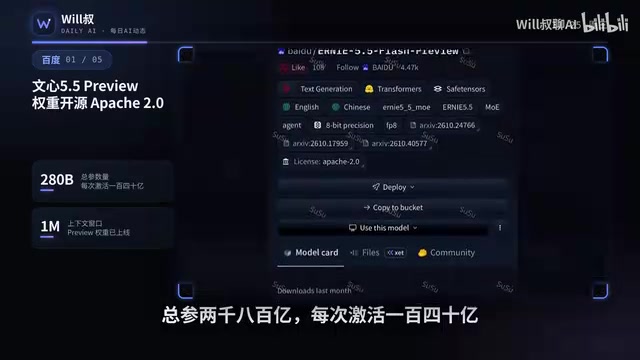
GPT-6-Designed Proteins Validated in Lab; ERNIE 5.5 Preview Open-Sourced
GPT-6 designed proteins using reasoning and code alone, with lab binding evidence across five targets; Baidu open-sourced ERNIE 5.5 Flash Preview under Apache 2.0 with 280B parameters and 1M context.