How H6.ai Builds AI Financial Automation with Lakebase Postgres
H6.ai combines large models with Lakebase Postgres as a unified data foundation to achieve intelligent AP automation.
H6.ai addresses the pain points of traditional AP tools relying on manual work for non-standard documents and rule engines struggling with multilingual and unstructured scenarios. It proposes an architecture with large models as the document understanding and decision layer and Lakebase Postgres as the unified data foundation, processing transactional data and AI workloads within the same Postgres system to avoid synchronization pipelines and improve data consistency and traceability. AI handles semantic understanding and candidate suggestions, while database constraints enforce hard boundaries like amounts, tax rates, and approval permissions. This reflects the trend of AI application infrastructure converging toward unified data platforms.
Traditional accounts payable (AP) and invoice processing tools often leave enterprises in a bind: either rely on manual review and tolerate inefficiency and errors, or adopt rigid automation rules that struggle with complex real-world documents. H6.ai's answer is to combine AI reasoning capabilities with Lakebase Postgres database capabilities to build a financial automation workflow that can understand, decide, and execute.

The Old Problem of Financial Automation: Rule Engines Hit Real Documents
The core pain point of AP processes isn't "whether there's automation" but how many non-standard scenarios the automation can cover. Traditional OCR plus rule engine solutions perform reasonably well when invoice formats are uniform and fields are regular; but once they encounter multilingual documents, unstructured notes, supplier name variants, or amounts that don't match contracts, the rules fail, and the process ultimately falls back to manual handling.
H6.ai's judgment is: financial documents are essentially unstructured data, and what's really needed is semantic understanding, not more complex regular expressions. This determined its choice of large models as the document understanding and decision layer, while the database layer must simultaneously carry structured accounting data and AI-generated vectors, context, and reasoning results.
Why Lakebase Postgres
In this architecture, Lakebase Postgres doesn't play the role of ordinary storage but serves as the data foundation for AI applications. According to the source material, H6.ai uses it to process transactional data and AI workloads within the same Postgres system, avoiding the classic hassle of synchronizing data back and forth between business databases and vector databases.
The direct benefit of this design is data consistency: invoice parsing results, matching decisions, approval statuses, and audit logs can be persisted within the same transaction boundary, rather than being scattered across multiple systems relying on message queues for eventual consistency. For financial scenarios, this is especially critical—traceability and consistency of accounting data are often more important than raw throughput.
What is Lakebase Postgres?
Lakebase Postgres is a managed Postgres service launched by Databricks, designed to bridge OLTP transactional databases with the data lakehouse. Unlike traditional Postgres, it supports processing business data and AI workloads (such as vector indexes, embedding storage, and model inference results) within the same engine, and achieves unified permissions and governance through integration with Unity Catalog. For AI applications, this means no need to maintain a separate vector database or write synchronization pipelines from the business database to the vector database, thereby reducing architectural complexity and the risk of data inconsistency. H6.ai chose it precisely for this "transaction + AI" integrated capability.
Where AI Actually Fits in the Accounts Payable Process
From a process perspective, H6.ai's automation covers several stages: invoice receipt, field extraction, matching with purchase orders or contracts, exception flagging, and approval routing. Large models handle the parts with variable formats and ambiguous semantics, such as determining expense attribution from free text or identifying equivalent supplier name variants; rules and database constraints enforce hard boundaries like amounts, tax rates, and approval permissions.
This division of labor—"AI does understanding, database does constraints"—is more reliable than having the model output final accounting results end-to-end. Financial scenarios have extremely low tolerance for errors; limiting model outputs to suggestions and candidates, and then having deterministic logic complete the final write, is a more production-ready approach.
The technical meaning of "AI does understanding, database does constraints"
Here, "database does constraints" is not a metaphor; it refers to using relational database constraint mechanisms (such as foreign keys, unique indexes, check constraints, and transaction isolation levels) to enforce financial data integrity. For example, invoice amounts must be within the tolerance range of purchase orders, supplier tax IDs must be unique, and approval status transitions must conform to a predefined state machine. When model outputs (such as expense attribution suggestions or supplier matching candidates) are written to the database as structured fields, these constraints are triggered; if violated, the transaction rolls back, and the model result is rejected or flagged as an exception. This pattern decouples the model's "probabilistic output" from the database's "deterministic rules," preserving AI's flexibility while safeguarding the bottom line of financial compliance.
Implications for the Financial Automation Sector
H6.ai's practice reflects a broader trend: infrastructure selection for AI applications is converging from the "dedicated vector database + business database" dual-database model toward a unified data platform. When the database itself can handle vector retrieval and AI workloads, teams can maintain one less synchronization pipeline and more easily ensure data freshness.
Of course, whether this solution can remain stable at larger scale and under more complex compliance requirements is not elaborated in the source material. For teams evaluating financial automation, H6.ai's case offers an architectural approach worth considering: first clarify what AI should and should not handle in the process, then choose the data foundation accordingly.
Trade-offs between the dual-database model and a unified data platform
The "dual-database model" refers to business systems using relational databases (such as Postgres or MySQL) to store transactional data while separately deploying a vector database (such as Pinecone or Milvus) to store embedding vectors, with the two kept consistent through asynchronous synchronization. The pain points of this architecture are: synchronization latency leads to insufficient data freshness, cross-database transactions cannot guarantee consistency, and operational costs double. A unified data platform (such as Lakebase Postgres) builds vector retrieval capabilities into the same database engine, allowing AI workloads and transactional workloads to share the same data copy, thereby eliminating synchronization pipelines. However, unified platforms may still lag behind dedicated vector databases in terms of vector retrieval scale limits and the richness of specialized indexing algorithms; teams need to weigh data scale and latency requirements.
One-line Summary
H6.ai uses large models plus Lakebase Postgres as a unified data foundation to achieve intelligent accounts payable automation.
Paragraph Summary
Addressing the pain points of traditional AP tools relying on manual work for non-standard documents and rule engines struggling with multilingual and unstructured scenarios, H6.ai proposes an architecture with large models as the document understanding and decision layer and Lakebase Postgres as the unified data foundation. This solution processes transactional data and AI workloads (vectors, context, reasoning results) within the same Postgres system, avoiding synchronization pipelines between business and vector databases and improving the consistency and traceability of financial data. In the workflow, AI handles semantic understanding and candidate suggestions, while database constraints enforce hard boundaries such as amounts, tax rates, and approval permissions, forming a reliable division of labor: "AI does understanding, database does constraints." This practice also reflects the trend of AI application infrastructure converging from dual-database models toward unified data platforms.
Related articles
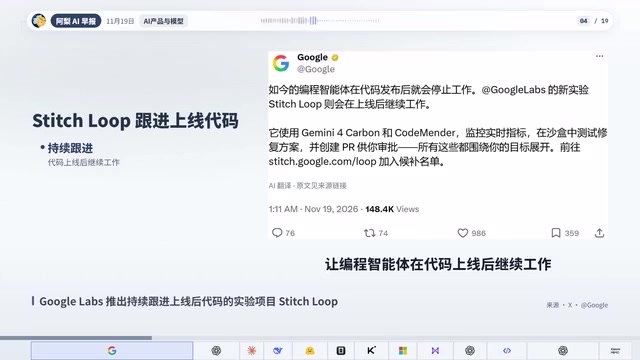
Gemini 4 Neon Released: Tops Coding Benchmarks, Gemini 4 World Model Opens Up
Google releases Gemini 4 Neon, topping the coding agent index with million-token context; Gemini 4 world model opens Project Genie; DeepSeek web search goes free; Microsoft unveils an on-device Windows small model; the White House discusses requiring US companies to disclose whether they use Chinese open-source models.
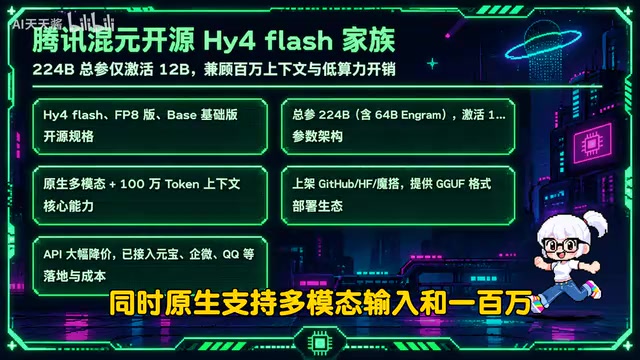
Google Gemini 4 Neon Released: Just $3 per Million Tokens as the AI Price War Escalates
Google releases Gemini 4 Neon at just $3 per million input tokens; Tencent open-sources Hy4 Flash; DeepSeek scraps search-crawling fees; Microsoft unveils new image and voice models; NVIDIA halts H200 shipments to China; Citi says no reimbursement for AI-agent fraud losses. Today's hardcore AI news in one read.
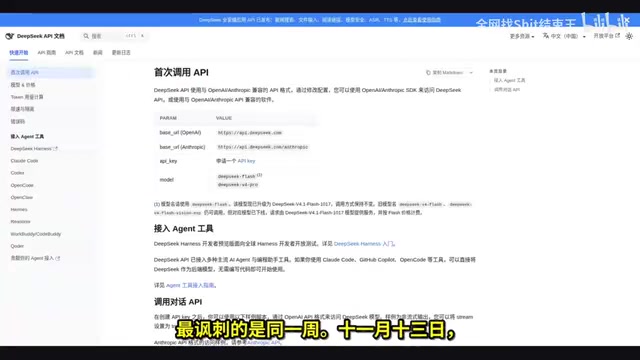
DeepSeek Quota Wall Pre-embedded in Code: The 48 Hours of Open-Source Migration Tools and Chat Restrictions
DeepSeek pre-embedded quota limits in frontend code two days early; old chats expire after 72 hours of inactivity on Nov 15, while APIs and client code go open-source the same week. This analysis examines the VRAM pressure and three-way resource contention behind rapid quota depletion, and the user dilemma of "not unwilling to pay, but unable to find where to pay."