How Programmers Cracked a Fake Minecraft Speedrun with Code

Programmers used pseudo-random numbers, GUI scaling, and frame sync detection to dissect the technical principles behind Dream's fake speedrun video.
TheStandup podcast invited game engine developer Casey Muratori to dissect the programming principles behind the faking of Minecraft top streamer Dream's speedrun video. DarkSpark's tool used the pseudo-random nature of hunger bar jitter patterns to infer game tick timestamps, revealing multiple cliff-like jumps; the integer pixel nature of GUI scaling proved that the so-called "fullscreen" operation was actually post-processing resampling; furnace smelting time (200 game ticks) and frame synchronization anomalies in the hotbar during the boat clutch provided hard evidence of editing. The show also discussed engineering principles such as game logic should not read the real clock to ensure reproducibility, and game data should avoid JSON. This technical debunking tool not only exposed an individual case but also provided a general verification method for the speedrun community.
Title
How Programmers Cracked a Fake Minecraft Speedrun with Code
Meta Description
Programmers used pseudo-random numbers, GUI scaling, and furnace timing to debunk Minecraft streamer Dream's fake speedrun video. Legendary engine developer Casey Muratori breaks down how hunger bar jitter becomes a timestamp, plus clock and data-driven principles in game engine design.
Article Content
When Minecraft top streamer Dream's "unedited" speedrun video was accused of being fake, a group of programmers didn't stop at flame wars. Instead, they used pseudo-random numbers, GUI scaling, and frame synchronization detection to turn every frame of the video into court evidence. In this episode of TheStandup podcast, legendary game engine developer Casey Muratori joins to play a guessing game while dissecting the programming principles behind this technical debunking.
From Entertainment Gossip to Code Detectives
Dream's Manhunt series claimed that all hunting footage was real and unedited. But another creator, DarkSpark, developed a tool that analyzed subtle changes in the in-game HUD and found 46 hidden edit points. These edit points are usually masked by "lag spikes"—the player character suddenly teleports or rubber-bands, and viewers think it's network lag, but actually the video was cut.
The podcast designed a guessing game on the spot: play a suspicious clip and let the guest guess where the editing evidence is hidden. Options include helmet shine changes, HUD disappearance, item name disappearance, abnormal furnace smelting speed, etc. These seemingly game-detail clues all correspond to deterministic rules that can be programmatically detected.
When GUI Scaling Becomes a Lie Detector
According to the podcast analysis, Dream once explained that a certain HUD disappearance was because he "pressed fullscreen." But programmers found a hard technical contradiction: Minecraft's GUI scale is an integer pixel scaling factor. The higher the scale value, the sharper the inventory texture should be; but in the video, the enlarged image becomes blurrier, indicating that the video was resampled, not a real in-game fullscreen operation.
Host TJ joked on the show: "He said he pressed fullscreen, so everything disappeared, but fullscreen doesn't make the game quality suddenly worse." This detail became one of the breakthroughs, and also demonstrated the difficulty of pixel-perfect rendering in game development—Casey mentioned that he spent a lot of time in his career dealing with pixel alignment issues.

GUI Scale in Minecraft controls the magnification factor of interface elements relative to screen resolution, and its value is an integer (usually 1, 2, 3, 4, or "auto"). The game scales interface textures by integer multiples to keep pixel edges sharp without interpolation blur. This is because Minecraft's UI textures use nearest-neighbor sampling; with integer scaling, each texture pixel corresponds exactly to an integer number of screen pixels, keeping the image clear.
If a video claims to use a higher GUI scale, then interface elements such as the inventory and hotbar should be sharper with larger pixel blocks. But if the enlarged interface in the video becomes blurry, it means the image has undergone non-integer resampling—which usually happens during video editing software scaling or compression, not a real in-game fullscreen operation. This contradiction constitutes hard technical evidence of Dream's video faking: in-game fullscreen does not change the integer pixel nature of GUI scaling; only post-processing introduces blur.
Furnaces, Boats, and Hunger Bars: Game Physics Doesn't Lie
Another key piece of evidence comes from furnace smelting speed. In Minecraft, each iron ore takes 200 game ticks (10 seconds) to smelt. But in a certain clip, the time interval between iron ingot outputs was noticeably shorter than the physical limit. Programmers directly checked the game data files and confirmed the recipe time, thereby proving that the video was sped up or spliced.
A more exciting case is the "boat clutch" clip. Dream places a boat and enters it while falling from a high tower to avoid fall damage. Theoretically, this requires extremely fast reaction, but analysis found that the hotbar at the bottom updated one frame faster than the inventory interface—which is impossible in normal game rendering, indicating that the video was composited.

Frame synchronization means that different interface elements in the same game screen should update within the same rendering frame. In normal game rendering, the hotbar and the inventory GUI are driven by the same rendering loop, so their state updates must occur in the same frame. If analysis finds that the hotbar updates one frame faster than the inventory interface, this cannot happen in real game rendering; it can only mean that the video was spliced from two different sources or edited frame by frame.
In the "boat clutch" case, Dream places a boat and enters it while falling from a height to avoid fall damage. Theoretically, this requires extremely fast reaction, but frame-by-frame inspection found that the hotbar at the bottom updated one frame ahead of the inventory interface—this time difference violates the rendering consistency principle of the game engine. Programmatic detection exploits this "should-be-synchronized-but-isn't" anomaly to turn edit points that are hard to notice with the naked eye into quantifiable evidence.
How Pseudo-Random Numbers Become Timestamps
The most ingenious technology comes from the "jolt cracker" tool. Minecraft's hunger bar jitter pattern is determined by a pseudo-random number generator driven by game ticks. Since the seed is based on game ticks, given a jitter pattern, the corresponding game tick range can be inferred.
DarkSpark made these possible game ticks into a searchable database, and then combined computer vision to recognize the hunger bar pattern in the video, estimating the in-game time corresponding to each frame of the video. If the video was edited, this "timestamp" sequence would show jumps—for example, if the player turned off the game and continued the next day, the timestamp would reset to zero and grow again.
The show displayed this timestamp curve on site: a truly unedited video should be a monotonically increasing straight line, while Dream's video showed multiple cliff-like drops.

Game tick is the basic time unit for Minecraft's simulated world. Normally it executes exactly 20 times per second, i.e., 1 tick = 50 milliseconds. Almost all in-game logic—block updates, entity movement, hunger changes, furnace smelting progress—advances by ticks, not by real time. This design makes the game state fully reproducible under the same inputs: as long as the initial seed and each tick's player actions are known, the entire game process can be precisely replayed.
Pseudo-random number generators (PRNGs) are heavily used in Minecraft to create seemingly random effects, such as hunger bar jitter, particle dispersion, enchanting table text, etc. The key is that these "random" numbers are not truly random but are calculated by a deterministic algorithm based on a seed. When the seed is tied to the game tick, the same tick always produces the same random number sequence. Therefore, by reverse-observing the output of the random numbers (such as the hunger bar pattern), the current game tick range can be inferred—this is the principle basis of the jolt cracker tool.
Design Principles from the Perspective of a Game Engine Developer
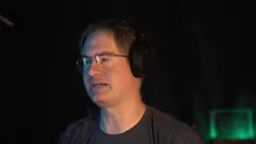
Casey Muratori extended the discussion to two engineering issues on the show. First, should game logic read the real-world clock? His answer is no: game code should be fully reproducible, and all time inputs should be uniformly provided by the engine layer; otherwise, replay and automated testing would be impossible. Dream's video precisely exposed that Minecraft's enchantment glint animation uses the system clock rather than the game clock, which is what made edit detection possible.
Second, should game data use JSON or code? Casey said bluntly, "Never use JSON." JSON parsing is slow, lacks type validation, has poor editing experience, and generates a lot of garbage at runtime. He recommends using a binary format with a custom editor, or at least limiting data-driven design to areas that truly require user modification; otherwise, it easily leads to homogenization where all equipment "just differs in values."
The Double-Edged Sword of Technical Debunking
The significance of this tool goes beyond exposing one YouTuber. The podcast pointed out that the Minecraft speedrun community has long been plagued by video splicing, and tools like jolt cracker can become a general verification method—any speedrun video claiming to be unedited can be cross-validated using in-game deterministic systems such as hunger bar jitter, furnace timing, and enchantment glint animation.
But conversely, it also reminds all content creators: every pixel in the game world is driven by code rules, and as long as the rules are deterministic, they can be reverse-engineered. For content that sells itself on "authenticity," technical auditing is becoming the new trust infrastructure.
The full discussion can be heard on TheStandup's Spotify and YouTube channels, including more code snippets and guest interactions.
One-line Summary
Programmers used pseudo-random numbers, GUI scaling, and frame synchronization detection to dissect the technical principles behind Dream's fake speedrun video.
Paragraph Summary
TheStandup podcast invited game engine developer Casey Muratori to dissect the programming principles behind the faking of Minecraft top streamer Dream's speedrun video. DarkSpark's tool used the pseudo-random nature of hunger bar jitter patterns to infer game tick timestamps, revealing multiple cliff-like jumps in the video; the integer pixel nature of GUI scaling proved that the so-called "fullscreen" operation was actually post-processing resampling; furnace smelting time (200 game ticks) and frame synchronization anomalies in the hotbar during the boat clutch provided hard evidence of editing. The show also discussed engineering principles such as game logic should not read the real clock to ensure reproducibility, and game data should avoid JSON. This technical debunking tool not only exposed an individual case but also provided a general verification method for the speedrun community.
Related articles

LLaMA-Factory in Practice: A Complete No-Code Guide to Fine-Tuning Large Models
An introduction to LLaMA-Factory, the open-source fine-tuning tool: its 60.1K-star background, supported models and algorithms, local vs. cloud deployment, and CUDA setup steps.

Zeng Ming's Deep Retrospective: Why OpenAI May Not Be the Ultimate Winner — and Why the Corporate System Will Disappear
Zeng Ming's deep retrospective on the AI endgame: model companies are just infrastructure, OpenAI and Anthropic won't be the final winners; the next battle is the Agent entry point standard; the corporate system will disappear as AI restructures collaboration, and only mission-driven companies can survive the cycle.

OpenHands v1.28.0: OpenCode and PI Added as Built-in Agents, API Keys Requestable In-Conversation
OpenHands ships 5 releases in 21 days: v1.27.0 adds OpenCode and PI as built-in agents, v1.28.0 enables in-chat key requests. ACP integration, credential reuse, model list changes, and upgrade advice.