How Rust Reshaped My Development Thinking: A Developer's Confession
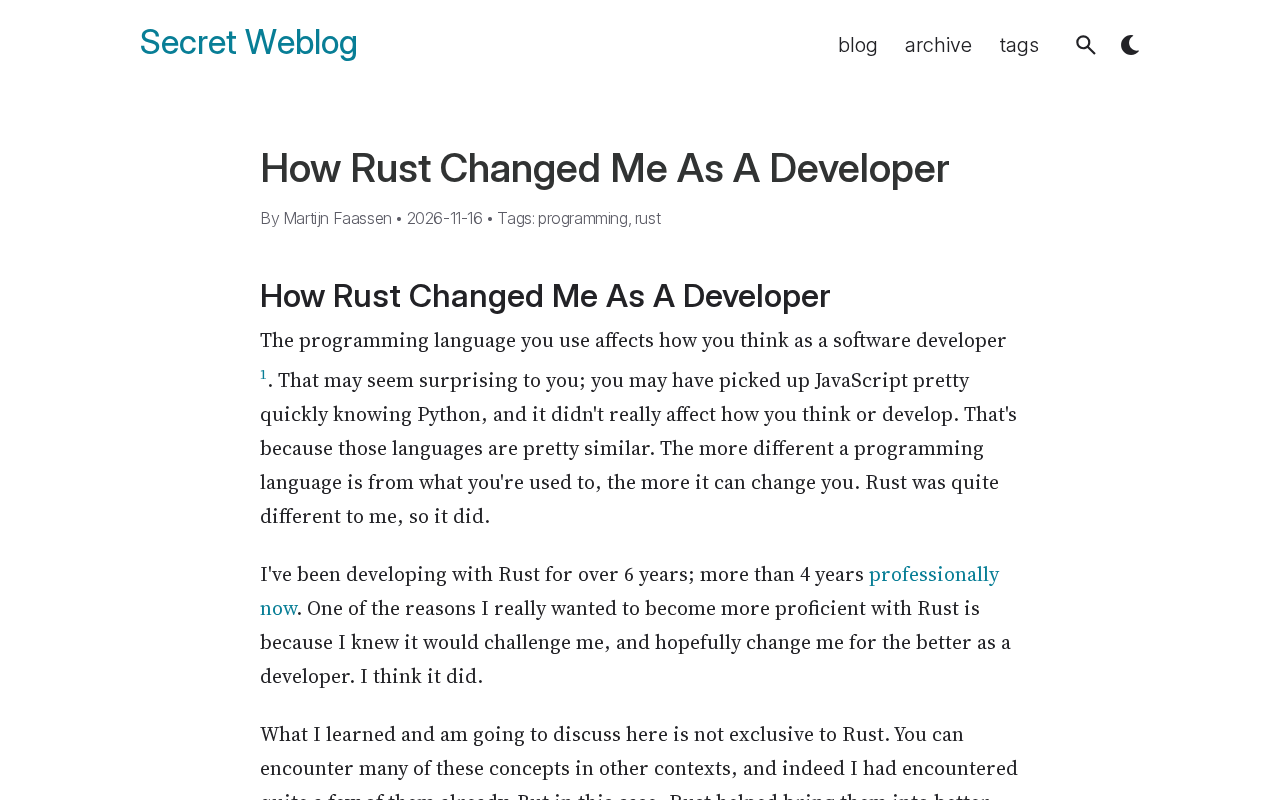
Rust reshapes developers' engineering thinking through ownership, explicit error handling, and concurrency safety models.
Based on a popular Hacker News blog post and its community discussion, this article outlines Rust's deep impact on developer thinking. The author notes that Rust's ownership system and borrow checker force developers to clarify data flow before coding, shifting problem detection from runtime to compile time; `Result` and `Option` types make error handling an explicit contract, influencing practices in languages like TypeScript; the concurrency safety model lowers the psychological barrier to multithreaded programming but is not a silver bullet. Community culture's rigor and mutual assistance are also important gains. Core conclusion: learning Rust is a thinking exercise transferable to other tech stacks.
Introduction: A Cognitive Shift Brought About by a Tech Stack Migration
In the tech community, debates about programming languages never cease, but few languages can fundamentally change a developer's way of thinking after deep usage the way Rust does. Recently, a blog post titled "How Rust Changed Me as a Developer" sparked extensive discussion on Hacker News, garnering 253 upvotes and 156 comments. The author shared his personal experience of how Rust influenced his development habits and problem-solving approach. Based on the original article and community discussion, this piece outlines the specific impacts of Rust on developer thinking and attempts to distill engineering insights that can be transferred to other tech stacks.
From "Just Make It Run" to "Think It Through Before You Start"
According to the original author's blog, before learning Rust, he was accustomed to quickly writing code that runs and then fixing issues through debugging and testing. However, Rust's ownership system and borrow checker force developers to clarify data ownership and lifetimes at compile time, which compelled him to map out the data flow path before writing any code. This experience of "strict review at compile time" initially brought frustration, but over time, he found that even when writing Python or JavaScript, he would instinctively think about variable scope and mutability first, rather than waiting until runtime to troubleshoot problems.
Many developers in the Hacker News comments echoed this sentiment. One comment noted that Rust compiler error messages not only point out the problem but often suggest fixes—this "teaching-style error reporting" accelerates the learning curve and gradually cultivates more rigorous coding habits. This shift from "post-hoc debugging" to "upfront design" is one of the biggest changes the original author attributes to Rust.
The ownership system and borrow checker are the core mechanisms behind Rust's memory safety guarantees. The ownership rules state: each value has exactly one owner; when the owner goes out of scope, the value is automatically dropped; values can transfer usage rights through move or borrow. The borrow checker verifies reference validity at compile time: at any given moment, there can be only one mutable reference or any number of immutable references, and references must not dangle. This static analysis mechanism eliminates common memory errors such as null pointers, double frees, and data races without introducing garbage collection. For developers, this means the compiler will reject code that would compile in other languages but could cause runtime crashes, thereby shifting a large amount of debugging work to the coding phase. Understanding ownership's "move semantics" and "lifetime annotations" is the key threshold to mastering Rust and the technical root of how it changes developer thinking.
Error Handling Is No Longer an Afterthought
In the original article, the author specifically mentions how Rust's Result and Option types changed his understanding of error handling. In previous projects, exception handling was often treated as a secondary task, or even ignored. Rust, however, makes errors part of the return value, and the compiler checks whether all possible branches are handled. This design led him to proactively adopt similar patterns in other languages, such as using union types in TypeScript to explicitly express possible error states.
In community discussions, some developers added that while this explicit error handling increases upfront code volume, it significantly reduces the cost of troubleshooting production failures. However, dissenting voices noted that in certain rapid prototyping scenarios, Rust's strictness may slow down development. The original author did not deny this but believes the trade-off is worthwhile for long-term maintenance projects.
Result<T, E> and Option<T> are two core algebraic data types in the Rust standard library. Option<T> represents a value that may or may not exist (Some(T) or None), used to replace null pointers; Result<T, E> represents an operation that succeeds (Ok(T)) or fails (Err(E)), used to replace exceptions. Unlike languages such as Java and Python where exceptions can silently propagate upward, the Rust compiler forces callers to handle every variant of these two enums, typically through match expressions or the ? operator for explicit propagation. This design encodes error states into the type system, making "forgetting to handle errors" impossible at compile time. The ? operator automatically propagates errors when a function returns Result, maintaining code conciseness without sacrificing explicitness. This pattern has conceptual parallels in TypeScript's union types and Go's error return values, but Rust's enforcement is stronger.
Respect and Control Over Concurrent Programming
Rust's concurrency safety model is another frequently mentioned turning point. The original author admitted that before encountering Rust, he had always been fearful of multithreaded programming because data race issues are difficult to reproduce and debug. Rust's type system can prevent data races at compile time, which gave him the confidence to write more complex concurrent logic. Some HN comments mentioned that this "fearless concurrency" experience makes developers more willing to attempt parallelization, thereby improving program performance.
However, some comments cautioned that Rust's concurrency safety is not a silver bullet—developers still need to understand underlying principles, or they may fall into other problems such as deadlocks. The original author agreed and emphasized that Rust only lowers the entry barrier; true concurrency capability still requires practical experience.
Rust's "fearless concurrency" is built on two marker traits: Send and Sync. Send indicates that ownership of a type can be safely transferred between threads, while Sync indicates that references to a type can be safely shared across multiple threads. The compiler automatically derives or requires developers to explicitly implement these traits at compile time, thereby preventing non-thread-safe types from being used across threads. Combined with ownership rules, Rust can rule out data races at compile time—situations where multiple threads access the same data simultaneously and at least one is a write operation. However, this static guarantee does not cover deadlocks, livelocks, or logic-level race conditions; developers still need to understand thread scheduling and lock semantics. Primitives provided by the Rust standard library such as Mutex<T>, RwLock<T>, and channels bind lock protection together with data, further reducing the possibility of misuse, but the correctness of concurrent design ultimately still depends on the developer's grasp of business logic.
Community Culture: Rigor and Mutual Assistance
Beyond language features, the original author also mentioned the influence of Rust community culture on him. The Rust community is known for its friendly discussion atmosphere and high-quality documentation, an environment that encourages developers to deeply understand the trade-offs behind language design. Discussions on HN reflect similar views: many developers believe that Rust's RFC process and the compiler team's emphasis on backward compatibility have shaped a responsible engineering culture.
Some commenters noted that this culture even influenced how they participate in open-source projects—placing more emphasis on code review and documentation quality. Although a few voices believe the Rust community is sometimes too dogmatic, most discussions still affirm its positive aspects.
Conclusion: Language Shapes Thinking, Thinking Feeds Back into Practice
The original author's core conclusion is: Rust did not make him a "Rust developer" but rather a more design-focused and rigorous developer. This influence transcends the language itself and permeates his decision-making process when using other tech stacks. For developers considering learning Rust, his advice is: don't treat it as just another syntax, but as a thinking exercise.
Judging from community feedback, this view is quite representative. Although Rust's learning curve is steep, the thinking shift it brings is seen by many developers as long-term value. For teams, adopting Rust may be not just a technology choice but also an opportunity to upgrade engineering culture.
One-line Summary
Rust reshapes developers' engineering thinking through ownership, explicit error handling, and concurrency safety models.
Paragraph Summary
Based on a popular Hacker News blog post and its community discussion, this article outlines Rust's deep impact on developer thinking. The author notes that Rust's ownership system and borrow checker force developers to clarify data flow before coding, shifting problem detection from runtime to compile time; Result and Option types make error handling an explicit contract, influencing developers' practices in languages like TypeScript; the concurrency safety model lowers the psychological barrier to multithreaded programming but is not a silver bullet. The rigor and mutual assistance in community culture are also seen as important gains. The core conclusion: the value of learning Rust transcends the language itself—it is a thinking exercise transferable to other tech stacks.
Related articles
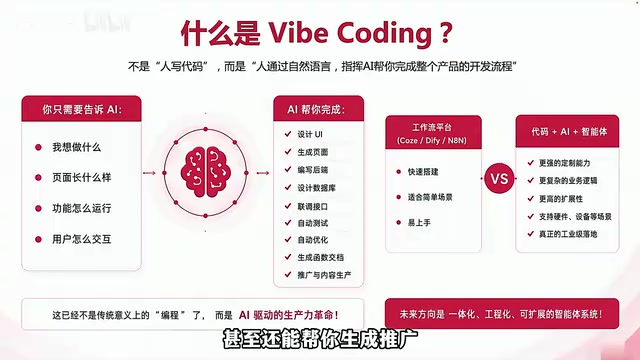
Vibe Coding for Absolute Beginners: A Practical Guide to AI-Assisted Programming
A beginner's practical guide to Vibe Coding: how AI-assisted programming lets people direct AI to write code, covering tools like Claude Code and Cursor, AI collaboration, multi-platform development, and automated operations for the full-chain one-person company.
Gemini 4 Neon Hands-On: Google's Mid-Size Model Takes On Opus 5.5
Hands-on with Gemini 4 Neon: Google's mid-size model rivals Opus 5.5 on coding tasks with strong coherence and long-task performance at lower cost, though 3D generation and architecture analysis remain weak.

Police Transcription Firm Data Leak: Naked Cloud Server Exposes Law Enforcement Sensitive Information
A transcription firm serving police, prosecutors, and tech giants exposed sensitive data like interrogation recordings and bodycam videos due to an unprotected cloud server. This article analyzes the third-party risks and recurring cloud security issues behind the incident.