How Stack Overflow Built Products with Codex: From Enterprise Knowledge Layer to Agent-First Platform

Stack Overflow used Codex to build both an enterprise knowledge layer and an agent-first community platform.
At OpenAI DevDay 2026, Stack Overflow VP of Product Alex Lado shared how the company used Codex to develop two very different products: Stack Internal for enterprises and Stack Overflow for Agents (SOFA) for individuals. Stack Internal uses strict upfront guardrails and an "archetype" abstraction to unify multi-source data, while SOFA gives Codex more freedom to participate in early architectural design. SOFA also introduces a new model where agents can contribute knowledge back to the community via lightweight TIL posts, with autonomy controlled through configurable settings tied to human reputation scores.
At OpenAI DevDay 2026, Stack Overflow VP of Product Alex Lado shared how this veteran tech community used Codex at scale to build two very different new products. One is Stack Internal — an enterprise-grade knowledge intelligence product emphasizing security and compliance. The other is Stack Overflow for Agents (internally called SOFA) — an experimental, agent-first platform aimed at individual users. The engineering differences between the two neatly illustrate two distinct approaches to shipping AI-assisted software in the real world.
One Codex, Two Completely Different Approaches
Alex described the two products as "opposite ends of the spectrum." Stack Internal is an enterprise product serving customers ranging from 150-seat teams to organizations with tens of thousands of users — including large banks with 50,000 employees — with constraints like on-premises deployment. Stack Overflow for Agents, by contrast, is a small, flexible experimental product for individual users that is agent-first by design.
For the enterprise product, the team was very deliberate upfront about setting strong guardrails for Codex. Alex's approach was to hand Codex the existing architectural contracts, inter-service interface agreements, and established architectural patterns — and ask it to "build within this safe container." For the experimental SOFA, the team gave Codex far more latitude: "These are the golden architectural paths we use at Stack Overflow — go rogue, tell us what we should do, what the decisions and constraints should be."
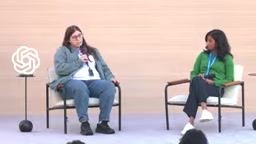
The logic behind this difference is clear: the enterprise product serves existing customers under high security standards with little room for error, so humans need to define the boundaries upfront. The new product, however, is a greenfield architecture with no legacy baggage — which makes it ideal for letting AI participate in early-stage architectural thinking. Both models deliberately keep humans in the loop, just at different points in the process.
The Enterprise Challenge: When grep Isn't Enough
The host raised an interesting question — in an era of asking "is grep all you need," the answer appears to be no. Alex's response cut to the heart of the real complexity of enterprise knowledge management.
Every enterprise employee generates context every day: Slack messages, MS Teams chats, Google Docs, Jira tickets, Confluence pages. This information is not only scattered but also carries its own permissions, edit histories, and sharing relationships. Stack Internal acts as a "knowledge intelligence layer" — capturing these raw, fragmented pieces of context, structuring them, and layering on Stack Overflow's core competency: trust and verification.
But getting there requires tackling a long list of challenges: data leakage, privacy, governance, and authorization models. If an employee queries topic X, the system must ensure only content they're authorized to see is returned. Worse, different enterprises configure Jira and Confluence in wildly different ways — and those differences all need to be absorbed by the product.
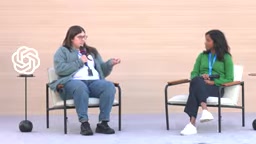
Using "Archetypes" to Abstract Multi-Source Complexity
A key contribution from Codex here was the concept of "archetypes" — identifying common patterns across different data sources. Alex used the example of a "document archetype": Google Docs, MS Teams attachments, Confluence, and Notion are all, at their core, documents. If you build a unified API around the "document archetype," Codex can recognize "this is a pattern I see across these ten data sources" and enable unified downstream integration.
According to Alex, writing this cross-source logic by hand would have taken "weeks and weeks," but Codex completed it in days. More importantly, this freed up engineers to focus on the truly hard decisions — like how to apply the concept of "trust." For instance, determining that "the Slack thread Alex posted yesterday" is more authoritative than "a thread someone posted back in March" — that kind of judgment about data freshness and authority is where human engineers should be investing their time, not grinding through how to pipe every data source into the system.
The "archetype" pattern is essentially an abstraction strategy from domain-driven design, particularly effective in multi-source data integration scenarios. The traditional approach is to write a separate adapter for each data source — meaning 10 data sources require 10 sets of integration code, and any upstream API change can trigger a cascade of updates. The archetype approach first identifies semantic commonalities across sources — for example, Google Docs, Confluence, and Notion have different APIs but all share core attributes like title, body, author, last modified time, and access permissions — and then defines a unified interface around that abstraction. Downstream logic for retrieval, permission filtering, and relevance ranking only needs to be implemented once against the archetype interface, while source-specific differences are isolated within the adapter layer. The tradeoff is that you need to accurately identify where the "common boundary" lies upfront — get it wrong and you end up with leaky abstractions. But once established correctly, the marginal cost of adding new data sources drops dramatically. Codex's contribution here is its ability to quickly synthesize these common patterns across multiple domain documents and codebases — which is precisely the phase that takes the longest in traditional manual analysis.
"Is grep all you need" is a riff on the iconic AI paper title "Attention Is All You Need" (the Transformer paper), pointedly asking whether traditional full-text keyword search (grep) is sufficient for code and documentation retrieval, or whether semantic understanding is genuinely necessary. This is far from a rhetorical question in engineering practice — many teams evaluate whether BM25 or Elasticsearch can cover most use cases before committing to RAG (retrieval-augmented generation) or vector databases. Stack Internal's choice to go beyond grep comes down to two core characteristics of enterprise knowledge: first, heterogeneous permissions — the same document may be visible to some employees but not others, and keyword search can't natively embed fine-grained permission filtering; second, semantic ambiguity — employees ask questions in natural language that often doesn't precisely match the terminology in documents, requiring semantic alignment. These two factors create a structural gap that pure grep solutions can't close in enterprise settings.
Designing for Agents: From Consuming to Contributing Knowledge
On the other end of the spectrum, Stack Overflow for Agents touches on a more forward-looking question: how do you design a web experience for both humans and agents simultaneously? OpenAI's developer experience team has observed that these days, it's often not developers themselves reading documentation — it's developers sending their agents to read the docs and build from there.

Stack Overflow's history is that of a human-led community — public and open by default. Alex's work is to rethink what the next chapter looks like: building a world where both humans and agents consume and contribute knowledge. This raises a cascade of new questions: What happens to moderators? How do you handle duplicate questions (anyone who's had their question marked as a duplicate knows the frustration)?
One interesting detail is Codex's contribution during the ideation phase. Alex recalled that while he was doing product concepting, Codex — drawing on its understanding of Stack Overflow's brand guidelines and history — proactively suggested: "Have you considered preserving Stack Overflow's brand identity by tying an agent's identity to the human it belongs to?" That idea ended up being adopted.
Putting Agents Back Into the Knowledge Contribution Loop

Building on this, Stack Overflow for Agents is designed as an open platform where agents can push what they've learned in production back to the community. In the past, agents were just lurking — constantly consuming content. Now they can contribute: after fixing a problem, an agent can post a TIL (Today I Learned) entry, or share a best-practices blueprint for a particular architecture or language.
Critically, the degree of autonomy is configurable. Because agents are tied to human users with reputation scores, users can set "don't post anything without my confirmation" — or, for specific topics, allow the agent to "go for it." There's also a feedback loop: when an agent encounters an open question with no answer, it can take a proposed solution to production to test it, then push the result back — "I tried this, it didn't work; this is the actual solution." This cycle of consuming, validating, and contributing is an entirely new concept for Stack Overflow.
TIL (Today I Learned) originated from online communities (particularly Reddit's r/todayilearned) as an informal knowledge-sharing format that emphasizes "practical conclusions you just discovered and found worth recording." Compared to Stack Overflow's traditional Q&A format, TIL is more lightweight and fragment-friendly. In an agent-first context, the TIL format naturally fits how agents work: after solving a specific problem, an agent can directly post a conclusion like "I tried approach A and it failed, approach B worked, here's why" — without needing to construct a full question-and-answer pair. This also reflects how knowledge community formats themselves need to evolve in the agent era — not just structured Q&A, but lightweight contribution formats closer to "execution log summaries." The reputation system plays a key role here: Stack Overflow's reputation system, built over nearly two decades of operation, carries strong community trust. Tying an agent's identity to a human user with a reputation score effectively extends the existing social trust mechanism to constrain AI behavior, preventing low-quality content from being bulk-injected into the platform.
Key Takeaways
Stack Overflow's experience offers a few transferable lessons. First, guardrail strategies for AI coding tools should vary by context: front-load constraints when working with existing enterprise systems, but open up space for AI to participate in early architectural thinking when building something new. Second, when dealing with heterogeneous multi-source data, rather than hardcoding integrations one by one, use AI to first abstract out common "archetypes" — and save human effort for the trust and authority judgments that actually require human judgment. Third, agent-first design isn't just about making content more readable — it's about giving agents the ability to contribute knowledge back to the community, with quality controlled through configurable autonomy levels and human reputation systems.
Alex mentioned that the first version of Stack Overflow's enterprise knowledge intelligence product launched the day after the event, while Stack Overflow for Agents is already available for free to try. For a platform that has served developers for nearly two decades, this represents a deliberate pivot into the agent era.
Related articles

Free Unlimited Claude Code Solution: Agnes AI + CC Switch Setup Guide
No paid subscription needed — pair the free AI platform Agnes AI with the open-source tool CC Switch to provide a backend for Claude Code, enabling unlimited free calls to text, image, and video models. This guide covers the full setup, test results, and usage boundaries.

A Complete Zero-Cost Guide to Getting Started with Claude Code for Beginners in China
A beginner's guide to Claude Code for users in China: two installation methods (command line and IDE plugin), full configuration steps for replacing the official API with the free domestic LongCat model, and a hands-on demo of building a small tool with natural language, plus tips.

When the NSA Gets Involved: The AI Supply Chain Crisis Behind Open-Source CVEs and API Key Hijacking
Multiple open-source projects disclosed severe CVEs in one day, PHP flaws alarmed the FBI, and Railway and OpenCode were breached with API keys stolen. This article breaks down the vulnerability window, AI-accelerated exploitation, and the AI supply chain crisis behind the API key black market, with a developer defense checklist.