How to Choose a Database for AI Agents? 5 Key Evaluation Criteria
Five criteria for evaluating AI Agent databases, with a deep dive into branch isolation and serverless architecture.
As AI Agents move from experimentation to production, traditional databases designed for deterministic applications struggle to keep up with agents' dynamic, exploratory behavior. This article analyzes five criteria for evaluating AI Agent databases, with a focus on two core capabilities: branch isolation — which lets agents safely experiment on independent data branches before merging or discarding results — and serverless architecture, which ties cost to actual load and suits agents' unpredictable calling patterns. Additional dimensions such as fast provisioning, API friendliness, and cost predictability are also discussed, offering a practical framework for forward-looking database selection in the age of AI-native applications.
As AI Agents move from concept to production, a long-overlooked question has come to the forefront: what kind of database do these autonomous agents actually need? Traditional databases were designed for human developers and deterministic applications — but AI Agents operate very differently. They experiment frequently, explore paths in parallel, and need isolated sandboxes to work safely. This article breaks down five criteria for evaluating AI Agent databases, drawing on both primary source material and broader industry practice.
Why AI Agents Need Purpose-Built Databases
The operational patterns of AI Agents differ fundamentally from those of traditional applications. When completing a task, an Agent may try multiple approaches, execute a large volume of reads and writes, and even encounter errors that require rollback. This highly dynamic, exploratory behavior places new demands on the underlying data layer.
Traditional databases assume that the caller is reliable and has clear intent. An Agent, by contrast, behaves more like a tireless experimenter. If every experiment directly touches production data, the risk becomes unmanageable. Databases designed around Agent workflows therefore need to offer new capabilities: isolation, elasticity, and programmability.
The Five Evaluation Criteria in Detail
The five key dimensions for evaluating AI Agent databases include branch isolation and serverless architecture as explicitly highlighted criteria. Below, we unpack each dimension with reference to industry practice.
Branch Isolation
Branch isolation is one of the most distinctive capabilities an AI Agent database can offer. It borrows the concept of branching from Git, allowing an Agent to operate on an isolated data branch without affecting the main dataset.
This is critical for Agent workflows: when an Agent needs to test a plan, it can create a snapshot branch, freely read from and write to it, then decide whether to merge the results back into the mainline or discard them entirely. If the experiment fails, the branch is simply thrown away — the production data remains untouched. This mechanism makes an Agent's trial-and-error behavior safe and controllable.
The core idea behind Git branching is that the main branch represents a stable state; developers make changes on isolated branches and only merge verified changes back. Branch isolation at the database level extends this philosophy to data itself. Through techniques like Copy-on-Write or pointer redirection, a new branch doesn't require a full physical copy of the data — it shares the original data pages and only records differential changes. This allows branches to be created in milliseconds, regardless of dataset size. Next-generation Postgres services like Neon treat database branching as a first-class citizen, giving every CI/CD pipeline or every Agent task its own isolated data environment.
Serverless Architecture
Serverless architecture addresses the challenge of resource elasticity. AI Agent workloads are notoriously unpredictable — an Agent might sit idle for long stretches, then suddenly generate a burst of concurrent queries.
A serverless database automatically scales based on actual demand: it consumes almost no resources when idle, and scales up rapidly at peak load. For on-demand Agent workflows, this both reduces cost and eliminates the waste of over-provisioning for peak capacity. The pay-as-you-go model aligns naturally with the irregular calling patterns of Agents.
Traditional database instances run continuously and consume fixed compute resources even when handling zero requests. Serverless databases solve this through a compute-storage separation architecture: the storage layer persists data, while the compute layer (the processes that execute queries) can be fully suspended during idle periods and wake up within seconds when a request arrives. This "cold start" capability is especially valuable for AI Agents, since an Agent task might run for seconds to minutes and then go quiet for hours. Representative products include Neon (PostgreSQL-based), PlanetScale Scaler Pro, and Aurora Serverless v2. It's worth noting that cold-start latency — the time from suspension to responding to the first query — remains an engineering challenge for serverless databases, with significant variation across products; this should be factored into any evaluation.
Reasonable Inferences on the Remaining Criteria
The source material references five criteria in total but only explicitly names branch isolation and serverless. Based on common discussions in the AI Agent database space, the remaining criteria typically cover the following areas (these reflect industry-standard dimensions, not explicit claims from the original source):
- Fast provisioning and branch speed: Agents frequently create and tear down data environments, so branch creation must complete in milliseconds or seconds — not minutes.
- Programmable interfaces and API friendliness: Agents interact with databases programmatically, making clean APIs and SDK support a fundamental requirement.
- Cost predictability: Large numbers of Agents running in parallel can generate massive volumes of short-lived data instances; the pricing model must prevent runaway costs.
It should be noted that, given the limited scope of the original source material, these additional dimensions represent supplementary inferences based on prevailing industry standards. Readers should refer to the official complete list for authoritative guidance.
Implications for Developers
The rise of AI Agent databases reflects a broader trend: infrastructure is adapting to AI-native applications. We once designed storage systems for humans and conventional programs; now we need to rethink the data layer for autonomous agents.
For teams building Agent applications, database selection should go beyond traditional performance benchmarks and focus on these newer dimensions: isolation capability, elastic scaling, and programmatic control. Branch isolation lets Agents experiment safely; serverless architecture ties cost to actual load. Together, these capabilities form the core of an Agent-friendly data infrastructure.
As Agent technology matures, the surrounding toolchain is evolving rapidly — and the database is just one piece of that puzzle. Understanding these evaluation criteria helps teams make more forward-looking technology decisions from the start.
Related articles

AI Daily Briefing: Qwen3-Omni Full-Modality Model Launches, Huawei Ascend 960 and Grok's New Model Surface
AI Daily: Qwen3-Omni Flash launches with full-modality support and 93% cost cuts; Huawei unveils million-processor AI architecture; Ascend 960 rumored; Grok spotted on GCP; N8N hits CVSS 10 vulnerability.
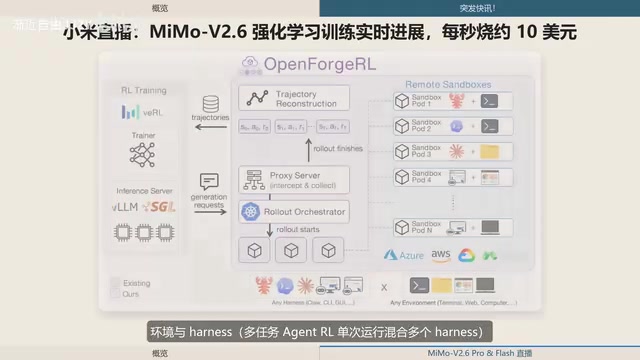
Xiaomi MiMo-V2.6 Live Training: ¥8.55M Spent in One and a Half Days, ~$10 per Second
Xiaomi's MiMo team live-streams MiMo V2.6 Pro/Flash RL training, spending ¥8.55M (~$1.28M) in 1.5 days — ~$10/sec. Covers compute scaling, open-source plans, and DeepSWE benchmarks.

ByteDance Trae Work Getting Started Guide: 11 Use Cases Explained
A hands-on guide to ByteDance's Trae Work AI agent — covering Work, Code, and Design sections across 11 use cases including PPT generation, data analysis, coding, and more.