How to Choose Among Gemini 4's Four Models: A Full Breakdown of Neon Pricing and Real-World Tests
Google's four Gemini 4 models each have distinct positioning; selection hinges on real cost per task, not unit price.
The article systematically breaks down Google's four Gemini 4 models—Carbon, Neon, Argon, and Hydrogen—covering their positioning, Neon's real capability boundaries (leading on long-document retrieval and coding agent benchmarks, slightly behind Opus 5.5 on Terminal Bench and Frontier Code, with mostly vendor self-reported data), the hidden cost switch of thinking levels, the December 1 price doubling for Carbon and Argon, and the trap that cheaper per token doesn't mean cheaper per task, ending with concrete selection rules by task type.
Google has launched four Gemini 4 models named after chemical elements all at once—Carbon, Neon, Argon, and Hydrogen. The names sound like the periodic table, but their positioning has nothing to do with atomic numbers. Choose the wrong model and you'll either spend double the money or sit waiting where you didn't need to. This article lays out the positioning of all four models, Neon's real capability boundaries, the pricing traps, and the selection rules in one go.
Who's Who Among the Four Models
Don't be fooled by atomic numbers. On the periodic table, Hydrogen is 1, Carbon is 6, Neon is 10, and Argon is 18—but Argon is not the largest model. Google's naming logic is closer to the "personality" of each element.
Carbon is the heavy flagship. Google calls it its strongest reasoning model, aimed at complex software engineering and coding agents that need to run for hours. Hydrogen is the lightest one—fast, cheap, aimed at everyday coding and agent tasks, and the only Gemini 4 model with a free tier (on the free tier, Google can use your prompts to improve the product). Argon is an efficient reasoning model that responds faster than Carbon and consumes fewer tokens per turn. Neon sits right in the middle: Google describes it as "frontier-level intelligence, completing tasks end-to-end quickly"—in plain terms, close to Carbon's brain but much faster.
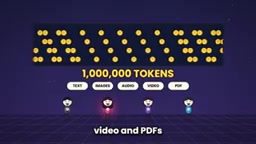
All four models share a 1M-token context window and can read text, images, audio, video, and PDFs.
That window is roughly equivalent to cramming 750,000 words into a single conversation, with a single response able to run up to about 65,000 tokens. For handling long documents and large codebases, that's a real capacity advantage.
Neon's Real Level: Top Tier, But Not Alone at the Top
On the Artificial Analysis Intelligence Index, Neon scores 61 at the highest thinking level, and Google says it ranks third overall; on the Coding Agent version of the same index, Neon ranks first with 58.6; on the Automation Bench it's also first, at 56.3%.
The most dramatic gap shows up in long-document retrieval. Google tested the models' ability to locate deeply buried facts in inputs ranging from 250,000 to 1M tokens, and Neon scored about 95% versus Claude Opus 5.5 at about 67%. This is Google's own testing and should be taken with a grain of salt, but the gap is indeed large. On safety, Neon scored 90.5% on SCC Bench Pro and beat Carbon by 3.4 points on CWE Bench, which detects common code weaknesses. The VALS index tests real work like legal research and tax, where Neon ranked second at 70.9%, taking first place in both the legal and tax subcategories.
It doesn't win everything. On Terminal Bench 4.1, Opus edges it out 65.8 to 65.2, and on Frontier Code, Opus also leads 47.3 to 46.2. But on the ultra-hard expert questions of Humanity's Last Exam Diamond, Neon pulls ahead 71.3 to 67.9.
To be honest: Neon is in the top tier, but it's not alone there. And remember, these numbers are almost all published by the company selling the models—independent testing is still rolling in.
The Artificial Analysis Intelligence Index is a comprehensive model capability ranking published by a third-party independent evaluator (Artificial Analysis). It aggregates scores from multiple public benchmarks and combines them into a single total score using certain weights, for cross-vendor comparison of large models. The index typically distinguishes between different "reasoning effort" levels, because the same model performs noticeably differently in low-effort versus high-effort modes. The Coding Agent version is a specialized index for coding agent scenarios, placing more emphasis on a model's ability to call tools, modify code, and complete end-to-end tasks. Automation Bench and Terminal Bench belong to the same evaluation family, measuring automated tasks and terminal operations respectively. It's worth stressing that while these indices are published by an independent body, their underlying test datasets and weight designs remain controversial, and some vendors optimize for popular leaderboards—so no single ranking should be your only basis for model selection.
Developer Real-World Tests: Visible Outputs and Bugs That Actually Get Fixed
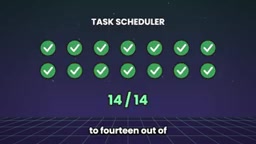
One developer gave Neon a photo of a robot dog and asked it to "build it in 3D," and got usable physics, legs that landed correctly, and three gaits: walk, trot, and gallop. Another tester built 17 interactive demos in a single day. He also threw three broken projects at Neon: a booking checker went from one of five tests passing to all passing, and a task scheduler went from 8 of 14 passing to all 14 passing. Google itself demoed a first-person skiing simulator based on the real terrain of Mont Blanc, complete with avalanche effects.
The pattern is clear: Neon excels at visible outputs (3D scenes, games, dashboards), at chewing through a specific broken problem, and at reading massive documents. But there's an implicit premise in these demos—the people who got the best results all wrote long, detailed instructions. Neon is powerful, but it still needs a good requirements document.
Thinking Levels: The Budget-Burning Switch Most People Never Touch
Neon has four thinking levels: low, medium, high, and extra-high, with high as the default. The higher the level, the longer the model thinks before answering, and the better the answers usually are on hard problems. The trap is that thinking tokens are billed as output tokens, at the same $15 per million. Every extra second of thinking shows up on your bill.
A safer habit is to start at "medium" for everyday tasks and dial it up when you get stuck. Leaving it on "extra-high" all day is the fastest way to burn through your budget.
Pricing and the Key Change on December 1
Neon's standard price is $3 per million input tokens and $15 output. Priority tier (faster and more reliable) is $5.4 input and $27 output. Repeated context via cached input drops to $0.15, a discount of up to 95%. If you don't need an immediate answer, batch mode halves the price to $1.5 input and $7.5 output. Hydrogen is $1.5 input and $7.5 output, with a free tier to try. Neon, Carbon, and Argon are not on the free tier.
December 1 is a date to remember. Carbon and Argon are currently at a promotional price of $1 input and $10 output, and on December 1 both double to $4 and $20. Neon's price stays unchanged.
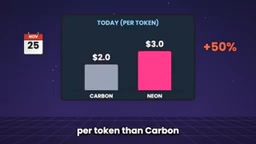
This means that today Neon is 50% more expensive per token than Carbon, but from December 1 it will actually be 25% cheaper.
But price per token is not price per task. One reviewer sent the same prompt to both Neon and Opus 5.5: Neon wrote about 25,000 tokens, Opus wrote about 16,000. The result was that the task cost $0.37 on Neon and $0.32 on Opus—cheaper per unit, but more expensive overall, because Neon tends to think more and write longer. According to Google's own data, under default settings Neon's cost per task is 32% lower than Carbon's. So the real question is never "what's the unit price" but "how much does it cost me to get a task done."
Batch mode (Batch API) is an asynchronous calling method commonly offered by major LLM vendors: developers submit large batches of requests, the vendor processes them within a committed time window (usually within 24 hours), and bills at roughly half the price of real-time calls. It suits offline evaluation, bulk data labeling, large-scale document processing, and other tasks that don't require immediate responses—at the cost of no real-time interactivity, and some vendors impose extra restrictions on success rates and timeout handling for batch jobs. Cached input is another cost-reduction lever, driving input prices very low by reusing repeated context, but it only applies to the input side—output tokens (including thinking tokens) are still billed at full price, so it helps only limitedly for output-heavy tasks.
Orchestrator Mode: Big Model as Manager, Small Model as Worker
Neon also has a new role that changes how you use it—the orchestrator. In Google's coding tool Antigravity, Neon can be the boss: planning the work, breaking it into chunks, and distributing them to parallel Hydrogen sub-agents. Hydrogen is fast and cheap, handling writing code, editing files, and running tests. When a sub-agent gets stuck, control passes back to Neon to replan. Google demonstrated this workflow with a command called Swarm.
Think of it as a senior engineer leading a team of extremely fast junior engineers: big model for key judgments, small models for repetitive labor.
Antigravity is Google's agent-first development environment, positioned more like a programming workbench that can orchestrate multiple AI sub-agents simultaneously than a traditional code-completion plugin. Its core design is to hand task planning, decomposition, and result verification to a stronger "orchestrator" model, then distribute repetitive operations—writing code, running tests, editing files—to multiple lightweight models running in parallel. The key to this multi-agent architecture is the handoff of control: when a sub-agent hits a problem it can't solve, it needs to pass context and state back to the orchestrator for replanning, rather than each fighting its own battle. The Swarm command is the demo entry point for this parallel orchestration capability, used to showcase multiple sub-agents collaborating toward a single goal.
Neon's Weaknesses
First, it isn't always cheaper. For the same job, it may consume more tokens. Second, quality depends heavily on task type. One tester had both models build an interactive watch configurator: Opus spent $2.74 to build a watch with 42 parts, while Neon spent $1.86 to build one with only 9 parts, plus malfunctioning controls. Cheaper, yes—but a big gap.
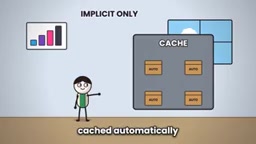
Third, a technical pitfall one developer ran into: Neon only supports implicit caching. Repeated context is cached automatically, but you can't specify exactly what gets cached.
Fourth, the published data is all vendor self-reported, and independent testing is still arriving. None of this means Neon is a bad model—it just means you should test it on your own work before migrating at scale.
Where You Can Use It, and How to Choose
In the Gemini app, AI Pro and Ultra subscribers can select it from the model menu. Developers can use Gemini 4 Neon in Google AI Studio and the paid tier of the Gemini API, and Antigravity's paid Pro and Ultra subscribers can use it too. It's also in Gemini for Business and Google Cloud, and available on OpenRouter. Vetted security teams can also get a special security version through Google's Fairwind program.
The selection rule is simple: for speed—quick edits, unit tests, simple Q&A, sub-agents—use Hydrogen, which is also the free option. For your daily workhorse—complex coding, debugging, analysis, visual building, ultra-long documents—use Neon. For the hardest, longest jobs, like large-scale architecture overhauls, use Carbon, but remember its price doubles on December 1. For solid reasoning while spending fewer tokens per turn, use Argon.
If you're already using Claude or ChatGPT, there's no need to switch. Add Neon alongside your existing tools and give it what it does best: large documents, visible outputs, and bugs that just won't get fixed. The best model isn't the one at the top of the leaderboard—it's the one that gets your task done at the lowest real cost.
Background Notes
Implicit caching and explicit caching are two different context-reuse mechanisms in LLM APIs. Explicit caching lets developers actively mark a piece of long text (such as a system prompt, codebase snippet, or long document), which the API stores separately and reuses at a lower price in subsequent requests—giving developers precise control over "what gets cached." Implicit caching has the server automatically decide which repeated context is worth caching; developers can't specify the scope and can't guarantee a hit. For most everyday scenarios, implicit caching already delivers significant discounts; but in production environments where the same long document is reused repeatedly and predictable costs matter, the inability to explicitly specify caching introduces uncertainty and limits fine-grained cost optimization.
One-line Summary
Google's four Gemini 4 models each have distinct positioning; the key to selection is real cost per task, not unit price.
Paragraph Summary
The article systematically breaks down the positioning and differences among Google's four Gemini 4 models—Carbon, Neon, Argon, and Hydrogen: the naming is based on each element's "personality" rather than atomic number. Carbon is the heavy reasoning flagship, Hydrogen is the lightest and cheapest with the only free tier, Argon focuses on efficient reasoning, and Neon sits in the middle—close to Carbon's intelligence but faster. The article focuses on evaluating Neon's real capability boundaries—leading on benchmarks like long-document retrieval and coding agents, but slightly behind Opus 5.5 on Terminal Bench and Frontier Code, with most data vendor self-reported. It also reveals the thinking-level hidden cost switch, the December 1 price doubling for Carbon and Argon, and the trap that cheaper per token doesn't mean cheaper per task, ending with concrete selection rules by task type.
Related articles

AI Cracks the Riemann Hypothesis? The Million-Dollar Prize Battle
The Riemann Hypothesis million-dollar prize sparks a debate over scientific discovery in the AI era: Levent Alpoj's Claude-assisted 17-million-line Lean proof passes independent verification, while the manual draft still has errors. The Clay Institute's rules do not explicitly ban AI, but the gap between verifiability and understandability has become the core controversy.

AI Solves the 167-Year-Old Riemann Hypothesis? Formal Proof Sets the Math World Ablaze
The 167-year-old Riemann Hypothesis gets a formal proof: Levent Alpoge and Claude release 17 million lines of Lean code, verified by independent checkers. This article explains the link between prime counting and zeta zeros, the limits of machine verification, and AI's role in mathematical discovery.

AI and Humans Team Up to Crack the Riemann Hypothesis? The Truth Behind a 167-Year-Old Math Problem
The Riemann Hypothesis remains unsolved, yet rumors claim AI and humans have proven it. This article examines the conjecture, the AI rumors, and what a real proof requires.