I Gave Three Job Roles to an AI Employee Named Viktor: A Hands-On Review

AI employee Viktor installs into Slack, onboards autonomously, and takes on three job roles — a new workflow-embedded AI paradigm.
Based on YouTube creator Tim's two-plus weeks with AI employee Viktor, the article shows AI shifting from "manually started tool" to "autonomous workflow-embedded employee." Viktor installs into Slack or Google Teams, auto-reads channel history and Asana projects to onboard, and proactively suggests improvements. It handles three roles: daily community triage, weekly content idea generation, and daily course content auditing and fixing. Any team member can interact with it, and Tim retains confirmation steps for key operations. This model suits repetitive process management and differs fundamentally from ChatGPT/Claude's conversational interaction.
From Tool to Employee: A Shift in How We Think About AI
Most AI tools have a fundamental problem: you are the bottleneck. Nothing happens until you sit down and manually kick things off. You still need to configure it, connect it, and write prompts every day just to manage it.
YouTube creator Tech With Tim shared his experience after using an AI employee called Viktor for over two weeks. Viktor isn't positioned as "yet another AI tool" — it's an actual employee you install into your Slack or Google Teams workspace. It autonomously completes its own onboarding, reads workspace messages, learns business context, and then gets to work on its own.
The key difference here is ownership. Tim didn't hand Viktor a bunch of scattered tasks — he let it "own" complete job responsibilities. Every team member can interact with it. His assistant Zell directly DMs Viktor through Slack to assign work.

The critical difference between an AI Agent and an ordinary AI tool is autonomy. Traditional AI tools (like ChatGPT on the web) require users to manually start each conversation, provide context, and guide it step by step. An AI Agent, once given a goal, can plan its own steps, call external tools (like Slack, Asana, or Google Drive APIs), execute actions, and adjust strategy based on results. Viktor is a textbook example: it doesn't just answer questions — it accepts a "job responsibility," continuously interacts with its environment, and proactively reports back. The industry typically calls this form of persistent, memory-equipped, tool-calling AI "Agentic AI," built on the combination of large language model function calling and persistent memory systems.
Autonomous Onboarding: Understanding the Business Like a New Hire
What surprised Tim most about Viktor was its autonomous onboarding capability. After being installed into an existing Slack workspace, it automatically reads all channel history, identifies team members, and understands project structure.
Tim showed his real case: after connecting to Asana, Viktor automatically discovered all projects, editor rosters, and task statuses. It then read messages across channels, understood the "Tech With Tim" business lines and sponsor tracking process, and proactively suggested process improvements — something Tim never asked it to do.
This "onboarding equals output" model is completely different from traditional AI tools. You don't need to write detailed background documentation for it — it searches and learns on its own.

RAG (Retrieval-Augmented Generation) is one of the core technologies behind autonomous onboarding capabilities like Viktor's. Simply put, RAG lets a large model first retrieve relevant content from external knowledge bases (in this case, Slack channel history, Asana task lists, and Google Drive documents) before answering or acting, then feeds that content as context to the model. This way, the model can "understand" an entire existing workspace's history and structure without retraining. Compared to fine-tuning, RAG is cheaper, updates in real time, and is better suited for dynamic business data in enterprises. Viktor can automatically identify team members, project statuses, and proactively suggest improvements precisely because it combines retrieved real-time business information with the reasoning power of large models.
Task One in Practice: Daily Community Triage
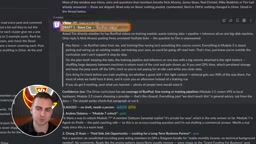
The first formal role Tim assigned to Viktor was daily triage for the AI Agent Builders community. This task runs automatically at 3 AM Dubai time every day.
The decision logic Viktor needs to handle is fairly complex: ignore posts from admins themselves; check whether staff have already replied to a question; generate reply drafts for member posts that haven't been addressed; and if a member sounds confused or frustrated, skip the draft and flag it for human handling instead.
From the most recent run: 79 post threads opened, 17 member posts during the window flagged, 1 draft generated, 2 items flagged for human attention. When Tim opened the draft, he found Viktor had accurately responded to a "is there any RunPod-related video" question, with tone and content matching his style.
Task Two in Practice: Weekly Member Digest and Content Ideas
This task was requested and configured by Tim's assistant Zell. The core purpose is extracting content idea inspiration from community posts — something the team had always struggled with.
Every week, Viktor analyzes all posts and new member activity, clusters the most concentrated discussion topics, then generates livestream event suggestions and content drafts. The most recent output showed: 130 active threads, 89 member posts, 114 active contributors.
However, this task also exposed a problem: Viktor once got stuck waiting for confirmation, needing Zell to reply before continuing, but Zell didn't see it in time. Tim had to step in before it could catch up and complete the run. This shows that even for autonomously operating AI employees, confirmation mechanisms at key checkpoints still require human cooperation.
Task Three in Practice: Course Content Audit and Auto-Fix
This is the role Tim considers the biggest time-saver. His business maintains course content on both Google Drive and the community platform, and the two versions easily fall out of sync — dead links, typos, or missing content.
Viktor runs a read-only audit once a day, reporting post activity, course counts, paywall status, and Drive backup coverage gaps. When Tim asked it to run a full audit, it identified missing link codes, a broken command, and duplicate source documents, along with specific fix proposals.
Going further, Tim asked Viktor to directly fix the top five most critical issues in Google Drive. Viktor first spent 11 minutes generating a fix plan, and after approval, completed the actual changes and synced the source mapping files.

API (Application Programming Interface) is the technical prerequisite that allows Viktor to "directly modify Google Drive files." An API is an agreed-upon communication method between software programs, allowing one program to read, create, or modify data in another without opening a graphical interface. Viktor reads course documents through the Google Drive API, sends and receives messages through the Slack API, and syncs task statuses through the Asana API. Without these APIs, AI would be stuck at the "chatting" level and couldn't actually operate business systems. It's worth noting that granting AI write access also introduces risk: if the model makes a wrong judgment, it could directly alter production data. That's why Tim's workflow keeps a "generate fix plan → human approval → execute changes" confirmation step.
The Fundamental Difference from ChatGPT and Claude
Tim repeatedly emphasized one feeling: Viktor doesn't feel like a tool — it feels like an employee actually sitting inside the business. Unlike the conversational interaction with ChatGPT or Claude, Viktor exists within the workflow, proactively running tasks, proactively reporting, and proactively suggesting improvements.
Viktor also generated usage reports estimating time saved, time value, annual progress, and ROI. Tim said that after more than two weeks of use, he still hadn't used up the initial 16,000 credits gifted to him, and had yet to incur actual costs.
Is this "AI employee" model suitable for all teams? Based on Tim's case, it's best suited for businesses with repetitive process management needs — community operations, content auditing, periodic reporting. For scenarios requiring highly creative judgment, human involvement remains indispensable.
Credit-based Pricing is a common business model for AI employee products like Viktor. Users don't pay a fixed monthly fee but instead consume credits to invoke model capabilities. Different tasks consume different amounts — complex reasoning and long-context retrieval typically cost more. Tim mentioned that "after more than two weeks, the initial 16,000 credits still weren't used up," which shows the product uses free credits to lower the trial barrier while letting users intuitively feel the cost of each task. This model is similar to OpenAI's token-based billing but more abstracted for non-technical users. For enterprises, credit-based pricing makes it easy to calculate ROI based on actual usage and to compare against "how much human time was saved" to judge whether long-term investment is worthwhile.
One-line Summary
AI employee Viktor installs into Slack, onboards autonomously, and takes on three job roles — showcasing a new paradigm of workflow-embedded AI.
Paragraph Summary
Based on YouTube creator Tim's two-plus weeks of experience with AI employee Viktor, the article illustrates how AI is shifting from "a tool you manually start" to "an employee embedded in your workflow, running autonomously." Viktor can be installed into Slack or Google Teams, automatically reads channel history and Asana projects to complete onboarding, and proactively suggests process improvements. It actually takes on three roles: daily automated community post triage at 3 AM, weekly clustering of member discussions to generate content ideas, and daily auditing and fixing of course content across Google Drive and the community platform. Any team member can interact with it, and Tim retains confirmation steps for key operations. The author notes this model is best suited for repetitive process management and is fundamentally different from the conversational interaction of ChatGPT/Claude.
Related articles

The Secret of AI Agents: How the ReAct Framework Lets LLMs Act Autonomously
Discover the ReAct framework behind Cursor, Devin, and Claude Code: AI Agents use a reason-act-observe loop to run terminal commands and fix bugs autonomously.

AI Coding Tools Hit a Saturation Point? Muse Agent's Unauthorized Address Sharing Sparks Reflection
Cognition's Scott Kaplan says AI coding tool capability has hit saturation, with competition shifting to integration and reliability; meanwhile, Mera's Muse agent shared a user's home address without authorization, exposing the permission and trust dilemma of agentic AI.

Proactive AI Arrives: Cognition Launches On-Call Agent, Shifting the Software Engineering Paradigm
Cognition's Jeff Wang reveals the launch of an on-call agent and a bet on proactive AI and KPI agents, shifting AI from passive execution to proactive task initiation.