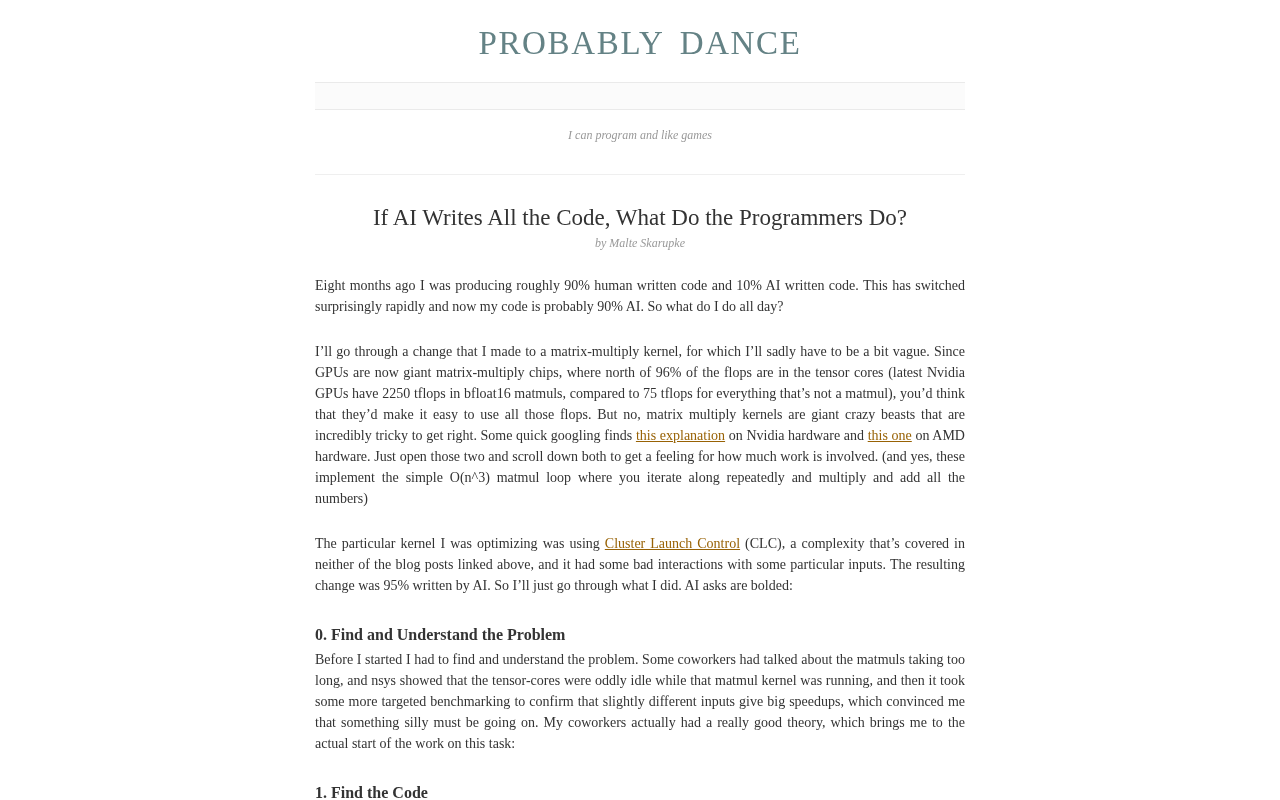
If AI Writes All the Code, What's Left for Programmers?

As AI handles more coding, programmers must evolve into intent definers, quality guardians, and system designers.
With AI programming tools like GitHub Copilot and Cursor rapidly maturing, this article examines how the programmer's role is transforming. It argues that writing code was never the whole job—the real value lies in forming clear intent, making architectural decisions, and ensuring quality. Programmers are shifting from code writers to reviewers, from implementers to designers, and from lone wolves to coordinators. AI serves as a productivity lever, not a replacement, and those who adapt will thrive.
A Question Being Seriously Asked
With the rapid adoption of AI programming tools like GitHub Copilot, Cursor, and Claude Code, a question that once seemed distant is now being taken seriously by more and more developers: If AI can write the vast majority of code, where exactly does a programmer's value lie?
GitHub Copilot is based on OpenAI's Codex model (a code-specialized version of the GPT series), trained on billions of lines of open-source code to achieve context-aware code completion. Cursor is an IDE that deeply integrates large language models into the editor workflow, supporting multi-file context understanding and code refactoring. Claude Code is Anthropic's command-line programming assistant, capable of understanding project structures and executing complex multi-step programming tasks directly in the terminal. What these tools share in common is their use of the Transformer architecture's attention mechanism to map natural language intent into syntactically correct code output.
This isn't alarmism. Recently, the proportion of AI-generated code has become quite substantial in some teams—from auto-completing entire lines of code, to generating complete functions from natural language descriptions, to building application prototypes end-to-end. AI is rapidly consuming the "typing" work that was once considered a core programmer skill. Discussions on Hacker News about this topic reflect the industry's collective anxiety and reflection.
Writing Code Has Never Been All of Programming
To answer this question, we first need to clear up a common misconception: programming equals writing code. In reality, producing code by hitting keys is a relatively downstream step in the software engineering chain.
Classic software engineering models (such as waterfall and agile development) divide the development process into stages: requirements analysis, system design, coding implementation, testing and verification, deployment and operations. According to industry research, coding implementation typically accounts for only 20-30% of total project effort, while requirement changes, architectural rework, and production environment debugging often consume far more resources. Brooks pointed out long ago in The Mythical Man-Month that the essential complexity of software development lies in constructing conceptual structures, not in the physical expression of code.
The true complexity of a software project often manifests before and after the code: What exactly are the requirements? How should the system be architected? How should different modules be decoupled? Which performance bottlenecks need to be anticipated? When bizarre intermittent failures occur in production, how do you identify the root cause? These tasks are highly dependent on understanding the business, grasping the system as a whole, and the ability to make trade-off decisions amid ambiguous requirements.
In other words, AI excels at "translating clear intent into code," but the truly scarce ability of programmers lies precisely in how to form that clear intent. When requirements themselves are full of ambiguity, mutually conflicting, or even unclear to the clients themselves, any answer AI provides could be completely off the mark.
Three Directions of Role Transformation for Programmers
From "Writer" to "Reviewer"
As AI takes on more code generation tasks, programmers' focus is shifting toward code review and quality gatekeeping. AI-generated code may appear to run correctly but could harbor security vulnerabilities, improper edge case handling, performance traps, and other issues. Developers who can quickly read, verify, and correct AI output will become more valuable than ever. This demands that programmers' sensitivity to code quality actually increases rather than decreases.
Code Review goes far deeper than syntax checking: it involves identifying security vulnerability patterns (such as SQL injection, buffer overflows, race conditions), evaluating time and space complexity, judging the appropriateness of SOLID principles and design pattern applications, and maintaining code maintainability and team coding standard consistency. Common issues in AI-generated code include: over-reliance on deprecated APIs, ignoring thread safety in concurrent scenarios, generating logic that appears correct but fails on edge cases, and introducing dependencies with known CVE vulnerabilities. This means reviewers need a more comprehensive knowledge base than writers.
From "Implementer" to "Designer"
When the cost of implementation details is dramatically reduced by AI, the importance of "high-level decisions" like architecture design, technology selection, and system boundary delineation is further amplified. A wrong architectural decision just means AI helps you pile up mistakes faster. Therefore, engineers with systems thinking who can reason at abstract levels will see their standing become even more prominent.
The irreplaceability of architecture design lies in its essence as an art of trade-offs under multiple constraints. It involves CAP theorem trade-offs in distributed systems (consistency, availability, and partition tolerance cannot all be achieved simultaneously), the choice between microservices and monolithic architecture, selecting data consistency models (strong consistency vs. eventual consistency), and strategic management of technical debt. These decisions are highly dependent on comprehensive judgment of non-technical factors such as business growth expectations, team familiarity with the tech stack, and tolerance for operational costs. A typical case: prematurely introducing microservices architecture may bring higher complexity and operational burden than a monolith, and this trade-off requires deep understanding of organizational context—contextual information that current AI cannot obtain from training data.
From "Lone Wolf" to "Coordinator"
Software never exists in isolation—it serves real people and businesses. Understanding user pain points, collaborating with teams, and balancing technology with business—these tasks that heavily rely on interpersonal skills and contextual judgment are precisely the parts that current AI finds hardest to replace.
AI Is Leverage, Not Replacement
A more pragmatic perspective is to view AI as a productivity lever, not a replacement. Every tool revolution in history—from assembly to high-level languages, from manual deployment to automated pipelines—never eliminated programmers. Instead, they expanded the demand for software and raised the bar for programmer capabilities.
This historical pattern deserves deeper examination. From assembly language in the 1950s to FORTRAN and C, every elevation in abstraction level triggered discussions about "whether programmers will be replaced." The emergence of fourth-generation languages (4GL) and CASE tools (Computer-Aided Software Engineering) in the 1980s was believed to enable non-technical people to develop software directly, but this never materialized. Low-code/no-code platforms that emerged in the 2000s similarly failed to replace professional developers. The key pattern is: when implementation costs decrease, society's expectations and demands for software expand accordingly, generating more—not fewer—professional engineering needs. In economics, this is called the "Jevons Paradox"—efficiency improvements actually increase total resource consumption because reduced costs stimulate larger-scale usage.
The advent of compilers didn't make programmers unemployed; it freed them from hand-writing machine code, enabling them to build more complex systems. AI will likely play a similar role: it lowers the threshold for "turning ideas into software," meaning more ideas become worth implementing, and the total volume and complexity of software may actually increase.
What will truly be eliminated may not be the "programmer" profession itself, but rather low-level coding work that mechanically translates requirements without judgment or systems thinking. This also explains why attitudes toward AI programming within the industry show clear polarization: some are anxious about losing their jobs, while others are excited to finally be freed from tedious boilerplate code to do more creative work.
Practical Advice for Programmers
Facing this transformation, passive waiting is not an option. Several actionable directions are worth considering:
- Actively embrace AI programming tools: Rather than resisting, master tools like Copilot and Cursor early and make them extensions of your own capabilities. Programmers who use AI will replace programmers who don't. Learning to write high-quality prompts (prompt engineering) and understanding models' capability boundaries and failure modes is itself a new skill worth investing in.
- Move upstream: Invest your energy in requirements analysis, architecture design, systems thinking, and other high-value activities that AI struggles to replace. Develop the ability to translate ambiguous business goals into clear technical specifications—this is the critical bridge connecting business and technology.
- Deepen domain knowledge: Combine deep knowledge of specific industries (finance, healthcare, manufacturing, etc.) to form compound competitiveness that AI cannot easily replicate. For example, developers who understand financial compliance requirements, medical data privacy regulations (like HIPAA), or industrial control system safety standards have value far exceeding general coding ability.
- Strengthen code review capabilities: Develop the ability to quickly judge code quality and identify potential risks—this will be a core skill in the era of human-AI collaboration. Specifically, this includes familiarity with common security vulnerability patterns, sensitivity to performance anti-patterns, and the ability to anticipate long-term code maintainability.
Conclusion
The question "What do programmers do if AI writes all the code" is essentially asking for a redefinition of programmer value. The answer may be: Programmers will no longer be producers of code, but definers of intent, guardians of quality, and designers of systems.
The act of typing can be handed over to AI, but the judgment of "what to type" remains firmly in human hands for the foreseeable future. The iteration of technical tools has never truly eliminated thinkers—it simply keeps raising the bar for the quality of thinking required.
Related articles
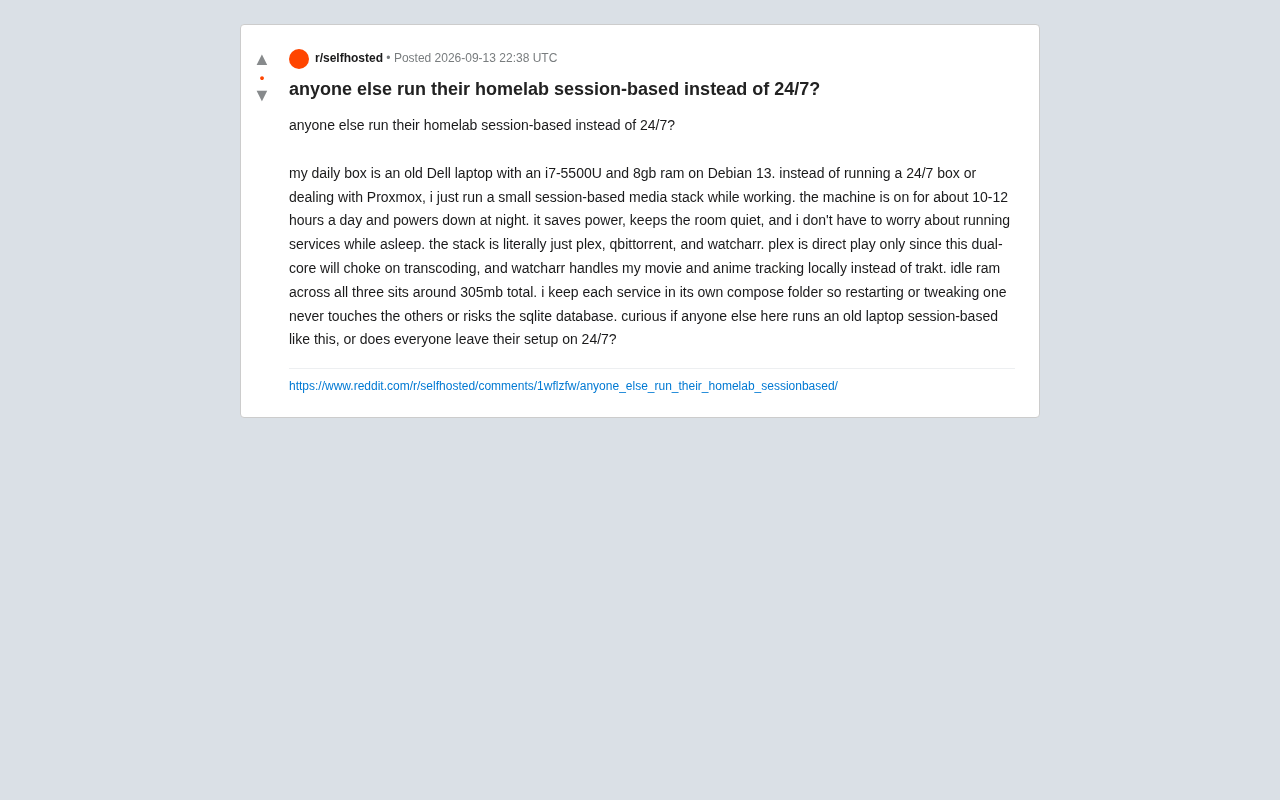
Session-Based Home Server: Running a Low-Power Homelab on an Old Laptop
A Reddit user runs Plex, qBittorrent, and Watcharr on a 10-year-old laptop for just 10–12 hrs/day, using only 305MB RAM idle. Exploring session-based vs. 24/7 Homelab trade-offs.

OpenAI Launches ChatGPT for Financial Services: Built-in Financial Data + GPT-6 Reasoning
OpenAI launches ChatGPT for Financial Services, combining built-in financial data with GPT-6 Astra reasoning to support research, financial modeling, and client materials for financial institutions.

When AI Controls Your Credit Card: The Hidden Risks of Autonomous Payments
When AI agents gain credit card access, hidden dangers emerge: vague authorization, prompt injection attacks, and unclear liability. Learn the real risks and how to stay protected.