If All AI Were Shut Off Tomorrow, Could Your Company Still Function?

Assessing how deeply your company depends on AI — and whether it could survive without it.
This article explores what would happen if enterprises suddenly lost access to all AI tools. It examines three levels of AI dependency — auxiliary, process-level, and structural — and highlights hidden risks like cognitive offloading and skill atrophy. It provides an AI dependency audit checklist and argues that true AI maturity means building resilience, not just adoption.
A Thought Experiment Worth Taking Seriously
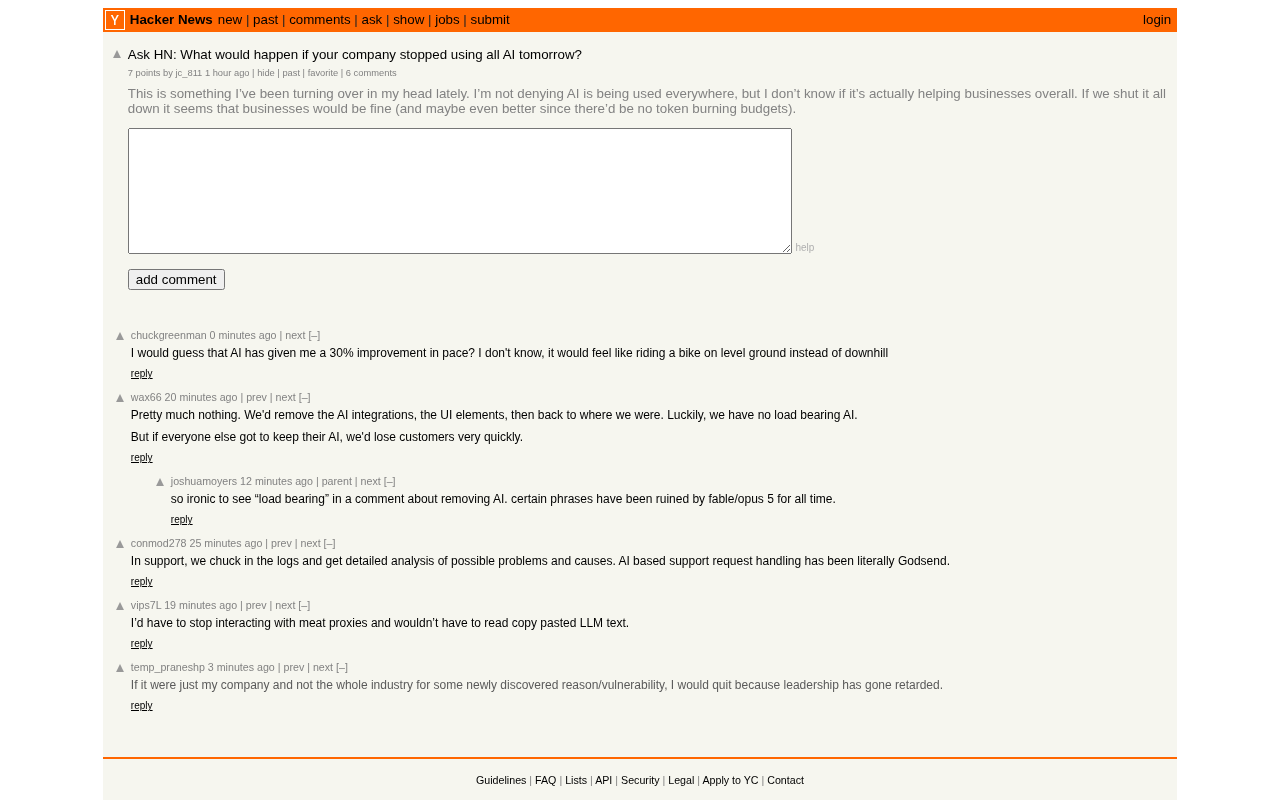
A simple yet pointed question on Hacker News sparked a heated discussion in the tech community: What would happen if your company stopped using all AI tools tomorrow?
The question may seem straightforward, but it cuts to the heart of a critical issue: how deeply enterprises have become dependent on AI. More than two years into the generative AI explosion — from code completion to customer service automation, from content generation to data analysis — AI tools have quietly permeated every aspect of business operations. Yet few have seriously assessed just how deep that dependency runs. If these tools vanished overnight, could the business still function?
From Productivity Tool to Infrastructure: A Fundamental Shift in AI's Role
What makes this question so valuable is that it reveals a fundamental shift in the role AI plays within enterprises.
Three Levels of Enterprise AI Dependency
The first level is auxiliary dependency. These tools fall into the "nice to have, but not essential" category — using ChatGPT to polish emails, or AI to generate meeting notes. Shutting them off would reduce employee productivity, but it wouldn't disrupt the business itself.
The second level is process-level dependency. When AI is embedded into critical workflows, the situation changes dramatically. For example, many development teams have made AI coding assistants like GitHub Copilot and Cursor standard tools in their daily workflow. GitHub Copilot, built on OpenAI's Codex model (a code-specialized version of the GPT series), analyzes a developer's current code context, comments, and function signatures to generate real-time code suggestions. Cursor goes even further — it's a full AI-native IDE that deeply integrates large language models into every aspect of the editor, supporting cross-file understanding and codebase-level refactoring. According to GitHub's official data, developers using Copilot complete tasks an average of 55% faster, with a code acceptance rate of approximately 30%. This means that if these tools were suddenly disabled, a team's coding speed could plummet by 30% to 50%, completely disrupting delivery schedules — and many newer-generation developers may never have developed the habit of manually consulting documentation or writing boilerplate code line by line.
The third level is structural dependency. This is the most dangerous layer — when a company's core product or service is built on top of AI capabilities, shutting off AI means the product immediately loses its competitive edge or can't even run. Here, it's important to understand a key concept: AI-native companies — enterprises that have built their core product capabilities and business models around AI technology from day one. Typical examples include Midjourney (AI image generation), Perplexity (AI search engine), and Jasper (AI content platform). Unlike the "AI-enhanced" approach of traditional enterprises, the value proposition of an AI-native company is its AI capability — remove the AI, and the product ceases to exist. For these companies, "shutting off AI" is equivalent to "shutting down the business" — the hypothetical doesn't even apply. Even more concerning is that these companies are typically highly dependent on underlying large model APIs (such as model services from OpenAI, Anthropic, and Google), meaning they face not only their own technology risks but also upstream supplier risks including policy changes, pricing adjustments, and service stability issues.
Hidden Dependencies: The AI Risk Enterprises Most Easily Overlook
What truly deserves attention are the hidden dependencies that companies themselves haven't even recognized.
Over the past year or two, many teams have gradually made AI their default path for solving problems. When a programmer encounters an unfamiliar API, their first instinct is to ask AI rather than consult the documentation. When a product manager needs a competitive analysis, they have AI generate the report directly. When operations staff need to process copy at scale, they rely entirely on AI for one-click output.
This habitual dependency has produced an overlooked side effect: employees' foundational skills are atrophying. In cognitive science, this phenomenon is called "cognitive offloading" — when external tools take over cognitive tasks like memory, computation, or decision-making, the human brain automatically reduces its investment in and maintenance of those corresponding abilities. This isn't a new problem unique to the AI era: after GPS navigation became widespread, people's spatial navigation abilities declined significantly; after calculators became ubiquitous, mental arithmetic skills deteriorated across generations. Research by Columbia University psychologist Betsy Sparrow demonstrated that when people know information can be easily retrieved through a search engine, the brain actively reduces its memory encoding intensity for that information — a phenomenon called the "Google Effect." AI tools push this effect to an even deeper level: they don't just replace information retrieval, but also substitute for higher-order cognitive processes like analysis, reasoning, and creation, accelerating the speed and broadening the scope of skill degradation far beyond anything seen before. If AI assistance were suddenly removed, many people would discover they can no longer independently perform tasks they "should" know how to do. This isn't alarmism — it's the inevitable result of outsourcing capabilities. When a tool takes over part of the thinking process, the corresponding human skills gradually atrophy.
How to Assess Your Company's AI Resilience
Rather than passively waiting for an extreme scenario to occur, it's better to proactively conduct an "AI Dependency Audit." The following questions deserve serious consideration from every technology leader:
Key AI Dependency Audit Checklist
- Which business processes would immediately break down without AI? These are the high-risk areas that need the most attention.
- Does the team maintain backup plans that don't rely on AI? For example, are there traditional development standards and manual review processes as fallbacks?
- Have employees' core skills deteriorated due to over-reliance on AI? Training or role rotation may be needed to maintain the team's "muscle memory."
- Is the dependency on third-party AI services manageable? API price increases, service outages, and policy changes can all create supply chain risks.
The last point deserves further elaboration: the risks of depending on third-party AI services have already played out multiple times in reality. In November 2023, OpenAI's internal governance crisis led to the brief ousting of its CEO, during which numerous companies dependent on OpenAI urgently began evaluating backup options. In 2024, several major AI APIs underwent significant pricing adjustments and terms-of-service changes. Geopolitical factors are also amplifying risks: access restrictions on AI services in certain countries and regions, along with tightening data cross-border transfer regulations, could cause enterprises to lose critical AI capabilities overnight. A 2024 Gartner report noted that over 60% of enterprises using generative AI have never developed contingency plans for supplier disruptions. This situation is analogous to the "single cloud vendor lock-in" problem from the early cloud computing era, except the switching costs for AI services are often even higher — because output characteristics differ significantly across models, switching may require re-engineering prompts, re-evaluating quality baselines, and even retraining users' habits.
The goal of this assessment isn't to get companies to abandon AI, but to build resilience — enjoying the efficiency gains AI provides without being left helpless when the unexpected happens.
Conclusion: Embrace AI, But Don't Follow Blindly
The hypothetical "what if all AI were shut off tomorrow" is fundamentally a reminder: technology's value should lie in augmenting human capabilities, not replacing human judgment.
For enterprises, a healthy state of AI adoption should look like this — if AI were removed, the business would be impacted but wouldn't collapse; team efficiency would decline but operations could still continue. If the answer is "everything would grind to a halt," then the dependency has gone too far, and it's time to reassess the risks.
A truly mature AI strategy isn't about how many AI tools you use — it's about knowing clearly: when to use AI, and when you must rely on yourself.
Related articles
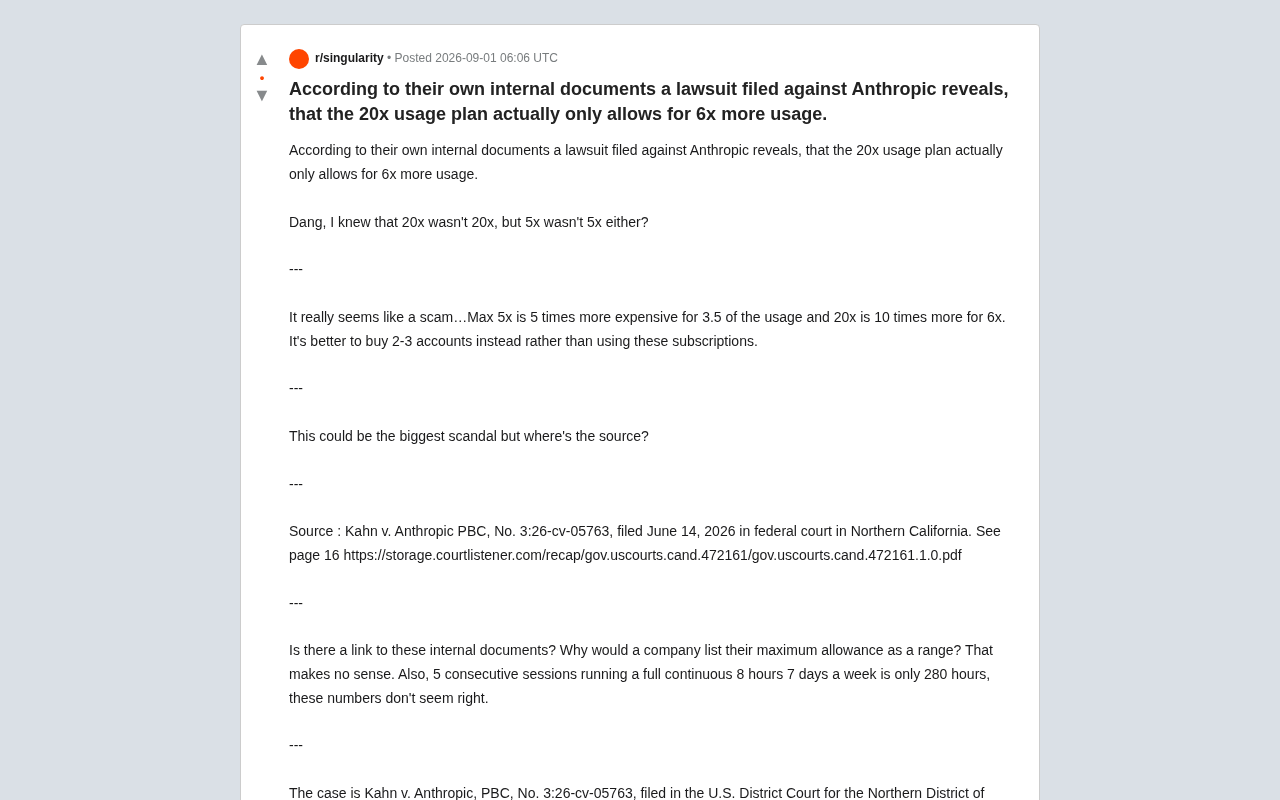
Anthropic Sued: Claude Max 20x Plan Allegedly Delivers Only 6x Usage?
A lawsuit against Anthropic alleges Claude Max's 20x plan delivers only ~6x usage, and the 5x plan just 3.5x. We break down the legal details, community reactions, and the AI subscription transparency crisis.

Cursor Beginner's Guide: A Six-Step Workflow for Managing Changes, Rollbacks, and Validation
New to Cursor and keep breaking things? Learn a six-step dev workflow covering Cursor Rules, Plan mode, Diff review, and Checkpoint rollback to go from guesswork to engineering.

Is Cheap Cursor Reselling Reliable? The Real Risks of Shared Account Pools Exposed
An in-depth analysis of Cursor Pro budget reselling services, exposing the shared account pool model behind so-called legitimate accounts and deep discounts from technical, compliance, and data security perspectives.