Is Cheap Cursor Reselling Reliable? The Real Risks of Shared Account Pools Exposed
Exposing the compliance, security, and stability risks behind Cursor Pro budget reselling services.
This article dissects the business model behind Cursor Pro budget reselling services that claim to offer subscriptions at 25% of the official price. It reveals how these services rely on shared account pools, potentially sourced through stolen credit cards, abused promotions, or ToS violations. The analysis covers data privacy risks, service instability from mass bans, and the false sense of security from "no client modification" claims, ultimately recommending developers stick with official channels.
A "75% Off Cursor Pro" Ad That Raises Questions
Recently, social media and tech communities have been flooded with promotional content advertising "official discounts," "Cursor Pro subscriptions at as low as 25% of the original price," and "credits that never expire." These posts are typically disguised as AI tool reviews but are actually marketing account reselling services for Cursor.
As someone who has been closely following AI programming tools, I feel it's necessary to take this model apart and examine it closely. This article doesn't make any recommendations — it simply looks at the real logic behind these "reselling" services from three perspectives: technical architecture, compliance risks, and user interests.
Breaking Down the Cursor Reselling Business Model
Before diving into the reselling model, it's important to understand Cursor's official pricing structure. Cursor is an AI code editor deeply customized on top of VS Code by Anysphere. Its Pro subscription plan is priced at $20 per month (approximately ¥145 CNY), which includes 500 fast requests per month to premium models like GPT-4 and Claude, plus unlimited slow requests. The Business plan costs $40 per user per month and adds enterprise features like team management, centralized billing, and privacy mode. Notably, Cursor has never offered any wholesale discount channels, reseller programs, or public API resale licensing mechanisms. This means that all claims of "officially authorized low-price channels" on the market lack any factual basis from the start.
Based on descriptions across various promotional materials, the core operational logic of these services generally includes the following:
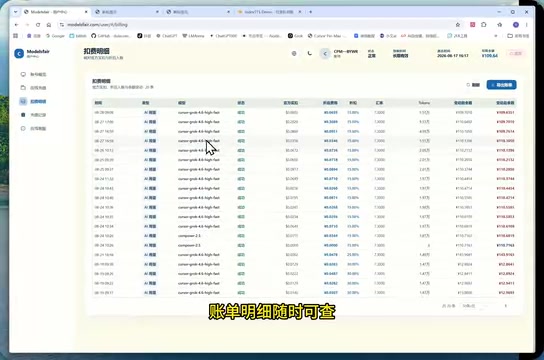
- Pay-per-use billing: Instead of selling fixed-term monthly or quarterly passes, they use a credit-based system that charges based on actual token usage. Tokens are the smallest units that large language models use to process text — they're not equivalent to a single word or Chinese character. In English, one word typically corresponds to 1–3 tokens, while a single Chinese character usually corresponds to 1.5–2 tokens. Taking GPT-4 as an example, its API pricing charges separately for input and output tokens: roughly $30 per million input tokens and $60 per million output tokens. Understanding this billing logic helps assess whether the claimed "1:10 exchange ratio" from resellers is reasonable — if the official per-token price is fixed, then offering equivalent credits at one-tenth the price would mean their acquisition cost is essentially zero, which is impossible under normal business logic.
- Account pool scheduling: They claim to have a "massive pool of legitimate Pro account resources" with an "intelligent quota scheduling system" that automatically matches and switches accounts for users.
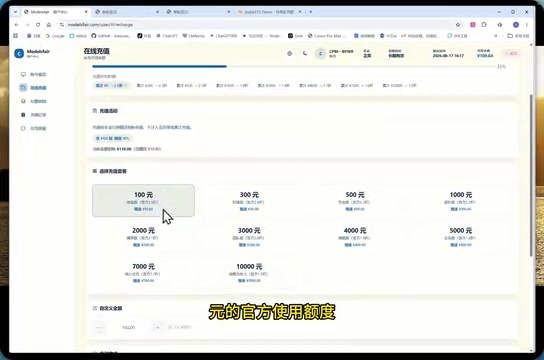
- Price advantage: They claim prices as low as 25% or even 10% of the official rate — "top up ¥100 and get ¥1,000 in official credits."
- Credits that never expire: Differentiating themselves from accounts with expiration dates sold on platforms like Xianyu (a secondhand marketplace), they emphasize that credits are permanently valid.
On the surface, this messaging does hit real user pain points — many people have indeed experienced issues like "trial accounts that only last a week" or "accounts getting suddenly banned." But the key question is: does this model actually hold up, and is it compliant?
Red Flag #1: Where Does the Cost for "75% Off Official Pricing" Come From?
This is the most concerning aspect of the entire model. Cursor's official Pro subscription has clear fixed pricing, and the company has never offered any "75% off" or "90% off" wholesale channel. So where do the resellers actually get the cost basis for providing "equivalent credits at 10–25% of official prices"?
The promoters claim "bulk purchasing costs are far lower than individual accounts" and "we hold a massive pool of legitimate Pro account resources." But there's an inescapable logical problem here — if these accounts are legitimate Pro accounts obtained through official payment channels, the unit cost simply cannot be low enough to allow resale at 10% of the price while still turning a profit.
The paths that could achieve such low prices typically fall into the following categories, each carrying serious compliance risks:
- Stolen credit cards or fraudulent registrations: Accounts activated using stolen credit cards or fraudulent methods. On the dark web and underground forums, leaked credit card information (known in the industry as "CC" or "Fullz") is traded in bulk, with individual card details sometimes selling for as little as a few dollars. Bad actors use these stolen cards to mass-register and activate paid SaaS subscriptions, quickly obtaining large numbers of usable accounts. When cardholders discover the unauthorized charges and initiate chargebacks, these accounts are eventually shut down — but by then, they've already been resold for profit. Additionally, using virtual credit card generators (BIN attacks) and disposable email addresses to mass-register trial accounts is another common tactic. Users who rely on accounts from such sources not only face the risk of service interruption at any time but may also be indirectly participating in a credit card fraud supply chain.
- Abusing promotional resources: Improperly using official trial credits, educational discounts, or other resources not intended for commercial resale.
- Violating terms of service: Circumventing official usage limits through API proxying, multi-user account sharing, and similar methods.
Regardless of the method, each one directly contradicts the promotional claims of "legitimate credentials and long-term stability."
Red Flag #2: The Hidden Risks Behind Automatic Account Pool Switching
The promotional content explicitly mentions that the system will "release idle account resources when no activity is detected for an extended period" and "automatically rotate to backup accounts when a single account's quota is exhausted."
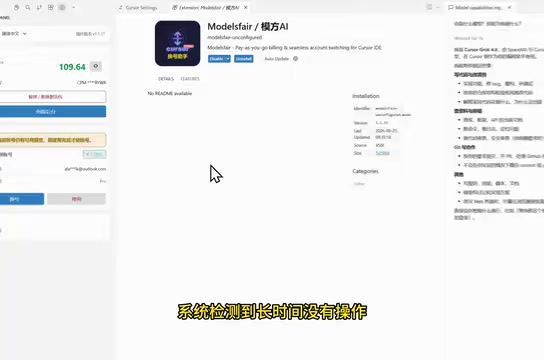
This description actually reveals a critical fact: users are not getting a dedicated, stable account of their own — they're being dynamically assigned resources from a shared account pool. This directly contradicts the promotional claim that "each user gets their own dedicated legitimate Pro account."
From a technical implementation standpoint, this kind of "account pool scheduling" is typically achieved through a reverse proxy or API gateway. Specifically, the operator maintains a batch of accounts with active Pro subscriptions and sets up a middleware server. When a user initiates an AI request, the system automatically selects an available account and forwards the request to Cursor's or the upstream model's API, then returns the response to the user. To evade the platform's rate limiting and anomaly detection, the system rotates among multiple accounts and simulates normal usage patterns. This architecture is known in technical communities as an "API Pool" or "Key Rotation" — a pattern that has long been widespread in gray-market proxy services for OpenAI and similar platforms. However, this model fundamentally violates the terms of service of virtually every AI service provider, specifically the clauses prohibiting "sharing, reselling, or redistribution."
This shared pool model creates at least three real-world problems:
Data Privacy Cannot Be Guaranteed
Your code snippets and conversation history are all generated through these shared accounts, and the ownership of those accounts and data retention policies are entirely outside your control. Under normal official subscriptions, Cursor's privacy policy clearly defines how data is processed, how long it's retained, and how it's used. The Business plan even offers a "privacy mode" to ensure code isn't used for model training. But when using a third-party account pool, all these protections become void — your code data shares the same account space with the pool operator, who may have access to view historical conversations and code snippets. For enterprise developers subject to compliance frameworks like GDPR or SOC 2, processing company code through unauthorized third-party channels could constitute a serious data security violation and even carry legal liability. This is especially important for developers working with commercial code.
Service Stability Is Questionable
The account pool could be mass-banned at any time due to tightening of the platform's risk control policies, and your topped-up credits could go to zero overnight. This isn't fear-mongering — SaaS providers like Cursor typically deploy multi-layered risk control systems to detect and combat account abuse. Common detection dimensions include: IP address analysis (the same account logging in from different geographic locations in a short time), device fingerprinting (the same account being used across a large number of different devices), usage pattern anomalies (request frequency and timing distribution deviating significantly from normal users), and payment information correlation analysis (multiple accounts using the same credit card or payment channel). Once risk control rules are triggered, accounts may be rate-limited, suspended, or permanently banned. Since 2024, multiple AI companies including OpenAI and Anthropic have significantly strengthened their detection of API abuse and account sharing, with mass banning events occurring frequently. This means the account pools used by reselling services face an increasingly high risk of "pool collapse."
No Safety Net for Service Continuity
Most of these services are operated by individuals or small teams with no corporate credentials for backing and no refund mechanisms. Once the service provider ceases operations, users' topped-up credits are essentially unrecoverable.
The promise of "credits that never expire" is predicated on two things: the service continuing to operate indefinitely, and the account pool surviving forever — and these are precisely the most uncertain variables.
Red Flag #3: Does "No Client Modification" Equal Safety?
The promotional content also heavily emphasizes that "no modifications are made to the Cursor application itself" and that the tool "only handles account allocation and billing records," presenting this as a guarantee of security.
Not modifying the client does reduce the risk of malicious code being injected into your local application, but it falls far short of addressing more fundamental security concerns:
- Login credentials pass through a third party: Your authentication information and session data may be processed and relayed through third-party tools. Even if the tool itself doesn't store this information, there's still a possibility of interception during transmission. Modern authentication systems typically rely on authorization protocols like OAuth 2.0, but when a third-party tool inserts itself into the authentication flow, it effectively plays the role of a "man in the middle" — which, from a security architecture perspective, represents a significant expansion of the attack surface.
- Account compliance cannot be verified: The source of the accounts themselves is questionable, and they could be flagged by Cursor's official team as violations and banned at any time.
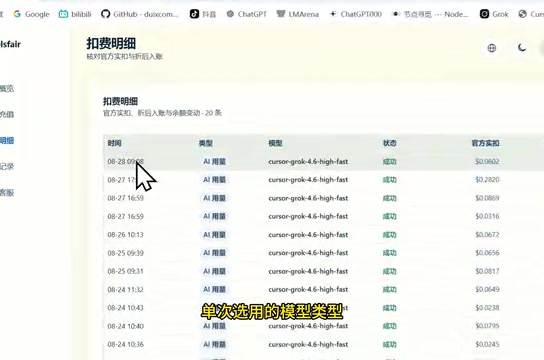
- Transparency is only surface-deep: "Cross-referencing billing records" may look transparent, but users have no way to verify the actual source of the account pool or how it's operated.
Put simply, "no client modification" is merely a necessary condition for security — it's far from sufficient. True security requires an end-to-end chain of trust — from the legitimacy of the account source, to the integrity of data transmission, to the trustworthiness of the service provider. A gap in any single link renders the entire security posture effectively meaningless.
How Should Developers Choose: Four Rational Recommendations
From a long-term usage perspective, here are some recommendations to consider:
Prioritize official subscription channels. While the price is higher, account ownership is clear, data handling is compliant, service continuity is guaranteed, and you get first access to official feature updates and technical support. For developers who rely on AI programming tools as daily productivity essentials, stability is far more important than the small amount saved. At $20 per month, that's $240 per year (approximately ¥1,740 CNY) — for a professional tool that can significantly boost coding efficiency, this cost is actually very reasonable compared to the productivity gains it delivers.
Stay clear-headed about "never expires." For any service that depends on a third-party account pool, the so-called "permanent" promise rests on two extremely fragile assumptions: that the service provider will keep operating indefinitely, and that accounts will never be banned. Neither of these can be reliably guaranteed in reality.
Put code security first. A developer's code is often a core asset. Processing this sensitive data through shared accounts of questionable origin creates risks that are difficult to assess. This is especially true when dealing with company projects or client data — the potential losses from such practices could far exceed subscription costs. The reputational damage and legal costs from a single code leak incident could be hundreds or thousands of times the cost of several years of subscriptions.
Consider compliant alternatives when budget is limited. Cursor itself offers a free tier (2,000 code completions and 50 slow premium requests per month) for experiencing basic functionality. You can also combine locally deployed open-source models (such as Code Llama, DeepSeekAd Coder, StarCoder, etc.) with VS Code AI plugins (GitHub Copilot, Codeium, Continue, etc.). Open-source code models have been improving rapidly in recent years, approaching the performance of commercial models in certain scenarios. The experience may not be quite as polished, but at least it's compliant and controllable — no need to worry about your account suddenly going dead one day.
Final Thoughts
Budget reselling services precisely exploit users' sensitivity to high subscription prices, building trust layer by layer with keywords like "legitimate," "official," and "transparent billing." But strip away the marketing veneer, and the underlying shared account pool model has hard-to-ignore fundamental flaws in compliance, stability, and data security.
This phenomenon isn't unique to Cursor — from the early days of Netflix account sharing and Spotify family plan splitting, to later ChatGPT Plus reselling and Claude Pro sharing, virtually every popular subscription service spawns a similar gray market. But AI programming tools differ from entertainment streaming services in one fundamental way: what you're transmitting isn't viewing preferences — it's source code that may contain trade secrets. The sensitivity level of the data is on an entirely different order of magnitude, and your risk tolerance should be calibrated accordingly.
The core value of AI programming tools lies in boosting efficiency — not in having you constantly deal with account issues in gray areas. For developers who truly depend on these tools, choosing compliant, stable official channels is the responsible approach to their own work.
Related articles

GPT-Next Leak, Gemini 4 Argon Imminent: AI News Roundup
GPT-Next leak suggests extreme efficiency; OpenAI's 28-day shipping pledge boosts speed 50%; Gemini 4 Argon nears release; Anthropic subscription value report sparks debate.

GPT-Next Leaked, Gemini 4 Argon Speeds Up, Fable 5.5 May Launch Today
OpenAI's GPT-Next model leaks, expected to be extremely low-cost and possibly part of the 28-day release plan; Gemini 4 Argon internal testing accelerates, NanoBanana 2.1 is live; Semi Analysis tests show Claude Max's equivalent API value is about 5 times that of ChatGPT Pro; Fable 5.5 may launch today.

Gemini 4 Argon Launches Globally: Key Highlights from the AI Daily Brief
Google opens Gemini 4 Argon globally across Pro and Ultra subscriptions and the API, and demonstrates robot control. This article rounds up open-source models, Agent infrastructure, cost transparency, and safety governance updates.