If Anthropic IPOs and Joins Index Funds in Three Weeks, Your Savings Will Be Passively Betting on AI

If Anthropic lists, it could be automatically added to the Nasdaq 100 within three weeks, making index fund investors passively bet on AI.
Anthropic has filed to list under ticker A-N-T, but a withdrawn pricing draft showed a ~$69.3B valuation and $26B in supplier subscriptions. Nasdaq 100 fast-entry rules could force index funds to buy Anthropic in about three weeks, as with SpaceX. Revenue is booming but decelerating, most of the $104B nine-month loss is book revaluation, and purchase commitments total $895B, leaving investors passively tied to AI.
If Anthropic IPOs and Joins Index Funds in Three Weeks, Your Savings Will Be Passively Betting on AI
The index funds you hold may quietly make you a shareholder of AI giant Anthropic—without you ever placing an order. How does this happen? And what does it mean?
A Withdrawn Draft IPO Pricing
According to Reuters, on the evening of Monday, November 9, Anthropic's representatives sent banks a copy of a securities filing showing approximately 867 million shares at $70 to $80 per share. At the top of that range, the valuation would be about $69.3 billion. But hours later, a second email said the pricing details were inaccurate and the document would be updated later, without specifying the error. Anthropic declined to comment. So these numbers can only be treated as a withdrawn draft, not a final deal.
The draft also contained another surprise: companies including Google, Nvidia, AMD, Broadcom, Micron, Microsoft, and TSMC have committed to subscribe $26 billion at the IPO price. A detail worth noting: most of these companies are the chip and cloud service providers that AI depends on—suppliers would become shareholders. But the same caution applies: this content comes from the very document Anthropic called inaccurate on pricing.
Official Progress and Cooling Market Expectations
What is certain: on October 26, Anthropic filed for a listing with the SEC under the ticker A-N-T and will list on Nasdaq. An amended filing was submitted on November 2, but the price column remained blank. Reuters says a roadshow for large investors is expected to launch this week, with pricing expected next week.
Will this be the largest IPO in history? Most likely not. In June this year, SpaceX raised $75 billion to $85.7 billion after underwriters exercised their over-allotment option, and even the withdrawn draft would not surpass that. Market enthusiasm has also cooled: investors once talked about a $1.5 trillion valuation, and Reuters says $1.5 trillion is now seen as a high-end expectation.
The Fast Track into the Nasdaq 100 Within Three Weeks
The core issue is this: Anthropic could enter your index funds without you ever choosing it. Since May, the Nasdaq 100 has had a fast-entry rule: on a new company's seventh trading day after listing, Nasdaq assesses its market value, and if it can rank among the index's top 40, it is added after its fifteenth trading day. Fifteen trading days—about three weeks.
There is already precedent. SpaceX began trading on June 12 and joined the Nasdaq 100 on July 7, forcing funds tracking the index to buy it. ABC News noted that many retirement accounts hold these funds, so a rocket company entered people's savings in an "autopilot" fashion.

One limitation: under the new rules, companies with smaller free floats receive lower weights, which is also why they are hard to buy in large amounts. For most savers, this will be a small slice, not a large block.
The Nasdaq 100 consists of the 100 largest non-financial companies listed on the Nasdaq exchange and is tracked by numerous index funds and ETFs (such as Invesco QQQ). Traditionally, newly listed companies had to wait months or even a year before becoming eligible for index inclusion, allowing the market to price them fully and meet liquidity requirements. The fast-entry rule that took effect in May 2025 shortened that waiting period: if a new stock's market value on its seventh trading day can rank among the index's top 40, it is included after its fifteenth trading day ends. The rule aims to let the index reflect changes in market structure more quickly, but it also means tracking funds must buy new stocks within a short window, regardless of whether their valuations are reasonable.
Financial Truth: High Growth and High Commitments Coexist
If pricing takes place next week and trading follows, the fifteenth trading day could fall in mid-December, and your fund will automatically buy in. So what exactly is the fund buying?
In the first nine months of this year, Anthropic's revenue was $33.2 billion, up about 1,200% year over year; the third quarter alone was about $17 billion, more than 12 times the same period last year. But look at the sequential quarterly growth: 132% in the first quarter, 144% in the second, and 47% in the third—still fast, but the curve is bending.
On losses: the nine-month loss was $104 billion. That headline number is real, but most of it is accounting: about $94 billion comes from changes in the value of convertible notes and similar instruments—a book revaluation, not cash spending. The third-quarter operating loss was about $567 million.
The number skeptics focus on: purchase commitments and leases of about $895 billion, almost entirely for compute and infrastructure. As of the end of September, the company had about $132 billion in cash and short-term investments. Over nine months, compute and infrastructure costs rose by $14.4 billion, an increase of 329%. The filing also contains more than 90 pages of risk factors.

Purchase commitments are irrevocable forward purchase contracts between a company and its suppliers, typically specifying that goods or services will be bought at agreed prices during a specified future period. In the AI industry, such commitments mostly involve GPUs, cloud compute, and data center leases. They are not counted as current costs but constitute rigid liabilities: if demand falls short of expectations, the company still has to pay. Lease commitments are similar, reflecting obligations to rent compute infrastructure over the long term. Investors need to compare these off-balance-sheet commitments with cash reserves to assess a company's financial flexibility.
Convertible notes are hybrid financial instruments that holders can convert into company stock under certain conditions, combining features of debt and equity. Their value fluctuates with the company's valuation, and accounting rules require fair-value remeasurement, with changes recorded in current profit and loss. Anthropic's roughly $94 billion loss stems from the appreciation of such instruments—a non-cash book loss that does not affect actual cash flow but significantly affects net income figures. Understanding this distinction helps separate operating losses from accounting fluctuations.
Bull-Bear Divergence and Future Scenarios
Optimists argue that a company founded about five years ago generating $17 billion in quarterly revenue reflects real demand; the commitments are simply the cost of keeping up with that demand. Skeptics argue that growth is already slowing, the bill runs into hundreds of billions of dollars, and market sentiment is tense. Reuters noted that amid rising interest rates and a selloff, other AI infrastructure companies have postponed or withdrawn listings. Its biggest rival, OpenAI, has also signaled higher rates and plans to list in 2027.
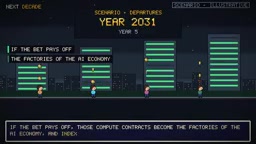
Projecting forward: in year one, Anthropic is priced every trading day, and every quarter, people who never bought it will feel its performance in their funds—a slowing quarter is no longer just a headline, but a line on a statement. In year five, if the bet succeeds, those compute contracts become the factories of the AI economy, and index savers own a small piece of them; if it fails, they own a small piece of the bill. In year ten, the question is no longer "Do you own AI?" but "How much of your retirement is bet on a handful of AI companies that are each other's customers?"
Implications for Ordinary Investors
Imagine a small business owner, say a restaurant owner, who pays monthly to use AI tools. Their retirement fund may soon own shares in the company selling those tools—two sides of the same bet, without ever placing it themselves.
This is not buy or sell advice, but a prompt to examine what the funds you already hold may contain. If a company can enter your savings 15 trading days after listing, should index funds wait longer? Or is that precisely the point of index funds?
One-line Summary
If Anthropic lists, it could be automatically added to the Nasdaq 100 within three weeks, making index fund investors passively bet on AI.
Paragraph Summary
Anthropic has filed with the SEC to list under ticker A-N-T, but a withdrawn draft pricing showed a valuation of about $69.3 billion, with several chip and cloud suppliers committing to subscribe $26 billion. The Nasdaq 100's fast-entry rule allows new companies to join around their fifteenth trading day—SpaceX set a precedent—meaning funds tracking the index would be forced to buy Anthropic within about three weeks. Financially, Anthropic's revenue is growing rapidly but decelerating sequentially; most of its $104 billion nine-month loss is book revaluation, and purchase commitments total $895 billion. Bull-bear divergence is clear, and ordinary investors may passively hold AI companies through retirement funds, deeply tying their savings to the AI industry.
Related articles

No Coding Required: He Shipped an App Store App by 'Cutting Features' and Nitpicking with AI
A game designer with zero frontend/backend skills shipped a dual-platform App Store app with AI—not via one-click generation, but by cutting scope and nitpicking like a demanding client.
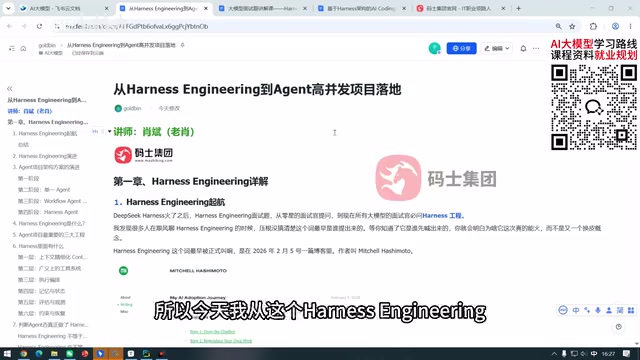
What Is Harness Engineering? From Concept Origins to Enterprise-Level Agent Implementation
What is Harness Engineering? This article traces the concept's origins and analyzes enterprise-level Agent requirements for tool call fault tolerance, data security, tenant isolation, and memory gaps.
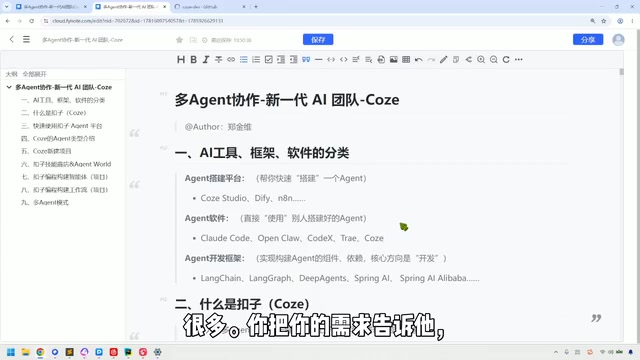
Coze in Practice: A Three-Tier Agent Classification and a Multi-Agent Collaboration Guide
A Bilibili tutorial breaks down the multi-agent collaboration toolchain into three categories: building platforms like Coze Studio and Dify, Agent software like Claude Code, and development frameworks like LangChain—plus a Coze demo of industry templates, three-platform interoperability, local Agent integration, and the trade-offs of credit consumption.