iFLYTEK T30 Lite Learning Tablet In-Depth Review: Dual AI Engines + 12.5-Inch Eye-Care Display

In-depth review of the iFLYTEK T30 Lite: dual AI engines and a 12.5-inch eye-care display for K12 learning.
The iFLYTEK T30 Lite is a value-oriented K12 AI learning tablet featuring a 12.5-inch eye-care display, 8GB+512GB storage, and dual AI engines combining the Spark large model with DeepSeek. This review examines its hardware, AI tutoring capabilities, and provides purchase advice for families.
Product Positioning: An AI Learning Device Built for K12 Students
The iFLYTEK AI Learning Tablet T30 Lite is a smart learning tablet aimed at the K12 student demographic. K12 (Kindergarten through 12th Grade) broadly refers to the foundational education stage from kindergarten through high school, and is one of the most important market segments in China's education technology (EdTech) sector. With the implementation of the "Double Reduction" policy in 2021, traditional academic tutoring outside of school faced strict restrictions, and smart learning hardware subsequently ushered in a new window for growth—parents' demand for after-school tutoring did not disappear, it simply migrated from offline training classes to smart devices represented by learning tablets. Manufacturers such as iFLYTEK, Xiaomi, Huawei, and NetEase Youdao successively increased their investment in this category, making learning tablets one of the few high-growth segments in the consumer electronics market since 2022.
As the product name suggests, the T30 Lite is a lightweight version of the T30 series—while retaining core AI capabilities, it controls costs through sensible configuration trade-offs, allowing more families to access iFLYTEK's education technology products.
The device's core selling points are quite focused: a 12.5-inch eye-care display, the "Spark + DeepSeekAd" dual AI engines, and the endorsement of "Gaokao homologous technology." These three highlights correspond respectively to the three concerns parents and students care about most—eye health, learning efficiency, and content authority.
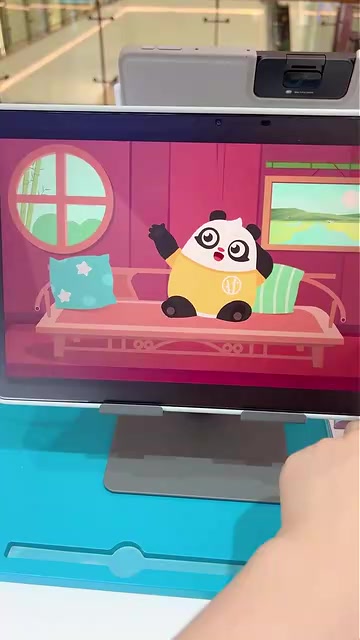
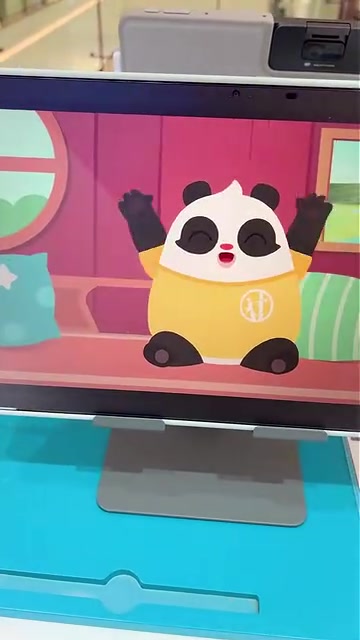
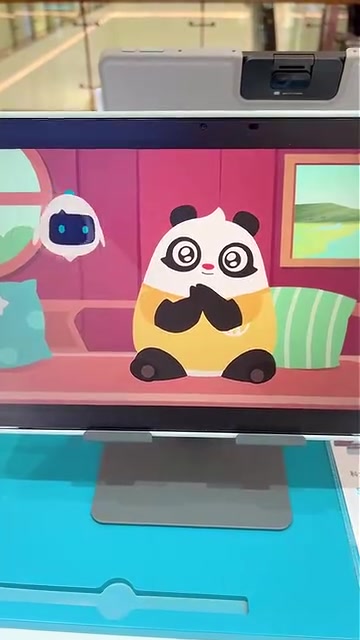
Worth noting is that the product also includes fun interactive content aimed at younger users. Featuring the giant panda "Qiuqiu" from the Wolong Nature Reserve in Sichuan as the protagonist, paired with robot assistant "Xiaoyan" in travel exploration scenarios, it lowers the learning barrier through character-driven and story-based approaches, effectively sparking children's curiosity and desire to explore.
Hardware Configuration: How to Balance a Large Screen with Eye Protection
12.5-Inch Eye-Care Display
The most intuitive feature of the T30 Lite is its 12.5-inch large screen. Compared with the roughly 10-inch learning tablets commonly found on the market, the larger display area provides a more comfortable visual experience when presenting textbook content, grading problems, and watching instructional videos, while also alleviating to some extent the eye strain caused by overly small screens.
Eye-care performance is the core battleground for student tablets. Learning tablet eye-care technology typically involves multiple dimensions: first, low blue light certification, which reduces the proportion of short-wave blue light through hardware filtering or software color temperature adjustment, minimizing potential retinal damage; second, DC Dimming (Direct Current Dimming), which, compared with PWM (Pulse Width Modulation) flicker dimming, does not produce flicker at low brightness, making it gentler on the eyes; third, anti-glare and anti-reflective coatings to reduce ambient light interference. In addition, some high-end models feature ambient light sensors that automatically detect surrounding light intensity and dynamically adjust screen brightness, achieving all-scenario eye protection. When purchasing, eye-care certification from TÜV Rheinland or SGS is an important reference for judging the credibility of eye-care performance. A large-sized screen combined with professional eye-care technology is precisely designed to address parents' concerns about vision damage from prolonged use of electronic devices, which is also the top consideration when purchasing.
Storage and Battery Life
The T30 Lite comes with a combination of 8GB of RAM and 512GB of storage. The 512GB large capacity is quite generous for a learning tablet that needs to store a large amount of course resources, teaching materials, and learning apps, essentially covering content needs from elementary through high school across all grades; the 8GB of RAM ensures a smooth experience when multitasking and running AI applications.
The battery capacity is 2992mAh. It should be objectively pointed out that for a 12.5-inch large-screen device, this capacity is somewhat conservative. In practice, users are advised to charge promptly during extended learning sessions.
Dual AI Engines: Spark Large Model × DeepSeek Collaboration
Gaokao Homologous Technology Endorsement
The most noteworthy technical highlight of the T30 Lite is its simultaneous integration of iFLYTEK's own "Spark" large model and the "DeepSeek" AI engine.
The iFLYTEK Spark cognitive large model (Spark) is a self-developed large language model officially released by iFLYTEK in May 2023, based on the Transformer architecture and deeply optimized for Chinese-language contexts and educational scenarios. iFLYTEK has cultivated the fields of speech recognition and natural language processing for over two decades, accumulating a large amount of Chinese educational corpora and Gaokao assessment data, giving the Spark model significant advantages in vertical scenarios such as essay grading, oral proficiency assessment, and subject problem-solving. This is precisely the promotional logic behind "Gaokao homologous technology"—iFLYTEK has long undertaken oral English computer-based exam projects for the Gaokao in multiple provinces, and its AI assessment technology has been validated and iterated through large-scale real exam data, providing a degree of authoritative backing.
DeepSeek, on the other hand, is a series of open-source large language models developed by Hangzhou DeepSeek Artificial Intelligence Basic Technology Research Co., Ltd. It attracted widespread attention from late 2024 to early 2025 thanks to the impressive performance of DeepSeek-V3 and DeepSeek-R1 on international AI benchmark rankings. Its core technical highlights include: adopting an MoE (Mixture of Experts) architecture to significantly reduce training and inference costs; and introducing reinforcement learning (the GRPO algorithm) to enhance mathematical reasoning and Chain-of-Thought capabilities. DeepSeek's performance on math competition benchmarks such as MATH and AIME is particularly outstanding, which aligns closely with the core needs of K12 STEM subject tutoring, and is the primary motivation for its integration into educational hardware.
The dual AI engine design reflects an important trend in current educational hardware: manufacturers no longer rely on a single model, but instead improve intelligent tutoring capabilities through multi-model collaboration. Deploying multiple large models collaboratively on the same device or through a cloud scheduling system has been an important direction in AI product engineering practice since 2024, which the industry calls "model routing" or "hybrid inference" architecture. Its underlying logic is: different models excel at different task types, and a single model struggles to achieve optimal performance across all scenarios. Typical collaboration strategies include: routing by task type (e.g., assigning language understanding to a model skilled in Chinese, and mathematical reasoning to a logic-oriented model); using a smaller model to handle simple queries to reduce latency and computing consumption, and a larger model to handle complex problems to guarantee quality; and voting on or fusing the outputs of multiple models to improve answer reliability. The Spark large model has deep accumulation in Chinese language understanding and educational content generation, while DeepSeek's performance in logical reasoning is widely recognized. Combining the two holds promise for complementary strengths in scenarios such as explaining problem-solving approaches, essay feedback, and oral dialogue.
How AI Reshapes the Way of Learning
Taking "robot Xiaoyan" as an example, this type of AI assistant is designed as an "all-knowing" learning companion, able to answer children's various questions in real time, replacing one-way instruction with companion-style guidance. Compared with traditional question banks and video courses, the AI engine gives the learning tablet stronger interactivity and personalized tutoring capabilities—dynamically generating answers based on the student's specific questions, rather than simply retrieving preset content.
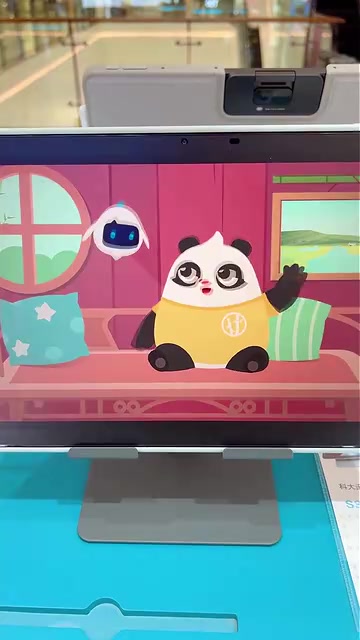
This "wish-fulfilling" interactive experience essentially uses AI technology to dissolve the tedium of learning, transforming passive reception into active exploration. For younger students, sparking interest often has greater long-term value than knowledge cramming.
Purchase Summary and Recommendations
As a value-oriented AI learning tablet, the iFLYTEK T30 Lite concentrates its core competitiveness on two dimensions: the "eye-care large screen" and the "dual AI engines." The 8GB+512GB storage combination is more than ample, the 12.5-inch large screen aligns with parents' emphasis on eye health, and the Spark and DeepSeek dual engines represent the product's technical ceiling.
For families with limited budgets who nonetheless want their children to experience mainstream AI tutoring capabilities, this device is worth considering. The only thing to note is that the 2992mAh battery capacity is relatively conservative, so it's advisable to plan charging during daily use.
Overall, the T30 Lite reflects the industry trend of the educational hardware market transitioning from "content resource competition" to "AI capability competition." As large model technology continues to become more accessible, learning tablets are evolving from electronic teaching-aid tools into intelligent learning companions with deep interactivity and personalized tutoring capabilities.
Key Takeaways
Related articles
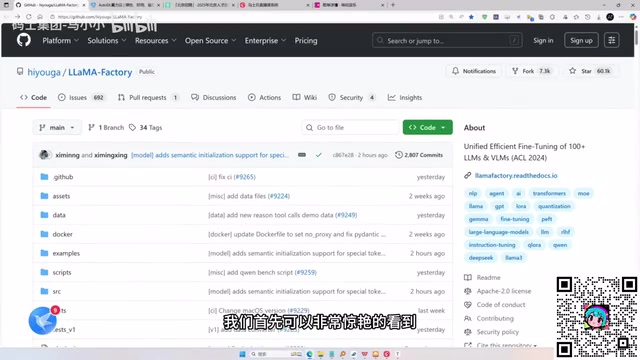
LLaMA-Factory in Practice: A Complete No-Code Guide to Fine-Tuning Large Models
An introduction to LLaMA-Factory, the open-source fine-tuning tool: its 60.1K-star background, supported models and algorithms, local vs. cloud deployment, and CUDA setup steps.
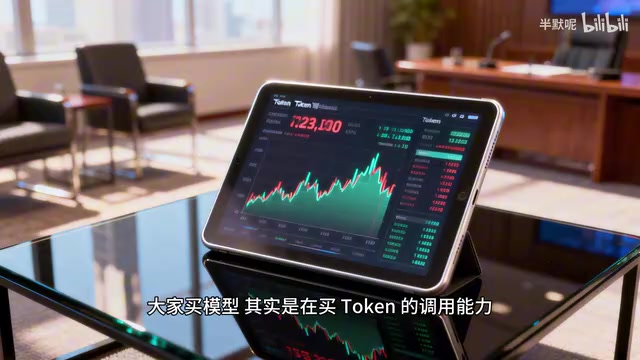
Zeng Ming's Deep Retrospective: Why OpenAI May Not Be the Ultimate Winner — and Why the Corporate System Will Disappear
Zeng Ming's deep retrospective on the AI endgame: model companies are just infrastructure, OpenAI and Anthropic won't be the final winners; the next battle is the Agent entry point standard; the corporate system will disappear as AI restructures collaboration, and only mission-driven companies can survive the cycle.
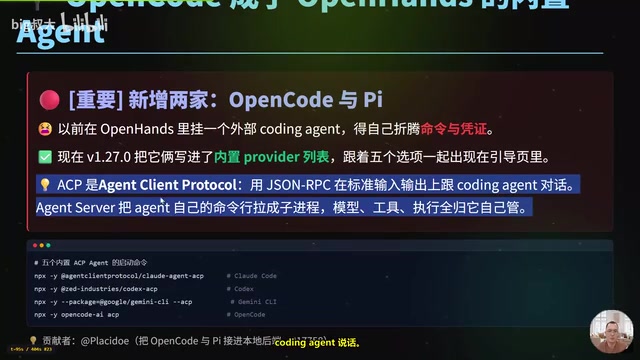
OpenHands v1.28.0: OpenCode and PI Added as Built-in Agents, API Keys Requestable In-Conversation
OpenHands ships 5 releases in 21 days: v1.27.0 adds OpenCode and PI as built-in agents, v1.28.0 enables in-chat key requests. ACP integration, credential reuse, model list changes, and upgrade advice.