Immersive Medical Role-Play: Veda's Ambulance Chest Pain Emergency Response
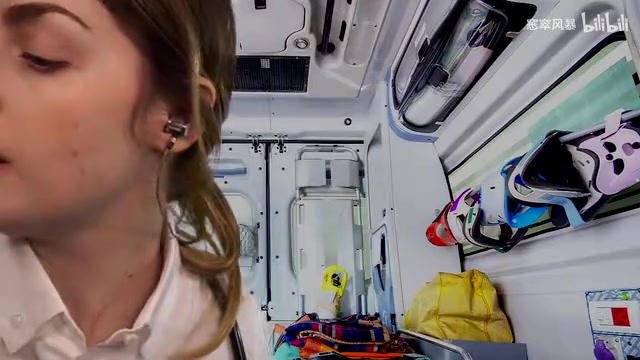
Bilibili creator Veda role-plays a paramedic demonstrating the complete prehospital assessment and intervention for a chest pain patient.
Bilibili creator Veda released a first-person medical role-play video in which she plays a paramedic and fully demonstrates the standardized assessment and intervention for a chest pain patient in an ambulance. The video covers initial communication and reassurance, aspirin administration, vital signs monitoring (pulse 94 bpm, BP 88/50 mmHg, SpO₂ 93%), oxygen therapy, 12-lead ECG, IV fluid resuscitation, and sublingual nitroglycerin after blood pressure recovery with follow-up checks. It emphasizes soft skills like informed consent and privacy protection, and shows individualized medication decisions considering the patient's pregnant status. The article argues such content has educational value but cannot replace formal emergency training; future VR or interactive AI patient simulation could enhance realism.
In today's world where AI and virtual content creation are increasingly converging, Bilibili creator Veda brings a distinctive medical role-play video. She takes on the role of a paramedic, fully demonstrating the standardized assessment and intervention process for a chest pain patient in an ambulance setting. This content not only showcases the details of emergency care operations but also offers new ideas for medical education content creation.
Immersive Opening of the Emergency Scene
The video unfolds from a first-person perspective. Veda introduces herself to the "patient" and explains they are heading to St. Mary's Hospital, with an estimated travel time of about 20 minutes. She proactively informs the patient that sirens may be heard along the way to ease their anxiety. This communication approach reflects emergency responders' attention to patients' psychological state—a soft skill that is easily overlooked in medical role-play.
After confirming the onset time and trigger of the patient's chest pain (they were watching TV at the time, with no physical activity), Veda uses a 1-to-10 scale to assess pain severity and immediately administers regular aspirin, instructing the patient to chew thoroughly before swallowing. This step aligns with the initial management principles for suspected acute coronary syndrome in chest pain patients.
Vital Signs Monitoring and Initial Intervention
Veda then proceeds with a systematic examination: palpating the head to assess temperature and sweating, checking pupillary response with a flashlight, and measuring the pulse. She reports a pulse of 94 beats per minute, slightly above the normal range. Combined with the patient's slightly labored breathing, she judges that the heart is under significant load and reassures the patient to stay calm.
Next, she measures blood pressure, which comes out to 88/50 mmHg—clearly low (hypotension). Veda notes that blood pressure needs to be raised and begins monitoring oxygen saturation. When the SpO₂ reading shows 93%, she immediately administers oxygen via a mask covering the nose and mouth, instructing the patient to breathe normally to increase oxygen concentration.
This series of actions demonstrates a paramedic's ability to rapidly assess and intervene with limited equipment. Interestingly, Veda always seeks the patient's consent or explains beforehand before any procedure—such as "Do you mind if I touch your head?"—reflecting respect for patient autonomy.
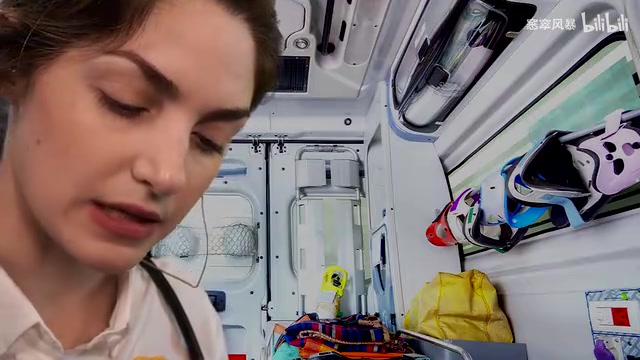
Pulse oximetry (SpO₂) is a core indicator for assessing oxygenation status in emergency care, with normal values typically ranging from 95%–100%. A reading of 93% suggests mild hypoxemia, which in chest pain patients may reflect cardiac dysfunction caused by myocardial ischemia or ventilation/perfusion mismatch. Finger-clip pulse oximeters are commonly used in emergency settings; their principle is non-invasive measurement based on the different absorption rates of red and infrared light by oxygenated versus deoxygenated hemoglobin. It is important to note that hypotension (such as 88/50 mmHg in this case), poor peripheral circulation, nail polish, or cold fingers can all interfere with reading accuracy—which is why clinical practice emphasizes interpreting readings alongside the patient's overall presentation rather than relying on a single number in isolation.
Hypotension is a red flag in patients with suspected acute coronary syndrome, potentially indicating cardiogenic shock, right ventricular infarction, or severe arrhythmia. Normal adult blood pressure is generally defined as systolic 90–120 mmHg and diastolic 60–80 mmHg. In this case, 88/50 mmHg has fallen below the warning threshold of 90 mmHg systolic. The paramedic's priority of fluid resuscitation to improve circulatory volume is a reasonable initial strategy; the subsequent administration of nitroglycerin only after blood pressure rose to 142/86 mmHg is precisely to avoid the vasodilatory effect of nitroglycerin further lowering blood pressure.
12-Lead ECG and IV Access Establishment
Veda begins the 12-lead electrocardiogram (ECG) procedure, explaining electrode placement in detail: four limb leads are placed on both arms and both legs, and of the six chest leads, two are positioned at the center of the chest and four below the left pectoral muscle extending to the axillary area. She emphasizes that the procedure is painless—only electrode patches need to be attached—and unbuttons the patient's shirt when placing chest leads, while promising to protect privacy as much as possible.
After running for about 30 seconds, the ECG machine produces a printed output for subsequent hospital diagnosis. Meanwhile, Veda prepares 500cc of normal saline for IV infusion, aiming to hydrate and restore circulatory volume to help raise blood pressure. She establishes IV access on the back of the patient's left hand, informing them of a slight stinging sensation, then secures it with tape.
This stage reflects the cyclical logic of "monitor–intervene–reassess" in emergency care. After the infusion, Veda rechecks oxygen saturation, which rises to 94%, indicating that oxygen therapy and fluid resuscitation are having an initial effect.
12-lead ECG is the most critical non-invasive test in chest pain assessment, recording the heart's electrical activity from 12 different angles through 10 electrodes: 4 limb leads (left arm, right arm, left leg, right leg ground) form leads I, II, III, aVR, aVL, and aVF, while 6 chest leads (V1–V6) record horizontal plane electrical activity from different positions on the chest. In emergency care, it is typically completed and printed before the patient reaches the hospital, allowing emergency physicians to quickly determine whether conditions such as ST-elevation myocardial infarction (STEMI) are present. The procedure itself is non-invasive and painless but requires chest exposure—hence the emphasis on protecting privacy and obtaining consent, consistent with prehospital emergency care ethics.
IV access and normal saline resuscitation: Establishing IV access in the field (usually in the back of the hand or forearm peripheral vein) provides a route for medication and fluids. 500cc of normal saline (0.9% sodium chloride) is an isotonic crystalloid solution used to expand intravascular volume and improve tissue perfusion during hypotension. In chest pain patients with suspected cardiogenic shock, fluid resuscitation requires careful balance—excessive fluids may worsen pulmonary edema—so paramedics reassess blood pressure and oxygen saturation during infusion, forming a "monitor–intervene–reassess" closed loop.
Pharmacological Intervention and Stabilization
Blood pressure is measured again at 142/86 mmHg, a significant improvement from before. Veda confirms that blood pressure has risen to a safe range and, considering the patient's pregnant status, decides to administer sublingual nitroglycerin. She explains that nitroglycerin relieves chest pain by dilating arteries and increasing myocardial oxygen supply, and instructs the patient to place the tablet under the tongue to dissolve.
After administration, Veda repeats the ECG, pupillary check, and head palpation, and monitors oxygen saturation rising to 95%. The patient reports chest pain is "a little better," and Veda indicates that pain will continue to improve as the medication takes effect.
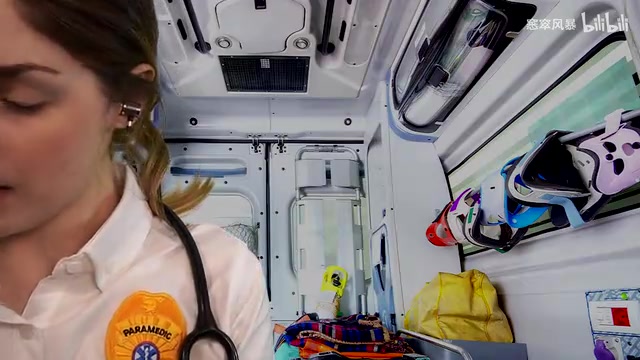
Subsequently, the pulse drops to 86 beats per minute, and blood pressure stabilizes further at 134/78 mmHg. Veda reconfirms that chest pain has significantly eased and informs the patient they are about to arrive at the hospital, where they will be taken directly to the emergency room (ER) without waiting. She decides to keep the oxygen and ECG leads in place for continued monitoring at the hospital.

Nitroglycerin is a first-line medication for relieving angina, available in sublingual tablets, sprays, and intravenous formulations. Its mechanism of action involves releasing nitric oxide (NO), which activates guanylate cyclase in vascular smooth muscle, causing vasodilation—venous dilation reduces preload and arterial dilation reduces afterload, thereby decreasing myocardial oxygen demand; it also dilates coronary arteries and increases blood flow to ischemic areas. Sublingual administration bypasses hepatic first-pass metabolism, with onset in 1–3 minutes. Key contraindications include: systolic blood pressure below 90 mmHg or significant hypotension, suspected right ventricular infarction, and recent use of phosphodiesterase-5 inhibitors (such as sildenafil). In this case, the paramedic waited until blood pressure rose to 142/86 mmHg before administering the drug, precisely to avoid worsening hypotension; while the patient's pregnant status is not an absolute contraindication, individualized assessment is needed because hemodynamic changes during pregnancy may affect drug response.
Content Value and Boundaries of Medical Role-Play
From a content creation perspective, Veda's video transforms professional emergency care procedures into a watchable, learnable narrative. She uses standard medical terminology (such as hypotensive, 12-lead ECG, nitroglycerin) while maintaining conversational explanations, lowering the barrier to understanding. This format has educational value for medical students, emergency volunteers, and even the general public.
It's worth mentioning that role-play videos cannot replace formal medical training. The operations in the video are based on simulated scenarios, and actual emergency care must follow local guidelines and protocols. Additionally, Veda mentions the patient's pregnant status in the video, which influenced the decision to use nitroglycerin—demonstrating the importance of individualized assessment in emergency care.
From the perspective of the AI and tech content ecosystem, this type of immersive simulation content is gaining traction through video platforms. In the future, combining VR or interactive AI patient simulation could further enhance training realism. However, with the current material, its core value remains in procedure demonstration and communication modeling.
Medical role-play and simulation training has a history spanning decades in medical education—from standardized patients (SPs) to high-fidelity mannequins, and now to video and VR immersive content. The core goal is always to allow learners to repeatedly practice clinical decision-making and communication in low-risk environments. The advantages of role-play videos lie in their rewatchability, step-by-step breakdown, and ability to showcase soft skills from a first-person perspective (such as reassurance and informed consent). But their limitations are also obvious: they lack real patient physiological feedback and unpredictability, and cannot replace hands-on training and instructor feedback. VR and interactive AI patient simulation are filling this gap—using voice recognition and physiological models to drive virtual patient responses—and may in the future provide prehospital emergency training experiences that are closer to reality.
Conclusion
Veda's ambulance chest pain emergency role-play presents the complete emergency care chain from first-person perspective—from initial assessment, vital signs monitoring, ECG operation, and IV fluid resuscitation to nitroglycerin administration. The video strikes a balance between professionalism and watchability, providing a reference sample for medical education content creation. For viewers interested in emergency care procedures or medical simulation content, this video is worth watching.
Related articles
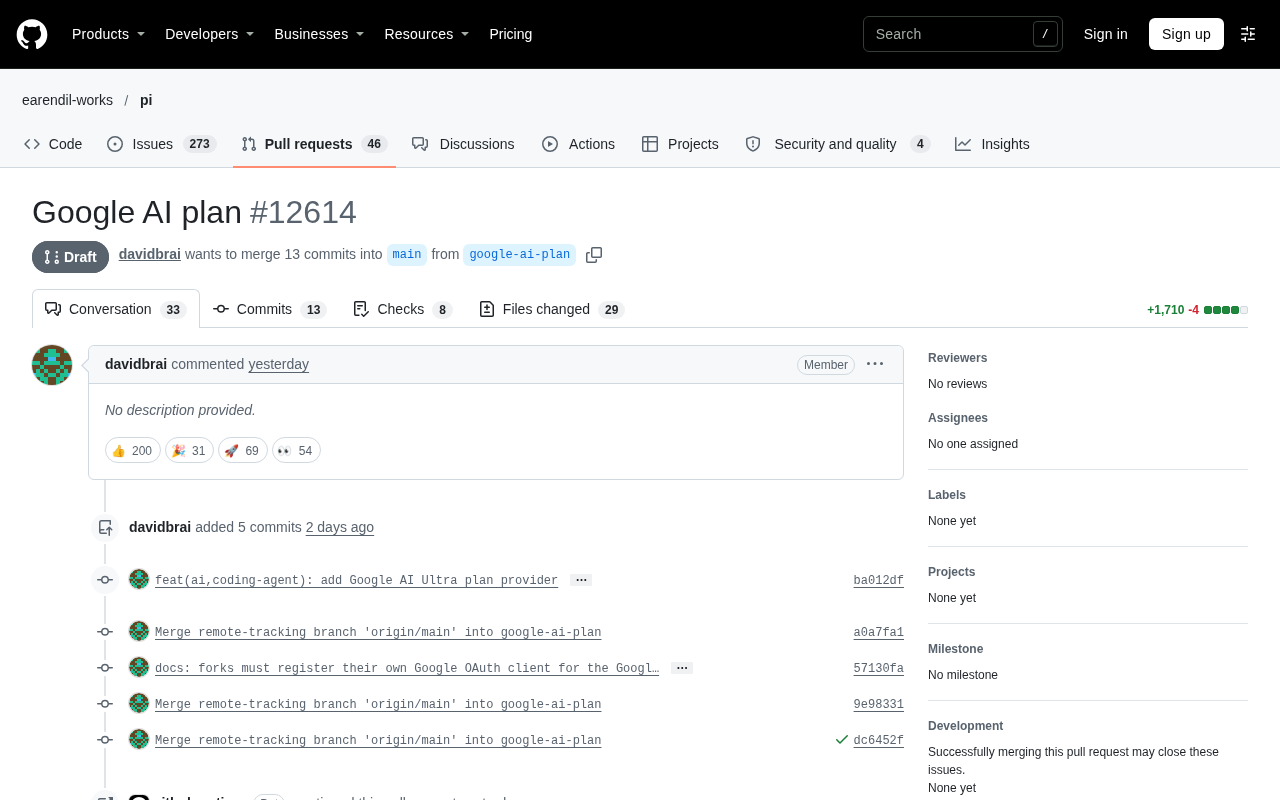
Google Officially Supports Pi Coding Agent: The AI Programming Tool Ecosystem Expands Further
Google adds official Google AI plan support for the open-source coding agent Pi, signaling accelerating integration between large model vendors and coding agent tool ecosystems. This article analyzes the impact on developer workflows, the tool ecosystem landscape, and model binding relationships.

Loom: One Machine for Weaving, Knitting and Braiding
Loom is a device that aims to seamlessly combine weaving, knitting and braiding in a single machine, drawing attention on Hacker News. This article examines its engineering challenges, significance for flexible manufacturing, and lessons for makers and hardware developers.
Running Local AI Agents on Mac: A Full Breakdown of the MLX Four-Layer Stack
A breakdown of Apple engineer Joanna's local Mac AI agent solution: the MLX four-layer stack, a three-step setup, and how the neural network accelerator, continuous batching, and distributed inference solve local agent performance bottlenecks.