In-Depth Analysis of Alibaba AgentScope 2.0: Three Core Capabilities of the Multi-Agent Framework
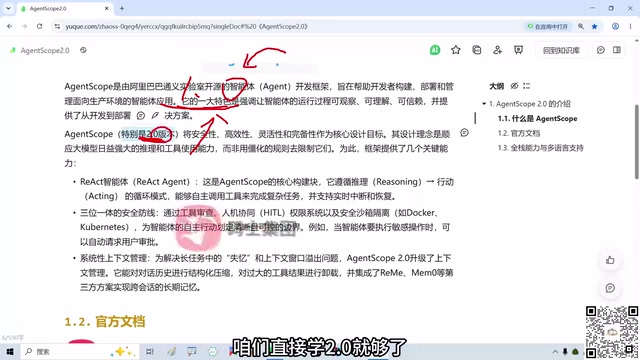
AgentScope 2.0: Production-ready multi-agent framework with ReAct loops, three-tier security, and context management
Alibaba AgentScope 2.0 is a production-grade multi-agent development framework featuring three core capabilities: ReAct agents that combine reasoning and action in循环s, a three-dimensional security defense (tool review, human-in-the-loop approval, and sandbox isolation), and systematic context management to handle information explosion in long-running tasks.
What is AgentScope: A Production-Ready Agent Development Framework
As multi-agent development gains momentum, how to engineer the building, deployment, and management of agents has become an unavoidable challenge for developers. The concept of Multi-Agent Systems (MAS) traces back to distributed artificial intelligence research, but gained fresh vitality in the era of Large Language Models (LLMs). Since 2023, with the emergence of projects like AutoGPT, BabyAGI, and MetaGPT, the industry has realized that single-agent capabilities hit a ceiling, while multi-agent collaboration—such as one agent handling planning, another coding, and a third testing—can significantly improve the quality of complex task completion. This has created an engineering demand for agent development frameworks: not only to rapidly build agents, but also to manage communication, state synchronization, and error recovery between agents.
Alibaba's AgentScope was built precisely for this purpose, and this article focuses on its latest version 2.0, breaking down its three core capabilities.
To understand AgentScope's value, we must first clarify the fundamental difference between agents and ordinary chatbots. Ordinary chatbots only handle "question and answer," while agents can autonomously think, invoke tools, and execute tasks. For example: when you give an agent the task "analyze today's sales data, generate a report, and email it to the manager," it will autonomously complete a series of actions including reading data, invoking Python analysis tools, generating the report, and calling email tools to send it.
As agent capabilities grow stronger, developers face emerging challenges: How to develop them? How to control them from "going rogue"? How to pinpoint specific links when problems occur? AgentScope is precisely the agent development framework that addresses these pain points, helping developers complete the full lifecycle of agent construction, deployment, management, and operation.
Why Start Directly with Version 2.0
AgentScope released version 1.0 earlier, but 2.0 represents a "destructive" refactoring compared to 1.0—numerous APIs have been deprecated with extensive changes. If you previously learned 1.0, transitioning to 2.0 requires almost complete relearning. Therefore, for developers new to the field, there's no need to start with 1.0; go directly to 2.0, as version 2.0 already possesses production-grade capabilities.
ReAct Agent: The循环 Engine of Reasoning and Action
The first core capability AgentScope provides is the ReAct Agent. Here, ReAct is not the frontend framework React, but rather a combination of the first letters of Reasoning + Action.
The ReAct paradigm was first proposed by Yao et al. in their 2022 paper "ReAct: Synergizing Reasoning and Acting in Language Models." The paper's core insight is: traditional Chain-of-Thought prompting only allows models to perform internal reasoning without interacting with the external world, while pure tool invocation lacks reasoning and planning. ReAct interweaves the two, having the model first generate a reasoning trajectory (Thought) at each step, then decide which action to execute (Action), before incorporating environmental feedback (Observation) into the next round of reasoning. This paradigm has demonstrated significant advantages in knowledge-intensive Q&A, web navigation, code generation, and other tasks, and has become the standard construction mode for mainstream agent frameworks today.
To understand with a concrete scenario: you tell an agent "check today's weather in Beijing, and if it's raining, remind me to bring an umbrella." The task processing flow goes like this:
- Reasoning: The LLM itself doesn't know whether it's raining in Beijing today, so the agent realizes it needs to query the weather first;
- Action: Invoke the weather query tool;
- Observation: The tool returns "It's raining in Beijing today";
- Reasoning again: Since it's raining, the user should be reminded to bring an umbrella;
- Return result: Inform the user "It's raining in Beijing, suggest bringing an umbrella."
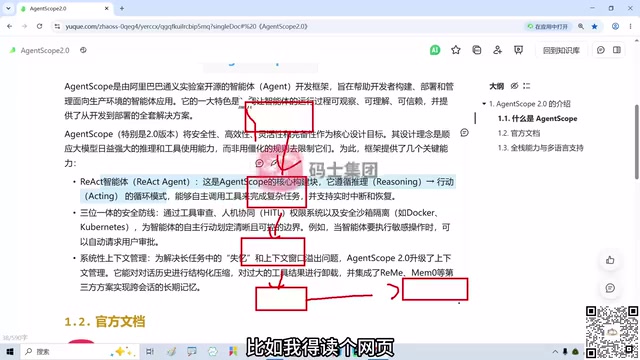
The entire process is a 循环 mode of thinking while acting, then continuing to think based on action results. For complex tasks, this loop executes more than once—the agent might first invoke a tool, observe the results and realize it still needs to read web pages, then observe again and find it needs to execute Python code to analyze data, progressing layer by layer until the task is complete.
AgentScope positions ReAct as the core agent construction method and provides capabilities like tool invocation, streaming execution, and interrupt recovery around it, making it more adaptable to complex task scenarios. Among these, tool invocation capability relies on the Function Calling functionality of LLMs. OpenAI pioneered the introduction of structured function calling interfaces in GPT series models in 2023, and major model providers quickly followed suit. The working principle is: developers predefine a set of available tool names, parameters, and descriptions (usually in JSON Schema format); the model can choose to output a structured function call request rather than pure text when generating responses. The framework layer is responsible for parsing this request, executing the corresponding function, and feeding the return value back to the model. AgentScope encapsulates this process, allowing developers to simply register tool functions without worrying about underlying invocation protocols and parameter serialization.
Three-Dimensional Security Defense: Making Agents Controllable and Trustworthy
As agent permissions expand (such as deleting files, executing Shell commands, operating databases, sending emails, invoking internal company systems), security issues become critical. Imagine: you ask an agent to clean up useless files in a project, it judges a file as useless and directly executes rm -rf, but deletes the wrong thing—for production environments, this could be fatal.
AgentScope provides a three-dimensional security defense for this pain point, safeguarding agent operation security from three dimensions.
First Layer: Tool Review—Solving "Can It Be Done"
Not all tools can be invoked at will. For ordinary tools (like checking weather), execution can proceed directly; but for sensitive tools (like operations that might delete database content), the framework conducts pre-checks to prevent high-risk operations from being rashly executed at the source.
Second Layer: Human-in-the-Loop—Solving "Will Humans Allow It"
Agents can work autonomously, but humans have the final say on critical steps. For example, when an agent prepares to execute high-risk actions like DELETE FROM ..., it will pause execution and request administrator approval. If approved, it continues; if rejected, it stops or adjusts. This mechanism doesn't limit the agent's autonomy, but rather reserves human final decision-making power over high-risk actions.
Human-in-the-Loop is a core design principle in the AI safety field, originating from deep thinking about AI system "alignment" issues. In high-risk domains like autonomous driving and medical diagnosis, fully autonomous AI decision-making is considered too risky, so the industry widely adopts Human-in-the-Loop strategies—allowing humans to intervene and approve at critical decision points. In the agent domain, this concept is especially important: agents can execute code, operate file systems, access networks and databases, and any misjudgment could cause irreversible consequences. AgentScope's human-in-the-loop mechanism draws on enterprise-level workflow approval design, supporting both synchronous blocking approval and asynchronous notification approval modes, enabling flexible adaptation to different business scenarios.
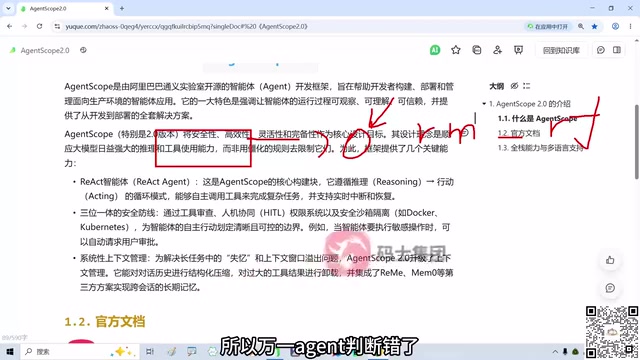
Third Layer: Secure Sandbox Isolation—Solving "Where to Do It Safely"
Even with human-in-the-loop, humans may approve incorrectly. Therefore, sandbox isolation is needed—prepare an isolated running space for the agent, let it execute code and process files within it, minimizing impact on external systems.
Sandbox technology has a long history in software security, from browser JavaScript sandboxes to Docker containerization, the core idea remains consistent: restrict the execution of untrusted code within a controlled isolated environment so it cannot affect the host system. In agent scenarios, sandboxes are typically implemented based on containers (like Docker), virtual machines, or OS-level namespace isolation. Code generated and executed by agents runs inside the sandbox; even if the code contains malicious operations (like rm -rf /), it only affects the sandbox's file system without impacting the host machine. AgentScope's sandbox design also considers network isolation and resource limits, preventing agents from initiating unauthorized network requests or consuming excessive computing resources. This mechanism is applied in many agent frameworks and serves as the last line of defense for system security.
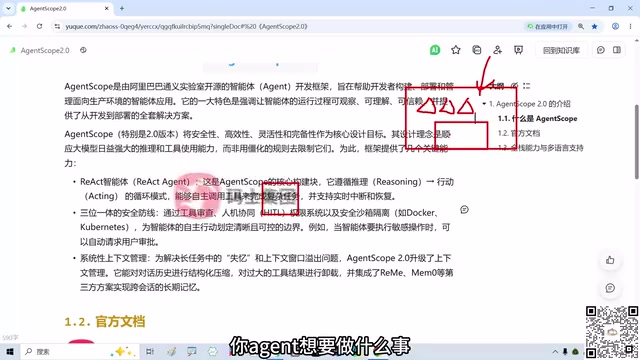
The three layers can work together to address more complex scenarios: tool review solves "can it be done," human-in-the-loop solves "will humans allow it," and sandbox isolation solves "where to do it safely." Together they form a complete security defense for production environments.
Systematic Context Management: Solving the Long-Task Information Explosion Problem
Another core capability of AgentScope is systematic context management. Imagine an agent has been working for two hours, during which it searched 20 web pages, invoked tools 30 times, and read dozens of files—these operations accumulate into massive contextual information.
The problem is: an LLM's context window is not infinite. Context window refers to the maximum number of tokens a model can process in a single inference. Although the latest models (like GPT-4 Turbo's 128K, Claude's 200K) have greatly expanded window length, in long-running agent tasks, context explosion remains a serious problem. On one hand, token count directly affects API call costs—taking GPT-4 as an example, a single call with 128K context could cost several dollars; on the other hand, research shows models exhibit "Lost in the Middle" phenomenon when processing ultra-long contexts—information in the middle of the context is more easily overlooked, meaning even if information is within the window, the model may not effectively utilize it.
As context continuously expands, much important information may be "drowned out," causing agent performance to decline and even resulting in forgetting key information. AgentScope provides multiple context management methods to address this challenge. Common strategies include: sliding window truncation (only keeping the most recent N rounds of conversation), summary compression (compressing conversation history into concise summaries), RAG retrieval-augmented generation (storing information in vector databases, retrieving relevant content on demand rather than stuffing everything into context), and hierarchical memory mechanisms (distinguishing between short-term working memory and long-term persistent storage, similar to the division of labor between human working memory and long-term memory). AgentScope comprehensively applies these strategies to help developers maintain agent effectiveness and stability in long tasks while balancing cost and performance.
Python and Java Dual Version Support
AgentScope provides both Python version and Java version language implementations. The current mainstream learning path focuses on the Python version, but Java developers can also refer to the official Java documentation for learning. Official documentation supports Chinese-English switching, and developers with a certain programming foundation can directly follow the official website for in-depth learning and practice.
Summary: The Core Value of AgentScope 2.0
AgentScope 2.0's positioning is very clear: as agent capabilities grow stronger and they can autonomously complete complex tasks, the accompanying security issues and long context problems must receive engineering solutions. AgentScope is precisely built around these pain points, providing a complete, production-oriented agent engineering development framework.
Reviewing its three core capabilities:
- ReAct Agent: Through the reasoning-action-observation loop mechanism, enables agents to handle complex multi-step tasks;
- Three-dimensional security defense: Through the three-layer mechanism of tool review, human-in-the-loop, and sandbox isolation, ensures agents are controllable and trustworthy in production environments;
- Systematic context management: Through multiple context optimization methods, solves the information explosion problem in long tasks.
For developers hoping to enter the multi-agent development field, mastering these three core capabilities is the key starting point for understanding AgentScope 2.0.
Related articles
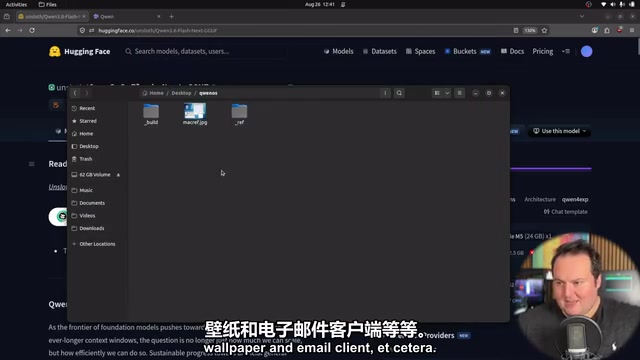
Qwen3 Next Flash Hands-On Review: An In-Depth Evaluation of the Qwen4 Architecture Preview Model
In-depth review of Alibaba's Qwen3 Next Flash preview model covering pixel-level visual replication, C++ 3D game generation, Blender+Godot tool invocation, and analysis of its Ngram embedding MoE architecture and local 4-bit quantized performance.
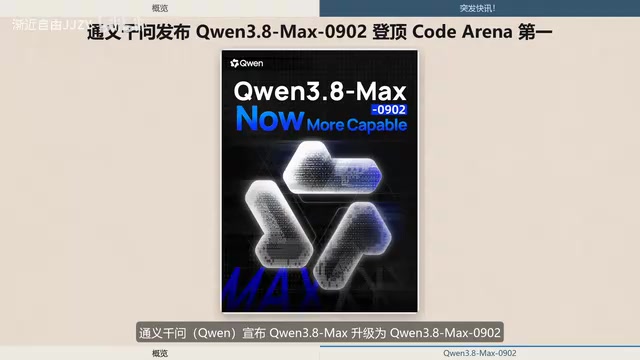
Alibaba's Qwen3.8-Max-0902 Tops Code Arena Leaderboard
Alibaba's Qwen3.8-Max-0902 tops Code Arena with 1691 points, featuring a 2.4T MoE architecture, 128K context, surpassing Claude Opus 3.5 in coding and cost-efficiency.
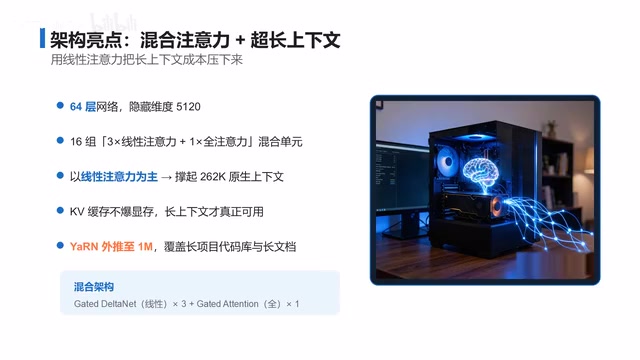
Qwen3 27B Open-Sourced: A Multimodal Agent Model That Runs on a Single GPU
Alibaba open-sources Qwen3 27B dense multimodal model with image/video understanding and GUI control. 4-bit quantized needs only 17GB VRAM. Apache 2.0 licensed.