Industrial-Grade Agent in Practice: Seven Ironclad Rules for Building Accident-Free AI Systems

Industrial-grade Agents aren't smarter AI — they're absolutely safe, reliable, and controllable production systems.
This article outlines the fundamental differences between industrial AI Agents and general-purpose chatbots, and presents seven core principles for real-world industrial deployment. Industrial settings demand zero errors, human controllability, millisecond response times, and 24/7 stability. This requires edge-side control logic, complete closed-loop execution, LLMs acting only as proposers (with rules systems as the final arbiter), and a conservative "uncertainty equals prohibited" stance on hallucinations. The true challenge lies in engineering — protocol integration and dirty data — not model tuning. Safety boundaries, tiered permissions, and in-house core modules are non-negotiable baselines.
Rethinking the Fundamentals: Industrial Agents and Chatbots Are Two Different Species
Many people's understanding of industrial-grade Agents stops at a naive formula: plug in an LLM, wrap it in RAG. But if you actually try to deploy that way, you can almost guarantee the project will fail — not just underperform, but fail to meet the minimum requirements for industrial deployment.
The "multi-turn dialogue + tool calling + knowledge augmentation" logic that works in general-purpose applications will collapse the moment it hits an industrial environment. The reason is simple: industrial settings operate under four non-negotiable rules:
- Zero tolerance for errors: A single wrong judgment can trigger a production halt or a safety incident;
- Must be controllable: Humans must be able to intervene and take over at any time;
- Millisecond-level response: Latency on a production line means defects or danger;
- 24/7 stability: The system cannot go down.

The core mindset shift here is fundamental: you are not building "a smarter AI" — you are building "a system that doesn't cause accidents." This change in perspective shapes every architectural decision in industrial Agent design.
Architecture: Control Must Live at the Edge
The first principle of industrial Agent architecture is to place real-time control at the edge, not in the cloud. The cloud can handle analytics, training, and coordination — but decisions involving real-time control must never depend on a cloud network connection.
Why? Because industrial sites don't care about demo performance — they care about whether the system holds steady the moment the network goes down. You must design your fallback strategy in advance: Is there a graceful degradation plan? Can the system automatically fall back to a rules-based system? If these questions haven't been answered, the project isn't ready to go live.
In other words, the maturity of an industrial Agent isn't measured by how smart it is when connected, but by how safely it degrades to a controllable state when connectivity is lost. This is the most fundamental difference from consumer AI applications.
Closed-Loop Design: A Decision Without Feedback Is Flying Blind
An industrial Agent is not a conversational chatbot. It is a complete closed loop: Sense → Decide → Execute → Feedback → Verify → Correct.

Once a command is issued, the system must confirm whether execution succeeded. If it failed, what happens next — retry, rollback, or trigger an alarm? All of this must be explicitly defined at the design stage. Many Agents look impressive — they handle dialogue smoothly and call tools correctly — but they lack this execution-confirmation loop. Without it, they haven't truly been deployed.
To put it plainly: in an industrial context, a decision without feedback is flying blind. A system that can make suggestions but cannot confirm outcomes has no value on a production line — and may actually be harmful.
The Right Role for LLMs: Proposer, Not Executor
The biggest misconception in industrial AI deployment is letting a large language model directly control production equipment. That's a landmine waiting to go off.
The correct approach is a clear division of responsibility:
- The LLM proposes and decides: it outputs a candidate action plan;
- The rules system reviews and validates: the proposal must pass a set of industrial rules before it can actually be executed.
Only after the LLM's output has been approved by the industrial rules layer is a command allowed to be dispatched. Otherwise, a hallucination-induced on-site operation could directly cause a safety incident.

This two-layer structure — "LLM proposes, rules system decides" — is the core safety guarantee of an industrial Agent. It harnesses the reasoning power of the LLM while keeping it on a leash with deterministic rules.
Governing Hallucinations: Uncertainty Equals Execution Prohibited
In industrial settings, LLM hallucinations are not an optimization target — they are the source of accidents. Governing them requires three commitments:
- Anything verifiable must go through RAG: Give the model's output a traceable, auditable basis;
- Anything uncertain must never be executed: It's better to stop than to gamble;
- Every decision must be fully logged: Every judgment must be traceable and auditable.
Remember this guiding principle: uncertainty equals execution prohibited. A model can output an uncertain result — but the system must never act on uncertainty. This conservative "stop rather than err" strategy is the defining line between industrial systems and consumer AI applications that optimize for response fluency.
The Real Challenge Is Engineering, Not the Model
Here's a counterintuitive but critically important insight: the real difficulty in industrial Agent deployment lies in engineering, not in the model itself.
Protocol integration, dirty data handling, anomaly detection, device compatibility — these are the hard problems you'll actually face. Many legacy devices have no open interfaces, and getting stable data ingestion from an old piece of equipment is often harder than fine-tuning a model.

This is a reminder about resource allocation: don't pour your energy into model fine-tuning while neglecting the unglamorous work of data ingestion and device integration. Model capability is often not the deciding factor in whether an industrial Agent project succeeds.
Safety Mechanisms and Framework Selection
Push Safety Boundaries to the Maximum
Industrial environments leave no room for AI to improvise. Every action needs a boundary; every execution needs a record. In practice, this means three safety mechanisms:
- High-risk commands require a whitelist: Only pre-authorized operations are permitted;
- Operations are permission-tiered: Different roles correspond to different operational scopes;
- Critical actions require secondary confirmation: Important executions must be re-confirmed by a human or a rule.
Don't Over-Mythologize Open-Source Agent Frameworks
Open-source Agent frameworks like AutoGPT and LangGraph are useful tools — but understand their place. They can only handle the process orchestration layer.
The truly critical modules must be built in-house, including:
- The safety validation layer
- The industrial tool library
- The human takeover system
Frameworks are the skeleton; safety and control are the flesh and blood. Handing over mission-critical components to a general-purpose open-source framework is another major pitfall in industrial AI deployment.
Conclusion
All seven principles are non-negotiable: push control to the edge, design a complete closed loop, let the LLM only propose, govern hallucinations with full audit trails, prioritize engineering capabilities, maximize safety boundaries, and build core modules in-house.
One thread runs through everything: you are not building a smarter AI — you are building an industrial production system that is absolutely safe, absolutely reliable, and absolutely controllable. Once you internalize that premise, every design trade-off in industrial-grade Agent development falls into place.
Related articles

Claude Code Adds Agent View: A Research Preview for Unified Session Management
Claude Code's new Agent View feature (research preview) consolidates all coding sessions into a unified list, advancing AI tools toward multi-agent orchestration.
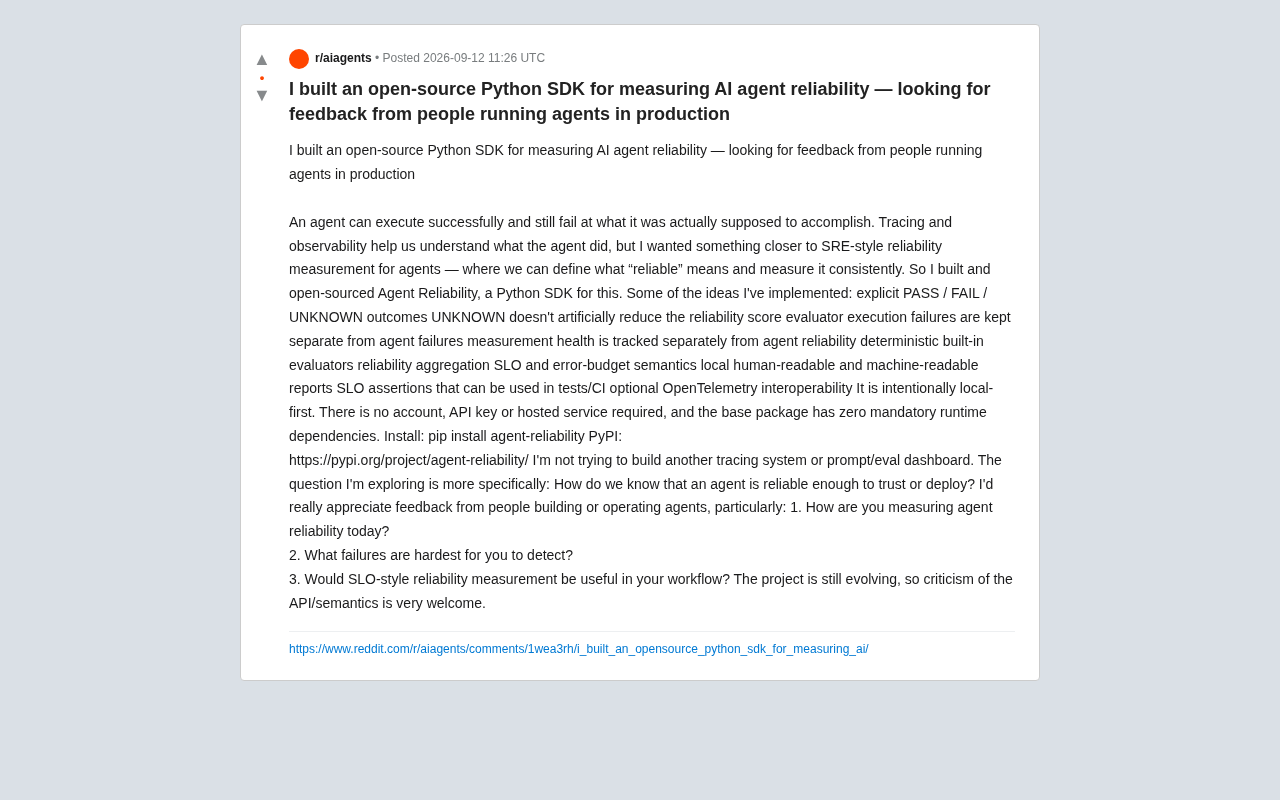
Open-Source Python SDK: Measuring AI Agent Reliability with SRE Principles
Agent Reliability is an open-source Python SDK that applies SRE's SLO and error budget concepts to AI Agent evaluation, with PASS/FAIL/UNKNOWN states, CI assertions, and zero forced dependencies.
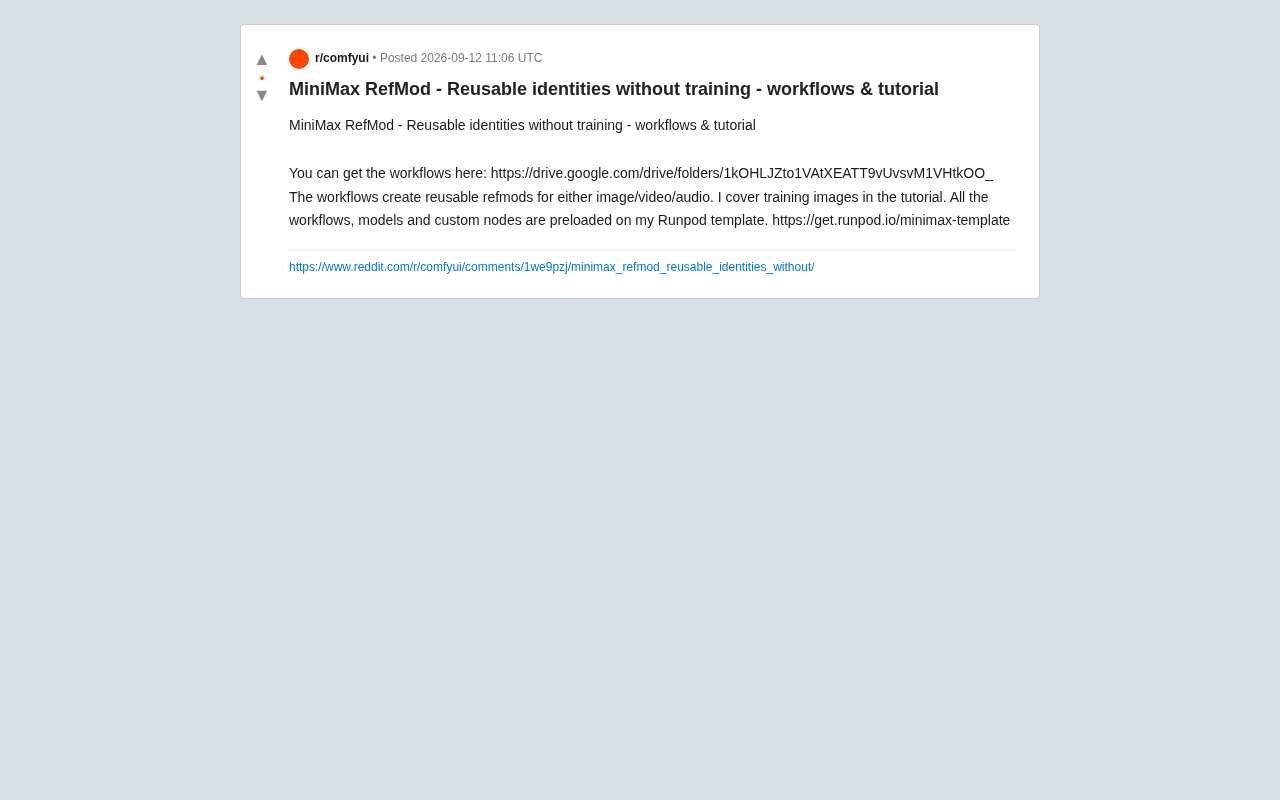
MiniMax RefMod: A Complete Guide to Training-Free Reusable Identity Workflows
MiniMax RefMod offers training-free reusable identity workflows for image, video, and audio generation. Includes Runpod template and tutorial for quick setup.