InkOS: How an Open-Source Agent System Systematizes Novel and Screenplay Writing
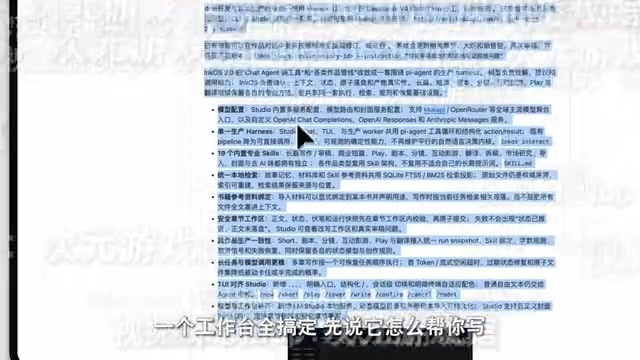
InkOS open-source agent system engineers AI novel writing into a complete pipeline of setting management, multi-agent collaboration, 37-dimension review, and style control.
InkOS is an open-source agent system designed to systematize and engineer AI novel and screenplay creation. Its core mechanism is "plan first, then write": solidify worldbuilding, character profiles, and creative rules into a structured outline, then dispatch agents with different roles to collaboratively generate chapters. Every chapter draft undergoes a 37-dimension continuity check covering character consistency, foreshadowing payoff, outline deviation, pacing, and AI-speak detection. The system also supports style fingerprint extraction for stable style imitation, and the InkOS Play module maintains world state to support open-world and branching interactive narratives. Additionally, it supports continuations and four fan fiction modes, with per-chapter snapshots that can be rolled back, and offers a low-threshold local deployment solution. InkOS's value lies in breaking writing down into a manageable, reviewable, and rollback-able process, upgrading AI from a ghostwriting tool to a creative collaboration system.
AI writing novels is nothing new, but tools that truly systematize and engineer the act of "writing stories" are few and far between. Recently, I came across an open-source agent system called InkOS on Bilibili, touted as "the highest peak in using AI to systematically write novels and screenplays." It packs long-form novels, short stories, screenplays, fan fiction, and even interactive film-games into a single workbench, attempting to solve a core pain point: AI writing isn't just about generating a block of text and calling it a day—it requires a complete pipeline of setting management, division of labor, quality review, and style control.
From Brainstorm to Chapters: The Agent Division-of-Labor Pipeline
InkOS's core mechanism is "plan first, then write." Users throw their ideas, worldbuilding, and character profiles at it, and it doesn't just start writing linearly. Instead, it first organizes the settings and creative rules into a structured outline. This step is crucial—many AI writing tools fail because they don't solidify the settings, leading to character breakdowns and worldbuilding contradictions later on.
After organizing the settings, InkOS dispatches a group of agents with different roles to collaborate and write the chapters step by step. Each agent takes on a different role: some drive the plot forward, some polish dialogue, and some handle scene descriptions. This multi-agent collaboration model is closer to the creative process of human authors than a single model generating everything in one go.
Local Deployment Without the GitHub Hassle
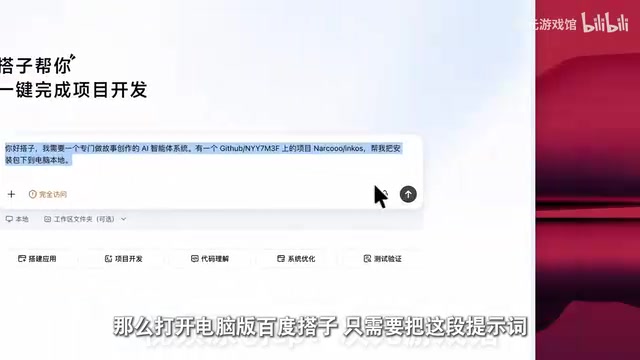
For authors unfamiliar with code, InkOS offers a low-threshold solution: open Baidu Dazi on your computer, paste in a prompt, and it will automatically deploy to your local machine. This significantly lowers the barrier to using open-source tools—after all, not every writer wants to wrestle with GitHub and the command line.
Multi-Agent Collaboration refers to a system architecture that breaks down complex tasks into multiple subtasks, assigns them to multiple AI agents with different roles and specialties, and then integrates the results through a coordination mechanism. Compared to a single model generating everything at once, a multi-agent system can reduce cognitive load at any single point through role division—for example, letting one agent focus on plot logic while another focuses on natural dialogue—thereby producing higher-quality content in each area of expertise. This model has been widely practiced in software engineering, automation research, and other fields, and in recent years has been introduced into creative writing scenarios to simulate the collaborative workflow of authors, editors, and polishers in a human creative team.
Review Across 37 Dimensions: Continuity Checking Is the Highlight
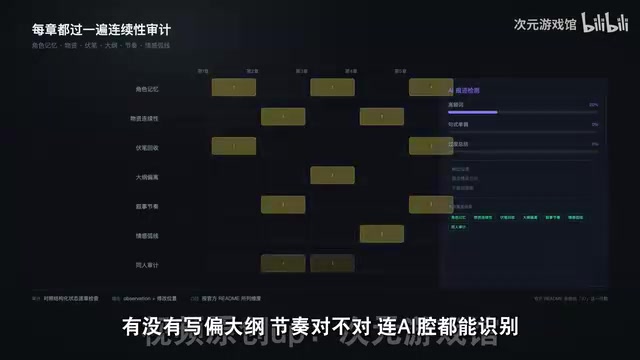
What reassures me most about InkOS is its review mechanism. Every chapter draft undergoes a continuity check across 37 dimensions, including whether characters are misremembered, whether foreshadowing is paid off, whether the writing deviates from the outline, and whether the pacing is right. These are exactly the areas where long-form writing most easily goes off the rails.
Even more granular, it can detect "AI-speak." Typical machine-writing traces such as high-frequency words, monotonous sentence structures, and transitional summaries are all flagged for the user to revise. This means InkOS is not just a generation tool but a writing assistant with an editor's perspective.
Style Fingerprint: Mimicking Writing Style with a Basis
Want to mimic someone else's writing style? InkOS can analyze reference works and extract a "style fingerprint," then automatically write each chapter with that flavor. This is far more reliable than simply asking the model to "imitate a certain style," because it distills style features into reusable parameters.
Continuity Checking originates from the tradition of "script supervision" in film and television screenwriting and series fiction creation, specifically responsible for tracking cross-chapter consistency in timelines, character states, prop locations, foreshadowing and payoff, etc. In AI long-form writing, due to limited model context windows and lack of persistent memory, issues such as character personality drift, setting contradictions, and forgotten foreshadowing are particularly prominent. Breaking continuity checking down into 37 quantifiable dimensions is equivalent to establishing a structured quality inspection checklist for AI-generated content, transforming review from a vague "is it good?" to item-by-item verification of "is it correct?", greatly reducing the risk of logical breakdown in long-form creation.
Style Fingerprint refers to a set of quantifiable, reusable style feature parameters extracted from reference text, typically covering dimensions such as vocabulary richness, sentence length distribution, rhetorical preferences, narrative perspective, and punctuation habits. Unlike simply asking in a prompt to "imitate a certain writer's style," a style fingerprint breaks down writing style into specific metrics and distills them into parameters, which continuously exert influence as constraints in subsequent generation. This approach draws on the ideas of computational stylometry, which was originally used for authorship attribution and is now applied in reverse for style transfer and style preservation, making style control in AI writing more operable and stable.
InkOS Play: Open World and Branching Interactive Gameplay
In addition to traditional linear writing, InkOS has a module called InkOS Play, specifically for open worlds and branching interactions. It maintains world states such as characters, locations, items, and relationships, so that interactive narratives don't spiral out of control due to branch explosion. For creators making interactive film-games or text adventure games, this is a very practical infrastructure.
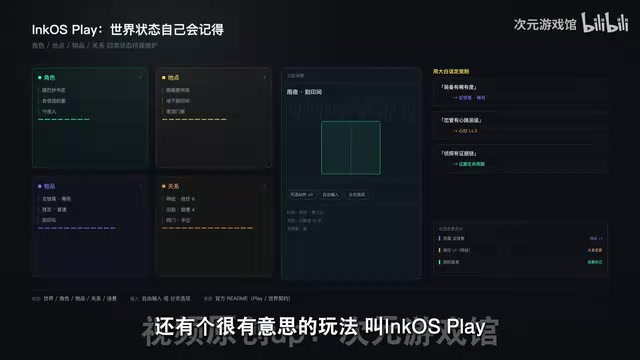
World State is a core data structure in interactive narrative systems, used to record all variables that change over time, such as character positions, attributes, item ownership, relationship networks, and plot flags. In branching narratives, each choice the player makes triggers a state update, and subsequent plot is dynamically generated or filtered based on the current state. Without centralized maintenance of world state, the number of branches expands exponentially with the depth of choices, leading to plot contradictions or system chaos. InkOS Play, through unified world state management, enables open-world interactive narratives to remain logically coherent even under branch explosion—a mechanism that shares conceptual parallels with state machines and knowledge graphs in game development.
Continuations and Fan Fiction That Veteran Authors Care About
InkOS also has targeted designs for continuations of existing works and fan fiction creation. It supports continuing existing works, and the fan fiction mode covers four types: canon-divergent, alternate universe, personality reshaping, and CP (character pairing). Every chapter has a snapshot and can be rolled back, and word counts aren't hard-cut. These details may seem trivial, but anyone who has actually written long-form work knows that being able to roll back means you can confidently let AI write boldly and revert if you're not satisfied.
The Significance of Systematic Writing Tools
InkOS's value isn't that "AI can write novels," but that it breaks writing down into a manageable, reviewable, and rollback-able process. Setting management, multi-agent division of labor, 37-dimension review, style fingerprints, world state maintenance—combined, these capabilities transform AI from a "ghostwriting tool" into a "creative collaboration system." For authors who need to stably produce long-form content, this systematic approach may have more long-term value than simply pursuing generation quality.
As an open-source project, InkOS also gives creators more control and room for customization. Of course, no matter how good the tool is, what ultimately determines whether a story is good or bad is the creator's judgment. But at least now there's an option that feels more like a "workbench" than an "input box."
Related articles

Average US New Car Price Tops $51,000: How AI and Software-Defined Vehicles Are Driving Up Costs
US average new car prices hit a record $51,000. This article analyzes how software-defined vehicles, central computing, pre-installed sensors, and in-vehicle AI inference costs drive up sticker prices—and what it means for consumers and automakers.
EG-RL: Edge-Gradient Augmentation + Reinforcement Learning for Temporal Graph Link Prediction
An in-depth look at EG-RL: explicitly encoding edge-gradient events (edge births and deaths) and using reinforcement learning to dynamically select the most informative snapshots, significantly improving AUC and AP for temporal link prediction on multiple dynamic graph datasets.
GNN+TCN Fusion Algorithm: A New Paradigm for ECG Anomaly Detection
Explore the innovative application of GNN and TCN fusion algorithms in ECG anomaly detection: transforming time series into directed graphs and using geometric deep learning to simultaneously capture local temporal features and global topological structures, offering a new paradigm for medical AI time-series analysis.