Integer Multiplication Below n log n: Exploring the Frontiers of Algorithm Complexity

Tracing integer multiplication complexity from O(n²) to the n log n frontier and the quest to go beyond.
Efficient integer multiplication is a classic challenge in computer science. Starting from the O(n²) complexity of long multiplication, researchers achieved breakthroughs via Karatsuba, Toom-Cook, and Schönhage–Strassen, leveraging FFT to approach O(n log n). Harvey and van der Hoeven's recent O(n log n) algorithm nearly touches the theoretical lower bound, yet the push for "below n log n" continues. Notably, these asymptotically optimal algorithms carry large constant factors and only outperform in practice at astronomical input sizes, limiting their immediate engineering impact. The significance lies chiefly in advancing our understanding of the fundamental limits of computation.
A Problem That Has Puzzled Mathematicians for Decades
Integer multiplication seems simple — we all learned long multiplication in elementary school. But when two numbers each have millions or billions of digits, finding the fastest possible way to multiply them has long been a central challenge in computer science and computational number theory.
The classical long multiplication algorithm requires O(n²) basic operations to multiply two n-digit integers. As numbers grow larger, this quadratic complexity quickly becomes unacceptable. For decades, researchers have searched for more efficient algorithms, and "n log n" has been regarded as the theoretical threshold for integer multiplication complexity.
The Evolution from Karatsuba to FFT
The breakthrough in integer multiplication algorithms began with the Karatsuba algorithm in the 1960s, which reduced complexity to approximately O(n^1.585), shattering the intuition that O(n²) was an insurmountable floor. The Toom-Cook algorithm then further optimized both the constant factors and the exponent.
The true leap came with the Schönhage–Strassen algorithm, which leveraged the Fast Fourier Transform (FFT) to push complexity down to O(n log n log log n). This approach reframes integer multiplication as polynomial multiplication, then uses FFT to efficiently perform convolution in the frequency domain — a foundational insight that underpins large-number arithmetic libraries like GMP.
Why n log n Is a Critical Milestone
For a long time, the research community conjectured that the optimal lower bound for integer multiplication complexity should be Ω(n log n). In other words, n log n has been both the target researchers chase and the ceiling they suspect cannot be broken. Any result that approaches or reaches this bound carries profound theoretical significance.
It's worth briefly explaining how FFT applies to integer multiplication. The core idea is to treat two large integers as coefficient sequences of polynomials, making integer multiplication equivalent to polynomial convolution. Computing convolution directly requires O(n²) multiplications, whereas FFT can convert a polynomial from coefficient form to point-value form in O(n log n) time. Multiplying the two sets of point values element-wise and then applying an inverse FFT brings the overall complexity down dramatically. The elegance of the Schönhage–Strassen algorithm lies in performing this process over integer rings rather than floating-point complex numbers, thereby avoiding floating-point errors and guaranteeing exact results for arbitrary-precision integer arithmetic. Major arbitrary-precision libraries like GMP (GNU Multiple Precision Arithmetic Library) implement high-performance multiplication based on exactly this approach.
A "complexity lower bound" refers to the minimum amount of resources any algorithm must consume for a given class of problems. Proving that the lower bound for integer multiplication is Ω(n log n) would mean: no algorithm can be faster than n log n — that is the inherent computational difficulty of the problem. However, this lower bound has not yet been rigorously proven; it remains more of an empirical conjecture. Harvey and van der Hoeven's algorithm approaches this conjectured value from above, but without a corresponding lower bound proof, we still cannot assert that n log n is a truly impassable limit — the possibility of a faster algorithm theoretically remains open. This "gap" between upper and lower bounds is the typical shape of many open problems in complexity theory, analogous to the P vs NP dilemma.
What "Below n log n" Really Means
The title "Integer multiplication below n log n" cuts to the heart of the matter: can we find an integer multiplication algorithm faster than n log n?
To be precise, Harvey and van der Hoeven recently proposed an O(n log n) algorithm, widely considered asymptotically near-optimal and close to the theoretical lower bound. The exploration of "below n log n" challenges a boundary that has generally been considered unassailable — touching not just on engineering optimization, but on fundamental questions in complexity theory about the intrinsic hardness of multiplication.
The Gap Between Theory and Practice
It's important to emphasize that these asymptotically optimal algorithms often hide enormous constant factors. They are "faster" in a mathematical sense, but their advantage only manifests at astronomically large input sizes. For the large-number arithmetic found in everyday cryptography and scientific computing, Schönhage–Strassen and its variants remain the more practical choice. As a result, the significance of breaking through n log n lies primarily in expanding humanity's understanding of the limits of computation, rather than in immediately changing existing software implementations.
Discussion Traction and Information Limitations
This topic surfaced on Hacker News, garnering 8 upvotes and 1 comment — relatively modest engagement. The original source material provided only a title, without specific paper links, author information, or technical details. This article therefore supplements the discussion with established context from the recognized history of integer multiplication algorithms.
For readers who wish to explore further, it is recommended to follow Harvey and van der Hoeven's related papers, as well as the latest research on multiplication lower bounds in computational complexity theory, for rigorous technical conclusions.
Conclusion
Integer multiplication — seemingly an "ancient" problem — remains one of the most active frontiers in complexity theory today. From long multiplication to FFT, and now to challenging the n log n barrier, each advance has reshaped our understanding of "how hard computation really is." Whether or not this boundary is ultimately broken, the pursuit itself exemplifies the enduring appeal of fundamental algorithms research.
Related articles
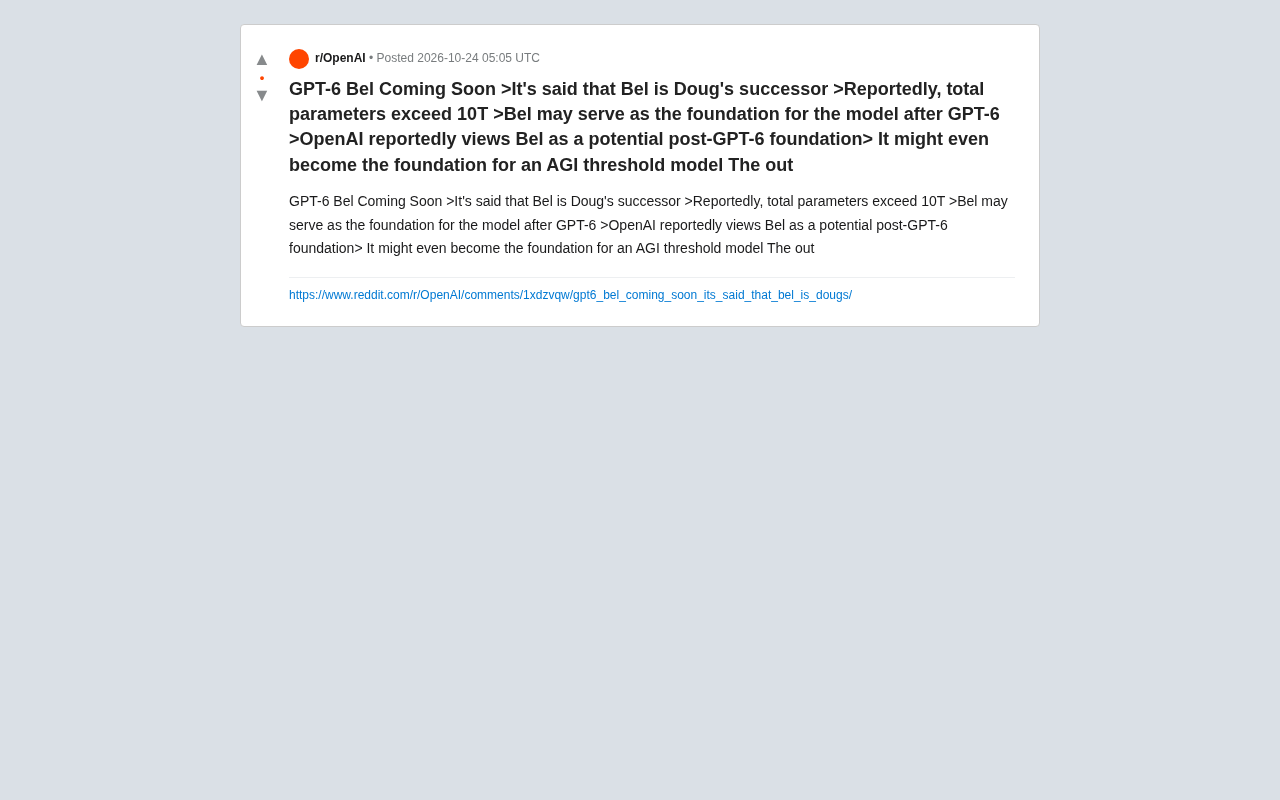
OpenAI's New Model Bel Leaked: 10 Trillion Parameters, Potentially the Foundation for AGI
A Reddit leak claims OpenAI's new model Bel is coming, with over 10 trillion total parameters, possibly serving as the foundation model after GPT-6 or even the base for the AGI threshold. This article breaks down the key claims and assesses their credibility.
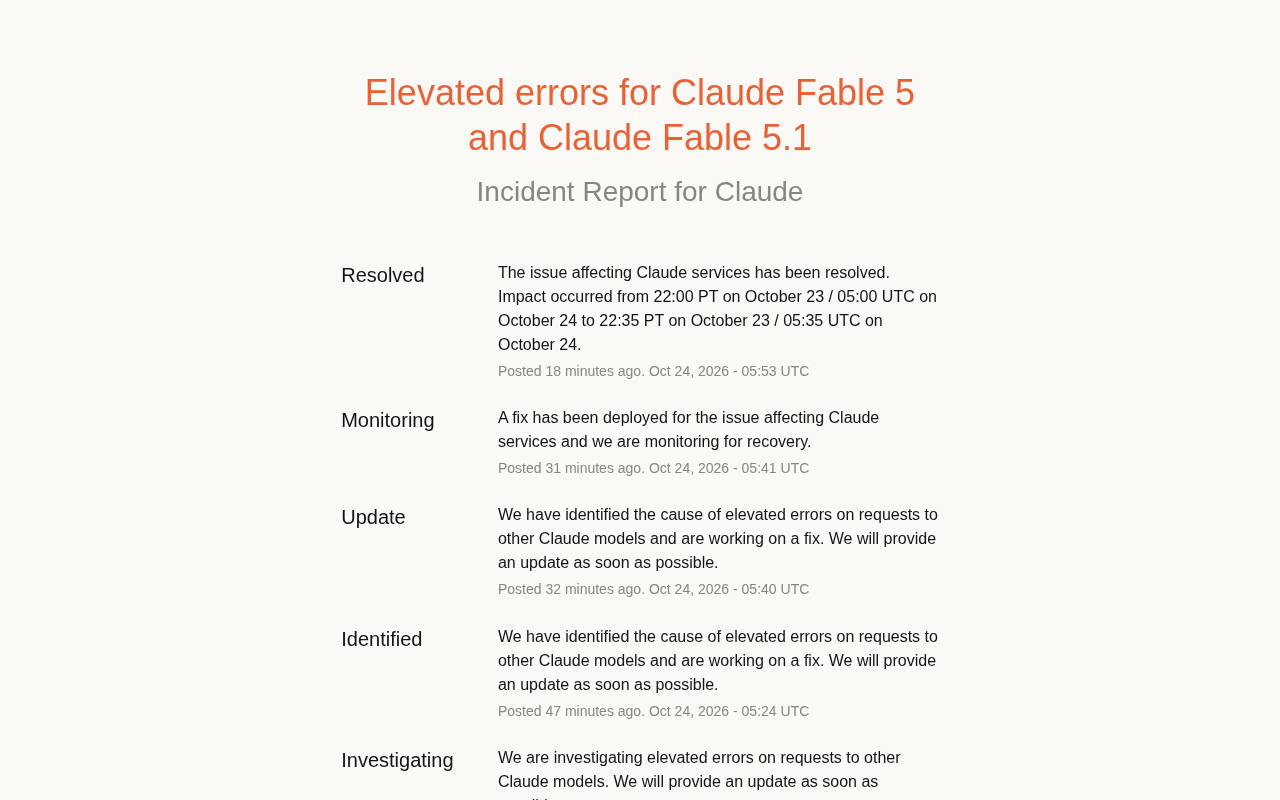
Claude Fable 5/5.1 Outage: A 30-Minute Postmortem
Claude Fable 5 and Fable 5.1 saw elevated error rates for about 35 minutes, per the official status page—from Investigating to Resolved in 37 minutes. This post reconstructs the timeline, analyzes impact on other Claude models, and offers developer guidance on retries, multi-model routing, and monitoring alerts.
Kimi K3.1 Open-Weight Model Hands-On: 3 Trillion Parameters Take On Closed-Source Giants
Kimi K3.1 open-weight model hands-on: 3T-parameter MoE, 1M-token context, stunning 3D rendering but weak spatial reasoning and factual accuracy. Benchmarks near Opus 5.5 at $2.11/task.