Introduction to AI Large Language Models: A Must-Read Guide for Test Engineers

Understand the essence of AI large language models—it all comes down to probability—and how test engineers can use them.
This guide explains the fundamentals of AI large language models for test engineers: how they fit within the AI hierarchy, how the Transformer's self-attention and word embeddings work, and why LLMs are essentially probabilistic. It then maps out their strengths, weaknesses, and practical testing approaches.
Understanding AI Large Language Models from Scratch: What Exactly Are They?
When we casually throw around the term "AI large model," many people don't actually understand its precise meaning. Strictly speaking, "AI large model" is a somewhat imprecise expression. To understand it, we first need to clarify the hierarchical relationships between several basic concepts.
The history of AI (Artificial Intelligence) dates back to the 1970s. Early AI was primarily based on statistics and strategic rules. In fact, during this period, AI was mainly built upon Symbolism and rule-based systems. The "Expert Systems" that flourished during the 1970s and 1980s are a typical example—they simulated expert decision-making by manually writing large numbers of "If-Then" rules, such as the medical diagnosis system MYCIN. The biggest limitation of such systems is that knowledge had to be manually entered; they couldn't learn autonomously from data, and would fail whenever they encountered a situation not covered by the rules. This is exactly why modern AI later shifted toward a machine learning paradigm centered on data-driven, automatic learning.
What we refer to today as DeepSeek, Gemini, ChatGPT, and so on, all fall under modern artificial intelligence. The core technical direction of modern AI is machine learning, which is further divided into reinforcement learning and deep learning. The large models that are so popular right now belong precisely to the branch of deep learning.
Here it's worth noting that machine learning and deep learning have a containing-and-contained relationship. Machine learning is the general term for methods that let computers automatically discover patterns from data. Traditional machine learning (such as decision trees, support vector machines, and random forests) often requires manually designed features. Deep learning is a subset of machine learning, with its core being multi-layer neural networks (Deep Neural Networks)—the more layers and the "deeper" the network, the stronger the model's ability to express complex patterns. The biggest breakthrough of deep learning is that it can automatically learn features from raw data, eliminating the tedious process of manual feature engineering. This is the key reason it has comprehensively surpassed traditional methods in fields such as image, speech, and text processing.
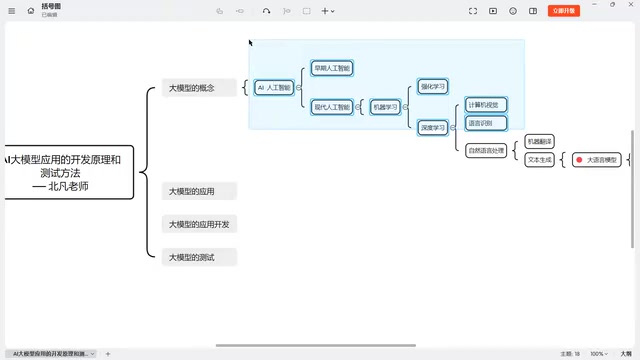
In other words, large models are not the entirety of artificial intelligence—they are just one specific branch on the big tree of AI. Understanding this hierarchy is the foundation for our subsequent discussion of large model applications and testing.
Three Mature Application Areas of Deep Learning
In recent years, deep learning has achieved a series of breakthroughs, concentrated mainly in three mature application areas:
- Computer Vision (OpenCV): Understanding and processing images. For example, the automatic face-slimming, skin-smoothing, eye-enlarging, and beauty makeup features when taking selfies in short videos.
- Speech Recognition: WeChat voice-to-text conversion, smart speakers (Xiao Ai, Tmall Genie), and even voice-controlled lights that cost just a few dollars—all reflect the widespread adoption of speech recognition technology.
- Natural Language Processing (NLP): Understanding text content, semantics, and meaning.
What we now call an AI large model in the narrow sense primarily refers to Large Language Models (LLMs) based on natural language processing. Of course, in a broader sense, images, speech, and video can also be "scaled up" using the Transformer architecture, forming large image models, large speech models, and so on.
Why AI Large Models Exploded: The Lowering of Barriers
Many people think AI suddenly became popular, but that's not the case. There was actually a great deal of accumulated technology behind it—it's just that past AI was more focused on specialized fields, usable only by those within those fields, while ordinary people outside couldn't use it.
Computer vision technology is actually quite mature, and its image recognition capabilities are very powerful. But it has a natural limitation: it can recognize the content of an image, but it struggles to communicate the result directly to the user—ultimately it still needs text to communicate. The same is true of speech recognition, where communication barriers between different languages limited its widespread adoption.
It wasn't until large language models matured that the situation fundamentally changed. We can tell the AI our needs in text, and the AI can also give us results in text. This leads to a colloquial but profound conclusion:
As long as you can chat via text, you can use AI.
It was precisely the maturity of natural language processing that lowered the barrier to using AI to an extremely low level—anyone who can type and chat can use a large model. This also explains why large models were able to rapidly reach the general public.
The Transformer Principle: The Essence of Large Models Is "Probability"
To truly make good use of large models, you also need to understand their basic working principles. The core here is the Transformer (many dictionaries translate this as "Transformers" like the movie, but that's not really accurate—it's essentially a "converter").
The Transformer was proposed by Google in the 2017 paper "Attention Is All You Need," and its revolutionary aspect was the introduction of the "Self-Attention" mechanism. Before this, processing sequence data relied mainly on RNN and LSTM, which had to process words sequentially one by one, making parallelization difficult and easily forgetting long-distance information. The self-attention mechanism allows the model, when processing a word, to simultaneously "attend to" all other words in the sentence and calculate the association weights between them, thereby better understanding contextual semantics. This parallelizable structure greatly improved training efficiency, making it possible to train ultra-large-scale models on massive amounts of data, ultimately giving rise to a series of large language models such as GPT and BERT.
A Machine Translation Example
When the Transformer was first proposed by Google, it was used for machine translation. Let's use the example of translating "I love you" into "我爱你" to understand the entire process in a simplified way:
- Encoding: First, the input English words are encoded into groups of vectors. At this point they are no longer letters, but numerical vectors.
- Vector Space Computation: These vectors enter a vector space, where the model looks for vectors with similar semantics. For example, after "I love you" goes in, it might find multiple candidates like "我爱你," "我喜欢你," "我稀罕你," etc.
The "vectors" mentioned here are backed by "Word Embedding" technology. It maps each word to a coordinate point in a high-dimensional space (typically hundreds to thousands of dimensions), where words with similar meanings are also close to each other in the space. A classic example is: "king" - "man" + "woman" ≈ "queen," which shows that vectors not only encode word meaning but also capture the semantic relationships between words. It is precisely because of word embeddings that computers can perform mathematical operations on "meaning"—this is the foundation for large models to understand and generate language.
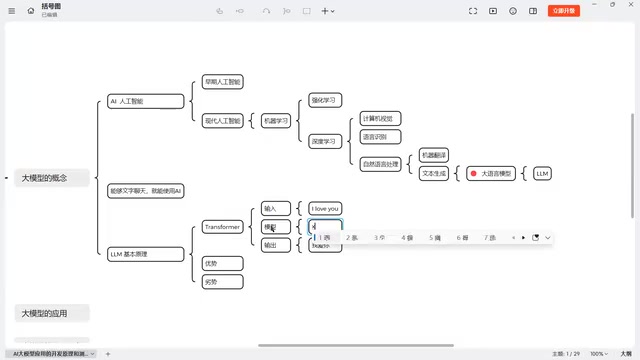
- Decoding and Probabilistic Selection: The model doesn't directly map to arrive at an answer; instead, it derives it word by word. It first calculates the first character "我," then derives the next character based on "我"—finding that "爱" has the highest probability and "喜" has a lower probability, so it chooses "爱"; then it derives "你." The final output is "我爱你."
Core Conclusion: The Essence Is Probability Estimation
This process reveals the most fundamental characteristic of large models: their computation is probabilistic.
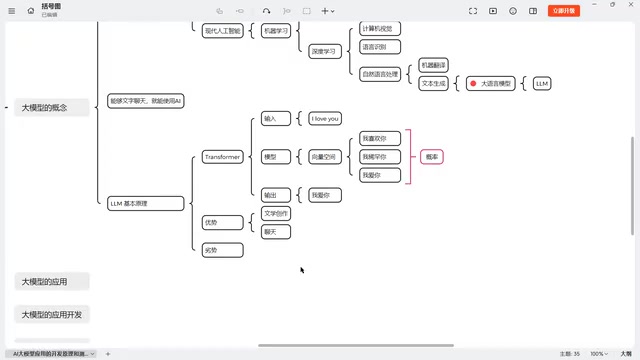
This means that if you ask it to translate the same sentence 100 times, the results may all be different; if you repeatedly ask the same question, the answer each time will also vary. Once you understand this point, you've grasped the soul of large models—they primarily "guess" the result based on probability, rather than through precise calculation or authoritative citation.
Advantages and Disadvantages of AI Large Models: A Complete Analysis of Applicable Scenarios
Since the essence of large models is probability, we can deduce the boundaries of their applicability.
What Large Models Are Good At
- Literary Creation: Scenarios that require randomness, variation, and creativity. Just like chatting with a person—if the other party always replies with the same few fixed words, you'll quickly lose interest; whereas probabilistic, diverse expressions actually make conversation more interesting.
- Divergent Thinking: When you need bizarre and unexpected content, the probabilistic nature actually becomes an advantage.
What Large Models Are Not Good At
- Precise Computation: Give it a set of complex equations, and it may not calculate faster or more accurately than you using a calculator. This is also why early users often used complex calculations to test the intelligence of ChatGPT and DeepSeek.
- Authoritative and Accurate Answers: In fields like law, finance, and medicine where "there's no room for error," large models should not answer in an overly confident tone. During training, they are usually guided to admit "I don't know" and to advise users to consult real doctors, lawyers, and other professionals. This also brings up a widely discussed problem with large models—"hallucination," where the model generates content that seems plausible and sounds certain but is actually wrong or fabricated out of thin air. Hallucination is precisely a byproduct of the probabilistic generation mechanism: what the model pursues is the "most probable next word," not the "factually correct next word." Therefore, extreme caution must be exercised in scenarios with very high factual requirements.
It should be added that large models are iterating rapidly. Taking the evolution from GPT-4 and GPT-4o to GPT-4.5 as an example, precise computation capabilities have already made considerable progress. So the "disadvantages" mentioned here are more of a relative comparison, and do not mean that large models absolutely cannot be used in computational scenarios.
Looking at Large Models from a Test Engineer's Perspective
For test engineers, this analysis of advantages and disadvantages can directly guide practice.
Testing Stages Suitable for AI
- Evaluating Requirements and Designing Test Cases: Testing work itself requires considering all sorts of bizarre and unexpected edge cases. AI's probabilistic nature and divergent capabilities are exactly an advantage here.
Testing Stages Not Suitable for AI
- Debugging Errors: When you have AI locate and debug bugs, it easily goes down the wrong path and gets stuck splitting hairs, unable to get out. This is its clear current limitation.
Two Approaches to Large Model Testing
When we want to test an AI large model product, there are two mainstream methods:
- Using AI to Test AI: Low cost, fast speed, suitable for large-scale automated evaluation.
- Manual Testing: The most expensive and slowest, but human evaluation of large models is one of the gold standards, especially for content involving humanistic and subjective judgment, where manual evaluation results are the most accurate.
Conclusion
If you really can't remember so many concepts, just remember one word—probability. Once you understand the essence that large models "primarily guess results based on probability," you'll naturally develop an intuition for which scenarios are suitable for using them and which scenarios require human backup.
For traditional test engineers, the AI wave is not a threat but an opportunity. Secondary development around large models (such as AI IDEs, AI customer service, AI English speaking courses, etc.) is giving rise to a large number of new applications and job roles. Mastering the principles and testing methods of large models is precisely the starting point for us to "get ahead of the future."
Key Takeaways
Related articles
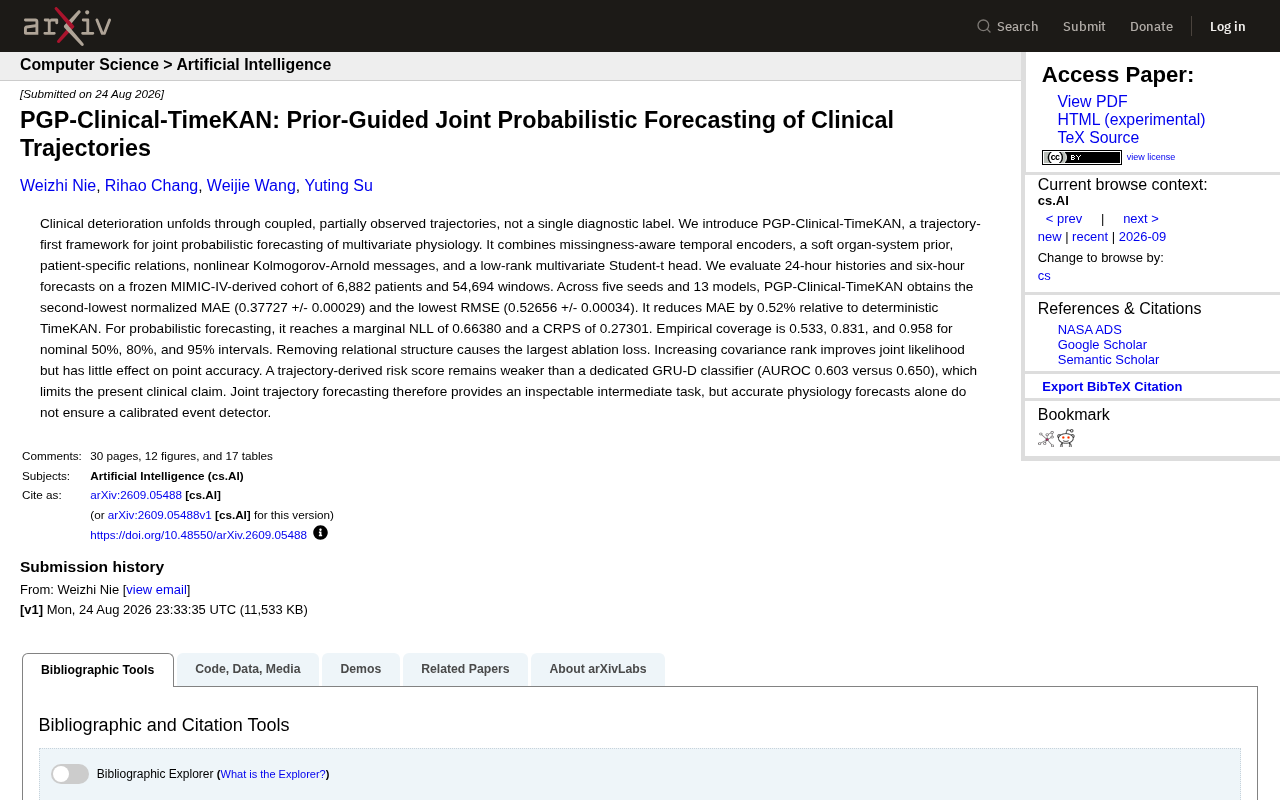
PGP-Clinical-TimeKAN: A Detailed Guide to the Multivariate Physiological Indicator Joint Prediction Framework
An in-depth analysis of the PGP-Clinical-TimeKAN framework for joint probabilistic prediction of multivariate physiological indicators, covering trajectory-first paradigm, KAN message passing, MIMIC-IV validation, and ablation studies.
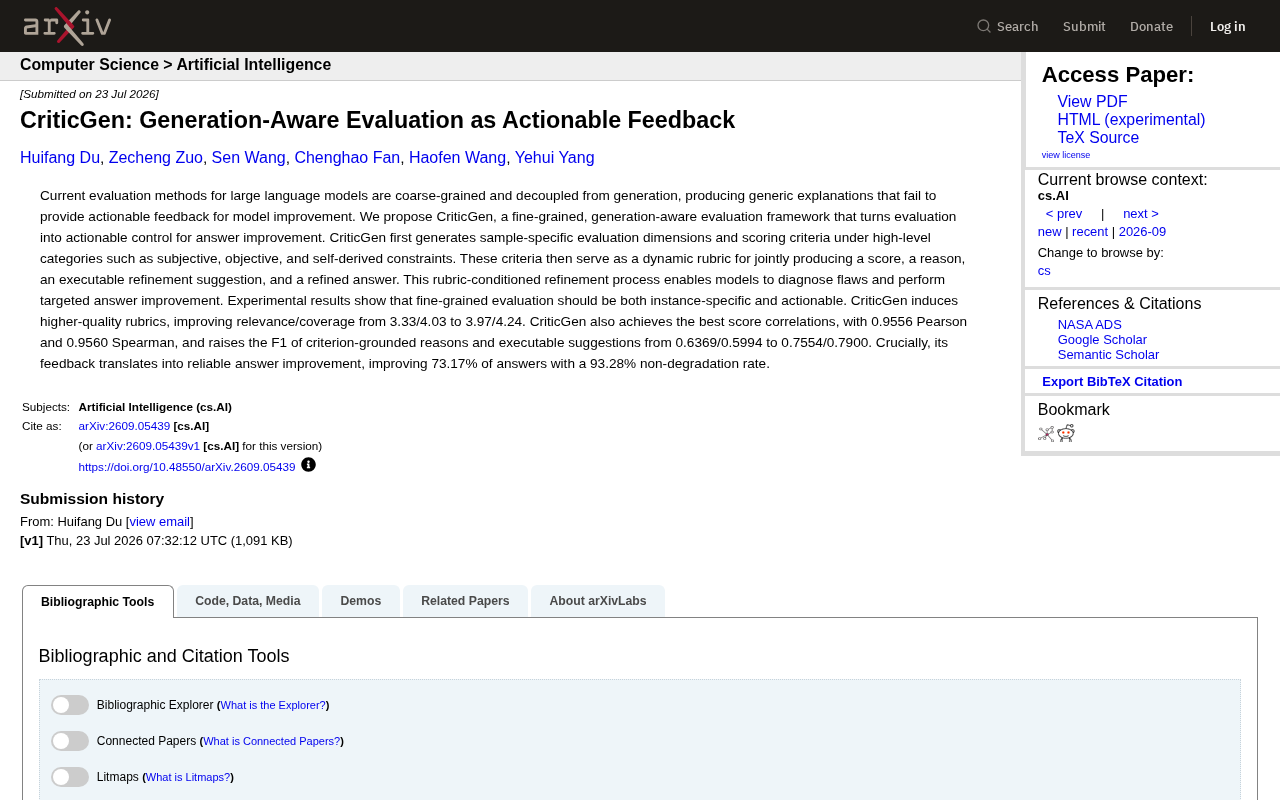
CriticGen: A New Framework That Transforms AI Evaluation into Actionable Improvement Feedback
CriticGen proposes a generation-aware evaluation framework that transforms AI assessment from passive scoring to an active optimization loop, achieving 73.17% answer improvement and 93.28% non-degradation rate.
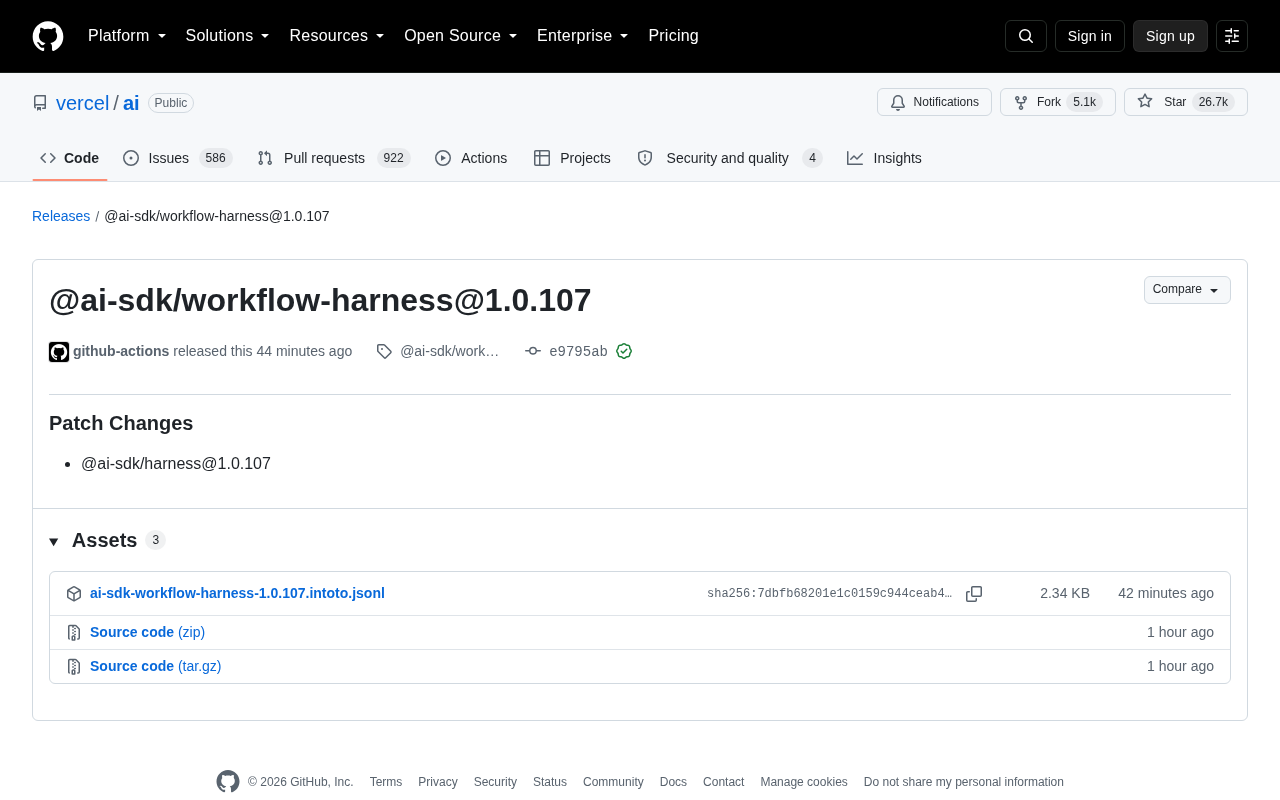
Vercel AI SDK workflow-harness Update Analysis
Deep analysis of Vercel AI SDK workflow-harness 1.0.107 update: architecture design, engineering practices, and developer value for building reliable AI apps.