Investor Breakdown: How Can AI Founders Successfully Raise a Series A?
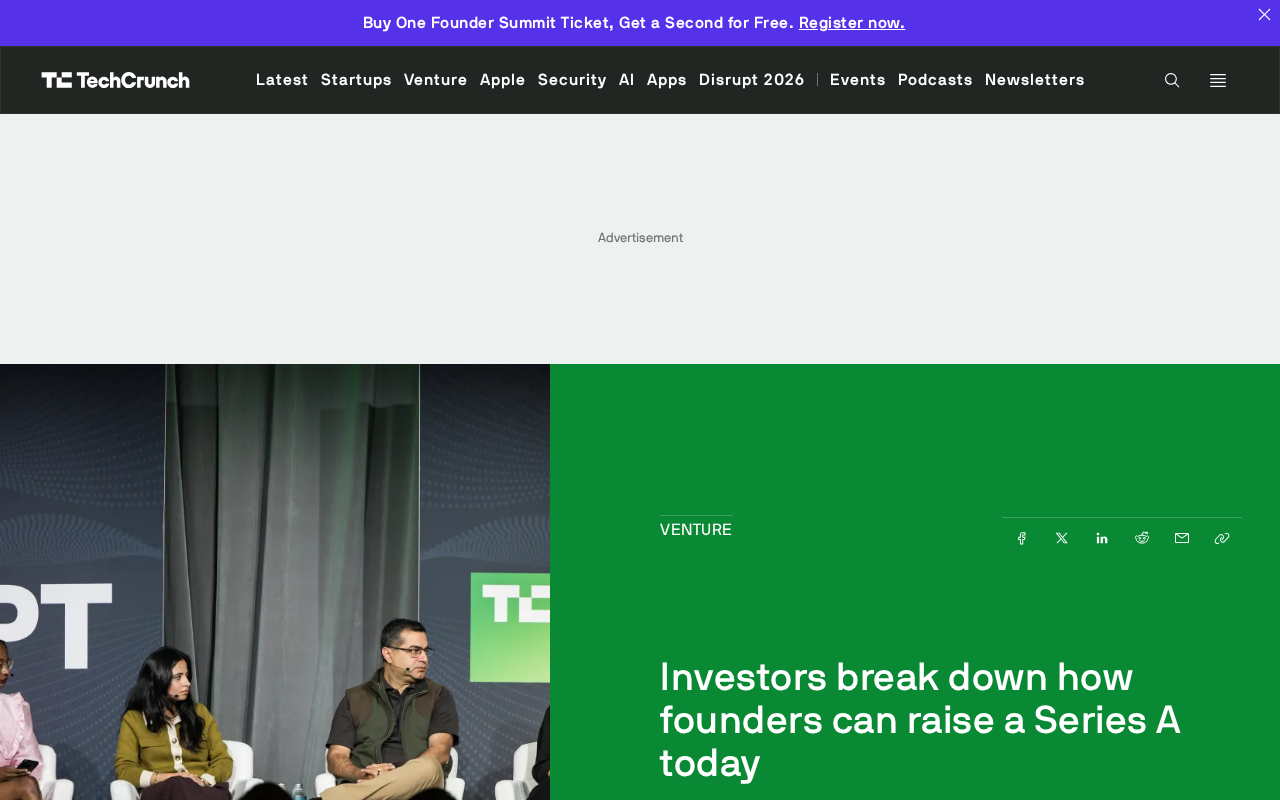
AI fundraising is shifting to execution-based pricing as Series A investors prioritize revenue quality and unit economics.
The article outlines the rising Series A bar in AI: seed rounds remain active, but investors no longer pay for the "AI concept" and instead use traditional SaaS metrics. Key focuses include revenue quality and unit economics. It also covers three common founder pitfalls and advises starting fundraising with 12+ months of runway.
Why Is Series A Fundraising Getting Harder Now?
Over the past two years, investment enthusiasm in the AI sector has remained high, but a clear divergence is emerging: seed rounds are still active, while the bar for Series A has risen significantly. According to TechCrunch, several top investors recently broke down the key elements of Series A fundraising for founders in the current environment. The core signal is clear—investors are no longer paying for the "AI concept"; they want to see verifiable growth, a clear unit economics model, and genuine customer stickiness.
This shift is no accident. A large number of AI-native startups raised ample funding at the seed stage, but when they reach Series A, investors begin to evaluate them using more traditional SaaS metrics: ARR growth rate, net revenue retention, and CAC payback period. AI is no longer a bonus point—it is the default premise.
What Do Series A Investors Care About Most Now?
Revenue Quality Matters More Than Growth Speed
According to the investors who participated in the discussion, a core change in current Series A fundraising is that investors no longer simply chase year-over-year ARR doubling, but focus more on the "quality" of revenue. Specifically, they care about how much revenue comes from recurring subscriptions versus one-off project-based contracts, and whether customers are expanding their usage.
This poses a real challenge for AI startups. Many AI products adopt usage-based pricing, which makes revenue more volatile. Investors will press: if model costs fall or customers optimize their usage, can your revenue still keep growing? Founders who can answer this question well will have a clear advantage in Series A negotiations.
Net Revenue Retention (NRR) refers to the revenue contributed by the same cohort of customers one year later relative to the previous year, including the combined effects of expansion, downgrades, and churn. An NRR above 100% means that even without signing new customers, revenue from the existing customer base is still growing—one of the metrics most recognized by capital markets for subscription businesses. For usage-based AI products, NRR can easily be dragged down by customers' usage optimization behavior: customers learn to use the product with fewer tokens, which instead causes revenue contraction. Investors therefore distinguish between "passive contraction" and "active optimization," and examine whether founders have mechanisms such as seat subscriptions or minimum consumption commitments to smooth usage fluctuations and ensure revenue predictability.
Unit Economics Must Work
Several investors emphasized that at the Series A stage, founders can no longer rely on the narrative of "scale first, profitability later." Gross margin, the ratio of customer lifetime value to acquisition cost—these metrics need to be clearly presented in the data. AI companies especially need to watch how inference costs erode gross margin—if an AI product's gross margin remains below traditional SaaS levels for a long time, investors will demand to see a clear path to improvement.
ARR (Annual Recurring Revenue) is the most core scale metric for SaaS and subscription businesses. It refers to the recurring portion of current subscription revenue annualized, usually excluding one-time implementation fees, hardware revenue, and other non-recurring items. When investors look at ARR growth, they also examine its composition: new customer ARR, expansion ARR from existing customers, churned ARR, and contraction ARR. For AI companies, there is debate over whether revenue generated from consumption-based pricing counts as ARR, because it fluctuates with usage and is less predictable than seat subscriptions. Therefore, Series A investors often require founders to split "committed ARR" and "consumption revenue," and observe whether NRR can remain healthy amid usage fluctuations.
Unit Economics measures whether the business of "acquiring each customer" is itself profitable, with the core formula being LTV/CAC. LTV (customer lifetime value) is usually estimated by multiplying gross margin by the average lifetime revenue per customer; CAC (customer acquisition cost) includes allocated sales and marketing expenses. A healthy SaaS business generally has a reference LTV/CAC of 3 or above, with a CAC payback period within 12 months. For AI companies, inference costs are directly included in cost of goods sold, which lowers gross margin and thus lowers LTV. Investors therefore press: as model prices fall and optimization methods such as caching and distillation are introduced, is there a verifiable improvement curve for gross margin, rather than merely the assumption that "it will be fine once we scale up"?
Three Pitfalls Founders Easily Fall Into
Over-Reliance on the "AI Narrative"
Investors pointed out that around 2023, an AI label could help with fundraising, but this approach no longer works today. They will look through "AI capability" to ask: why exactly are customers paying? Is it efficiency improvement, cost savings, or revenue growth? If founders cannot explain the value in the customer's language, Series A will be hard to advance.
Data Is Ready but the Story Is Not
Another common problem is that founders come to investors with a pile of metrics but cannot clearly explain the business logic behind them. Investors prefer to see a coherent narrative: market pain points, product entry approach, proven growth path, and expansion plan for the next stage. Data supports the story; it does not replace it.
Misjudging Fundraising Timing
In the current environment, Series A fundraising cycles are generally longer. Investors advise founders to start approaching Series A investors when they still have more than 12 months of cash runway, rather than waiting until only 6 months remain. Starting too early may dilute attention, but starting too late carries greater risk—cases of being forced to accept unfavorable terms when the market window narrows are not uncommon.
How Should Founders Adjust Their Strategy?
Based on the advice from investors, the current Series A fundraising strategy can be summarized in three points: first, make revenue quality metrics the core of pitch materials rather than piling up growth numbers; second, validate unit economics in advance, especially the impact of AI inference costs on gross margin; third, leave sufficient fundraising buffer time and maintain continuous communication with investors rather than scrambling at the last minute.
The fundraising logic of the AI track is shifting from "pricing imagination" to "pricing execution." For founders, this is not necessarily bad news—when the bubble recedes, companies with genuine product-market fit are actually easier to identify and price.
One-line Summary
AI fundraising logic is shifting to execution-based pricing, with Series A investors focusing on revenue quality and unit economics.
Paragraph Summary
The article outlines the trend of a rising Series A fundraising bar in the AI sector: seed rounds remain active, but Series A investors no longer pay for the "AI concept" and instead evaluate startups using traditional SaaS metrics. Core focus areas include revenue quality (share of recurring subscriptions, net revenue retention, growth resilience amid usage fluctuations) and unit economics (gross margin, LTV/CAC, erosion of gross margin by inference costs, and the path to improvement). The article also summarizes three common pitfalls for founders: over-reliance on the AI narrative, disconnect between data and story, and misjudging fundraising timing, and recommends starting fundraising with more than 12 months of cash runway. The overall judgment is that the AI track is shifting from "pricing imagination" to "pricing execution."
Related articles

LLaMA-Factory in Practice: A Complete No-Code Guide to Fine-Tuning Large Models
An introduction to LLaMA-Factory, the open-source fine-tuning tool: its 60.1K-star background, supported models and algorithms, local vs. cloud deployment, and CUDA setup steps.

Zeng Ming's Deep Retrospective: Why OpenAI May Not Be the Ultimate Winner — and Why the Corporate System Will Disappear
Zeng Ming's deep retrospective on the AI endgame: model companies are just infrastructure, OpenAI and Anthropic won't be the final winners; the next battle is the Agent entry point standard; the corporate system will disappear as AI restructures collaboration, and only mission-driven companies can survive the cycle.

OpenHands v1.28.0: OpenCode and PI Added as Built-in Agents, API Keys Requestable In-Conversation
OpenHands ships 5 releases in 21 days: v1.27.0 adds OpenCode and PI as built-in agents, v1.28.0 enables in-chat key requests. ACP integration, credential reuse, model list changes, and upgrade advice.