Vibe Coding in Practice: Developing Product Thinking and Turning Everyday Problems into Monetizable Apps with AI

A senior dev shows how imitation, daily pain points, and AI Agents help indie developers figure out what to build.
This is the second post in a Vibe Coding series by a developer with five years of big-tech experience, focusing on the most overlooked part of indie development: discovering and validating real needs. The author offers three actionable paths — using imitation to lower the barrier to entry, drawing inspiration from App Store charts, indie dev content creators, and GitHub projects, and extracting product ideas from everyday friction like supermarket unit pricing. The standout insight is packaging the research workflow as an open-source AI Agent Skill that daily auto-collects cases and generates 5–7 product mockups, helping developers quickly judge whether an idea is worth building.
For many aspiring indie developers, the biggest obstacle isn't writing code — it's not knowing what to build. In the second installment of his Vibe Coding tutorial series, a developer with five years of experience at a major tech company focuses on this often-overlooked step: how to discover real user needs and quickly decide whether they're worth pursuing. This piece isn't about tools or prompts — it's about cultivating product thinking and using AI Agents to automate the tedious work of market research.
Great Products Often Start with Imitation
The author puts forward a counterintuitive but highly pragmatic point: great products often begin with imitation, and there's no shame in that. He cites well-known examples from China — Weibo mirroring Twitter, WeChat drawing inspiration from Kik Messenger — products that, in their early days, clearly echoed their overseas counterparts.
The underlying logic is worth unpacking: imitation works because it addresses the same class of widely recognized problems. When a problem is universally understood, the best solutions tend to converge in design. For beginners, the value of imitation isn't in copying — it's in lowering the barrier to entry. It helps you take that first step faster and develop product intuition through practice. Once you've found your footing, you can start thinking about how to differentiate.
Vibe Coding is an AI-assisted programming philosophy that emerged in recent years, introduced by OpenAI co-founder Andrej Karpathy in early 2025. The core idea: instead of reviewing or writing code line by line, developers describe their intent in natural language and let AI generate, modify, and iterate on the code — with humans steering direction and evaluating outcomes. This model dramatically lowers the technical barrier for non-professional developers to ship products. But it also introduces a new challenge: when "writing code" is no longer the bottleneck, "figuring out what to build" becomes the central problem. That's exactly why this tutorial series dedicates an entire post to discovering needs rather than coding techniques.
Where Do Ideas Come From?
On the topic of inspiration, the author offers several actionable channels, each grounded in the realities of the indie developer ecosystem.
App stores — especially the Apple App Store. Most indie developers start with iOS, and for good reason: iOS users have stronger willingness to pay, and the software ecosystem is healthier. Browsing charts and categories is a goldmine of ideas in itself.
Indie developer content creators on social platforms. Indie developers naturally need acquisition channels, so many of them are also content creators. On platforms like Xiaohongshu and Douyin, you can easily find them and absorb their ideas and thinking. This reveals a practical truth about indie development: building a product and building an audience are often two sides of the same coin.
Open source communities. GitHub is full of productivity tool projects that are well-suited for transformation into standalone apps. The author's advice is straightforward — fork a repo, adapt it, and ship it. Open source serves both as a learning resource and a ready-made starting point.

Mining Needs from Everyday Friction
Once product thinking starts to take shape, the next step is turning your attention to daily life. The author's view: any moment of friction or frustration in your day-to-day routine is worth considering as a product opportunity.
He gives a relatable example — buying toothpaste at the supermarket. The shelf has a 50g tube and a 100g tube. People instinctively reach for the one with the lower sticker price. But do the math: the 50g tube might cost 0.5 yuan per gram, while the 100g tube is only 0.4 yuan per gram. The cheaper-looking option is actually more expensive.
That's a genuine pain point. The solution follows naturally: use your phone's camera to photograph the product, automatically calculate the unit price (per gram, per unit), and instantly tell you which option is the better deal. The author also notes this concept extends to online shopping — the same unit-price comparison could be triggered by a screenshot. A small everyday annoyance, neatly decomposed into a clear app concept.

Automating Market Research with an AI Agent
The author acknowledges that product thinking is built gradually over time — it can't be rushed — and that day-to-day research is extremely time-consuming. This is where the tutorial delivers its most valuable insight: he has packaged the research workflow into an open-source Skill, handed off to an AI Agent for automatic execution.
The Skill works roughly as follows:
- Automatically collects the latest demand cases every day, drawing inspiration from the App Store and open source projects;
- Searches the web for outstanding examples of app UI and interaction design;
- Uses those examples as references to produce 5 to 7 polished product mockups for each identified need.
With these mockups, you can almost immediately visualize what a given idea would look like as an app — and quickly decide whether it's worth spending tokens to build. The author has also set up a scheduled task inside his Agent so it runs automatically at a set time each day. He describes this not as a burden, but as something he actually looks forward to: "What good idea did the Agent research today?"

AI Agent and Skill are two key concepts for understanding this approach. An AI Agent is an AI system capable of autonomously planning and executing multi-step tasks — distinct from a standard conversational model that only handles single-turn exchanges. An Agent can call external tools, browse the web, read and write files, and iterate repeatedly until a goal is achieved. A Skill is a capability module for an Agent — essentially a reusable task-flow script that tells the Agent: "When you encounter this type of task, follow these steps." By packaging "daily demand research" as a standalone Skill, the entire workflow — scraping App Store data, searching open source projects, generating product mockups — only needs to be configured once, after which the Agent triggers it automatically on a schedule with no human intervention. This approach of "automating repetitive cognitive work" represents a higher-leverage use of Agents in the indie development workflow than simply using AI to generate code.
A Few Closing Thoughts
The core value of this tutorial lies in how it breaks down the seemingly abstract task of "discovering needs" into concrete, executable steps: start with imitation to lower the barrier, draw from multiple channels for inspiration, extract product ideas from everyday friction, and finally automate the repetitive research work with an AI Agent.
Using an Agent as a "product research assistant" rather than just a "code generator" is the most transferable insight from this approach. In the context of Vibe Coding, AI isn't just there to turn your ideas into code — it can also help you filter out ideas that "seem interesting but aren't worth building" during the validation phase. That's precisely the stage in indie development where developers most often go wrong, and the hardest one to quantify.
Related articles
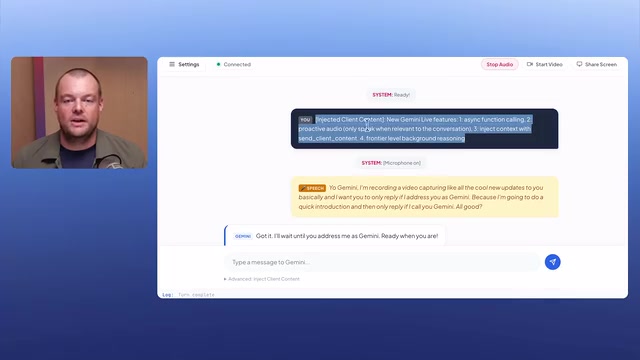
Gemini Live API Major Update: Frontier-Level Reasoning Comes to Native Audio for the First Time
Gemini Live API major update: Proactive Audio, context injection, async function calling, and frontier-level reasoning now available in native audio for voice AI.
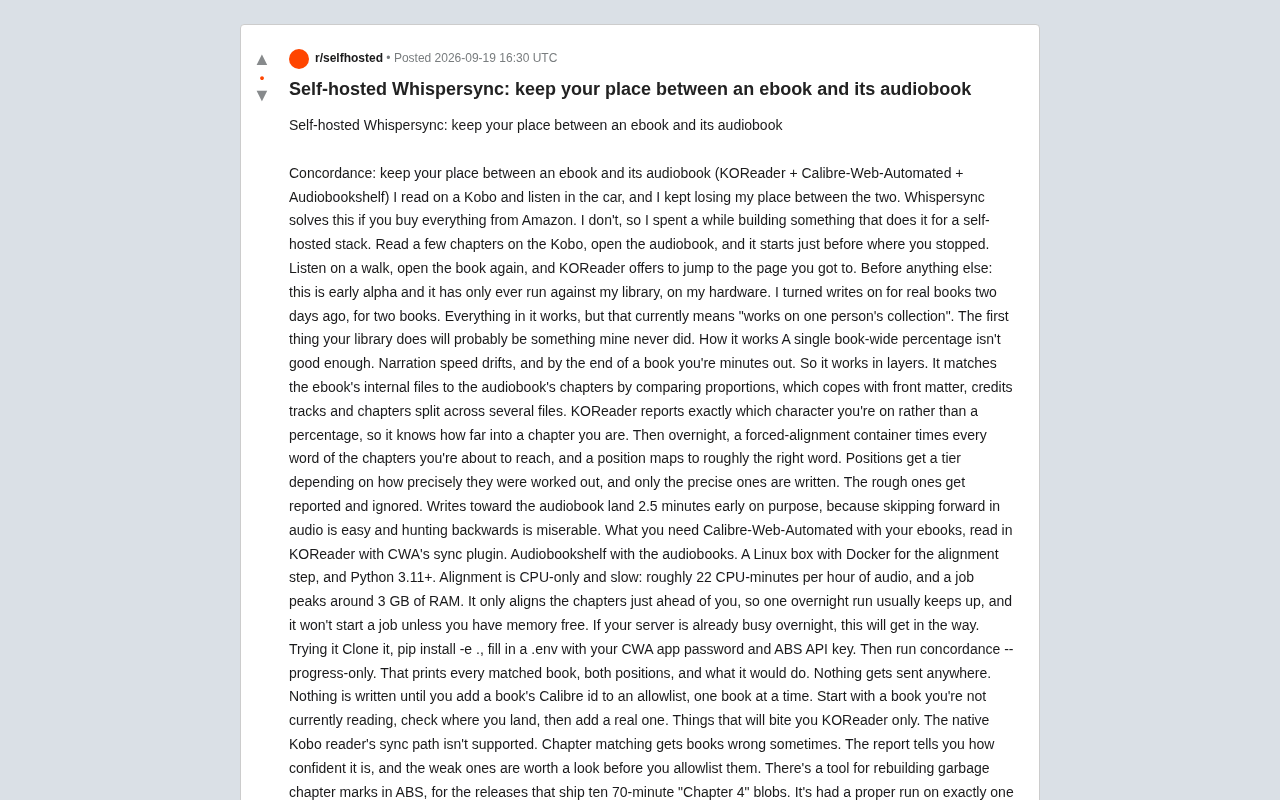
Self-Hosted Whispersync: Automatic Progress Sync Between E-Books and Audiobooks
Concordance is an open-source self-hosted Whispersync alternative that syncs e-book and audiobook progress using KOReader, Calibre-Web-Automated, and Audiobookshelf.
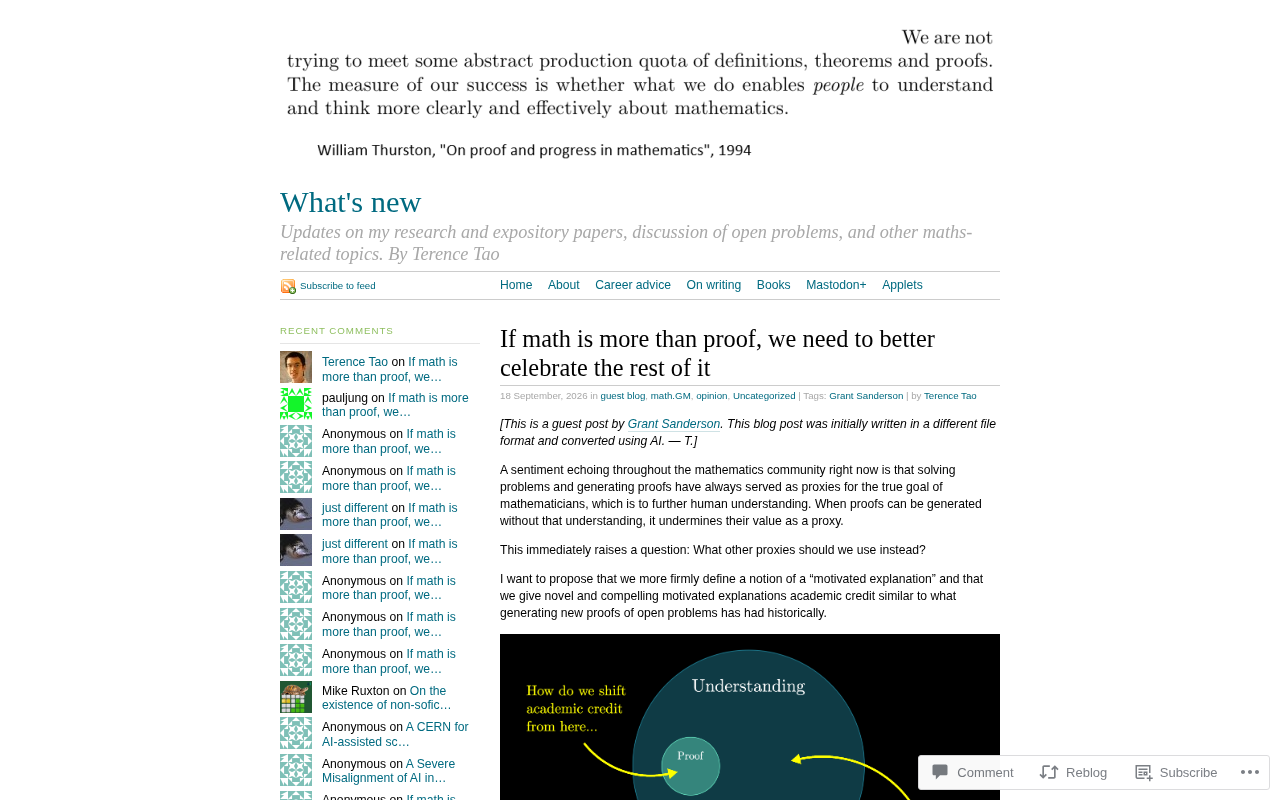
Terry Tao: Math Is More Than Proofs — How Should We Recognize Everything Else?
Fields Medal winner Terry Tao argues that math is far more than proofs — posing questions, building concepts, and conveying intuition matter too, especially as AI takes over routine verification.