Is AI Comic Drama Monetization Legit? A 4-Week Learning Path & Core Skills Breakdown

A structured 4-week learning path breakdown for AI comic drama creation and its transferable AIGC skills.
This article objectively analyzes the widely circulated 4-week AI comic drama learning plan, breaking down core skills including prompt engineering, dynamic camera language, viral content analysis, and full-process production. It evaluates whether this AIGC track is worth pursuing while providing actionable advice for beginners to avoid common pitfalls and build transferable AI content production capabilities.
Starting from Zero with AI Comic Dramas: Hype or Real Opportunity?
Recently, a flood of tutorials about "AI comic drama monetization" has appeared on Bilibili, claiming that ordinary people can earn four-figure daily income by creating dynamic comic short dramas with AI tools. While such content is often dismissed as marketing hype, setting aside the exaggerated income claims, AI comic dramas do represent a legitimate track in today's AIGC content production landscape.
AIGC (AI Generated Content) is the third content production paradigm following UGC (User Generated Content) and PGC (Professionally Generated Content). Since the explosion of AI illustration tools like Stable Diffusion and Midjourney in 2022, AIGC has expanded from static images into dynamic video. The emergence of AI video generation tools such as Runway Gen-2, Pika, and Kling has enabled non-professionals to create cinematic dynamic visuals. AI comic dramas are a direct product of this technological wave — they string together AI-generated static comic frames through dynamic processing into coherent short drama content, dramatically lowering the barriers and costs of traditional animation production.
For the vast majority of people looking to get started, the real obstacle isn't the tools themselves but the lack of a clear learning path. As the original video points out: many people "spend all day drowning in tutorial oceans, downloading a pile of random tools, tinkering for hours, yet can't even produce a single finished video ready for upload." This kind of ineffective spinning is precisely the trap that zero-experience learners most commonly fall into.
This article will objectively break down the skill system and learning logic of AI comic dramas based on this widely circulated "four-week learning plan," helping readers determine whether this path is worth pursuing and how to avoid common pitfalls.
The 4-Week AI Comic Drama Learning Plan: A Structured Path from Tools to Practice
The core value of this learning framework lies in its decomposition of a seemingly complex skill system into progressive stage-based goals. This structured approach is exactly what zero-experience learners need most.
Week 1: Master AI Illustration & Video Tool Fundamentals
The first phase focuses on familiarizing yourself with the complete interface and features of AI illustration and video software, and memorizing and practicing "core universal prompts." This step seems basic, yet it's where 90% of beginners get stuck.
Prompt Engineering is the foundation of the entire workflow — whether generating static images or dynamic shots, your ability to provide structured, precise prompts directly determines output quality. Specifically, prompt engineering refers to the technical method of guiding AI models to generate expected outputs through carefully designed text instructions. In the AI illustration domain, a high-quality prompt typically contains structured information across multiple dimensions: subject description, style definition, composition, lighting and atmosphere, camera angle, and more. For example, simply inputting "a girl" versus "a schoolgirl in uniform, side profile close-up, under cherry blossom trees, backlit, shallow depth of field, Makoto Shinkai style" produces vastly different results. Mastering structured prompt writing is essentially learning to precisely express creative intent in a language machines can understand — which is why it's considered one of the core literacies of the AI era.
Week 2: Develop Visual Aesthetics & Dynamic Camera Language
Week two focuses on style awareness, visual aesthetics, and dynamic camera language. This addresses the most common pain point among beginners — "the output looks stiff, lifeless, and lacks quality."
Dynamic camera language is a fundamental concept in film studies, encompassing basic camera movements like push, pull, pan, tilt, and tracking shots, as well as shot scale variations including close-ups, medium shots, and wide shots. In traditional animation, these require animators to draw frame by frame or render in 3D. In AI comic drama production, creators specify camera movements through prompts (e.g., "camera slowly zooms in," "dolly shot"), letting AI video tools automatically generate cinematic dynamic effects. Whether an image looks "stiff and lifeless" largely depends on whether the creator understands the narrative logic of camera language — when to use a close-up to intensify emotion, when to use a wide shot to establish environment. This judgment can only be developed through extensive viewing and practice.
The root of this problem is a dual deficiency in aesthetic judgment and prompt precision, which can only be overcome through extensive repetitive practice.
Week 3: Deconstruct Viral Comic Drama Works
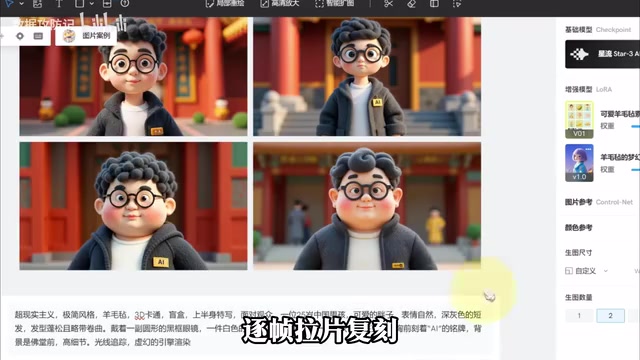
Week three introduces the "shot-by-shot analysis and replication" methodology: benchmarking and deconstructing quality works to understand the creative logic, editing rhythm, and traffic strategy behind viral comic dramas.
Shot-by-shot Analysis is a fundamental training method for film students, involving frame-by-frame or shot-by-shot analysis of excellent works' composition, editing, pacing, and narrative techniques. In the AI comic drama space, this means selecting works with strong platform performance data and systematically deconstructing each frame's likely prompt structure, the rhythm of shot transitions (viral short videos typically average 2-4 seconds per shot), how BGM pairs with visuals, and the hook design of the opening 3 seconds. The value of this methodology is that it allows learners to build intuitive judgment about "what constitutes good content" through imitation rather than creating from scratch.
This is the critical leap from "being able to make content" to "being able to make viral content." Simply mastering tool techniques isn't enough for monetization — understanding content distribution patterns and platform algorithm preferences is the truly scarce capability. Content platforms represented by Douyin and Bilibili universally employ a "traffic pool escalation" mechanism: new works are first tested for data performance within a small audience (completion rate, engagement rate, share rate), and advance to larger traffic pools once metrics meet thresholds. For AI comic dramas, this means the visual impact of the first 3 seconds (determining scroll-away rate), the overall pacing tightness (determining completion rate), and the emotional hook at the ending (determining engagement rate) all directly affect algorithmic recommendation. Pure technical ability is just the foundation; understanding distribution patterns is the dividing line between "being able to make content" and "being able to make hits."
Week 4: Complete an Independent Full-Process Production
The final week emphasizes independently completing the entire workflow from concept to finished product, producing your own original work. Running through a complete pipeline once is more valuable than repeatedly learning fragmented techniques.
What You're Really Mastering with AI Comic Dramas: Transferable Content Production Skills
The most noteworthy perspective in this framework is that what learners truly master isn't the single craft of "making comic dramas," but a complete set of AI content production capabilities.
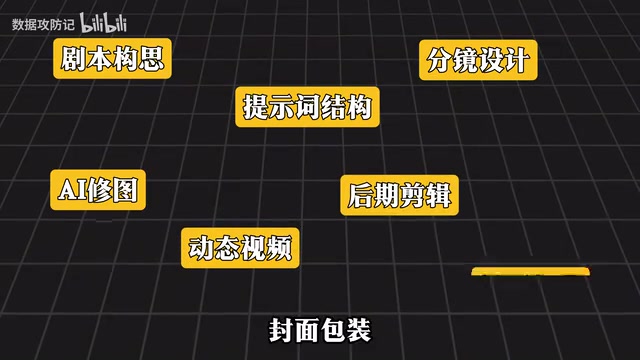
The video breaks these down into several independent hardcore skill modules:
- Script Conception: The skeleton of content that determines whether a work can attract viewers
- Universal Prompt Structure: The core variable determining AI generation quality
- Storyboard Design: The key to visual storytelling
- AI Image Editing & Dynamic Video Production: The technical execution layer
- Post-production Editing & Cover Design: The final touch affecting completion rates and click-through rates
This perspective is highly instructive. These capabilities are highly transferable — even without running an AI comic drama account, they can be applied to short video creation, content operations services, personal brand building, and many other monetization scenarios. In other words, the real return on learning is establishing "a complete closed loop for efficiently producing content with AI," rather than being locked into any single project.
An Objective View of AI Comic Drama Monetization: Opportunities and Pitfalls Coexist
It must be acknowledged clearly that this type of tutorial content inherently carries lead-generation and conversion intent. Statements like "four-figure daily income" and "ready for employment upon completion" are typical marketing rhetoric. Readers should maintain rational judgment and avoid setting income expectations too high.

However, one point from the video genuinely deserves agreement: "When ordinary people are starting out, never wait until you're 100% perfectly prepared. First learn the process, first produce a first-level work, first run through a complete monetization pipeline." This MVP (Minimum Viable Product) style action philosophy is especially important for content creators.
The MVP (Minimum Viable Product) concept originates from the Lean Startup methodology, systematically articulated by Eric Ries in The Lean Startup. Its core idea is: use minimal resources to quickly launch a verifiable product prototype, iterate rapidly through market feedback, rather than pursuing one-shot perfection. Applying this thinking to AI comic drama creation means creators shouldn't wait until their technique is fully polished before publishing work. Instead, they should complete a product that's "above passing grade" as quickly as possible, release it to the market, and optimize directionally based on data feedback (completion rate, like rate, comment content). Many successful content creators had early works far below their later quality standards — it was precisely this "publish-feedback-iterate" cycle that drove rapid growth.
Rather than endlessly deliberating among massive tutorials, it's better to complete your first work as soon as possible and iterate through practice.
Three Practical Tips for AI Comic Drama Beginners
- Focus on one toolset: Don't spread yourself thin. First master one or two AI illustration and video tools, avoiding the "tool collector" trap of diminishing returns.
- Prioritize prompt engineering skills: This is the foundational skill that runs through the entire workflow, offering the highest return on learning investment.
- Completion over perfection: Running through the full process once beats studying ten scattered tutorials.
Conclusion
As a niche track within the AIGC wave, AI comic drama monetization viability varies from person to person. However, the skill system it demands — prompt engineering, visual storytelling, content distribution — truly represents some of the most valuable digital capabilities today. For zero-experience learners, rather than agonizing over income myths, it's better to treat this structured path as a framework for systematically learning AI content production. What truly determines success or failure has never been talent — it's whether you're willing to push open that door and complete your first full practice run.
Related articles

Apple HomeView Hands-On Review: Is the $300 Smart Home Hub Worth It?
Apple HomeView hands-on: a $300 smart home hub with facial recognition for quick account switching, but no App Store or voice recognition. Is the wall-mounted version worth it? Should you buy the first generation?

Meta Muse Wonder Launch: What It Means for Meta's Return to the Frontier AI Race
Meta releases Muse Wonder and WonderFull, benchmarks reach the frontier, community feedback is polarized. An in-depth look at Meta's return to the frontier AI race, its personal agent strategy, and Zuckerberg's different path.

Apple Home Smart Home Lineup Leaked: LG and Schneider Team Up, UWB Door Lock on Board
Apple Home ecosystem gains new LG and Schneider devices: UWB smart lock with proximity unlock, 2.5K dual-camera doorbell, privacy indoor camera, and AirPods-like seamless pairing.