Is Bad News for Jensen Huang Also Bad News for the AI Industry?

Jensen Huang's deep entanglement with Nvidia amplifies single-point risk, but personal news does not equal an industry turn.
The article explores whether negative personal news about Jensen Huang transmits into bad news for the AI industry. The highly personalized bond between Huang and Nvidia is rare in tech; he is both CEO and the embodiment of the AI computing narrative, which brings strategic continuity and capital trust but amplifies single-point risk. Given Nvidia's core position in the AI supply chain, market sentiment spreads downstream, and the short-term answer leans toward "yes." However, the article stresses distinguishing personal controversy from fundamental shocks—the former affects sentiment, while only the latter changes the industry's pace. Tying the AI industry's health to one person is a fragile narrative; the rational approach is to focus on verifiable indicators like computing supply and demand, enterprise adoption rates, and inference costs.
Jensen Huang, founder of Nvidia, is now seen as a bellwether for the AI industry in everything he does. Recently, a pointed question has been raised: "Jensen Huang is Nvidia, right? The entire economy is betting on Nvidia." This quote comes from a discussion that touches the most sensitive nerve in the current AI boom—when a company's fate is deeply intertwined with the expectations of an entire industry, any negative news about its leader could trigger a chain reaction.
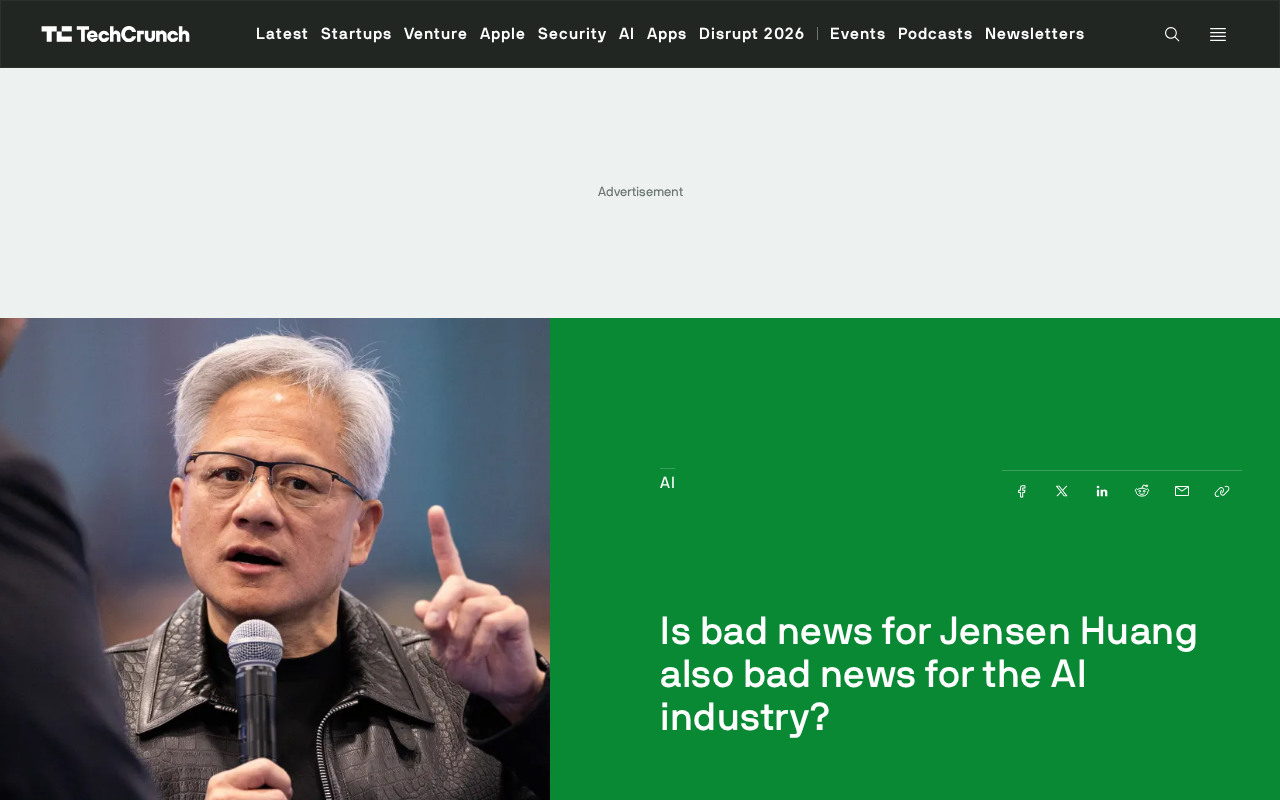
Jensen Huang and Nvidia: A Rare Overlap of Personal Brand and Corporate Fate
The bond between Jensen Huang and Nvidia is extremely rare in the tech world. He is not only the company's CEO but also the embodiment of the AI computing narrative. From GPU architecture iterations to the construction of the CUDA ecosystem, Huang's personal judgments and public statements often directly sway market sentiment. The phrase "Jensen Huang is Nvidia" in the original is not hyperbole but an accurate summary of reality.
This highly personalized leadership structure has its advantages: strategic continuity, strong brand recognition, and concentrated capital market trust. But it also amplifies single-point risk. When investors and analysts view Nvidia as the "infrastructure" of the AI industry, any doubt about Huang personally—whether about strategic direction, management style, or external controversies—gets magnified into concerns about the entire AI industry's prospects.
The CUDA ecosystem is key to understanding Nvidia's moat. CUDA (Compute Unified Device Architecture) is a parallel computing platform and programming model launched by Nvidia in 2006, allowing developers to directly call thousands of GPU cores for general-purpose computing using languages like C/C++. After nearly two decades of accumulation, CUDA has millions of developers and a large number of scientific computing libraries (such as cuDNN and TensorRT), creating extremely high switching costs. Competing chips, even with similar hardware specs, must rebuild the software stack or rely on compatibility layers. This is why Huang repeatedly emphasizes that "Nvidia is a software company," and it also explains why his personal judgments can directly influence the ecosystem's direction.
Why Bad News for Jensen Huang Transmits to the AI Industry
The core of the transmission mechanism lies in Nvidia's position in the AI supply chain. From large model training to inference deployment, the vast majority of AI workloads depend on Nvidia GPUs. Cloud providers, startups, and even competitors' chip designs all reference Nvidia's product roadmap to varying degrees.
When Huang faces negative news, the market first reacts in Nvidia's stock price and valuation expectations. Then this uncertainty spreads downstream along the supply chain: enterprise customers may delay computing power procurement decisions, investors may reassess the return cycle of AI infrastructure projects, and startups may face a tougher financing environment. The question raised in the original—"Is bad news also bad news for the AI industry?"—leans toward "yes" in terms of short-term sentiment.
But two scenarios need to be distinguished: controversies targeting the individual versus shocks to the company's fundamentals. The former mainly affects market sentiment and narrative, while only the latter truly changes the industry's pace. Confusing the two can easily lead to overreaction.
The computing power difference between training and inference is important context for understanding the transmission mechanism. Training refers to adjusting model parameters with massive data, typically requiring large-scale GPU clusters running for long periods, with extremely high demands on computing density and interconnect bandwidth; inference refers to processing user requests after the model is deployed, focusing more on latency, cost, and energy efficiency. Nvidia holds absolute dominance in the training market, but in inference scenarios, ASICs, FPGAs, and cloud providers' custom chips have greater room for substitution. Therefore, negative news about Huang has a more direct impact on procurement decisions of training-side customers, while transmission on the inference side is relatively mild. This distinction helps assess the actual scope of impact of the news.
The Risks of Over-Personalized Narratives and Reflections
Tying the health of the entire AI industry to one person is itself a fragile narrative structure. Nvidia's success is built on thousands of engineers, long-term technological accumulation, and ecosystem barriers. Jensen Huang is the symbol of this system, but not the whole of it. Similarly, the AI industry's development is driven by algorithmic breakthroughs, data resources, application deployment, and the regulatory environment. News about a single leader should not be the sole coordinate for judging the industry's direction.
For content creators and investors, a more rational approach is to focus on verifiable industry indicators: changes in computing supply and demand, enterprise AI adoption rates, and inference cost trends, rather than concentrating excessively on personal news. The value of the original question lies in reminding us to examine this binding relationship, not in providing a black-and-white conclusion.
Frequently Asked Questions
Will negative news about Jensen Huang directly cause a recession in the AI industry?
Not directly. Short-term market sentiment may be affected, but the industry's direction depends on technology deployment and commercial returns. The impact of personal news is more of an emotional disturbance.
Is Nvidia's position in the AI industry irreplaceable?
Currently Nvidia dominates the training computing power sector, but competitors are catching up, and chip choices for inference scenarios are more diverse. In the long run, ecosystem barriers are harder to replace than a single product.
One-line Summary
Jensen Huang's deep entanglement with Nvidia amplifies single-point risk, but personal news does not equal an industry turn.
Paragraph Summary
The article explores whether negative personal news about Jensen Huang transmits into bad news for the AI industry. The highly personalized bond between Huang and Nvidia is rare in tech; he is both CEO and the embodiment of the AI computing narrative. This structure brings strategic continuity and capital trust but amplifies single-point risk. Because of Nvidia's core position in the AI supply chain, market sentiment spreads downstream, and the short-term answer leans toward "yes." However, the article stresses the need to distinguish personal controversy from fundamental shocks—the former affects sentiment and narrative, while only the latter changes the industry's pace. Tying the AI industry's health to one person is a fragile narrative; the rational approach is to focus on verifiable indicators such as computing supply and demand, enterprise adoption rates, and inference costs.
Related articles
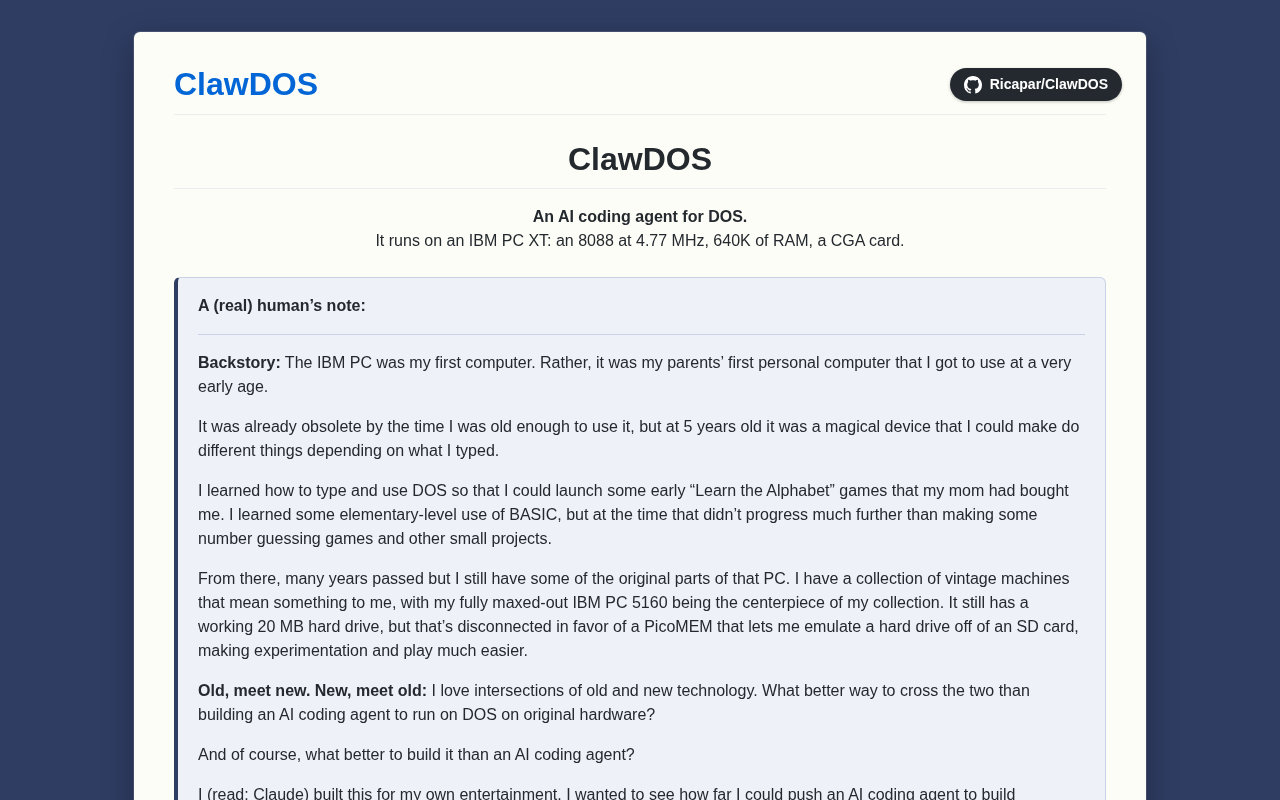
ClawDOS: Bringing AI Coding Capabilities to DOS
ClawDOS is an AI coding agent project for DOS, exploring the possibility of bringing AI coding assistance into resource-constrained retro computing environments. This article analyzes its positioning, use cases, and community response.

Baseten Releases Bison-1 and Groundhog-1, Topping the Decision Model Leaderboard
Baseten releases open-weight decision models bison-1 and groundhog-1 built on Gemma 4; bison-1 scores 76 on the AA Decision Index v2.1 to top the leaderboard. Both support 128k context and image input—here we analyze their capability combination, benchmark significance, and selection advice for developers.

Cline CLI v3.0.75 Released: Yolo Mode Now Default for One-Shot Runs
Cline CLI v3.0.75: one-shot runs now default to yolo mode, --timeout and Ctrl+C can interrupt the first round, read_files is no longer truncated to 8k chars, plus reasoning parameter fixes and 94 new providers.