Is Closed-Source AI More Dangerous Than Open-Source AI? A Debate About the Nature of Security
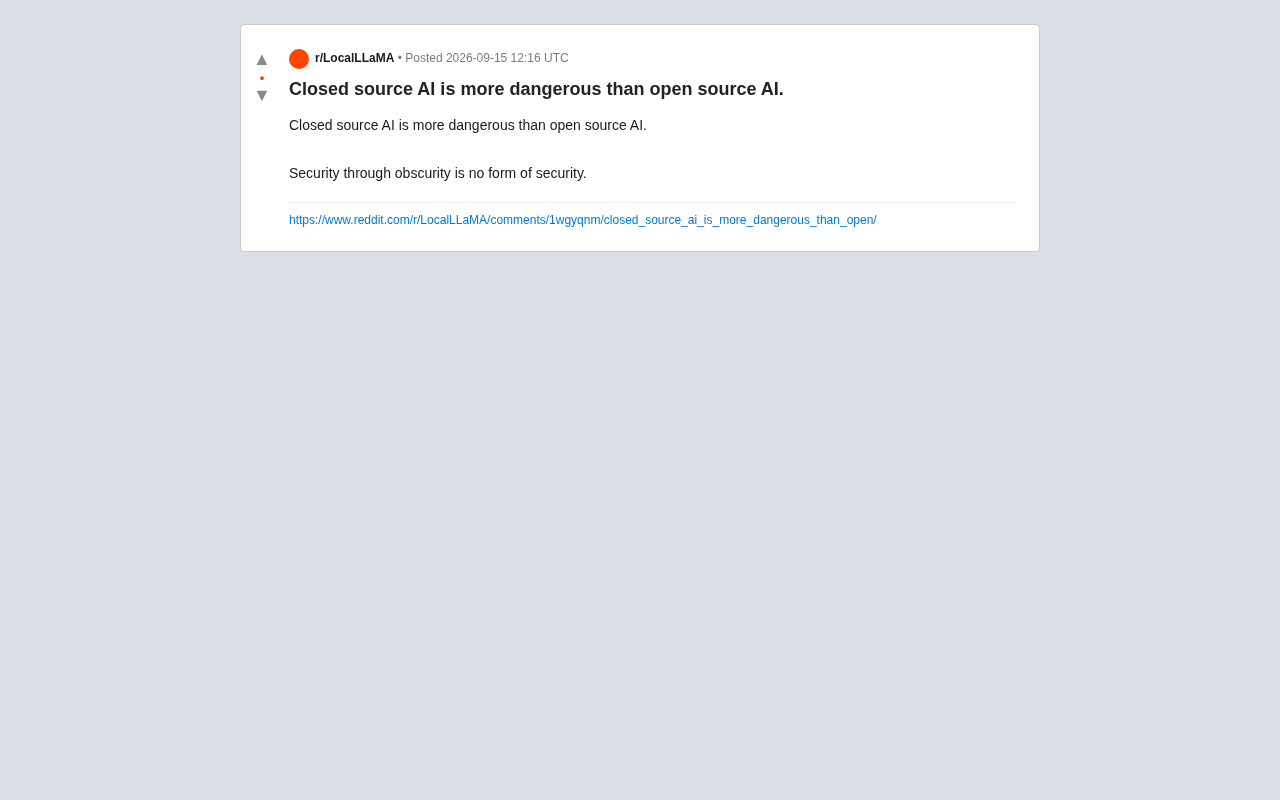
Is closed-source AI safer than open-source? A Reddit debate exposes the core tension between transparency and control in AI governance.
A Reddit post invoking the security maxim "obscurity is not security" sparked debate over whether closed-source or open-source AI poses greater risks. Open-source advocates cite the "many eyes" principle for faster vulnerability discovery, while critics note that once model weights are public, they can't be recalled and safety guardrails can be stripped — unlike traditional software. The article explores tiered release and third-party audits as potential middle grounds, concluding there's no universal answer.
A Repeatedly Debated Argument
On Reddit, a short but highly controversial post sparked a debate about AI safety: "Closed source AI is more dangerous than open source AI." The author backed this claim with a well-worn maxim from the information security world — "Security through obscurity is no form of security."
The phrase itself isn't new. It stems from long-standing consensus in cryptography and cybersecurity. But when applied to today's increasingly powerful large language models and generative AI, it touches on a core controversy that remains unresolved: Does making model weights, training data, and architecture publicly available make the world safer — or more dangerous?
Why "Security Through Obscurity" Gets a Bad Rap
"Security through obscurity" refers to the practice of relying on the fact that outsiders don't know how a system works in order to protect it. Security experts widely regard this as fragile: once internal details leak or are reverse-engineered, the entire defense collapses instantly. Truly robust security should be designed so that even if an attacker fully understands the system's mechanics, it remains difficult to breach — like a publicly known encryption algorithm paired with a secret key.
Mapped onto AI, proponents of open source argue that the "security" of closed-source models relies heavily on the outside world not being able to see their internal structure, training data origins, or potential flaws. This opacity ends up concealing risk — the causes of bias, vulnerabilities, and harmful outputs cannot be audited or fixed by external researchers.
The Case for Open Source Being Safer
The open-source camp's central argument is the "many eyes" principle: many eyes make bugs shallow. When a model is fully public, researchers, white-hat hackers, and independent organizations worldwide can examine its behavior, identify problems, and propose fixes. Vulnerabilities exposed in the open tend to get patched faster.
This logic has been validated repeatedly in traditional software. Critical infrastructure like Linux and OpenSSL built their reputations on open scrutiny. Open-source advocates argue AI should be no different: putting decision-making processes and weights in the hands of the community reduces the uncontrollable risks of "black boxes" and prevents a handful of companies from monopolizing the interpretation and control of powerful models.
The Opposing Concerns Are Just as Real
Yet this view is far from settled. Critics point out a fundamental difference between AI and traditional software: once powerful model weights are released publicly, anyone can download, fine-tune, and strip away safety guardrails to generate misinformation, malicious code, or other harmful content — and there's no taking it back. Traditional software vulnerabilities can be patched, but open-source model weights that have already spread are virtually impossible to "recall."
This means the "security through obscurity" maxim may not translate cleanly to AI. Publishing an encryption algorithm is safe because the key remains secret; but a model with public weights has its capabilities as the very thing being released — there's no equivalent of a "key" left to provide protection. This is precisely why the open-source versus closed-source debate resists easy conclusions.
Real-world cases have reinforced these concerns. After Meta released the LLaMA model series, the weights spread widely via BitTorrent and similar channels within days, and researchers quickly demonstrated how to remove the original safety filters on consumer-grade hardware. By contrast, closed-source models constrain usage through API access controls, rate limits, and behavioral monitoring — and even when misused, traceable logs remain. This "asymmetry" represents the most fundamental divergence between open-source AI and open-source traditional software: open-source code helps attackers find vulnerabilities, while open-source model weights directly hand attackers the capabilities themselves. Some scholars have therefore introduced the concept of the "dual-use dilemma" — the same weight file is both a researcher's experimental material and a potential weapon for malicious actors, with no technical means to separate the two use cases.
The Real Question Behind the Controversy
This Reddit post resonated because it strikes at the most intractable tension in AI governance: the trade-off between transparency and controllability.
- Transparency brings the benefits of auditability, trustworthiness, and decentralization;
- Controllability attempts to prevent misuse by restricting access.
It's worth considering that the two aren't necessarily in complete opposition. The industry is exploring middle-ground approaches — such as publishing model architectures and evaluation results while releasing weights in tiers, establishing responsible disclosure mechanisms, and using third-party audits to balance transparency with safety.
No single maxim can resolve this debate, but it reminds us that any argument using "keeping it closed means it's secure" deserves scrutiny — is that security genuinely real, or does it merely rest on the assumption that no one is looking?
Tiered release is one of the most widely discussed compromise approaches. The basic idea is to classify model capabilities into different risk levels: architecture papers and evaluation benchmarks are fully public to ensure academic transparency; medium-scale weights are made available to identity-verified research institutions; and the strongest versions of weights are only accessible via controlled APIs, or not released externally at all. Organizations like Anthropic and Google DeepMind have already practiced similar "Responsible Scaling Policies" internally, attempting to decouple transparency from access control — letting the outside world understand a model's capability boundaries and evaluation methods without necessarily opening up the weights themselves. Third-party auditing offers another path: independent organizations can review model internals under confidentiality agreements and then publish summary reports to the public, achieving a degree of external oversight without fully releasing weights.
Closing Thoughts
Though brief, this Reddit discussion precisely surfaces a central question of the AI era. Whether closed-source or open-source AI is more dangerous likely has no universal answer — it depends on a model's capability level, deployment context, and the governance mechanisms surrounding it. What may matter most isn't rushing to pick a side, but continuing to ask: What, exactly, is the "security" we're relying on actually built upon?
Related articles
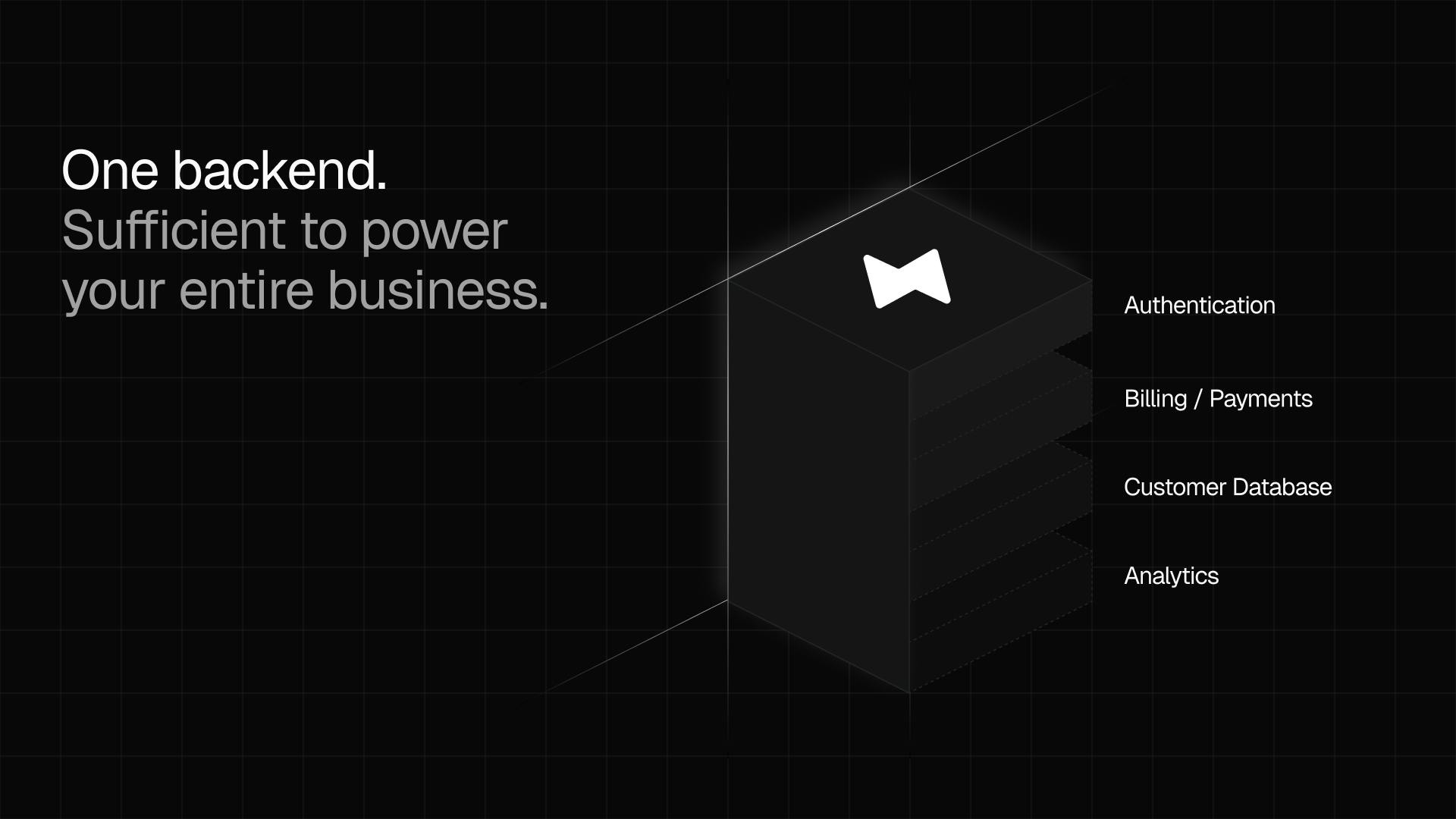
tiun.: An All-in-One Auth and Payments System Built for AI Developers
tiun. topped Product Hunt by giving AI developers auth, payments, billing, customer data, and analytics in one system — installable with a single command.

Axari: Let Your AI Twin Take Over the Mundane Work of Security Operations
Axari introduces an AI twin for SecOps teams, autonomously handling alerts, compliance checks, and repetitive tasks directly within Slack and Microsoft Teams.
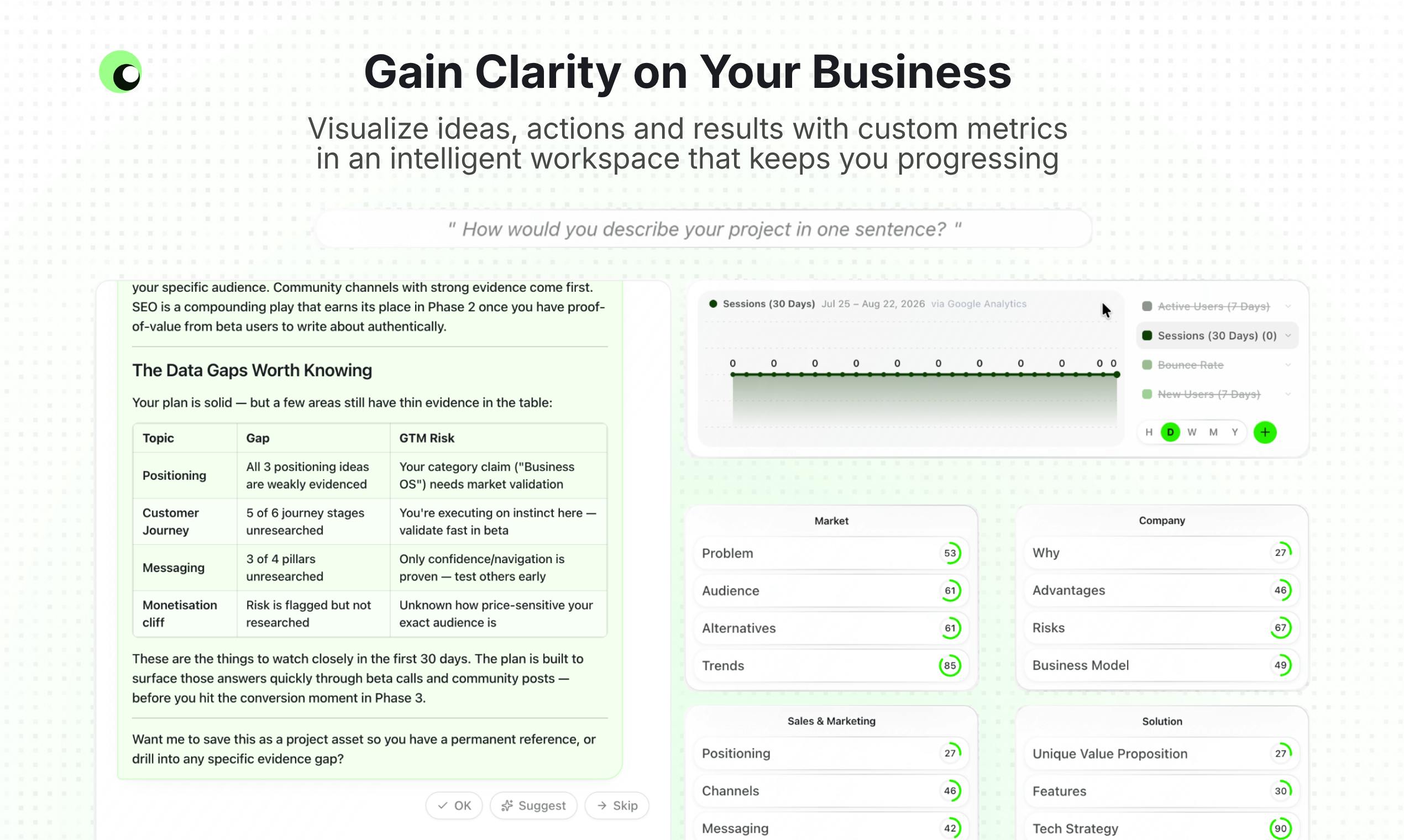
siift: Turning AI Startup Noise into Actionable Business Decisions
siift is an AI startup decision tool that turns scattered AI conversations and advice into a living business map — covering validation, GTM, and growth.