Is Cursor at 75% Off Legit? Security Risks of Shared Account Pools Explained
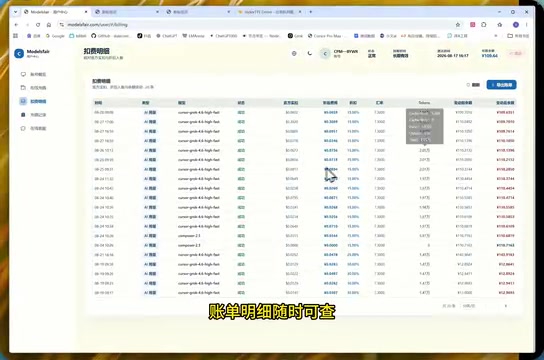
Cheap Cursor shared account services hide serious security, compliance, and financial risks.
This article examines discounted Cursor subscription services promoted on platforms like Bilibili that use shared account pools and pay-per-token billing. It reveals how these gray-market services violate Cursor's terms of service, expose users' code and API keys to third-party interception risks, and offer no real billing transparency. The article recommends official subscriptions, open-source alternatives like Continue and Cline, or locally deployed models as safer, more reliable options.
The Truth Behind "Cursor at 75% Off" Promotions
Recently, platforms like Bilibili have seen a surge of promotional content using clickbait titles like "Grok 4.6 is amazing" and "Official Cursor subscription at 75% off." These videos aren't really about introducing AI tools — they're selling a so-called "Cursor renewal service" that lets users access Cursor at 75–90% off the official price through pay-per-use billing and shared legitimate Pro accounts.
As tech content creators, we need to take a clear-eyed look at how these "discounted access" services actually work. On the surface, it seems like a great deal. But when you examine technical compliance, account security, and long-term reliability, the hidden risks far outweigh the advertised "savings."
How Shared Cursor Account Services Work
Based on the promotional content, the core model of these services can be summarized in three points:
- Shared Account Pool: The platform bulk-purchases or registers a large number of Cursor Pro accounts, and when users connect, the system "intelligently allocates" an active Pro account.
- Pay-per-Use Billing: Instead of selling fixed-term monthly or quarterly plans, users are charged based on actual token consumption, with the promise that "your balance never expires."
- Account Rotation: The videos mention that "the system detects inactivity and releases idle account resources" and "when one account's quota is exhausted, it automatically switches to a backup account."
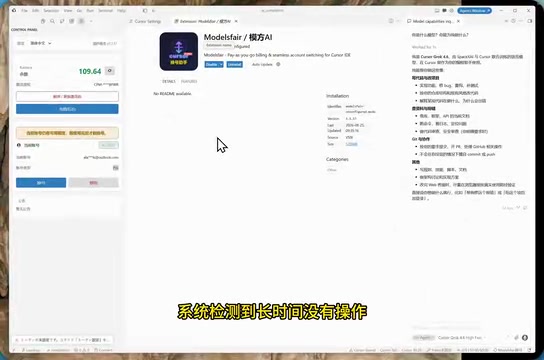
To understand how these services operate, you need to grasp two core concepts. An "Account Pool" is a common resource-scheduling architecture in gray-market services, similar to how early VPN account sharing or Netflix account splitting worked — the platform maintains a batch of paid accounts and dynamically assigns them to end users through a middleware layer. As for "pay-per-token billing," a token is the basic unit of text processing for large language models. In models like GPT-4 and Claude, one English word typically corresponds to 1–2 tokens, while one Chinese character is roughly 1.5–2 tokens. Cursor Pro's official subscription essentially includes API call quotas for underlying AI models (such as Claude Sonnet, GPT-4o, etc.), and these model API calls are inherently priced per token. Shared service providers are essentially arbitraging the spread between wholesale and retail prices, similar to how MVNOs (Mobile Virtual Network Operators) work in the telecom industry.
In other words, you don't own a stable account — you're dynamically assigned one from a large account pool. The promoters emphasize that topping up 100 RMB gives you the equivalent of 1,000 RMB in credits, roughly 137 USD in official value, making the price advantage seem obvious. But the key question here is: Where do these legitimate accounts come from? And why can they be supplied in bulk at such low prices?
Does "No Client Modification" Equal Safe?
The promotional content repeatedly emphasizes two selling points: first, "the Cursor application itself is never modified in any way," and second, "you can cross-reference consumption with the official dashboard for full transparency."
This messaging is designed to alleviate concerns about "cracked versions." Indeed, if they're only sharing login credentials without modifying the client, users can theoretically follow official one-click updates. But "no client modification" does not equal "compliant and safe," for three reasons:
Shared Accounts Violate Cursor's Terms of Service
The vast majority of SaaS products explicitly prohibit account sharing and resale in their user agreements. SaaS (Software as a Service) is the dominant software delivery model today, with a business model built on per-seat or per-user pricing. Anysphere, the company behind Cursor, like virtually all mainstream SaaS products, requires that accounts be used exclusively by the registered user. Bulk purchasing and multi-user rotational sharing fundamentally constitute a terms-of-service violation and can trigger account suspension at any time.
SaaS platforms typically employ multiple risk-control measures to detect abnormal usage: frequent IP address changes, inconsistent device fingerprints, rapid logins from different geographic locations, unusual API call patterns, and more. Once these risk thresholds are triggered, the platform can unilaterally terminate service without issuing a refund. Historically, consumer subscription services like Netflix and Spotify have conducted large-scale crackdowns on account sharing, and developer-facing B2B tools (such as GitHub Copilot and JetBrains IDEs) typically enforce even stricter compliance monitoring due to intellectual property and enterprise data security concerns. The promise of "balance never expires" could instantly become worthless if the platform's account pool faces mass bans.
Your Code May Pass Through Third-Party Infrastructure
Although the promoters deny any "API relay or data tampering," shared accounts inevitably require centralized session management. What developers type into Cursor is often core business logic, API keys, and internal architecture details. When accounts are centrally managed by a third-party platform, you have no way to verify that your data truly hasn't passed through an intermediary. For enterprise developers, this is an unacceptable information security risk.
The core security concept at play here is Session State management. When a user logs into Cursor, the client obtains a set of authentication tokens (Access Token/Refresh Token), and all subsequent API requests carry these tokens to communicate with the server. In a shared account scenario, the third-party platform must centrally manage these tokens — whether through an OAuth proxy, cookie injection, or custom authentication middleware, it means the user's credentials pass through an unofficial third party. In cybersecurity, this represents a classic "supply chain attack" risk surface. More critically, Cursor as an AI-assisted programming tool works by sending the user's current code context to a backend large language model for analysis and completion. This means that code snippets, internal system architecture descriptions in comments, hardcoded API keys, and other sensitive information could all be intercepted or logged by intermediaries in the transmission chain. The 2023 incident where Samsung employees leaked confidential chip source code through ChatGPT is a real-world example of exactly this kind of risk.
"Transparent Billing" Lacks Independent Verification
The promoters showcase detailed consumption dashboards, including total token usage, official base unit prices, and remaining balances.

However, this data is generated and displayed entirely by the platform itself. Users have no way to truly "cross-reference" it with Cursor's official dashboard — because the account isn't in your hands. The so-called "public billing records" are more of a trust-building marketing tactic than independently auditable evidence.
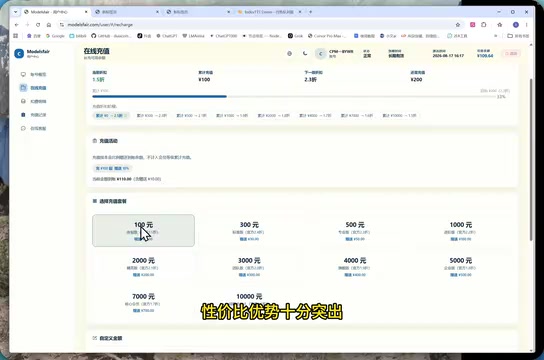
Comparison with Xianyu Cursor Accounts: Same Gray-Market Category
The videos deliberately contrast their service with "buying a Cursor account on Xianyu for 50–60 RMB," emphasizing that the latter comes with fixed expiration dates, quotas that reset to zero, and high ban rates. This comparison actually exposes a shared industry problem: Whether it's individual accounts from Xianyu or platform-managed account pools, they're all gray-market methods that circumvent official subscriptions.
The platform's claimed advantages — credits that never expire, automatic rotation, zero waste — all depend on the uncertain premise that "the account pool can operate stably over the long term." Once the official platform tightens risk controls, bans bulk accounts, or the service provider disappears, users' prepaid balances face the risk of becoming worthless. By comparison, individual Xianyu accounts are at least a one-time small investment, while the platform's top-up model encourages users to "add 100 RMB for bonus credits," which actually amplifies the risk of losing prepaid funds.
Practical Advice: The Right Way to Subscribe to Cursor
For users who genuinely rely on Cursor for daily development, here's our advice:
- Choose the official subscription first: Cursor's official Pro plan costs about $20/month. While it's more expensive than "75% off," it offers account stability, data security, no ban risk, and immediate access to official technical support.
- Be wary of prepaid top-up models: Any third-party service that requires large upfront deposits and promises "balances that never expire" should be treated with extreme caution. Your funds are not guaranteed.
- Enterprise users must never use shared accounts: In any development scenario involving commercial code, you should never hand over your authentication state to a third-party platform.
- Take advantage of free tiers and open-source alternatives: If budget is tight, look into Cursor's free tier, or try open-source AI coding plugins like Continue or Cline with your own API keys — costs are controllable and data remains entirely in your hands.
The AI-assisted programming tool ecosystem has matured into a multi-tiered landscape. On the commercial side, beyond Cursor, GitHub Copilot ($10–19/month), Windsurf (formerly Codeium), and Amazon CodeWhisperer all offer varying levels of free usage. Among open-source alternatives, Continue is an open-source VS Code/JetBrains plugin that lets users connect to any LLM API (including OpenAI, Anthropic, locally deployed Ollama models, etc.) to achieve code completion and chat functionality similar to Cursor. Cline (formerly Claude Dev) focuses on agent-style autonomous programming, supporting automatic file read/write and terminal command execution. Using these open-source tools with your own API keys requires some setup effort, but your data flows entirely through your own infrastructure, and you pay only for actual API usage — often cheaper than any subscription plan for moderate or light users. Additionally, locally deployed open-source models (such as DeepSeek Coder, CodeLlama, Qwen2.5-Coder, etc.) combined with sufficient GPU compute can even enable completely offline AI programming assistance, eliminating any possibility of data leakage.
Conclusion
Titles like "Grok 4.6" and "75% off" are essentially packaging account-sharing services with trending model names and low-price bait. The value of technical tools lies in serving productivity stably and securely — not in constantly gambling in gray areas over whether your account will get banned. The subscription fees you save today could easily cost you double through data breaches or wiped balances.
For developers, choosing legitimate channels is the most responsible thing you can do for your code and your productivity.
Related articles
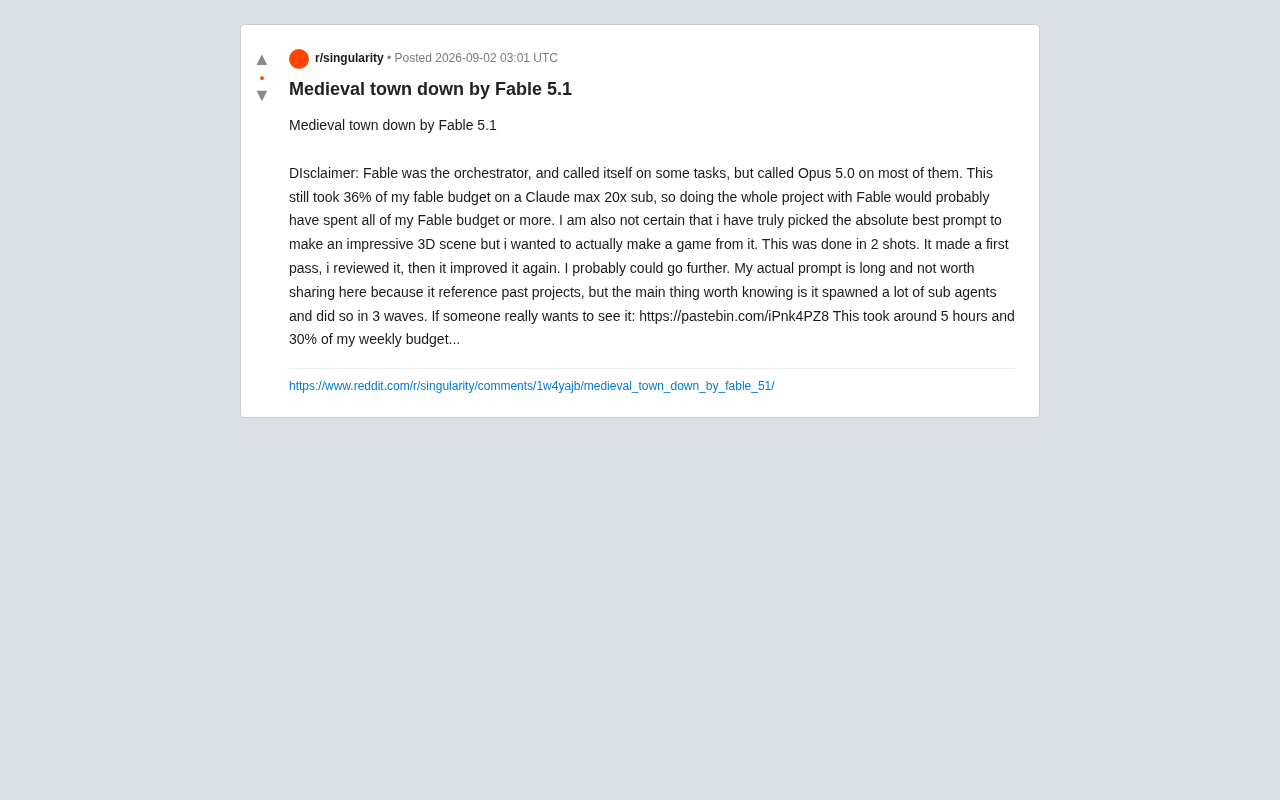
Fable 5.1 Real-World Test: The Truth About Generating a Medieval 3D Town in 5.5 Hours — Results and Costs
A Reddit developer tests Fable 5.1 generating a full medieval 3D town, revealing multi-wave sub-agent coordination, two-round iteration, and 5.5 hours consuming 30% of weekly budget.

The Truth Behind AI Agent Memory System Failures in Production: Seven Pain Points and Governance Strategies
An in-depth analysis of 7 critical issues AI Agent memory systems face in production, including stale info, entity deduplication, and memory bloat, with practical governance strategies.
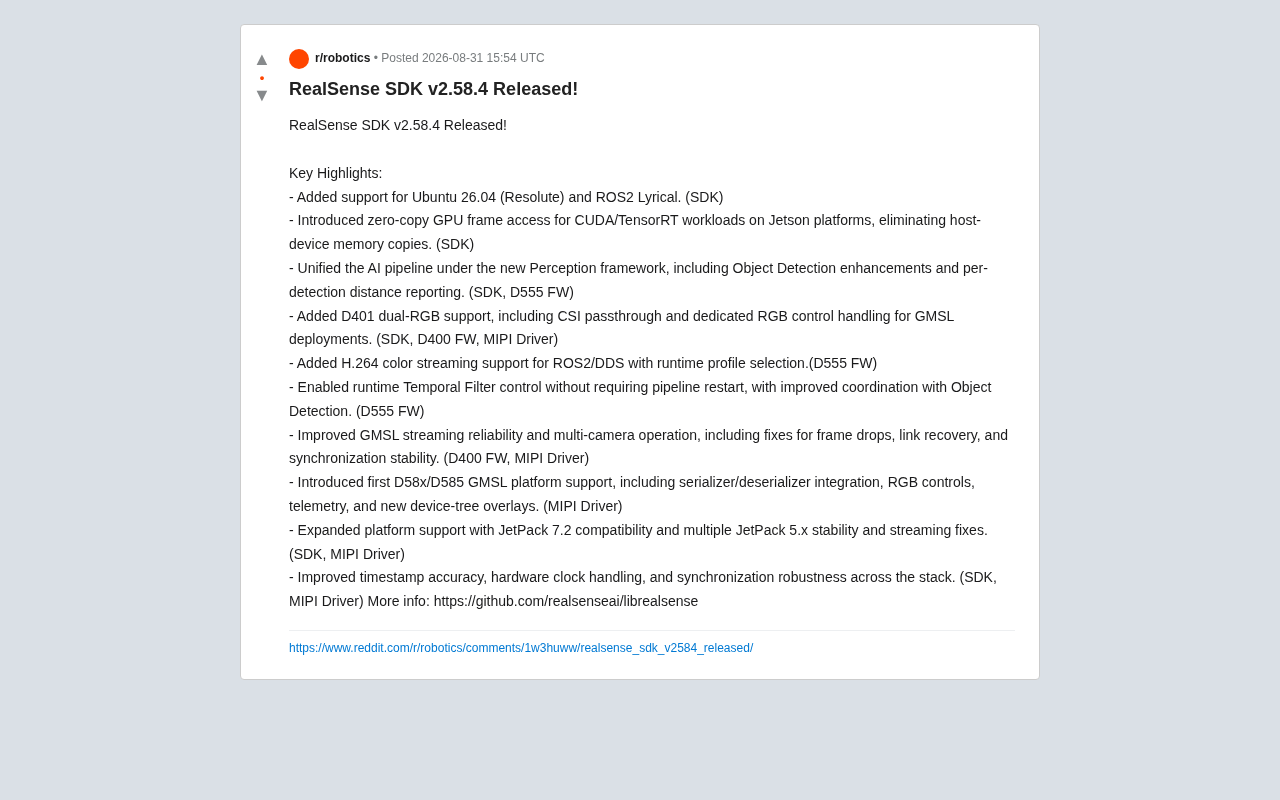
RealSense SDK v2.58.4 Released: GPU Zero-Copy and AI Perception Framework Major Upgrade
RealSense SDK v2.58.4 introduces GPU zero-copy frame access for Jetson, unified Perception AI framework, per-detection distance reporting, GMSL multi-camera support, and ROS2 H.264 streaming.