The Truth Behind AI Agent Memory System Failures in Production: Seven Pain Points and Governance Strategies
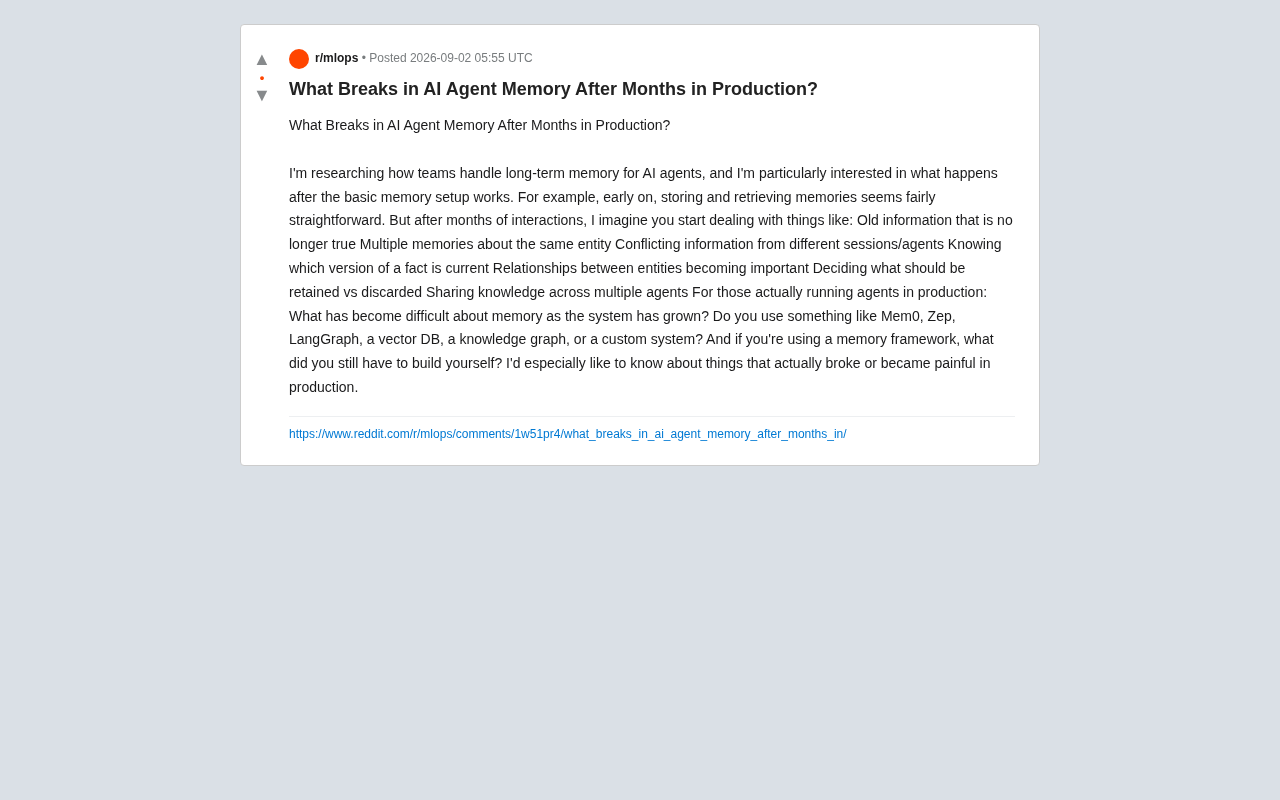
Why AI Agent memory systems break in production and how to govern them for long-term reliability.
AI Agent memory systems often work well in demos but deteriorate after months in production. This article examines seven critical pain points — stale information, entity deduplication, memory bloat, and more — while analyzing the limitations of tools like Mem0, LangGraph, and knowledge graphs. It argues that memory governance, not storage, is the real engineering challenge and recommends hybrid architectures combining vector retrieval with knowledge graphs.
Introduction: What Happens After Your Memory System Has Been Running for Months
Building a memory feature for an AI Agent often looks effortless during the demo stage. You embed conversation content into a vector database, retrieve it when needed, and everything runs smoothly. But the real challenges typically surface months later — once the system has accumulated thousands of interactions, memories start becoming chaotic, contradictory, and even harmful.
A recent Reddit discussion about "What Breaks in AI Agent Memory After Months in Production" struck a chord with many practitioners. The question cuts to the heart of an underestimated engineering challenge: storing memories is easy; governing them is the real nightmare. This article systematically examines these pain points and analyzes the limitations of current mainstream memory solutions.
Seven Fractures in Production Memory Systems
Stale Information and Fact Timeliness
One of the most critical problems facing Agent memory systems is: how do you know which version of a fact is currently valid?
Imagine a customer service Agent that recorded "lives in Beijing" three months ago, and last week the user mentioned they "moved to Shanghai." If the memory system simply stores and retrieves, it might return both contradictory pieces of information simultaneously. Worse still, vector retrieval is based on semantic similarity and doesn't inherently understand the concept of "more recently updated."
To understand the technical root of this problem, you need to understand how vector databases work. A vector database is a system specifically designed for storing and retrieving high-dimensional vectors. In AI Agent memory scenarios, text content is converted into high-dimensional numerical vectors through an Embedding Model, and these vectors capture the semantic information of the text in mathematical space. During retrieval, the system similarly converts the query into a vector and finds the semantically closest historical records using metrics like cosine similarity or Euclidean distance. This approach can understand content that is "similar in meaning" rather than relying solely on keyword matching. However, vector space is inherently dimensionless in terms of time — it only knows whether two pieces of text are "similar," not which one is newer or which one is outdated.
This means vector databases alone cannot solve the timeliness problem. You need to additionally build version management, timestamp ordering, and even proactive "memory invalidation" mechanisms — determining when a piece of old memory should be flagged as expired.
Entity Deduplication and Information Conflicts
When a system runs long enough, memories about the same entity (user, project, product) become scattered across dozens or even hundreds of records. This creates two derivative problems:
- Duplicate memories: The same fact gets stored repeatedly, consuming precious context window space during retrieval. A large language model's context window refers to the maximum number of tokens the model can process in a single inference pass, where a token roughly corresponds to a word or a few characters. Current mainstream models have context windows ranging from a few thousand to hundreds of thousands of tokens, but larger windows mean higher inference costs, and the model's attention to the middle portions of very long contexts degrades — a phenomenon known as "Lost in the Middle." Therefore, every redundant memory crammed into the context consumes valuable token budget, dilutes truly important information, and directly impacts the model's output quality.
- Conflicting information: Memories generated across different sessions or different Agents contradict each other. For example, Agent A believes a task is completed, while Agent B records it as still in progress.
Solving these problems requires Entity Resolution capability — recognizing that "these memories are about the same thing" and merging or adjudicating conflicts. Entity Resolution is a classic problem in data management and knowledge engineering, with the core task of determining whether different data records refer to the same entity in the real world. In traditional database domains, this problem has been studied for decades, with common approaches including rule-based matching, probabilistic matching, and more recently, machine learning methods. In AI Agent memory systems, entity resolution becomes even harder: memories exist as unstructured natural language, and the same entity may be referenced with different names or in different contexts (for example, "Director Zhang," "Zhang Ming," and "our CEO" might all be the same person). This requires combining semantic understanding with structured reasoning — vector similarity alone cannot reliably accomplish this, as it far exceeds the capability boundaries of general vector retrieval.
Memory Retention and Forgetting Decisions
Human memory naturally forgets insignificant details, but AI Agents default to "remembering everything." As the memory store bloats, retrieval quality actually decreases — noise drowns out the signal.
Therefore, production-grade memory systems must answer an engineering question with philosophical undertones: what should be kept, and what should be discarded? This requires scoring memory importance, setting decay strategies, or introducing some form of "memory compression" mechanism that distills numerous granular interactions into high-level summaries.
Mainstream Solutions and Their Boundaries
How Much Can Off-the-Shelf Frameworks Solve?
There are currently several typical categories of Agent memory management tools on the market:
- Mem0 / Zep: Dedicated memory layer frameworks that provide out-of-the-box memory storage, retrieval, and a degree of management capability. Mem0 provides a memory abstraction layer that can automatically extract key facts from conversations and store them, supporting memory updates and retrieval, attempting to transform short-term conversational context into persistent long-term memory. Zep focuses more on conversation history management and summarization, providing automatic conversation summarization, entity extraction, and temporal management features. Both frameworks are attempting to solve the "raw conversation to structured memory" transformation problem, but they primarily focus on automating the storage and retrieval layers. For governance-level issues like memory conflict adjudication and cross-Agent synchronization, users still need to design their own business logic.
- LangGraph: Oriented toward Agent workflow orchestration, with built-in support for state and memory. LangGraph is a framework within the LangChain ecosystem specifically designed for building stateful, multi-step Agent workflows. Unlike traditional chain-based calls, LangGraph defines Agent execution flows based on graph structures, where each node represents a processing step and edges represent state transition conditions. It has built-in state persistence mechanisms (Checkpointing) that can save and restore an Agent's complete state at any node in the workflow. However, LangGraph's state management leans more toward "workflow-level" short-to-medium-term memory. For long-term knowledge accumulation and governance across sessions and Agents, it provides infrastructure primitives rather than a complete solution.
- Vector databases (e.g., Pinecone, Weaviate): The underlying infrastructure for semantic retrieval.
- Knowledge Graphs: Used for explicitly modeling entities and their relationships, suitable for handling structured memory data. A knowledge graph is a knowledge representation method that uses graph structures (nodes and edges) to represent entities and their relationships. In a knowledge graph, nodes represent entities (such as people, places, events), and edges represent relationships between entities (such as "lives in," "is responsible for," "belongs to"). Google's launch of the Knowledge Graph in 2012 brought this concept into widespread awareness, and it has since been extensively used in enterprise applications for search enhancement, recommendation systems, and intelligent Q&A. For AI Agent memory systems, the value of knowledge graphs lies in their ability to explicitly model structured relationships between entities, support multi-hop reasoning (e.g., inferring "A is related to technology C" from "A manages project B" and "project B uses technology C"), and naturally annotate each relationship with timestamps and confidence scores — making them inherently suited for handling memory timeliness and conflict issues.
- Custom-built systems: Many teams ultimately choose to partially or fully build their own memory management solutions.
What Do You Still Need to Build Beyond Frameworks?
This is the most valuable follow-up question in the entire discussion. Even with mature memory frameworks in place, teams often still need to solve the following critical problems on their own:
- Conflict adjudication logic: Frameworks can store and retrieve, but the business rules for "which memory to trust" typically need to be custom-built.
- Cross-Agent knowledge sharing: When multiple Agents collaborate, how to safely share and synchronize memories is a universally weak spot in frameworks.
- Entity relationship modeling: Vector retrieval is inherently poor at relational reasoning, often requiring knowledge graphs as a supplement to form a "vector + graph" hybrid architecture.
- Memory lifecycle management: The complete workflow of expiration, updates, archiving, and deletion — most frameworks only provide basic primitives rather than comprehensive governance solutions.
From an Engineering Perspective: Memory Is an Ongoing Governance Problem
This discussion reveals a widely overlooked reality: AI Agent memory is not a one-time technology choice but a dynamic system requiring continuous governance.
It's more akin to the "data quality" problem when operating databases, rather than purely a "retrieval accuracy" problem. Storage and retrieval are just the price of admission. What truly determines whether a system remains viable long-term is the complete set of mechanisms built around memory governance: timeliness judgment, conflict resolution, deduplication and merging, forgetting strategies, and cross-agent sharing.
For teams building production-grade Agent memory systems, the following recommendations are worth considering:
- Don't underestimate the engineering effort required for memory governance — a demo that works doesn't mean it will still function properly six months later.
- Hybrid architectures often outperform single solutions — vector retrieval handles semantic recall, while knowledge graphs handle relationships and timeliness management.
- Introduce explicit memory versioning and temporal dimensions — prepare for "facts will change" from the very beginning of the project.
- Active forgetting and summary compression are essential tools for combating unbounded memory store growth.
Conclusion
The memory problem for AI Agents is essentially the ancient challenge of "knowledge management" transplanted into automated systems. Storage is cheap, retrieval is mature, but keeping memories "correct, relevant, and consistent" remains an open engineering challenge. Whoever can truly tame the chaos of long-term memory holds the key to building reliable Agents.
Related articles

M&M's Spent Millions Replacing Artificial Blue Dye — Why Is It So Hard?
Mars spent millions trying to replace artificial blue dye in M&M's with spirulina, but thick material clogs pipes and residue risks mold, forcing a full production-line rebuild. Here's the engineering behind the reformulation.
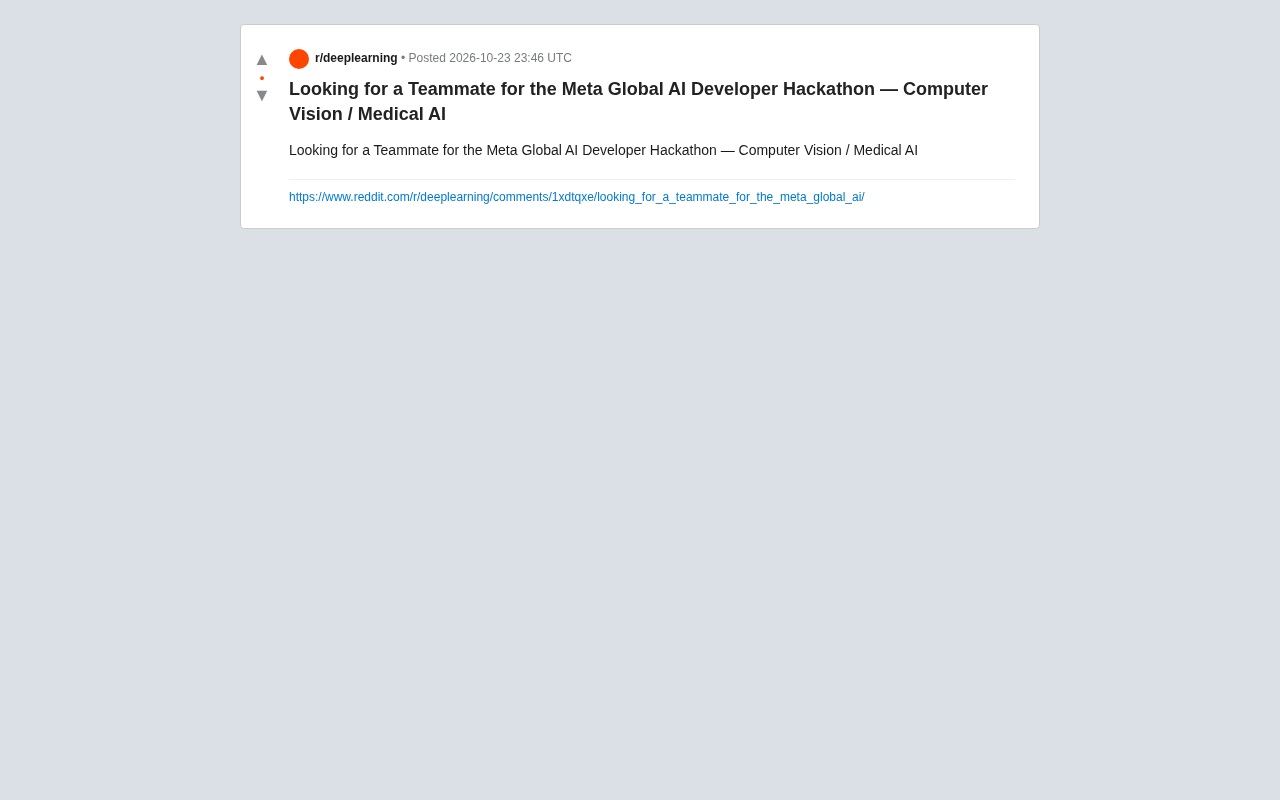
Teammate Wanted for Meta Global AI Developer Hackathon: Computer Vision & Medical AI
A Reddit developer seeks teammates for the Meta Global AI Developer Hackathon, focusing on computer vision and medical AI. This article analyzes the track logic, skills-complementarity needs, and topic selection strategy behind this teaming signal.
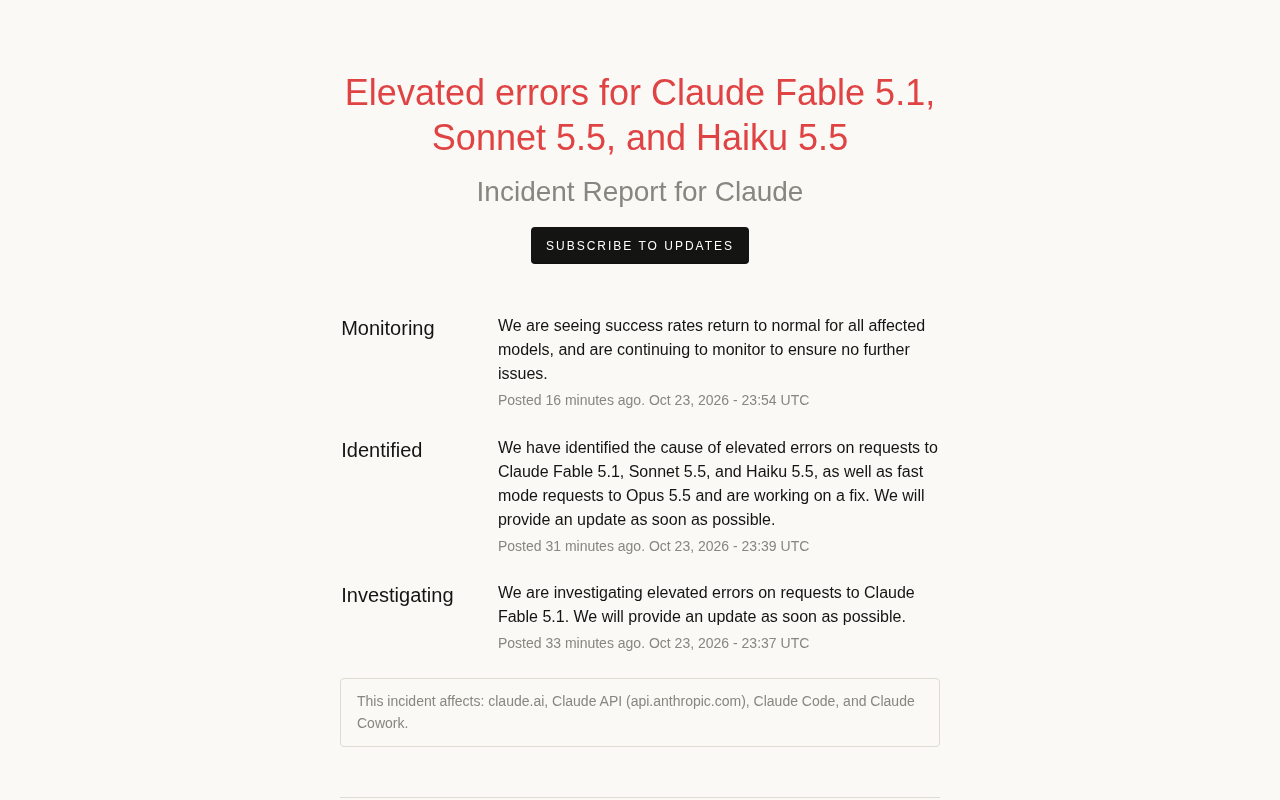
Multiple Claude Models Hit by Errors: A Postmortem of Fable 5.1, Sonnet 5.5, and Haiku 5.5
Claude Fable 5.1, Sonnet 5.5, Haiku 5.5, and Opus 5.5 fast mode saw elevated errors; Anthropic identified and resolved the issue in 17 minutes. This postmortem covers the timeline, the technical reasons for the multi-model cascading failure, and practical lessons for retry and degradation strategies.